
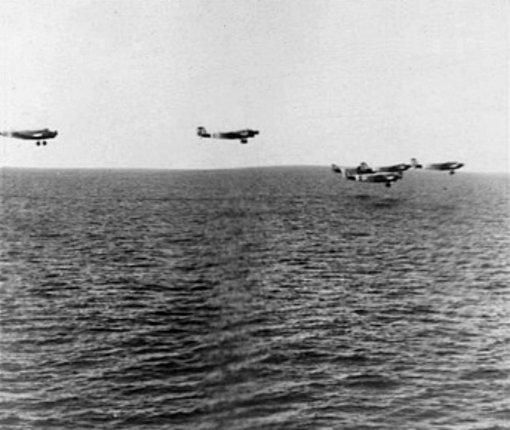
Late in the afternoon of April 18, 1943 — Palm Sunday — a wall of German transport planes crawled north-east across the Mediterranean at wavetop height, so low their propellers kicked spray off the swells. There were about ninety of them, packed with fuel, ammunition and men, strung out in three great "vic" formations. Above and behind, the setting sun turned each one into a glinting speck against the dark sea.
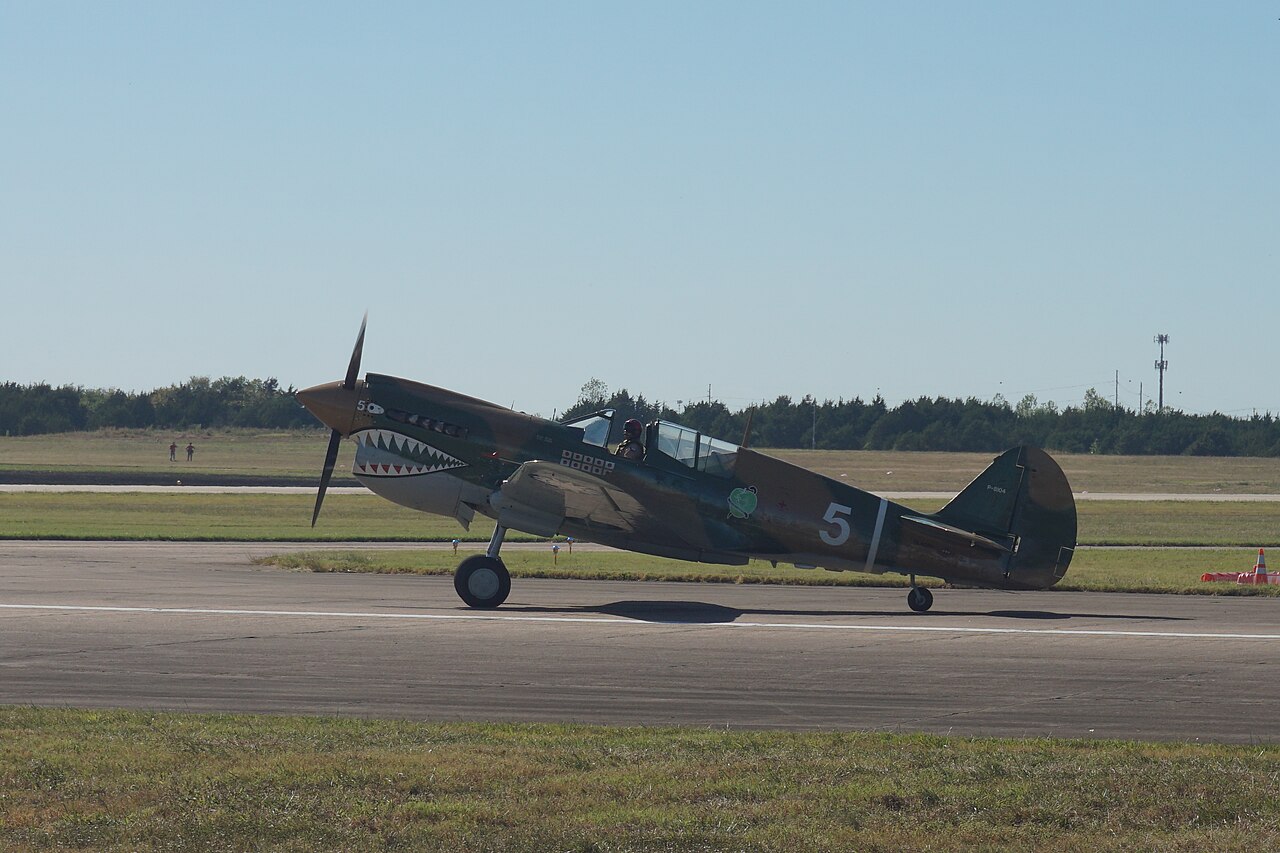
Waiting for them were the P-40 Warhawks of the U.S. 57th Fighter Group. What followed in the next quarter of an hour was so lopsided that the Germans gave the day a name that stuck: the Palm Sunday Massacre.
It was the bloody climax of Operation Flax, an Allied campaign built for one purpose — to cut the air bridge keeping Rommel's Afrika Korps alive in Tunisia. By that April, the whole German position in North Africa hung from a thread of lumbering three-engined Junkers. On Palm Sunday, the Allies cut it.
Datos rápidos
- Fecha: April 18, 1943 (Palm Sunday), late afternoon
- Allied unit: U.S. 57th Fighter Group, Curtiss P-40 Warhawks
- German force: ~90 Junkers Ju 52 transports, lightly escorted
- American claims: 59 Ju 52s, 14 Bf 109s and 2 Bf 110s
- American losses: six P-40s
- Campaign: part of Operation Flax (began April 5, 1943)
A lifeline made of transport planes
By spring 1943 the Axis armies penned into Tunisia were starving for fuel and shells. With the sea lanes contested, almost everything had to come by air — Junkers Ju 52s, giant Messerschmitt Me 323s and Italian Savoia-Marchettis flying more than a hundred sorties a day from Sicily and Italy. Roughly 500 aircraft were tied up in the effort, usually shepherded by a handful of fighters.
The Allies knew all of it. ULTRA code-breaking and radar handed air planners the enemy's timetable, and from April 5 the Northwest African Strategic Air Force turned that knowledge into an ambush campaign: sweep the straits by day, hammer the departure and arrival airfields, and bleed the transport fleet white.
The story of the Palm Sunday interception, told in full.
It worked with grim efficiency. On April 5 alone, P-38 Lightnings and B-25s tore into a mixed formation off Cape Bon. Over the following days the tally climbed — twenty transports here, twenty-five there, twenty-six caught skimming the waves from Marsala to Cape Bon. But the worst day for the Luftwaffe's transport crews was still ahead.
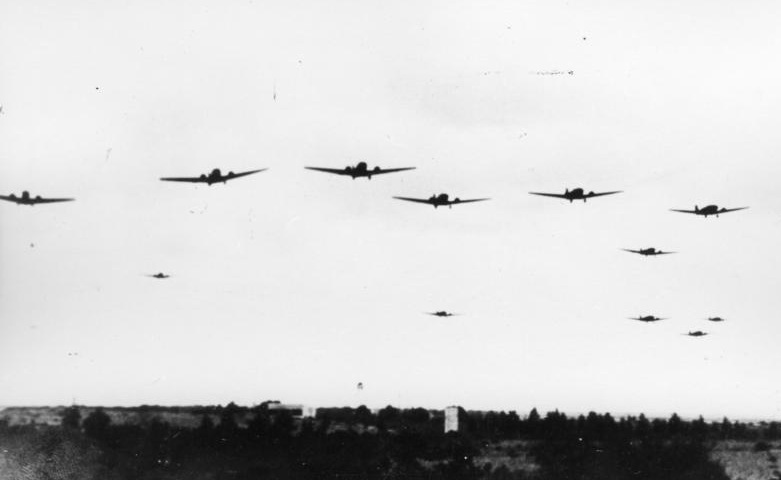
Fifteen minutes over the strait
When the 57th Fighter Group's Warhawks found the Palm Sunday formation, one squadron climbed to hold top cover against the escorts while three others dropped into the transports. The Bf 109s were too few to matter and were quickly swamped. The Ju 52s, flying straight and level a few feet above the water, had nowhere to go.
The beauty did not last. Warhawks darted through the vics, and Junkers began to fall — some into the sea, others burning onto the Tunisian shore. American crews reported German soldiers firing rifles and pistols out of the transport windows at the diving fighters, a measure of how helpless they were.
El ajuste de cuentas
Back at base the Americans counted 59 Ju 52s, 14 Bf 109s and two Bf 110s claimed for the loss of six P-40s. German records broadly match the scale, though the Luftwaffe insisted many of the "downed" Junkers had actually forced-landed. Either way, the fleet was gutted — and the punishment continued at dawn, when a South African Warhawk unit stumbled onto another transport formation and shot down fifteen more.
Four days later the giant Me 323s met the same fate over the same water — the "Holy Thursday" sequel to Palm Sunday.
The German crews drew the obvious lesson. When the time finally came to evacuate ground personnel from Tunisia, many refused to ride the Ju 52 across the strait at all, preferring to fold themselves into the fuselage of a departing Bf 109 — cramped, but far less likely to end the day in the sea. It was, in its own way, a monument to what the Warhawks had done.
Another retelling of the fifteen minutes that broke the Afrika Korps' air bridge.
Operation Flax did not win Tunisia by itself. But by strangling the airlift, it helped ensure that when the end came in May, a quarter of a million Axis troops surrendered with empty tanks and empty magazines — undone, in part, by a slaughter that lasted a quarter of an hour.
Sources: The National WWII Museum (John Curatola, PhD); Shores, Ring & Hess, Fighters over Tunisia; Craven & Cate, The Army Air Forces in World War II; Wikipedia.
Preguntas frecuentes
What was the Palm Sunday Massacre?
Why were so many German transports in the air?
What was Operation Flax?
How did the Allies know where to find the transports?
Why were the losses so one-sided?
Publicaciones relacionadas
La carrera del Canal: Seis peces espada contra una flota de batalla
0 Comments