
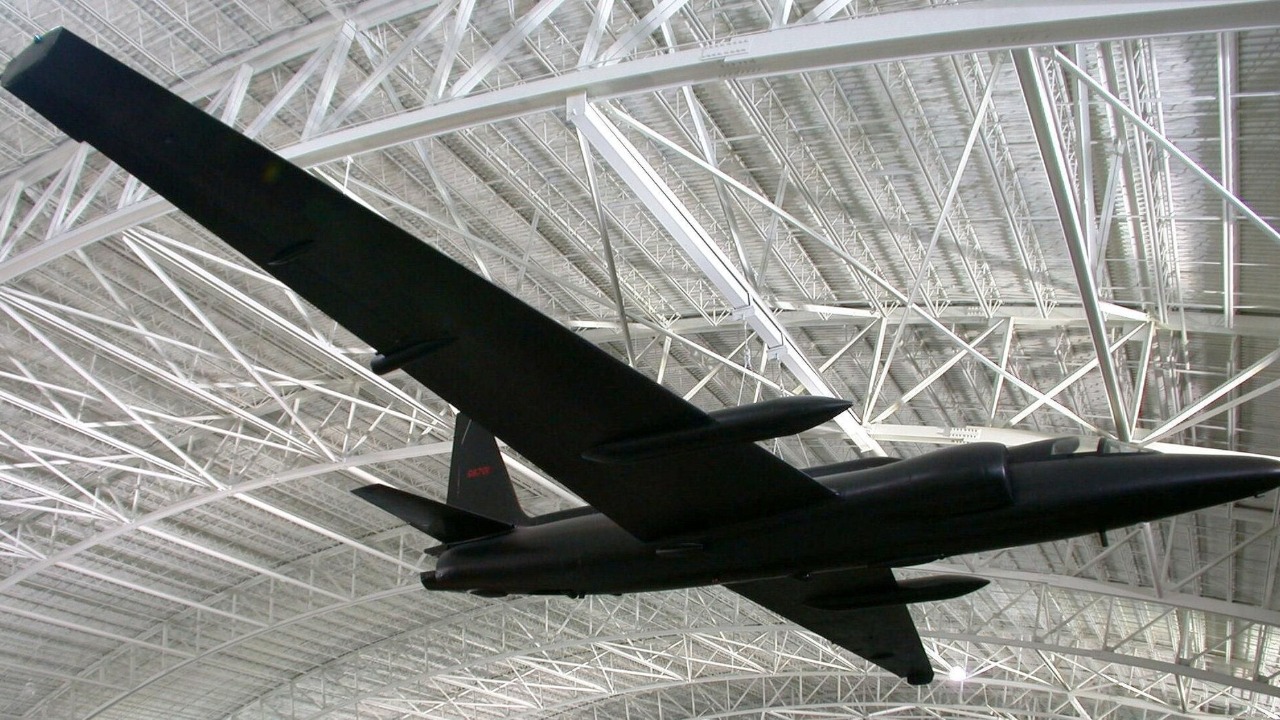
In 1965 the Republic of China Air Force built two graves at the Bitan military cemetery outside Taipei. One was for Major Yeh Changti, the other for Major Chang Liyi. Both men had been shot down over communist China. Both had been declared dead. The Central Daily News ran Chang’s obituary on 12 January 1965.
Both men were alive, in Chinese custody, and would stay there for seventeen and nineteen years respectively.
When they were finally released to Hong Kong in November 1982, Taiwan would not let them come home.
Quick Facts — 35th “Black Cat” Squadron, ROCAF
Active: 1961–1974, from Taoyuan Air Base, Taiwan
US designation: Detachment H; programme codename RAZOR, run by the CIA
Misiones: About 220 operational sorties, of which around 102 penetrated Chinese airspace
Aircraft assigned: 19 U-2C/F/G/R over fourteen years, usually only two on strength at once
Shot down over China: 5 aircraft — 3 pilots killed, 2 captured
Other operational loss: 1 aircraft, pilot killed
Training losses: 7 aircraft, 6 pilots killed
Last overflight of the mainland: 16 March 1968
Last mission: 24 May 1974
A Squadron That Officially Was Not There
The arrangement was agreed in 1958 and the cover story was high-altitude weather research. It was one of the more thinly disguised operations of the Cold War.
The 35th Squadron flew from an isolated corner of Taoyuan Air Base. On American paperwork it was Detachment H; the programme itself was RAZOR, run directly by the CIA with US Air Force support rather than through normal Air Force channels. The Americans on the base wore civilian clothes, carried false names and described themselves as Lockheed representatives. The Taiwanese pilots and ground crew never learned their real names, ranks or agencies.
Every operational mission needed the personal approval of both the American and the Chinese Nationalist president.
Between 1959 and 1973, somewhere between twenty-eight and thirty ROC pilots were sent to Laughlin Air Force Base in Texas; twenty-six or twenty-seven completed U-2 training. Sources disagree on the exact figures. The first commander, and the longest-serving, was Colonel Lu Xiliang.
Two numbers get confused constantly, so it is worth separating them. The squadron flew roughly 220 operational sorties over fourteen years. Of those, about 102 actually crossed into Chinese, North Korean, North Vietnamese or Laotian airspace. The rest were flown along coastlines and over international water.
Five Aircraft, Five Pilots
The first loss was the first U-2 combat loss anywhere. On 9 September 1962, Major Chen Huai took off from Taoyuan at six in the morning and was brought down near Nanchang in Jiangxi, four hundred kilometres inland, by the PLAAF’s 2nd SAM Battalion. He was found alive and died in hospital. Washington denied involvement, pointing out that Eisenhower had sold the aircraft to Taiwan — while the CIA quietly went on maintaining and replacing them.
On 1 November 1963, Major Yeh Changti was hit over Shangrao on the way back from the Jiuquan missile base in Gansu. It was his third mission. The right wing came off. He ejected, took fifty-nine missile fragments, and got his parachute open before losing consciousness. The battalion that got him was the same one that had killed Chen Huai.
On 7 July 1964, Lieutenant Colonel Lee Nanpin flew from Cubi Point in the Philippines against China’s supply lines into North Vietnam and was shot down over Fujian. His ejection seat did not fire, because it had not been armed.
On 10 January 1965, Major Chang Liyi was hit over Baotou in Inner Mongolia on an infrared-photography mission against atomic-bomb production facilities. He parachuted onto a farm and was captured.
On 8 September 1967, Captain Huang Jungpei was killed over Jiaxing — the first kill ever scored by a Chinese-built surface-to-air missile.
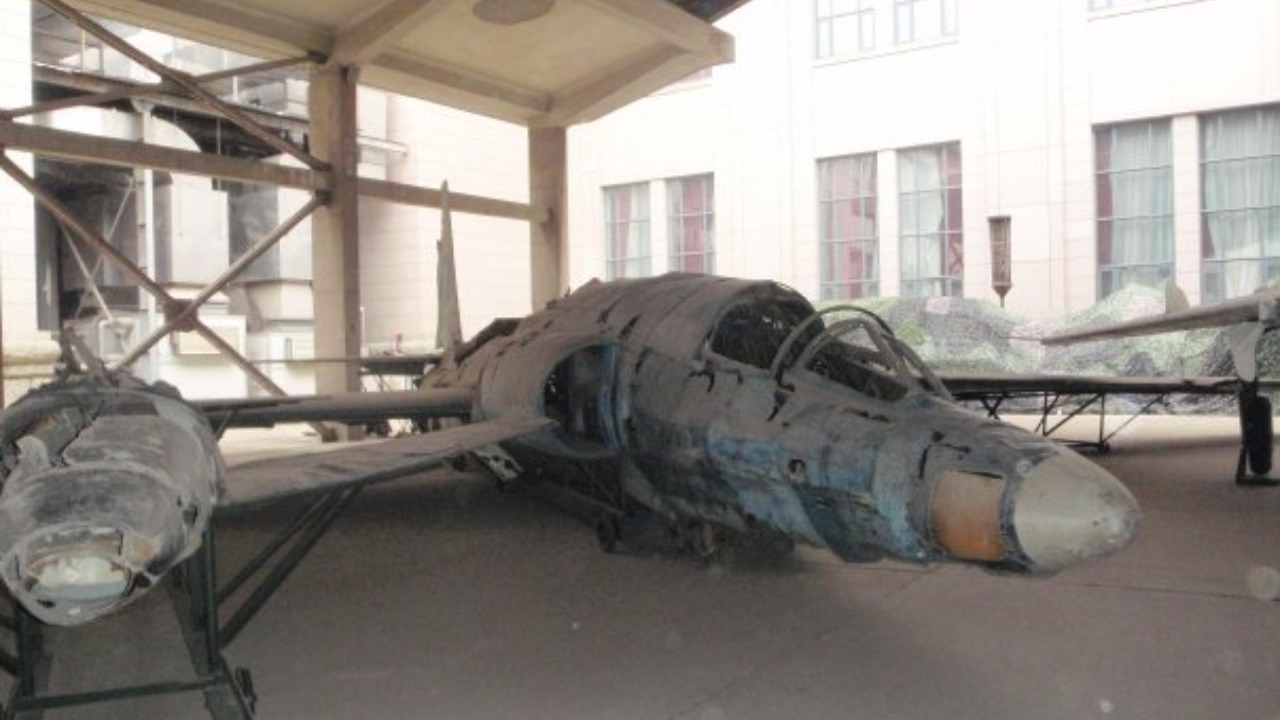
The training record was worse than the combat record. Seven aircraft were lost in training and six pilots died, including one accident in February 1966 in which a U-2 diverting with an engine problem landed on the wrong, too-short strip, overshot into civilian housing and killed the pilot and five people on the ground.
What the Other Side Thought
The Chinese perspective is genuinely useful here, and one of the men responsible has been on the record about it. Lieutenant General Han Decai was a Korean War ace whose MiG-17 squadron was tasked specifically against the U-2.
Fighters could not reach it. So China did it with missiles, and did it the way a guerrilla army would.
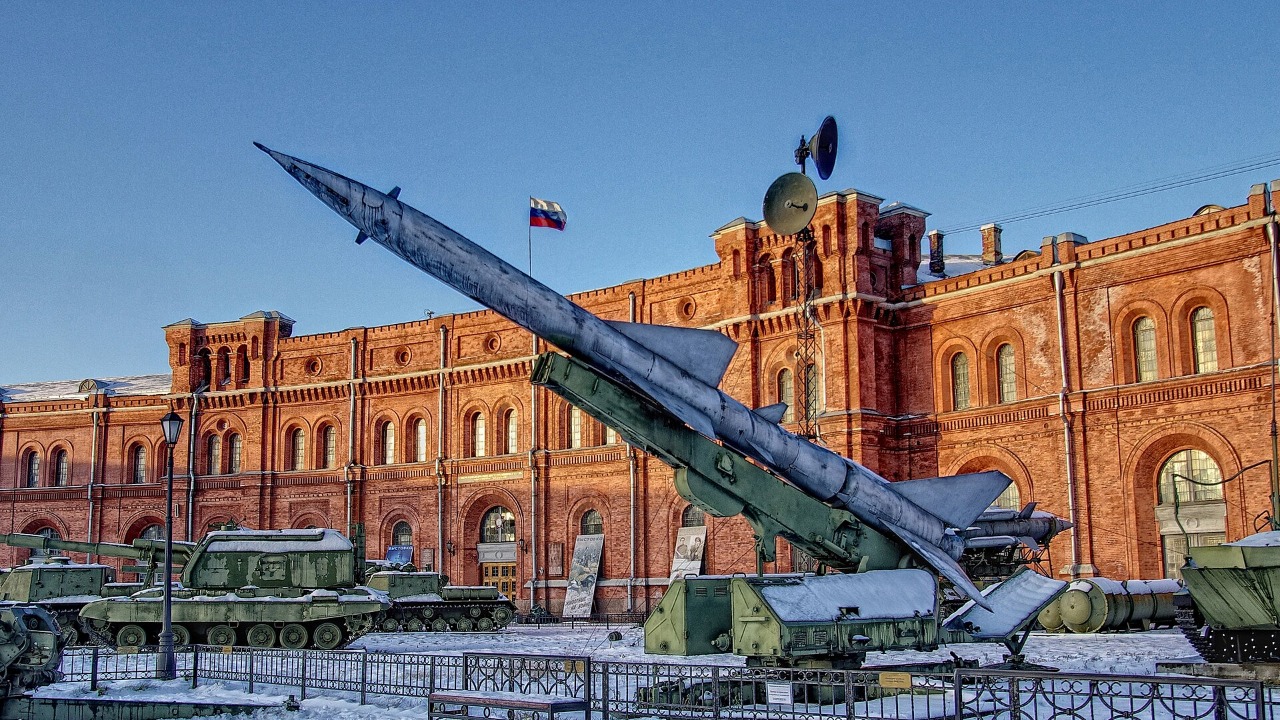
The equipment argument on the American side was equally revealing. Detachment H’s aircraft carried the System XII radar warning receiver but were denied the System XIII jammer, because the Defense Department feared its capture. After enough losses it relented — but insisted System XIII stay switched off until System XII detected a Fan Song radar. Taiwan eventually refused further overflights unless its pilots could use the jammer whenever they liked.
Trailer for Lost Black Cats, the documentary on the squadron.
Nineteen Years, and Seventeen
Yeh Changti was interrogated repeatedly for about four years, then — once the Cultural Revolution had begun and the security apparatus had other priorities — sent to farm work, then to an arsenal in Wuhan. His English and his aeronautical background eventually got him a post as an associate professor at Huazhong Institute of Technology, translating papers for a mechanics journal.
Chang Liyi was released from detention in late 1969 after almost five years, sent to live in Nanjing, reunited with his mother and siblings after twenty-seven years apart, and worked as a farmer, then a factory worker, then an engineer at the Nanjing Institute of Aeronautics.
Both were released to Hong Kong on 10 November 1982. Yeh had been held nineteen years; Chang seventeen.
President Chiang Ching-kuo judged them compromised and refused to let either man into Taiwan. Their former deputy squadron commander, Yang Shiju, by then living in Las Vegas, contacted the CIA, which resettled them in the United States. Neither received an American decoration. They were finally allowed home in 1990, after Chiang’s death.
Chang’s wife had remarried eight years after he was declared dead, on an understanding with her second husband that she would go back to Liyi if he ever returned. They met in Hong Kong in 1983. She divorced, remarried Chang in April 1991, and died in 2003. Chang died in Taipei in June 2019, aged 89. Yeh died in 2016; President Tsai Ing-wen attended his funeral, and his service was finally, officially recognised.
The Black Cat exhibition at the Armed Forces Museum in Taipei.
The Miracle at Cortez
Not every Black Cat story ends badly, and the best of them happened in Colorado.
On the night of 3 August 1959, Major Hsichun “Mike” Hua took off from Laughlin at about half past eight on a celestial-navigation exercise — his seventh U-2 flight, and his first night flight in a foreign country. Over Ogden, Utah, he reported his altitude as “above 450”. He was actually above 70,000 feet.
At 10:28 the engine flamed out. His pressure suit inflated so hard he had to haul the helmet cable down to stop the bladder choking him. The autopilot dropped out. The generator quit.
He could not attempt a relight above 35,000 feet, and at that altitude the U-2 has under twenty knots between stall buffet and Mach buffet, so he could not simply dive for it either. He went into cloud below 40,000 feet. Three airstart attempts failed. At 17,000 feet, still in cloud over mountains with peaks above 13,000, he decided against bailing out because he could not see the ground. He called Mayday and nobody answered.
He broke out of cloud in a narrow valley, saw lights at his eleven o’clock, then a rotating beacon flashing white and blue, then a runway, at about 7,000 feet indicated. He had just enough height to cross it and fly a 270-degree emergency circuit.
Cortez Municipal Airport was not on his map. The city council had been debating switching its night lighting off to save money. The airport manager later told him he and the radio operator had been about to close up and douse the lights.
He got the gear down, used the speed brake, touched down reasonably smoothly, did not stay on the gear, scraped the belly, caught the left wingtip on the runway shoulder and ground-looped to a stop in one piece. The cause was a broken fuel line.
A Frontier Airlines station manager lent him mechanic’s dungarees and rang Laughlin. Four National Guardsmen stood over the aircraft until the Air Force arrived in the morning with a C-124 to take it apart and fly it home. The local paper ran it on the front page as a weather-reconnaissance aircraft.
Hua was given a US Distinguished Flying Cross. He went on to fly operational missions over China, took a doctorate at Purdue, returned to Taiwan in 1970 to lead the Aero Industry Development Center, and developed the AT-3 trainer and the F-CK-1 Ching-kuo — which is why he is remembered in Taiwan as the father of the Indigenous Defense Fighter. He made general in 1982 and died in 2017. He also wrote the book about Yeh and Chang.
The End
By 1966 satellite imagery had already made the overflights largely redundant. The U-2C, F and G were replaced by the U-2R in 1968, and the last flight over the mainland was on 16 March 1968; after that the aircraft stayed twenty nautical miles offshore, shooting long-range oblique photography over international water. Nixon promised in 1972 to end reconnaissance near China.
The last mission was flown on 24 May 1974 by Sungchou “Mike” Chiu. The squadron disbanded that spring, and on 29 July the two remaining U-2Rs were flown from Taoyuan to Edwards Air Force Base and handed back.
One footnote, easily missed: there is no publicly available photograph of a U-2 in Republic of China markings. Detachment H’s aircraft flew unmarked or under American civil registrations. A squadron that lost thirteen aircraft and twelve pilots left almost no visual record that it existed at all.
The ROC Ministry of National Defense’s own 25-minute film on the squadron. Mandarin only, and the most authoritative account available.
Preguntas frecuentes
What was the Black Cat Squadron?
How many U-2s did the Black Cat Squadron lose?
How many missions did the Black Cats fly?
What happened to the captured pilots Yeh Changti and Chang Liyi?
How did China manage to shoot down a U-2?
What was the “Miracle at Cortez”?
Are there photographs of U-2s in Taiwanese markings?
Sources: Bob Bergin, “The Growth of China’s Air Defenses”, CIA Studies in Intelligence 57(2); Hsichun M. Hua, “Miracle at Cortez”, Air Force Magazine, August 1989, and Lost Black Cats (2005); Roadrunners Internationale; Durango Herald; Ben Rich, Skunk Works.
0 Comentarios