
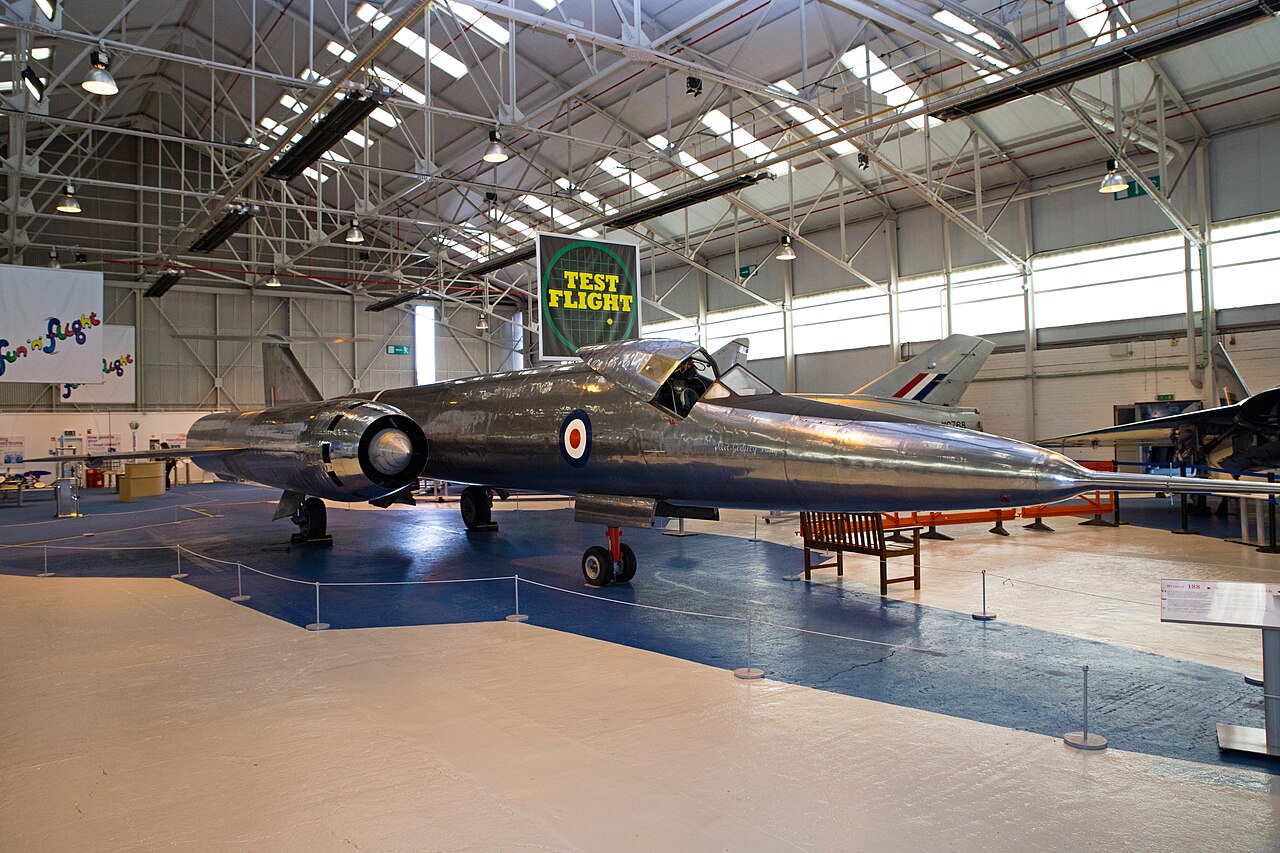
In 1954 the Air Ministry wrote a requirement that no aircraft on earth could meet. OR.330 asked for a machine that would cruise at Mach 2.5 at 60,000 feet, be capable of Mach 3, fly 5,754 miles, and penetrate Soviet airspace and come home. Avro won the contract in 1955 and set about building it. The result was the Avro 730 — and the strangest thing about it was that the pilot would not be able to see where he was going.
To keep the fuselage slender enough for Mach 3, the 730 had no conventional canopy. Production aircraft were to have two small side windows and an electrically operated retractable periscope, which the pilot would use for take-off and landing. At Mach 2.7 the skin would reach 277 °C. The airframe was to be stainless steel brazed honeycomb, the fuel would double as a heat sink, and a duplicated Freon refrigeration system would keep the crew compartment survivable.
Datos rápidos
| Aeronave | Avro 730 (with the Avro 731 scale prototype) |
| Role | Strategic reconnaissance, later reconnaissance-bomber |
| Requirement | OR.330 (1954), then RB.156T |
| Longitud | 163 ft 6 in (49.83 m) |
| Envergadura | 59 ft 9 in (18.21 m) |
| Central eléctrica | Eight Armstrong Siddeley P.176 afterburning turbojets in wingtip pods |
| Velocidad de diseño | Mach 3 maximum, Mach 2.5 cruise |
| Rango | 5,754 miles (9,260 km) |
| Estructura | Stainless steel brazed honeycomb |
| Destino | Cancelled 1957; the sole test fuselage was cut up |
A requirement nobody could meet
When OR.330 was issued, Britain had no operational combat aircraft capable of supersonic flight at all. Meeting it meant inventing new aerodynamics, new materials and new engines more or less simultaneously. Three firms tried: Handley Page with the HP.100, Vickers with the SP4, and Avro with the Type 730. Handley Page got as far as a full-scale mock-up. In mid-1955 the Ministry of Supply gave Avro the development contract.
For scale: the requirement predates the American programme it is usually compared with. The SR-71 lineage began at a meeting in 1958, four years after OR.330 was written.
Steel, not aluminium
The heat problem drove everything. At Mach 2 the external skin was expected to reach 190 °C; at Mach 2.7, 277 °C. Aluminium does not survive that, so the 730 would be built largely of stainless steel honeycomb — a material almost nobody in Britain had experience of forming, brazing or repairing at airframe scale.
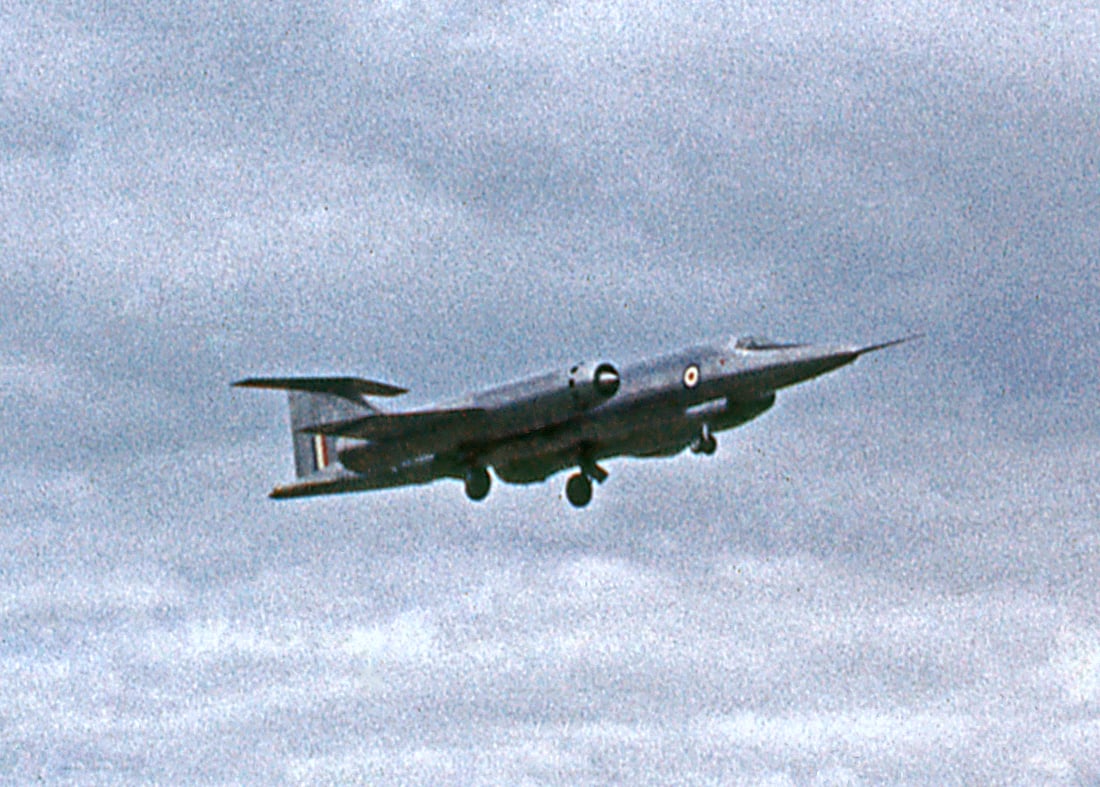
To learn how, the Ministry ordered a separate research aircraft: the Bristol Type 188, a stainless-steel test machine built to explore sustained supersonic heating. Two were flown. The 188 never reached its design speed, largely because it drank fuel faster than it could carry it, but the programme continued after the 730 was dead and the surviving airframe is at RAF Museum Cosford today.
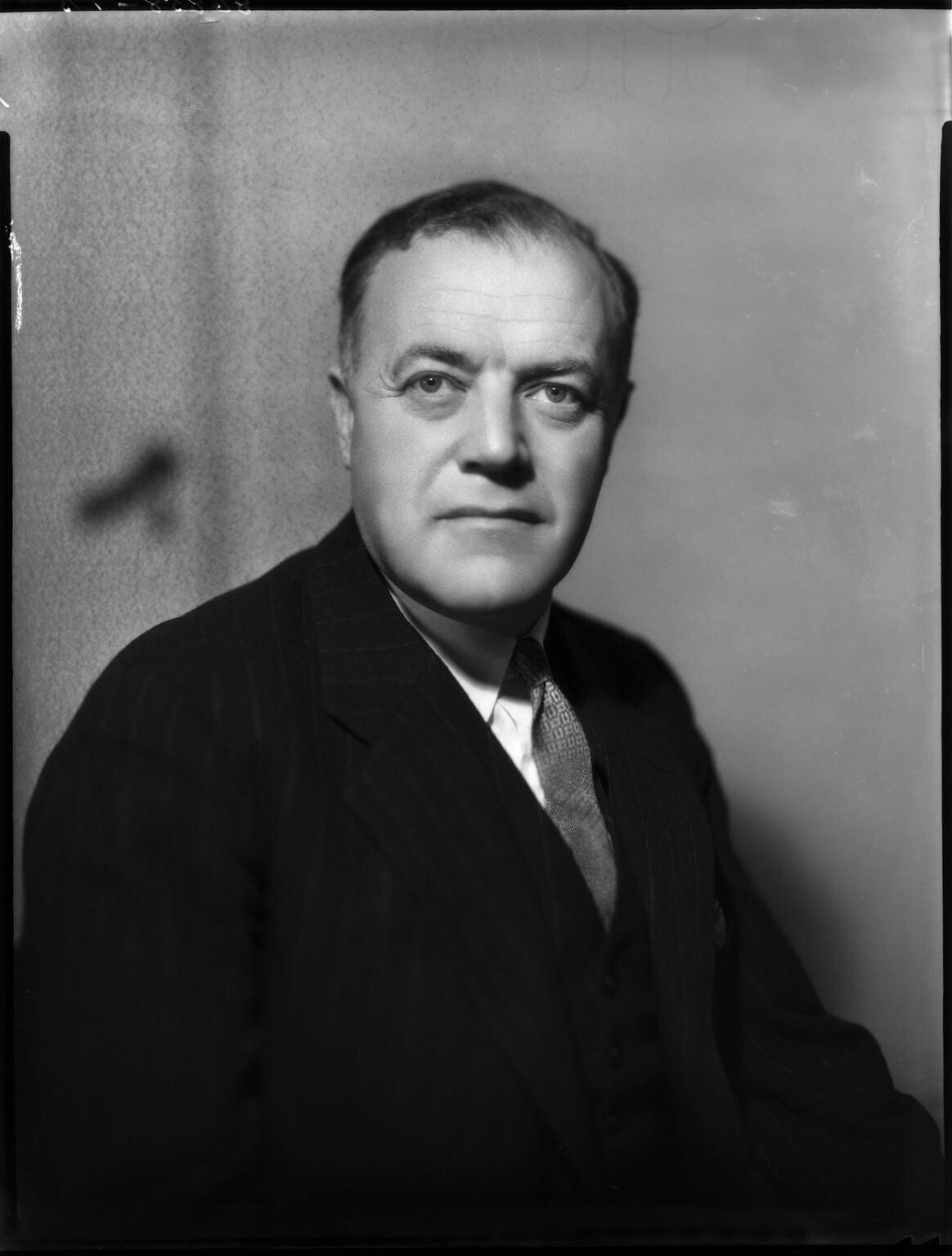
The scrapped machine Stokes was describing was the Avro 730.
The aeroplane with no windscreen
Everything about the layout was subordinated to fineness ratio. The 730 was an unswept canard, 163 feet long, with a small centrally mounted wing and its engines carried in pods at the extreme wingtips — two per pod in the reconnaissance version, four per pod in the later bomber redesign, for eight engines in total. Pitch control came from elevators on the nose-mounted foreplane. The flight controls were quadruple-redundant electro-hydraulic units from Boulton Paul, with fly-by-wire and automatic stabilisation.
The reason there was no canopy was the Red Drover side-looking radar, which needed a long antenna buried in the fuselage, and the drag penalty of anything that broke the line. Early development aircraft would have had a raised canopy for direct vision. Production aircraft would not. Three crew — pilot, navigator, radar operator — sat in one pressurised and refrigerated compartment with lightweight ejection seats.
When the RAF added a bombing role in October 1955, the design grew. The crew dropped to two, the wing became a cropped delta with added outboard sections, and the bomb bay came out at 50 feet long, intended for a nuclear stand-off missile with a warhead developed under the code name Blue Rosette.
Then it was over
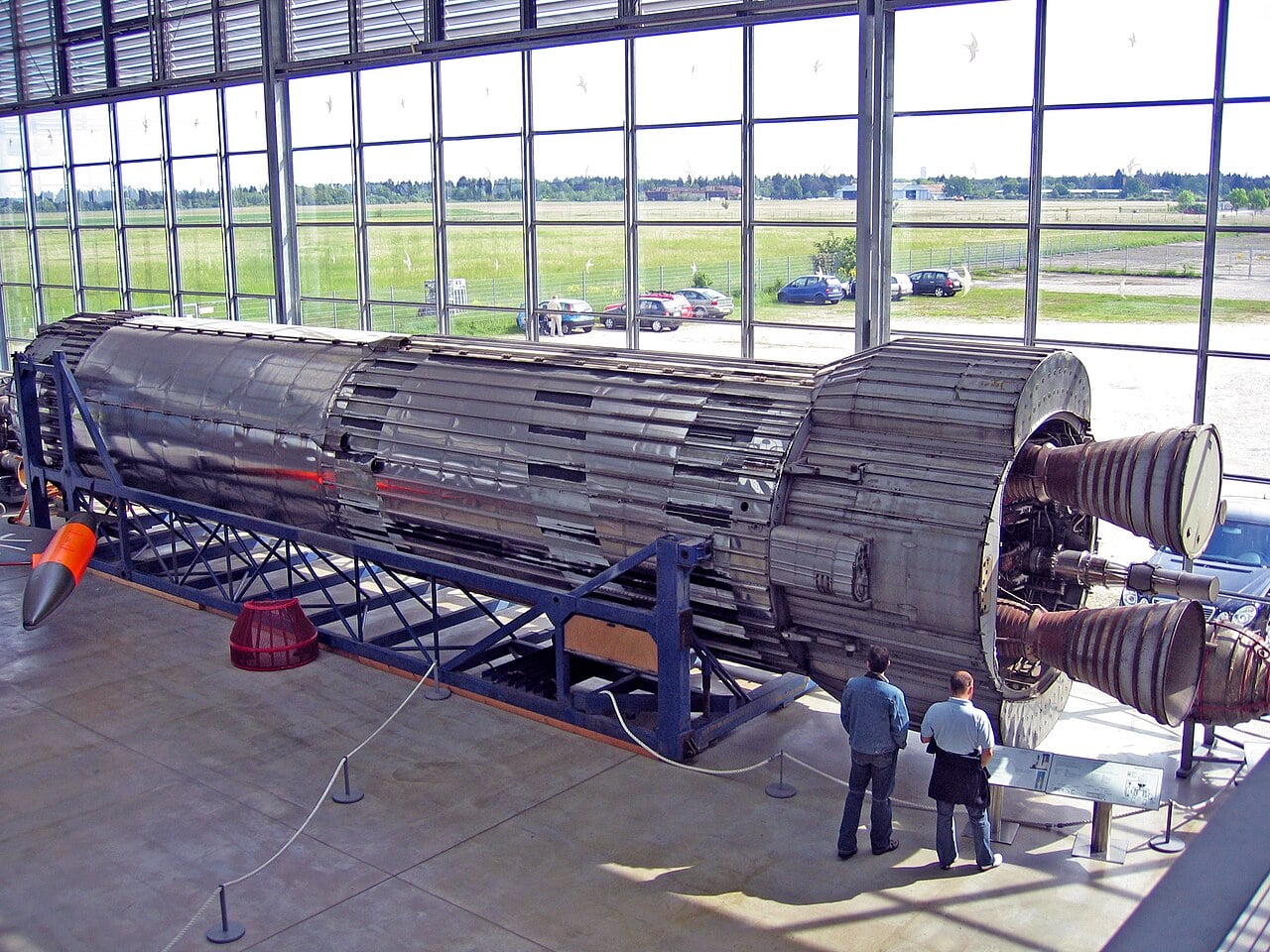
The first prototype was under construction when the 1957 Defence White Paper landed. Duncan Sandys had concluded that ballistic missiles were overtaking manned aircraft, and that by the time the 730 entered service — around a decade later — Soviet surface-to-air missiles would shoot it down anyway. The programme was cancelled. The test fuselage was cut up. The effort went into Blue Streak, a medium-range ballistic missile that was itself cancelled in 1960.
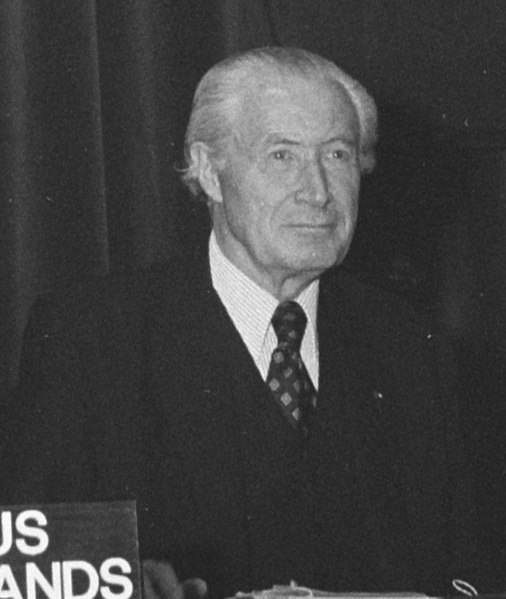
He was not wrong about the direction. He was wrong about the timetable, and about how much of an industry you can shut down in the meantime and still restart later. The Vulcan, Victor y Valiant the 730 was meant to replace stayed in service for decades.
What it left behind
Not nothing. The aerodynamic and thermal work done for the 730 fed into Royal Aircraft Establishment studies on supersonic transport, and from there into the research that produced Concorde. The Bristol 188 flew. And the next attempt at the same problem — a fast, deep-penetration strike aircraft, this time flying low rather than high — became the TSR-2, which was cancelled too.
Preguntas frecuentes
What was the Avro 730?
Did the Avro 730 have a windscreen?
How fast was the Avro 730 designed to fly?
Why was the Avro 730 built of stainless steel?
Why was the Avro 730 cancelled?
Was the Avro 730 Britain’s answer to the SR-71?
Does anything of the Avro 730 survive?
What was the Bristol 188 and how was it connected to the Avro 730?
Sources: Wikipedia (Avro 730; 1957 Defence White Paper); Hansard, House of Commons Defence debate, 16 April 1957; Derek Wood, “Project Cancelled” (1975); Norman Polmar, “Spyplane: The U-2 History Declassified” (2001).
0 Comentarios