
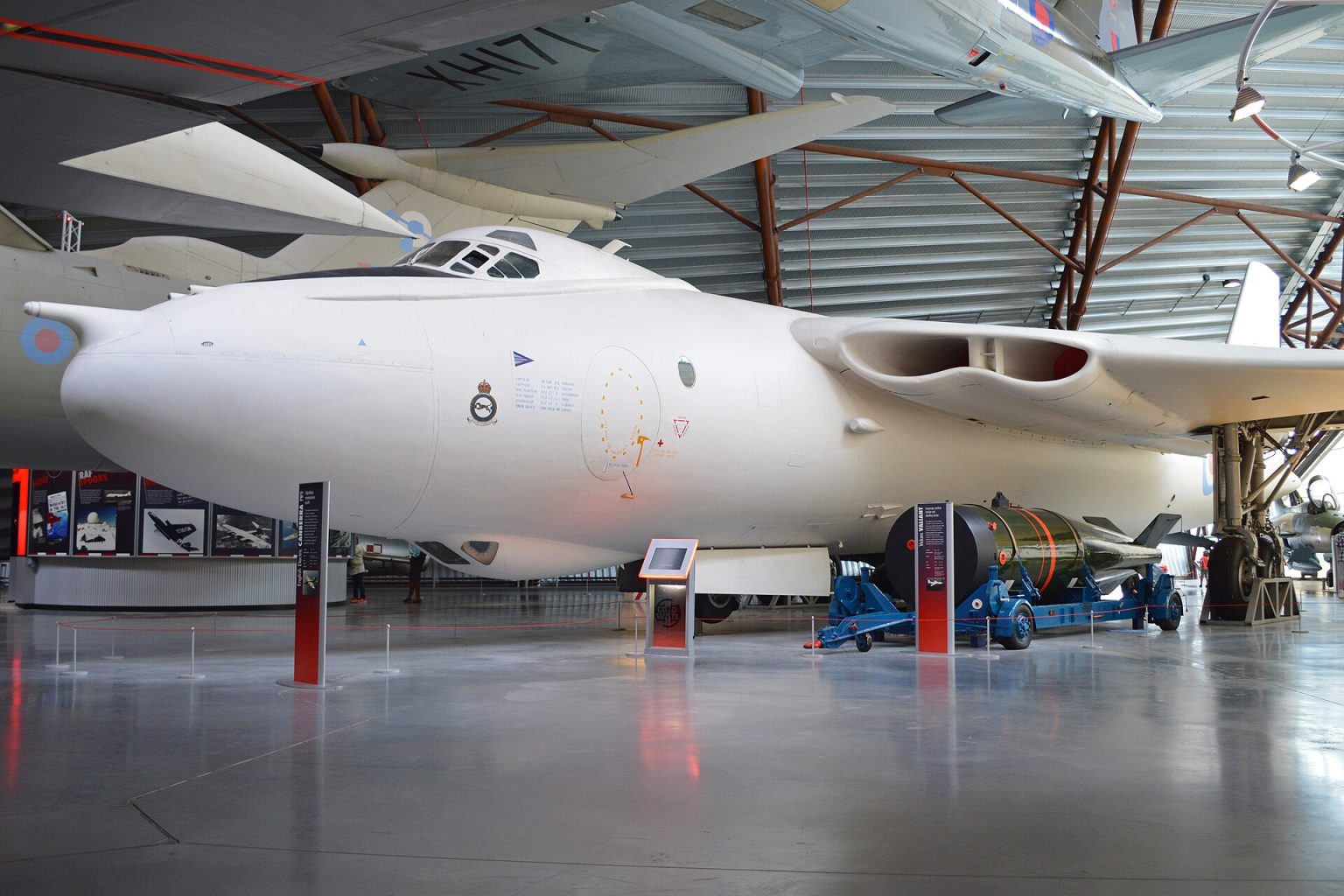
Vickers Valiant
Britain’s first V-bomber
The first of the RAF’s three “V-bombers” to fly and to serve — the aircraft that dropped Britain’s first atomic and hydrogen bombs, fought at Suez, and was then grounded almost overnight when metal fatigue cracked its wings.
The bomber that armed Britain’s deterrent — then cracked
When the Air Ministry set out to build a jet force capable of delivering Britain’s new atomic bomb, it hedged its bets. The radical designs that became the Avro Vulcan and Handley Page Victor promised extraordinary performance but carried real technical risk. So Vickers-Armstrongs, under chief designer George Edwards, was asked for something more conventional — a lower-risk “insurance” design that could reach the squadrons quickly. The result was the Vickers Valiant, and the gamble paid off: it was the first of the three “V-bombers” to fly and the first to enter service.
The prototype WB210 first flew on 18 May 1951 from Wisley, in the hands of Vickers’ veteran test pilot Joseph “Mutt” Summers. The programme was nearly derailed the following January when WB210 was lost to an engine-bay fire; the crew bailed out, but Squadron Leader Brian Foster was killed. Development pressed on, and by July 1955 No. 138 Squadron at RAF Wittering was operational — the cutting edge of Britain’s new airborne nuclear deterrent, painted in gleaming anti-flash white to reflect the heat of a nuclear blast.
The Valiant packed its short career with firsts. On 11 October 1956 a Valiant of No. 49 Squadron dropped Britain’s first air-delivered atomic bomb — a Blue Danube — over Maralinga, South Australia. Weeks earlier, other Valiants had flown the V-force’s only combat missions, bombing Egyptian airfields from Malta during the Suez Crisis — and, tellingly, they did so conventionally, never nuclearly. Then on 15 May 1957 the Valiant XD818 released Britain’s first hydrogen bomb in Operation Grapple, off Christmas Island.
Its end came almost as fast as its rise. To survive improving Soviet missiles, the V-force switched to low-level flying in the early 1960s — but the Valiant’s wing had been designed for smooth air at high altitude. In August 1964 a heavy jolt in flight exposed metal fatigue in the main spar; fleet-wide inspection found widespread cracking. Judged uneconomic to repair, the entire fleet was grounded in December 1964 and scrapped. The first V-bomber to fly was also the first to go — a front-line life of barely a decade.
01The Vickers Valiant and Britain’s V-force: why the RAF built three bombers at once
Faced with the enormous stakes of the nuclear age and the uncertainty of untried technology, the Air Ministry deliberately ordered three different jet bombers against overlapping specifications — the Valiant, Vulcan and Victor — rather than betting everything on one. Giving each a name beginning with “V” broke the RAF’s old tradition of naming bombers after cities and gave the force its enduring nickname.
The Valiant was the pragmatic choice: conventional enough to be built quickly and reliably, it filled the front line while the more advanced Vulcan and Victor matured. By the time those two hit their stride, the Valiant was already being pushed from the strategic role — and the low-level mission that followed would prove its undoing.
What makes it special
The low-risk “insurance” bomber
Where the Vulcan chose a delta wing and the Victor a crescent, George Edwards gave the Valiant a moderately swept, conventional wing. The bet was that a straightforward airframe would reach service faster and with less technical risk — and it did, flying in 1951 and entering RAF service in 1955, ahead of both its more radical siblings.
Four Avons buried in the wing roots
Its four Rolls-Royce Avon turbojets were embedded in the thick wing roots and fed by leading-edge intakes, an aerodynamically clean layout that kept the fuselage free for a large fuel load and the bulky early nuclear weapons. The distinctive twin-intake leading edge became one of the Valiant’s signatures.
Built for the high-altitude bomb run
The Valiant was optimised to cruise near Mach 0.84 at around 54,000 ft — above the reach of 1950s defences — and dropped its weapons from that height. It wore anti-flash white with pale, washed-out national markings designed to reflect the thermal flash of a nuclear detonation rather than to hide it from enemy eyes.
02The Vickers Valiant B.2 “Black Bomber”: the strengthened one-off that could have saved the fleet
A single specialised low-level pathfinder, the Valiant B.2 (WJ954), first flew in September 1953. Painted gloss black, it had a strengthened structure and moved its main undercarriage into streamlined pods on the wing trailing edges to free wing space for fuel and to withstand the punishing loads of high-speed flight down low. The pathfinder role evaporated, an order for more was cancelled, and the sole aircraft was destroyed in trials in 1958. The irony is sharp: the B.2’s beefed-up wing was exactly what the standard B.1 lacked when the fleet was later forced down to low level.
03The Vickers Valiant’s wing-spar fatigue: how low-level flying grounded a whole fleet
The Valiant’s wing was stressed for smooth, thin air at high altitude. When rising Soviet surface-to-air missiles pushed the V-force down to low level from the early 1960s, the aircraft began soaking up turbulence loads it was never built for, and fatigue cracks spread through the DTD683 aluminium alloy of the main spar. On 6 August 1964 the crew of WP217 felt a heavy in-flight jolt that turned out to be a major spar failure. Inspections found widespread cracking across the fleet, a full re-sparring was judged uneconomic, and every Valiant was grounded within months and scrapped.
Full specifications
Figures are for the production Valiant B.1. Contested values (thrust, ceiling, number built) are hedged; several sources differ slightly.
Baseline note: the figures below describe the Valiant B.1 as delivered to Bomber Command from February 1955 — four Rolls-Royce Avon RA.28 Mk 204/205 buried in pairs in the wing roots, five men in one pressure cabin, and a bomb bay sized around the 10,000 lb Blue Danube. Deltas for the B(PR).1 photo-reconnaissance aircraft, the B(PR)K.1 and B(K).1 tankers and the one-off B.2 low-level prototype are given in grey. Four cautions before any number below is quoted. First, the sub-marks are not different aeroplanes. With the single exception of the B.2 they share one airframe, one wing, one engine installation and one set of dimensions; the suffixes describe what was bolted into the bomb bay — a camera crate, a hose-drum unit — and a four-column table of near-identical figures is telling the reader nothing. Second, published production totals genuinely disagree: 107, 108 and 111 all appear in reputable sources, and the sub-type counts most often printed do not add to any of them. The arithmetic is set out in the variants section below. Third, maximum weight is quoted two ways — 140,000 lb is the normal figure and 175,000 lb the overload figure with underwing tanks — and a table that prints one without saying which is describing two different sorties. Fourth, the Valiant is routinely called a B.35/46 design. It was tendered against B.35/46 and rejected as insufficiently advanced; what was built was the Type 660 to Specification B.9/48, a separate specification written round the Vickers submission after George Edwards argued that a conservative bomber in service in 1955 was worth more than an advanced one in 1958. He was right, and the same conservatism killed the aeroplane ten years later.
Dimensions & weights
- Crew
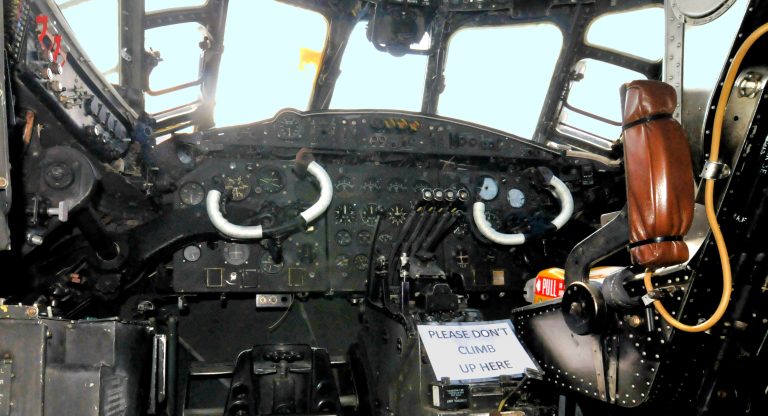
- 5 — captain and co-pilot side by side on an upper deck, with two navigators (plotter and radar) and an air signaller, later retitled air electronics officer, seated below them and facing aft. Only the pilots had ejection seats, Martin-Baker Mk.3; the rear three were expected to leave by the oval entrance door on the port side, an escape route nobody in the force believed in
- Length
- 32.99 m (108 ft 3 in). The B.2 was stretched to 34.37 m (112 ft 9 in), the extra bay going to avionics
- Wingspan
- 34.85 m (114 ft 4 in) — for scale, a B-47E spans 35.36 m and a Vulcan B.2 33.83 m. The projected Type 1000 transport derivative would have gone out to 42.67 m (140 ft)
- Height
- 9.80 m (32 ft 2 in)
- Wing area
- 219.4 m² (2,362 sq ft)
- Wing sweep
- 37° on the inner third, 21° outboard — Elfyn Richards’s patented "compound sweep", adopted so that shock waves would form at the same speed across the whole span as thickness/chord ratio fell towards the tips. It is the one piece of genuinely original aerodynamics on the aeroplane, and it is why the Valiant looks subtly wrong in plan to anyone used to a constant-sweep wing
- Wing thickness
- 12 per cent at the root chord — thick enough to bury four Avons in the roots rather than hang them in pods as Boeing did on the B-47. Cleaner in drag, far worse for maintenance access, dangerous if one engine failed uncontained into its neighbour, and it forced the main spar to be routed around the engine bays
- Empty weight
- 34,419 kg (75,881 lb)
- Normal maximum take-off weight
- 63,500 kg (140,000 lb) — the figure in most specification tables, including Andrews and Morgan
- Overload take-off weight
- 79,400 kg (175,000 lb) with the underwing tanks fitted. Both numbers are printed as "maximum take-off weight" in reputable sources and neither is wrong
- Internal fuel
- Five fuselage cells above the bomb bay plus wing tankage — no consistent total appears in open sources and this page will not invent one. What is documented is the external provision: two underwing tanks of 1,650 imp gal (7,500 l, 1,982 US gal) each, standard on the tanker aircraft, plus an auxiliary tank that could go in the forward part of the bomb bay. Burying the engines and the main gear in the wing is precisely what left so little room for fuel inside it
- Bomb load
- 4,536 kg (10,000 lb) as one nuclear store, or 9,525 kg (21,000 lb) as 21 × 1,000 lb conventional bombs. The bay was later found large enough to take a Blue Steel stand-off missile, which the Valiant carried only on trials
- Wing loading
- 289 kg/m² at normal maximum weight, 362 kg/m² at overload (59.3 and 74.1 lb/sq ft) — light for the class, which is most of the reason a clean Valiant could climb straight to 50,000 ft
- Undercarriage
- Twin nosewheel; tandem twin-wheel main units retracting outboard into wing recesses — and those recesses cut through the wing torsion box. The B.2 deleted them, moving to four-wheel bogies retracting rearwards into trailing-edge fairings, which bought both an uninterrupted spar and more room for fuel. That is the whole argument of the aeroplane in one paragraph
Performance
- Maximum speed
- 912 km/h (567 mph, 493 kn) at 9,145 m (30,000 ft)
- Maximum speed at sea level
- 666 km/h (414 mph, 360 kn) for the B.1, and this limit is the hinge of the type’s history. The B.2 was cleared to 933 km/h (580 mph) down low and reached 1,030 km/h (640 mph) on test — faster at sea level than any other V-bomber
- Limiting Mach number
- Mach 0.84 in service — a consequence of the mild sweep around the control surfaces. The Vulcan and Victor were both faster and higher; nobody at Vickers pretended otherwise
- Typical cruise
- Mach 0.75 at heights up to 16,760 m (55,000 ft) when lightly loaded
- Service ceiling
- 16,460 m (54,000 ft). A clean aircraft without underwing tanks would climb straight to 15,240 m (50,000 ft) after take-off unless heavily loaded
- Rate of climb
- 20.3 m/s (4,000 ft/min)
- Range, internal fuel
- 5,550 km (3,450 miles)
- Range with underwing tanks
- 7,240 km (4,500 miles)
- Combat radius
- ~2,780 km (~1,730 miles) — a derived half-range figure with no allowance for reserves, climb, or a run-in and escape manoeuvre, because no authoritative radius is published. The honest statement is the operational one: from bases in England the Valiant could not reach worthwhile targets in the western Soviet Union and come home. That is why the tanker force existed, and why four squadrons ended up assigned to SACEUR for shorter tactical work rather than to the strategic deterrent
- Take-off run
- Cleared from runways as short as 1,830 m (6,000 ft), and without a brake parachute — unusual for a 63-tonne jet bomber and a direct dividend of the low wing loading
- Bombing accuracy
- Practice bombs within a few metres of the aiming point from 13,715 m (45,000 ft) using the Navigational and Bombing System, flown by crews who typically arrived with 1,750 hours as a captain and a Canberra tour behind them. At Suez the aircraft did not yet have NBS and used Second World War visual technique, and the results showed it
- Assessed fatigue life at low level
- 75 hours, later revised to "possibly less than 200 hours" — from the Vickers low-level trials flown in WZ383 in 1956, refined by an RAE programme reported in 1958. This is the most important performance figure on the page. It was known seven years before the fleet was ordered down to low level, and it was not acted on
- Notable flight
- Marham to Singapore non-stop, 1960 — refuelled by Valiant tankers positioned along the route. Non-stop flights to Nairobi and Gan followed. In-flight refuelling as the RAF practises it today was invented on this aeroplane
Propulsion & systems
- Engines
- 4 × Rolls-Royce Avon RA.28 Mk 204 or Mk 205 turbojets — buried in pairs in fireproof bays in the wing roots, with oval "spectacle" intakes
- Rated thrust
- 44.7 kN (10,050 lbf) each for the Mk 204 and 46.7 kN (10,500 lbf) for the Mk 205. Sources differ: some tables give a flat 44.5 kN (10,000 lbf) for the installation, others 46.7 kN across the whole production fleet
- Take-off augmentation
- Water-methanol injection, worth about 4.4 kN (1,000 lbf) per engine, together with longer tailpipes on the full-production aircraft
- Rocket-assisted take-off
- Two jettisonable de Havilland Super Sprite packs — developed for hot-and-high tropical dispersal fields, cleared on the B.2 prototype, and abandoned once more powerful Avons arrived and somebody costed the consequences of one booster failing on a 63-tonne aeroplane at rotation
- Earlier engine marks
- RA.3 of 28.9 kN (6,500 lbf) in the first prototype with narrow slot intakes; RA.7 of 33.4 kN (7,500 lbf) in the second, which was ordered with Armstrong Siddeley Sapphires and never got them; Avon 201/RA.14 of 42.3 kN (9,500 lbf) in the five pre-production aircraft
- B.2 production engine
- Rolls-Royce Conway turbofans — specified for the 17 production B.2s that were ordered and cancelled. No Valiant ever flew with one
- Electrical system
- 112 V DC generators, one per engine, with 28 V DC control, 115 V AC for radar and control actuation, and 24 V and 96 V batteries — an unusually electric aeroplane for 1951. Flaps and undercarriage were driven by electric motors and mechanical gearing; even brakes and steering were electric motors driving hydraulic pumps. Vickers chose electrics on weight grounds and the sum came out right, but a full electrical failure took the flying controls to manual, so manual flying was practised on every conversion course
- Flying controls
- Two-channel powered ailerons, elevators and rudder with full manual reversion — Boulton Paul electro-hydraulic power units in the rear fuselage, artificial feel pressurised from a ram-air inlet. In manual the controls took real physical effort
- Navigation and bombing
- H2S radar in a glass-fibre nose radome with a visual bomb sight below the cabin floor — plus the Navigational and Bombing System, Marconi Green Satin Doppler, Gee, ADF, VOR/DME, radar altimeters and a Smiths autopilot and ILS. Provision was made for side-looking airborne radar
- Defensive systems
- ARI 5800 Orange Putter tail-warning radar; no guns — Vickers drew a pair of 20 mm cannon in the tailcone and never took the idea off the drawing board. Height and speed were the defence, on the Mosquito precedent, and deleting the turrets is what brought the crew down to five
- Refuelling
- Fixed probe on the nose, transfer pipe run externally over the canopy to avoid piercing the pressure cabin. The hose-drum unit sat on bomb-mounting points inside the bay, worked from a panel at the radar navigator’s station, so the bomb doors had to be open to trail the hose — crude next to the flush installations that followed, and removable, so a tanker could be turned back into a bomber
- Primary structure
- Spar booms and main beams in DTD683 zinc-magnesium-copper aluminium alloy, designed on a Safe-Life basis — the two decisions that killed the aeroplane. A paper in the Journal of the Institute of Metals in 1957–58 condemned DTD683 as unstable and capable of catastrophic failure when stressed near design limits, and a Lockheed engineer had already told the Royal Aeronautical Society in 1956 that Safe-Life guaranteed nothing. Handley Page stripped DTD683 out of a hundred Hastings transports and rebuilt them. Nobody did that for the Valiant
04The Vickers Valiant’s operating costs: what a 1950s V-bomber really cost
Reliable per-hour operating figures for the Valiant simply were not kept the way modern fleets track them, so any number should be treated as an order-of-magnitude estimate. Contemporary sources commonly place the flyaway cost of a Valiant in the region of £250,000 in mid-1950s money — a large sum, but deliberately less than the more advanced Vulcan and Victor, in keeping with the Valiant’s role as the lower-cost, lower-risk member of the V-force. Its true “cost”, in the end, was measured differently: a fleet-wide re-sparring to fix the fatigue cracks was judged so expensive that scrapping the aircraft outright was the cheaper option.
Armament & payload
The Valiant carried every nuclear weapon Britain ever dropped from an aeroplane, and the only V-bomber load ever released in anger
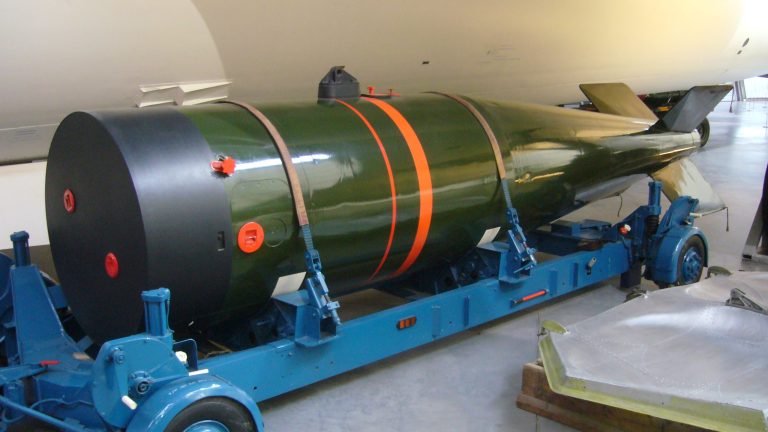
Everything the Valiant could do offensively happened inside one bomb bay, and that bay was sized in 1947 around Blue Danube — ten thousand pounds, roughly twenty-four feet long and a little over five feet across, the smallest atomic bomb British technology of the day could manage. There were no guns, no missiles, no rockets and no defensive armament of any kind. The alternative to one nuclear weapon was twenty-one thousand-pound conventional bombs, and in the whole V-force only the Valiant ever dropped those in anger.
The nuclear inventory it carried is a compressed history of the British deterrent. Blue Danube of 10 to 12 kilotonnes from 1955, with 58 built and a stockpile once planned at 800. Yellow Sun Mk.1 with the Green Grass warhead, about 400 kilotonnes, from 1959. Yellow Sun Mk.2 from 1961 with Red Snow, an Anglicised version of the American Mk 28 that yielded 1.1 megatonnes and cost 500,000 pounds against 1.2 million for the Mk.1 it replaced. Red Beard, the first British tactical weapon, for the smaller-yield job. And from 1961 the twenty-four Valiants assigned to SACEUR carried American weapons outright: two Project E Mk 28 bombs each, replaced by Mk 43 laydown weapons in early 1963, held in United States custody under a dual-key release with a USAF authorisation officer on the base.
That last arrangement matters more than it usually gets credit for. Half of Britain’s airborne deterrent, for four years, could not be released without an American turning a key, and it was the Valiant squadrons that carried the arrangement longest — Project E weapons were phased out of the strategic force by the end of 1962 but stayed on the Valiants until the fleet was grounded. Fits varied sharply by squadron, by base and by year: a Wittering aircraft in 1957, a Marham aircraft on SACEUR alert in 1963 and a Honington tanker in 1962 were the same airframe carrying entirely different things, and only the aircraft actually on quick reaction alert held live weapons.
Gun
- None, on any mark, at any point in the type’s ten years of service. The Valiant carried no defensive armament whatsoever
- Vickers proposed a pair of 20 mm cannon in the tailcone during design; the scheme never left the drawing office
- Deleting the gun turrets is what brought the crew down to five and saved the weight that made the promised performance achievable — the Mosquito argument, applied to a nuclear bomber, and adopted across all three V-bombers
- What went into the tailcone instead was ARI 5800 Orange Putter tail-warning radar, which told the crew an interceptor was closing and offered them nothing to do about it
- After 1962, flying low with a 414 mph limit, no gun, no missile and no stand-off weapon, the Valiant’s entire defence was terrain masking and the hope of not being seen
Air-to-air
- None. No V-bomber ever carried an air-to-air weapon, and no Valiant was ever fitted for one
- The design assumption was height: 54,000 ft in 1955 put the aircraft above most of what could reach it, and Valiant crews performed extremely well in Strategic Air Command’s annual bombing competition against that background
- The assumption was dead within five years. The SA-2 that brought down Gary Powers at 70,000 ft in May 1960 ended the high-level case for the whole V-force, not just for this aeroplane
- The only thing a Valiant ever fired at a fighter was chaff, from the dispensers carried by the radio-countermeasures aircraft of 18 Squadron
- In practice the type spent more time helping fighters than evading them: Valiant tankers refuelled Lightnings, and Sea Vixens and Scimitars of the Fleet Air Arm, as routine work
Air-to-surface guided
- None in service. No Valiant squadron ever held a guided air-to-surface weapon of any kind
- Valiants were used as flying testbeds during trials of the Blue Steel stand-off missile, and the bomb bay was large enough to accept it — but Blue Steel entered service on the Vulcan B.2 and Victor B.2, never on the Valiant
- The reason is timing rather than capability. By the time Blue Steel was ready the Valiant had been pushed out of the strategic role and down to low-level tactical work for SACEUR
- That absence is what made the 1962–63 switch to low level so unforgiving: with no stand-off weapon the aircraft had to fly over its target, in turbulent air, in an airframe designed for smooth flight at 45,000 ft
- The one guided store the fleet did handle in numbers was American and free-fall, not a missile: the Mk 43, shaped for laydown delivery from very low altitude
Bombs
- Blue Danube, 10,000 lb (4,500 kg), about 24 ft long and 62 in across, composite plutonium and uranium-235 core, 10 to 12 kt, four flip-out fins, designed for release from 50,000 ft. Fifty-eight were built; all three V-bomber bomb bays were sized around it; retired in 1962
- Yellow Sun Mk.1 with the Green Grass warhead, about 400 kt, in service from 1959; Yellow Sun Mk.2 with Red Snow, 1.1 Mt, from 1961. Both 7,250 lb, 21 ft long and 4 ft in diameter, with a completely flat nose that both dragged the weapon safely behind the bomber and gave clean barometric fuzing
- Red Beard, Britain’s first tactical nuclear weapon, unboosted fission with a composite core, in service from 1962 and stockpiled forward at Akrotiri and Tengah
- Project E: from 1961 each of the twenty-four SACEUR-assigned Valiants at Marham was equipped for two American Mk 28 bombs, replaced by Mk 43 laydown weapons in early 1963. The final practice loading at Marham was in January 1965 and the last American personnel left in July
- Conventional: up to 21 × 1,000 lb bombs. This is the load that went to Egypt in 1956, and the only V-bomber ordnance released in anger until the Vulcans bombed Port Stanley in 1982
Rockets
- None, offensive or defensive, on any mark. The Valiant carried no rocket armament at any time
- The only rockets it ever carried were for getting off the ground: two jettisonable de Havilland Super Sprite packs, trialled for hot-and-high tropical dispersal fields and cleared for the B.1 by the B.2 prototype
- Even that was abandoned. More powerful Avons with water-methanol injection arrived, and the asymmetric-thrust case if one booster failed on take-off was judged not worth the risk
- Unguided rockets are a weapon for an aeroplane that can see its target and dive at it. The Valiant was built to release one bomb from 45,000 ft and immediately roll into a 60-degree banked escape turn
- After the move to low level the weapon practised was laydown nuclear delivery, not rocketry; the type never acquired a conventional ground-attack fit beyond free-fall bombs
Pods & other stores
- Two underwing tanks of 1,650 imp gal (7,500 l) each, plus an auxiliary tank in the forward bomb bay — standard on the tanker aircraft, optional on the bombers
- The hose-drum unit, universally called the HooDoo, carried on bomb-mounting points in the bay and worked from a panel at the radar navigator’s station. Because it lived inside the bay the bomb doors had to be open throughout a transfer. It was removable, so a tanker could be reverted to a bomber, and by 1962 it defined what the fleet was for
- The reconnaissance crate: a removable bomb-bay installation carrying up to eight narrow-field high-resolution cameras and four survey cameras, with a further pair set into the fuselage and enlarged rear fuel tanks for endurance
- The radio-countermeasures fit of 18 Squadron — American APT-16A and ALT-7 jamming transmitters, Airborne Cigar and Carpet jammers, APR-4 and APR-9 sniffing receivers and chaff dispensers. At least seven aircraft were converted
- The Grapple fit: anti-flash white finish, heat-reflective paint, windscreen blinds fitted before the Maralinga drop to shield the crew from the flash, and trials instrumentation carried by the nuclear-test aircraft of 49 Squadron
Three typical loadouts
- Operation Musketeer, night attack on Egyptian airfields, Luqa, 31 October 1956
- Twenty-one 1,000 lb high-explosive bombs, no underwing tanks, no Navigational and Bombing System — the sets had not yet been fitted, so the crews used Second World War visual technique. On the opening night six Valiants were sent to Cairo West and recalled in flight because of American nationals near the target, six attacked Almaza and five bombed Kibrit and Huckstep Barracks. Across the campaign the force dropped 842 long tons (856 t) and seriously damaged three of the seven airfields it attacked. There was no opposition and no loss, and the results were reported at the time as disappointing.
- Grapple 1, live thermonuclear test drop off Malden Island, 15 May 1957
- One Short Granite device in the bay of XD818, anti-flash white, windscreen blinds up, Wing Commander Kenneth Hubbard commanding, with XD824 alongside as the grandstand observation aircraft. Both took off from Christmas Island at 09:00; the weapon was released from 45,000 ft at 10:38 local time, 418 yd (382 m) from the aiming point, followed by the standard 60-degree banked escape turn. The yield was about 300 kt, less than a third of what the design called for — a fact the government neither confirmed nor denied at the time.
- SACEUR-assigned low-level tactical strike, Marham, 1963
- Two American Mk 43 laydown weapons, carried live only by the aircraft actually on quick reaction alert, armed and fuelled on a hardstand inside a six-foot chain-link fence with a USAF authorisation officer holding one of the two keys. Grey and green camouflage over the upper surfaces in place of anti-flash white, a run-in flown low and fast under the radar horizon, and a delivery profile that put the release well below the altitude the wing had been designed and fatigue-rated for. This is the sortie that broke the aeroplane.
Sourcing: weapon fits here are reconstructed from Humphrey Wynn’s official history of the RAF strategic nuclear forces, Andrew Brookes’s unit history, Hubbard and Simmons’s account of the Grapple drops and the declassified Project E record. A weapon being available to the V-force is not evidence that a Valiant squadron held it, and this page states what a given aircraft carried only where the record is explicit. Two figures are firm: the 842 long tons dropped at Suez, and the eight British nuclear weapons detonated after release from an aircraft, every one of them dropped by a Valiant of No. 49 Squadron. Most of the rest of the day-to-day loading picture is inference from squadron records, and where sources conflict on yields the ranges rather than an average are given above.
Variants
Vickers built one Valiant and sold it four times, and the only version that could have survived low-level flying was the one the Air Ministry cancelled
Vickers built one Valiant and sold it four times. Strip away the designations and the B.1, the B(PR).1, the B(PR)K.1 and the B(K).1 are the same aeroplane with different things bolted onto the bomb-mounting points inside the bay: bombs, a camera crate, a hose-drum unit, or two of the three at once. The dimensions do not change, the wing does not change, the engines do not change. The only genuine variant Vickers ever flew was the B.2, and the Air Ministry cancelled it.
The production arithmetic deserves stating plainly because it is a mess. The usual total is 107 including three prototypes; at least one widely read online reference says 107 in one section and 108 in another, and Aviastar prints 111. The sub-type counts that circulate most widely — five pre-production, 34 full-production B.1s, 11 B(PR).1, 14 B(PR)K.1, 44 B(K).1 and one B.2 — sum to 109 before the two flying prototypes are added, which is impossible. The breakdown that reconciles to 107 gives 35 B.1s in total, pre-production included, and that is the version used below. Anyone quoting a Valiant production figure to the unit should be asked which breakdown they are using.
There were no exports and no licence production. Every Valiant built was a Vickers aeroplane for the Royal Air Force, and no foreign air force ever operated one — the only V-bomber of which that is true without qualification, since the Vulcan and Victor at least reached museum collections abroad. There was also never a Mark 2 in service, which is the whole tragedy in one sentence: as Vic Flintham put it, there is a fine irony in the situation, because Vickers had produced the Type 673 B.2 as a fast low-level aeroplane and the Air Ministry was not interested. Eleven years later the Ministry ordered the high-level B.1 fleet down to low level and broke its wings.
- Type 660 (prototype, 1951, 1 built)
- WB210, first flown on 18 May 1951 by Joseph "Mutt" Summers — the man who had first flown the Spitfire — with Jock Bryce as co-pilot, twenty-seven months after the instruction to proceed and comfortably inside the date George Edwards had promised. Four Avon RA.3 of 6,500 lbf, narrow slot intakes. Lost on 12 January 1952 during V.1000 noise measurement work when an engine relight started a fire in the starboard wing; most of the crew got out, but the co-pilot struck the tail after ejecting and was killed.
- Type 667 (second prototype, 1952, 1 built)
- WB215, flown on 11 April 1952. Ordered with Armstrong Siddeley Sapphires and completed with Avon RA.7 of 7,500 lbf and rounded intakes to feed them. Later cracked its rear wing spar at Boscombe Down after a rocket-assisted take-off at overload weight, an incident reported in Flight in May 1957 on an airframe that had never had the production fix for a known rear-spar weakness. It was broken up for wing fatigue testing after 489 hours. The warning was there in 1957 and it was read as a one-off.
- Valiant B.1, pre-production (Type 674 and related, 1953–54, 5 built)
- Avon RA.14 / Avon 201 of 9,500 lbf. WP199, the first, flew on 21 December 1953, again inside Edwards’s promised date, and was delivered to the RAF on 8 February 1955 — the day the V-bomber force formally came into existence. 138 Squadron had reformed at Gaydon on 1 January to receive it, with 232 Operational Conversion Unit following on 21 February.
- Type 706 Valiant B.1 (1954–57, ~30 built; 35 B.1s in all including pre-production)
- The full-production bomber: Avon RA.28 Mk 204/205 of up to 10,500 lbf, longer tailpipes, water-methanol injection for take-off boost. These were the aircraft of the first-line nuclear squadrons at Wittering, Marham and Honington, and the aircraft of No. 49 Squadron that dropped every British nuclear weapon ever released from an aeroplane.
- Type 710 Valiant B(PR).1 (11 built)
- Bomber and photo-reconnaissance. Edwards’s team had planned for the role from the start: a removable crate in the bomb bay took up to eight narrow-field high-resolution cameras and four survey cameras, with two more in the fuselage and enlarged rear fuel tanks. Flown by 543 Squadron at Wyton, which is credited with photographing some 400,000 sq miles (1,036,000 km²) of Rhodesia in an eleven-week survey — usually dated 1965, which sits awkwardly with a fleet grounded on 26 January that year, and is more probably 1964.
- Type 733 Valiant B(PR)K.1 (14 built)
- The three-role aircraft: bomber, photo-reconnaissance and tanker, wired and plumbed for all three and flying with whichever crate was fitted that week. Also 543 Squadron. Two were written off in non-combat accidents that say something about the era — WZ398 burnt in a hangar at Wyton in September 1957, WZ399 abandoned its take-off at Offutt in Nebraska in November 1961 and caught fire after running off the runway onto a railway line.
- Type 758 Valiant B(K).1 (44 built, 16 more cancelled)
- Bomber and tanker, the largest single batch and, by the end, the version that mattered. A removable hose-drum unit and transfer tanks went on the bomb-mounting points in the bay. 214 Squadron at Marham was operational in the tanker role in 1958 and 90 Squadron at Honington in 1959; both became dedicated tanker units on 1 April 1962. When the fatigue inspection came, the tanker squadrons had the highest proportion of aircraft cleared to keep flying, because their work had stayed at high level. XD818 is one of these.
- Type 673 Valiant B.2 (1953, 1 prototype; 17 ordered and cancelled)
- The road not taken. WJ954 first flew on 4 September 1953 in gloss black night-operations finish and was inevitably called the Black Bomber. Fuselage stretched to 112 ft 9 in for extra avionics; the wing torsion box made continuous by deleting the main-wheel cut-outs, the gear moved to four-wheel bogies retracting rearwards into large trailing-edge fairings; the whole structure strengthened against low-level turbulence. It was cleared to 580 mph at sea level against the B.1’s 414 mph and touched 640 mph on test. Production aircraft were to have Conways. It was cancelled because the wartime pathfinder concept looked obsolete in the nuclear age, spent a few years on Super Sprite rocket clearance and brake-judder taxi trials, and was scrapped in 1958.
- Radio-countermeasures conversions (1957–63, at least 7 aircraft)
- Not a separate mark but a distinct fleet within the fleet. C Flight of 199 Squadron received Valiants at Honington on 29 May 1957, replacing Lincolns, and was renumbered 18 Squadron at Finningley on 17 December 1958. American APT-16A and ALT-7 jamming transmitters, Airborne Cigar and Carpet jammers, APR-4 and APR-9 receivers and chaff. Disbanded 31 March 1963.
- Vickers Type 1000, Type 1002 and VC7 (1953–55, 1 airframe scrapped incomplete)
- The transport derivative, and the reason the Valiant was the last purpose-built military aeroplane Vickers ever produced. Low-mounted wing, span out from 114 ft 4 in to 140 ft, fuselage to 146 ft, uprated engines; a military Type 1002 and a civil Type 1004 or VC7 were to follow. The prototype was nearly complete when it was cancelled in 1955 — a decision Edwards and a good many others regarded as one of the worst ever taken in British aviation, since it left the transatlantic jet market to Boeing.
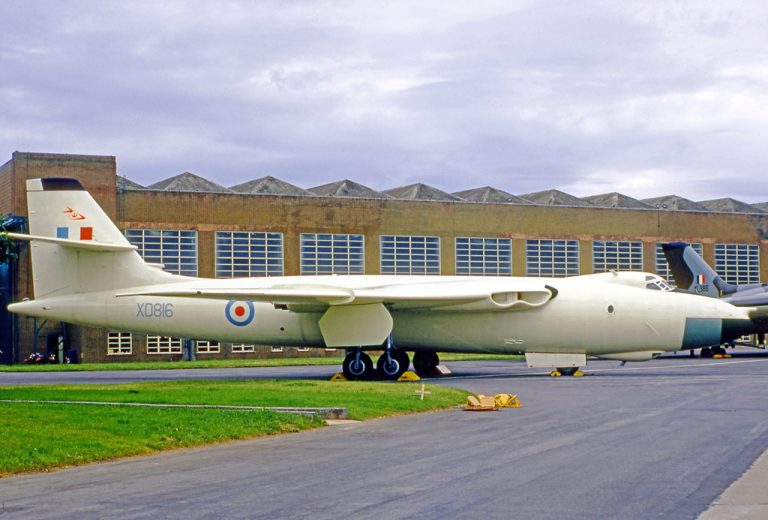
Disposition: the type is extinct, and it ended faster than any other British bomber of its size. A cracked spar was found in one of the three Operation Pontifex aircraft in July 1964; on 6 August the starboard wing rear spar of WP217, an OCU aircraft from Gaydon captained by Flight Lieutenant "Taffy" Foreman, failed at 30,000 ft, and the aeroplane came home with no starboard flap, buckled fuselage skin, popped rivets and a cracked engine door. A fleet inspection found wing spars fatigued at between 35 and 75 per cent of their assessed safe life. Repairs were actually under way at Marham when, in January 1965, the incoming Wilson government under Denis Healey decided the cost could not be justified against the aircraft’s remaining life. The last sorties had already been flown on 9 December 1964 — XD812 of 214 Squadron refuelling Lightnings over the North Sea, recalled before the exercise finished, and a bomber sortie by XD818 — and the fleet was permanently grounded on 26 January 1965. Healey told the Commons on 1 February that the decision was "not in any way connected with low-level flying". Of the hundred-odd airframes built, exactly one survives complete: XD818, listed by the Royal Air Force Museum’s own accession record as a Valiant B(K) Mk.I although it is often catalogued as a B.1, the aircraft from which Wing Commander Kenneth Hubbard released Short Granite off Malden Island on 15 May 1957. It was retained as maintenance airframe 7894M, displayed for years at RAF Marham, and now stands in the National Cold War Exhibition at the Royal Air Force Museum Midlands at Cosford beside a Victor and a Vulcan, with a Yellow Sun casing under its wing — the only place on earth where all three V-bombers can be seen together. Four nose or cockpit sections survive and nothing else: XD816 at Brooklands Museum in Surrey, XD826 at the Imperial War Museum Duxford, XD857 at the Norfolk and Suffolk Aviation Museum at Flixton, and XD875 at Morayvia at Kinloss. There are no reproductions, no replicas and no flyable examples anywhere; every piece listed here is original structure, and no Valiant has flown since 9 December 1964. The rest were cut up at their operating bases from 1965. That is why the first V-bomber into service, the only one to drop a British nuclear weapon and the only one to bomb anything in anger before 1982, is the one the public almost never sees.
From specification to scrapyard in seventeen years
Ordered against B.9/48
Vickers’ design, evolved from specification B.35/46, is ordered against B.9/48 — the pragmatic, lower-risk member of the future V-force.
Prototype first flight
WB210 flies from Wisley on 18 May 1951, piloted by Mutt Summers — the first V-bomber into the air. The name “Valiant” is adopted that June.
WB210 lost
The prototype is destroyed by an engine-bay fire on 12 January 1952; the crew bails out but Sqn Ldr Brian Foster is killed.
Enters RAF service
No. 138 Squadron at RAF Wittering becomes operational in July 1955 — the first V-bomber squadron, in anti-flash white.
Suez — the V-force’s only war
From 31 October Valiants bomb Egyptian airfields from Malta during Operation Musketeer — the sole combat use of any V-bomber, flown conventionally.
Britain’s first atomic drop
On 11 October a No. 49 Squadron Valiant releases a Blue Danube over Maralinga — the first British air-delivered atomic bomb.
Britain’s first H-bomb
On 15 May Valiant XD818 drops the country’s first hydrogen device in Operation Grapple, near Christmas Island.
Tankers and low level
Converted Valiant tankers carry much of the RAF’s air-refuelling load, while the strategic force is pushed down to low-level penetration.
Grounded and scrapped
Main-spar fatigue exposed by the WP217 incident grounds the whole fleet in December 1964; No. 49 Squadron disbands and the Valiants are broken up.
Twelve Vickers Valiant stories
Three bombers, one insurance policy
The Valiant was Britain’s deliberately low-risk V-bomber — and it flew first.
Read the full story
The fire that nearly killed the programme
WB210 was lost to an engine-bay fire in January 1952, with one crewman killed.
Read the full story
The bomb that started it all
On 11 October 1956 a Valiant dropped Britain’s first air-delivered atomic bomb.
Read the full story
The hydrogen-bomb crew
Valiant XD818 dropped Britain’s first H-bomb in 1957 — though the device underperformed.
Read the full story
The only V-bomber to fight
At Suez in 1956, Valiants flew the V-force’s sole combat missions — conventionally.
Read the full story
Poor marks over Egypt
Suez bombing was reportedly inaccurate, and the raids are judged of limited effect.
Read the full story
The tanker years
Converted Valiants provided much of the RAF’s air-to-air refuelling in the early 1960s.
Read the full story
The Black Bomber
A one-off strengthened Valiant B.2 was painted gloss black for the low-level role.
Read the full story
Low level killed it
The switch to low-level flying cracked wings built for high altitude.
Read the full story
The jolt that grounded a fleet
A single heavy in-flight shock in 1964 exposed the fatal spar cracks.
Read the full story
Painted for Armageddon
The Valiant wore anti-flash white to survive a nuclear blast, not to hide.
Read the full story
The lone survivor at Cosford
Grapple veteran XD818 is the only complete Valiant left.
Read the full story
The Valiant in pictures
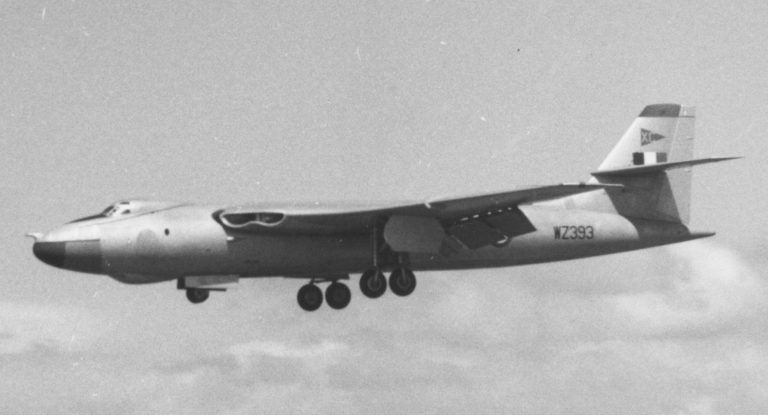
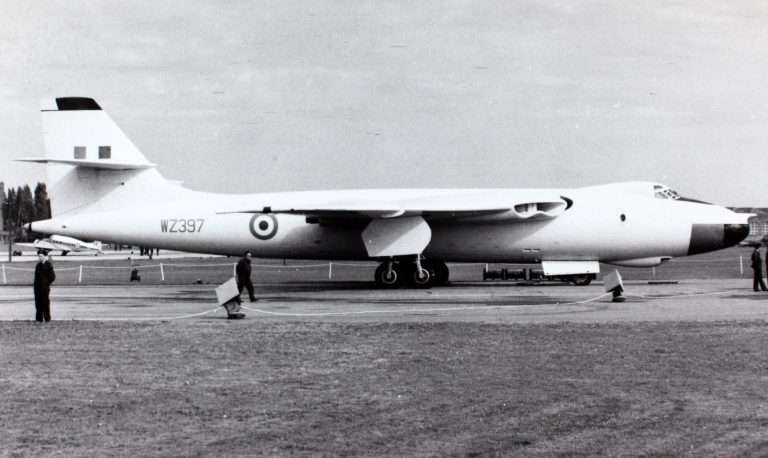
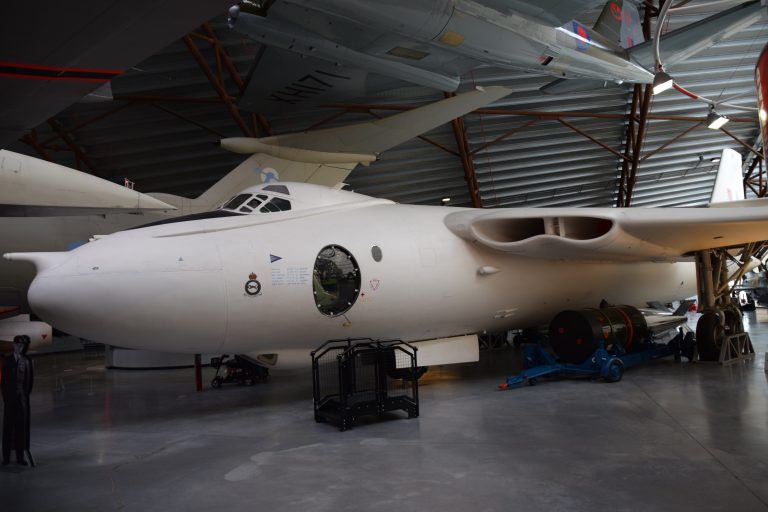
The Vickers Valiant in motion
A curated video feature for the Vickers Valiant is coming soon. In the meantime, explore the photo gallery above and the operations map below.
Where the Valiant flew
The record that defines it
The Valiant is a bomber, not a fighter, and holds no aerial kills — but it owns a unique distinction: it is the only one of Britain’s three V-bombers ever used in combat. During the 1956 Suez Crisis (Operation Musketeer), Valiants flying from Malta bombed Egyptian airfields — and did so as conventional bombers, never nuclear. Bombing from high altitude, accuracy was reportedly poor and the raids are generally judged of limited military value. The Valiant’s greater mark on history was made on the test range: it dropped Britain’s first atomic bomb (1956) and first hydrogen bomb (1957).
Compare the combat record of every military aircraft. Figures as of July 2026.
Everything people ask about the Vickers Valiant
Can I fly in a Vickers Valiant?
Why was the Valiant called a “V-bomber”?
Did the Valiant really drop Britain’s first nuclear bombs?
Was the Valiant ever used in combat?
Why was the Valiant retired so early?
How many Valiants survive today?
How fast and high could the Valiant fly?
You can’t fly the Valiant.
These, you can.
Some legends only live in museums — others are fuelled and waiting. MiGFlug has put civilians in real military jet cockpits since 2004.
 Fly the L-39 AlbatrosThe world’s most-flown jet trainer — aerobatics included
 Fly the F-104 Starfighter“The missile with a man in it”
 Fly the MiG-21The Cold War’s most-produced jet
 Fly the T-33 Shooting StarAmerica’s first jet trainer
 Fly the DH VampireA piece of early jet history
 Fly the S.211Agile Italian jet trainer
 Fly the MB-326The classic Aermacchi jet
 Fly the MiG-15The Soviet legend of the Korean War
Continue the tour
Every fact, checked
- RAF Museum — Valiant XD818 individual historyOfficial museum record of the sole surviving Valiant and its H-bomb drop.
- Thunder & Lightnings — Vickers Valiant historyDetailed history: prototype, WB210 crash, Suez squadrons and the WP217 grounding.
- This Day in Aviation — first British atomic dropThe 11 October 1956 Blue Danube drop, crew details and B.1 specifications.
- Imperial War Museums — Operation MusketeerAuthoritative context for the Suez Crisis and the RAF bombing campaign.
- Vulcan to the Sky Trust — The Black BomberHeritage account of the Valiant B.2 pathfinder and the low-level fatigue irony.
- The Royal Air Force Chronicle — Vickers ValiantThe “insurance” design, anti-flash white, tanker role and fatigue withdrawal.
- Jets of the Cold War — Operation GrappleThe 1957 hydrogen-bomb trials and the underperformance of the first device.
- Military Factory — Vickers ValiantConsolidated specification table for dimensions, weights and performance.