
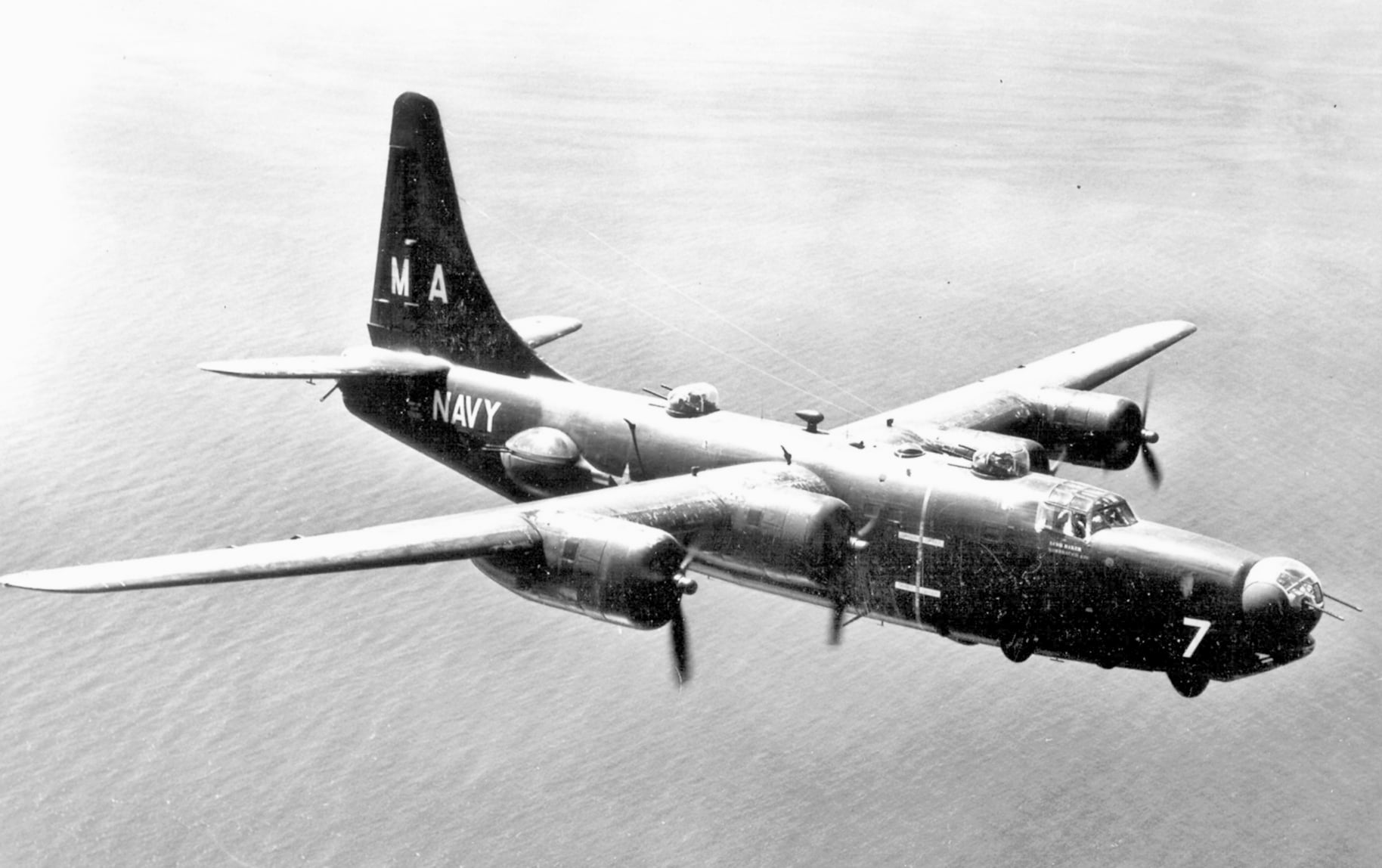
At 10:31 Greenwich time on 8 April 1950, a United States Navy Privateer lifted off from Wiesbaden and turned for the Baltic. Ten men were aboard. None of them came back, and no trace of any of them has ever been found.
The aircraft was called Turbulent Turtle. Nobody called it a spy plane in public, because in April 1950 that word was not yet in general circulation and the mission it was flying did not officially exist.
It was the first shootdown of the Cold War to become public, and the argument about what happened has never been settled.
Datos rápidos
Fecha: 8 April 1950
Aeronave: Consolidated PB4Y-2 Privateer, Bureau Number 59645, nicknamed Turbulent Turtle
Unidad: Patrol Squadron 26 (VP-26), Detachment A
Salido: Wiesbaden, West Germany, at 10:31 GMT
Misión: electronic reconnaissance under the Special Electronic Search Project
Interceptado por: four Soviet Lavochkin La-11 fighters, NATO reporting name Fang
Dónde: over the Baltic near Liepāja, Latvia. Washington said over the open sea; Moscow said 21 km inside Soviet territory
Multitud: ten, all lost. Declared missing on 9 April 1950
Recuperado: two unmanned life rafts and some wreckage. No crew, dead or alive
Significado: the first publicised shootdown of the Cold War
What a Privateer was
The PB4Y-2 was the Navy’s own reworking of the B-24 Liberator: same four engines, same long slender wing, but with a single towering vertical fin instead of the Liberator’s twin tails, and a fuselage stretched for the long over-water patrols the Navy actually flew.
By 1950 a handful had been fitted out for something else entirely. Packed with receivers and recorders, they flew along the edges of Soviet territory to provoke radar and radio activity that could then be catalogued. The programme was called the Special Electronic Search Project. The aircraft were, in every meaningful sense, the first generation of electronic spy planes.
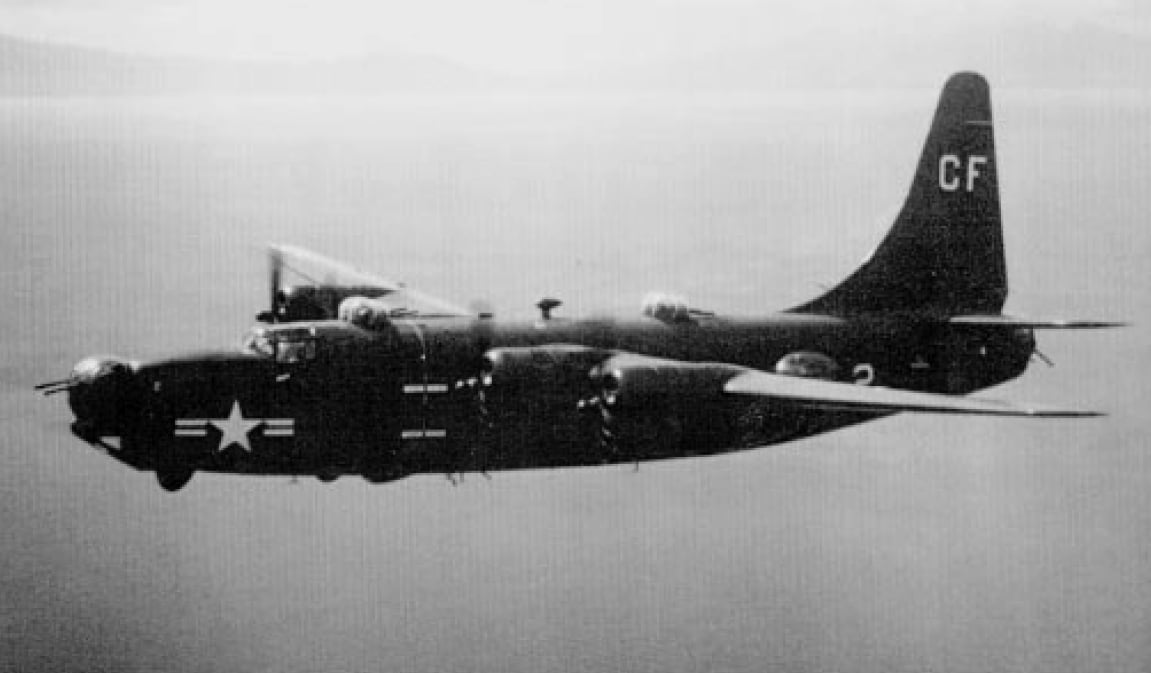
The risk was understood and accepted. Flying deliberately close to a hostile border to see what switches on is an inherently provocative act, and in 1950 the rules for what happened next had not been written by anyone.
Two irreconcilable accounts
What is agreed: four La-11s intercepted the Privateer, and shooting occurred.
Everything else splits along national lines and has stayed split for three quarters of a century. The Soviet note of 11 April described a B-29 type aircraft that had penetrated 21 kilometres into Soviet territory. The American reply, delivered in Moscow by Admiral Alan G. Kirk on 18 April, rejected that outright.
The note also recorded something revealing: the Soviet government had acknowledged that one of its fighters fired on an American aircraft that day at 5:30 p.m. Moscow time. The dispute was therefore never about whether Soviet pilots shot at an American aeroplane. It was about where, and at what.
By 5 May the exchange had curdled into something close to open contempt, with Washington accusing Moscow of refusing to investigate its own account.
No indemnity was paid. No investigation satisfied anybody. The notes stopped.
The PB4Y-2 Privateer and the long, largely forgotten career of the Navy’s Liberator derivative.
What the Russians said, forty years later
The most useful information arrived after the Soviet Union did not. In the 1990s American investigators gained access to Soviet documents and, remarkably, to surviving La-11 pilots who had flown the interception.
Their account was that after being fired on, the Privateer dived into cloud and they lost sight of it. They did not watch it hit the water. That is entirely plausible for a piston fighter in 1950 Baltic weather, and it is also exactly what you would say if you did not know.
Nothing in those files confirmed the fate of the ten men. The recovery of two empty life rafts suggests at least some of the crew had time to act. What happened after that is the part that has never been answered, and it is the reason the families spent decades asking.
The pattern that started here
What makes 8 April 1950 worth remembering is not that it was unique. It is that it was first, and that it established the template.
Over the following fifteen years the same sequence repeated across the Baltic, the Sea of Japan, the Barents Sea and the Black Sea: an American reconnaissance aircraft near a border, an interception, a shootdown, two incompatible official accounts, and crews who were never recovered. Dozens of American airmen were lost that way, and for decades their missions could not be publicly described because the missions were classified.
The Privateer’s crew were the first. Their aircraft went into the Baltic carrying equipment nobody was allowed to mention, on a flight the United States described as a routine patrol and the Soviet Union described as an intrusion, and the argument outlived the country that started it.
The sole airworthy PB4Y-2 Privateer left in the world, arriving at Oshkosh.
The Consolidated PB4Y-2 Privateer in detail.
Sources: United States diplomatic notes of 18 April and 5 May 1950 (Department of State Bulletin, via the Avalon Project at Yale Law School), U.S. Naval Institute Proceedings and Naval History, Naval Historical Foundation, National Security Agency cryptologic histories, Aviation Safety Network.
0 Comments