
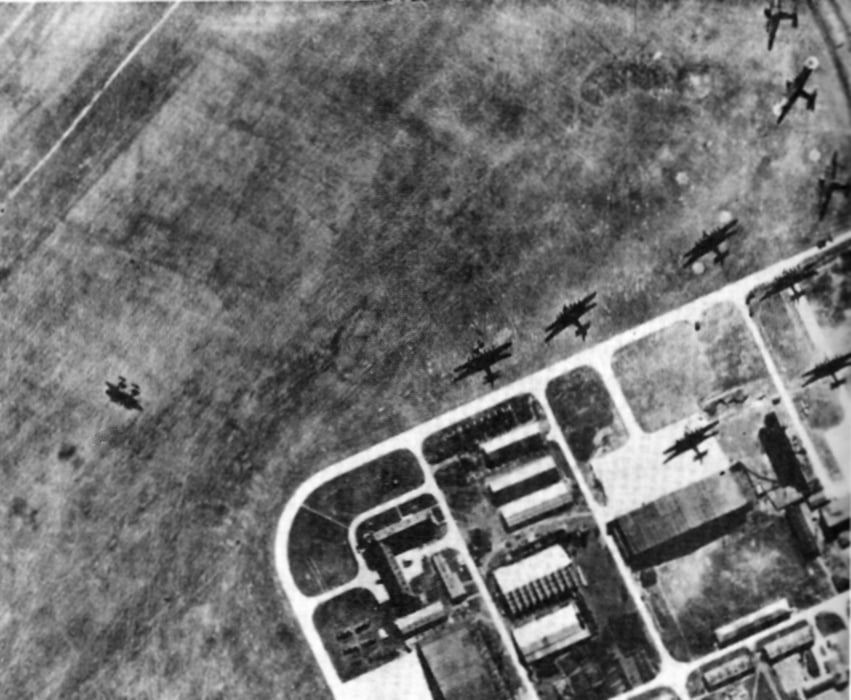
The Messerschmitt Me 321 Gigant could carry an 88 mm gun and its tractor, or a medium tank, or two hundred equipped soldiers. Its cargo hold was deliberately sized to match a German railway flatcar, so that anything which could travel by rail could be flown instead.
It was also a glider, which meant somebody had to get it into the air. The Luftwaffe’s first answer was to tie it to three Bf 110s and have them take off together in formation.
The second answer was to bolt two bombers together and put a fifth engine in the middle.
Datos rápidos
| Aeronave | Heinkel He 111Z Zwilling (Twin), heavy glider tug |
| Configuración | Two He 111 airframes joined by a new centre wing in two 6.15 m sections |
| Motores | Five Junkers Jumo 211F, about 1,300 hp each |
| Multitud | Seven, split across both fuselages; flight controls in the port fuselage only |
| Combustible | 8,570 litres internal, plus four 600-litre drop tanks |
| Towing capability | A Go 242 or Me 321 for up to 10 hours at cruise |
| Take-off assistance | Jettisonable rocket pods, two per fuselage and one per wing, adding about 500 kg |
| Tested | Rechlin, 1941 |
| Numbers built | Disputed. Accounts give four, five and ten in different places |
| Destino | One shot down over France on 14 March 1944; eight destroyed during 1944 |
The problem it was invented to solve
The Me 321 first flew on 25 February 1941, towed by a Junkers Ju 90 and carrying three tonnes of ballast. Messerschmitt test pilot Karl Baur reported that the controls were heavy and the responses sluggish, which for an aircraft with a 55-metre wingspan and no engines is not a surprise.
The Ju 90 was not powerful enough to tow it reliably. So the Luftwaffe adopted the Troikaschlepp: three Bf 110 heavy fighters, taking off in a vee, all attached to one glider, often with rocket-assisted take-off units fitted as well.
Read that sentence again. Three twin-engined fighters, in close formation, at take-off speed, on the end of ropes, with solid rockets burning. If one rocket failed, or one pilot drifted, everything in the formation was in trouble at once.
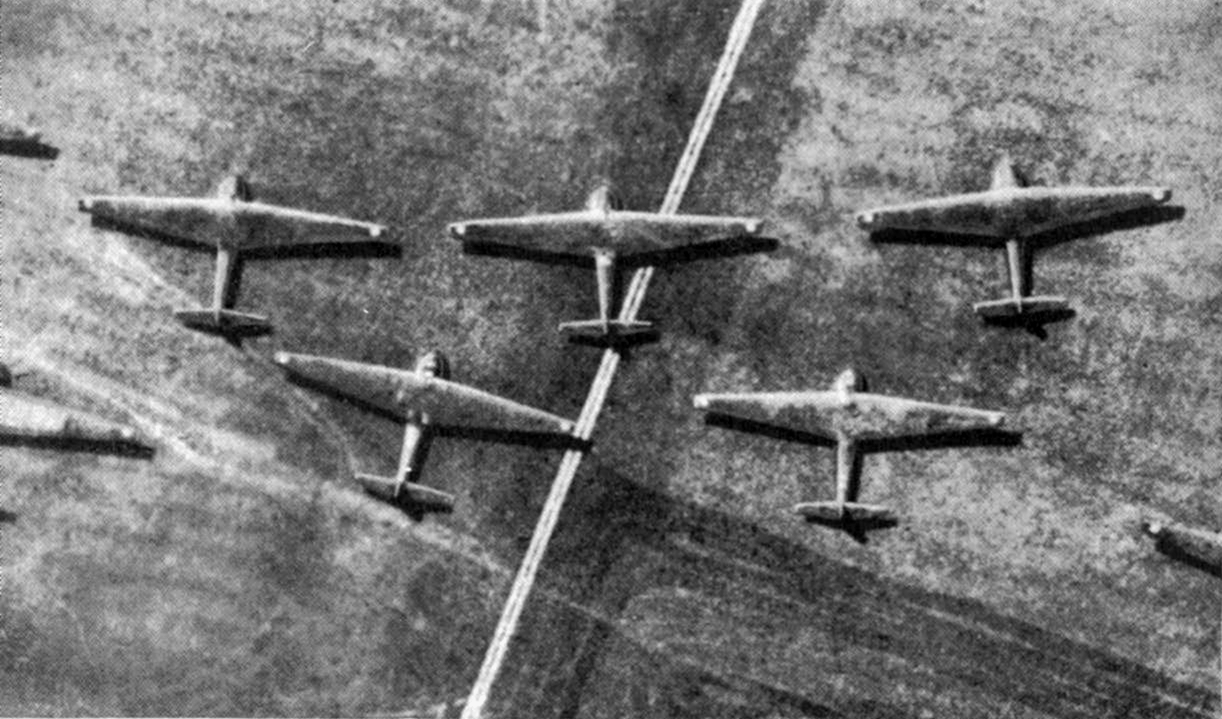
There is a well-known account of a 1941 accident at Leipheim in which the tow aircraft collided and everyone aboard all four aircraft was killed, 129 people, which would have made it the deadliest aviation accident in the world at that point. It is worth being careful with this one.
The claim rests on a single secondary source and a paper-model website. It may well be true. It is repeated everywhere as though it were settled, and it is not.
What is not in doubt is that the Troikaschlepp frightened the people responsible for it. Ernst Udet asked Ernst Heinkel to find a better way of getting a Gigant airborne.
Heinkel’s answer
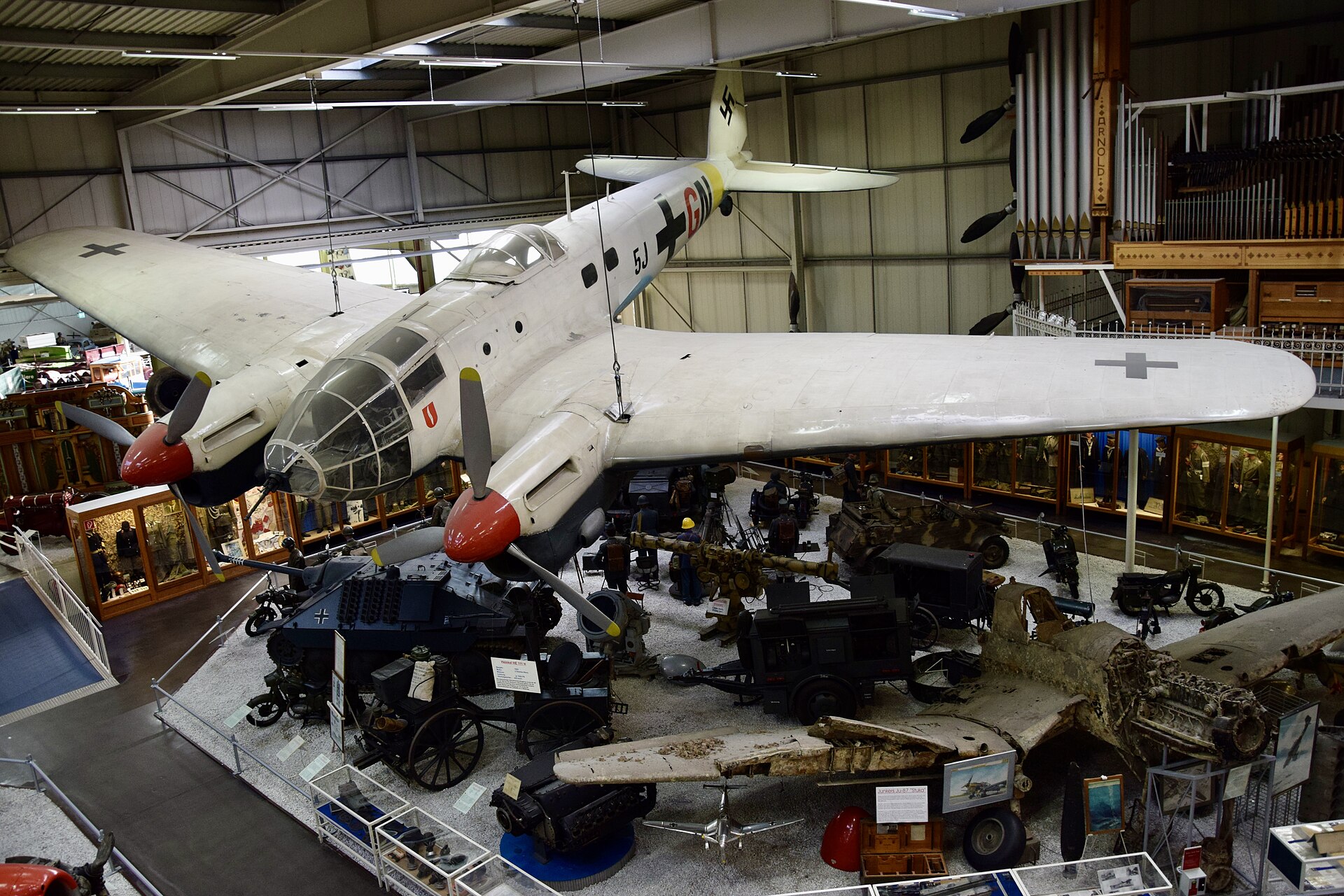
Heinkel’s solution has the brutal simplicity of a wartime engineering decision. Take two He 111 H-6 bombers off the line. Join them with a new centre wing section, built in two 6.15-metre pieces. Put a fifth Jumo 211F in the middle of it.
The result had five engines, two fuselages, a crew of seven and a total internal fuel load of 8,570 litres, extendable with four 600-litre drop tanks. It could tow a loaded Go 242 or an Me 321 for up to ten hours, and it could stay in the air with the three central engines shut down entirely.
The crew arrangement is the detail that sticks. Pilot, first mechanic, radio operator and a gunner in the left-hand fuselage; observer, second mechanic and a gunner in the right. The flight controls existed only on the left. If you were sitting in the starboard cockpit of an He 111Z, you were looking out of a bomber’s nose at an aeroplane you could not fly.
Tested well. Used barely.
Trials at Rechlin in 1941 went well and the pilots rated the aircraft highly. Then the war declined to cooperate.
The Zwilling was earmarked for Operation Herkules, the 1942 invasion of Malta, which was abandoned in part because there were not enough tugs. It was considered for a projected airborne assault on Astrakhan and Baku, which never happened. It was sent towards Stalingrad to help relieve Sixth Army, and by the time the gliders reached the front there were no suitable airfields left, so they were sent home again.
What it actually did was less dramatic: hauling equipment and people out of the Caucasus in 1943, and an attempt to reinforce Sicily. On 14 March 1944 RAF fighters caught one over France while it was towing a Go 242. Eight more were destroyed in the air or on the ground during 1944. A bomber-missile version and a long-range reconnaissance version were both drawn for 1944 and neither was built.
Nobody knows how many there were
Here is the strangest thing about an aircraft this distinctive: there is no agreed production figure.
Four, ten, five. Those numbers appear within a few lines of each other and nobody reconciles them. The figure of twelve, which circulates widely online, does not appear in that description at all.
It is a useful reminder about late-war German aviation records generally. The programmes that mattered are documented. The oddities, the one-off conversions and the tools built to solve a single problem, frequently are not.
What we can say is that the He 111Z was a sensible answer to a genuinely awful problem, that the crews who flew it liked it, and that by the time it existed the operations it had been built for had all been cancelled. That is about as German-1943 a story as aviation offers.
Preguntas frecuentes
What was the Heinkel He 111Z Zwilling?
Why did Germany build a twin-fuselage bomber?
Where did the pilot sit in an He 111Z?
Could the He 111Z actually tow the Me 321?
How many He 111Z Zwillings were built?
Did the He 111Z see combat?
Were there other versions planned?
Was the Troikaschlepp really as dangerous as it sounds?
Sources: Wikipedia, Heinz J. Nowarra, Die Deutsche Luftruestung 1933–1945; Staerck and Sinnott, Luftwaffe: The Allied Intelligence Files; Mrazek, Fighting Gliders of World War II.
0 Comments