

Every airshow demonstration you have ever watched was flown to a script written at sea level and then adjusted. At Colorado Springs this weekend, the adjustment is large.
The Pikes Peak Regional Airshow is running today, the second of two days at Colorado Springs Airport, with the US Air Force F-35A Lightning II Demonstration Team and the US Navy Rhino Demo Team on the bill alongside a deep field of Second World War aircraft from the National Museum of World War II Aviation.
The airport sits at roughly 6,200 feet above sea level. On a warm September afternoon on the Front Range, the air the aeroplanes are actually flying in behaves like air several thousand feet higher still — and every manoeuvre in the display has to account for it.
Datos rápidos
Evento: Pikes Peak Regional Airshow, 19 and 20 September 2026
Venue: Colorado Springs Airport, field elevation roughly 6,200 ft
Military demos: USAF F-35A Lightning II Demonstration Team and the US Navy Rhino (F/A-18 Super Hornet) Demonstration Team
Also flying: USAF Wings of Blue parachute team, and a C-130 fitted with the Modular Airborne Fire Fighting System
Warbirds: Aircraft billed include the Grumman F7F Tigercat, B-25 Mitchell, SBD Dauntless, F4U Corsair and a Skyraider
Partner: National Museum of World War II Aviation, with static and interactive displays on the flight line
Timings: Gates from 8:30 a.m.; the flying programme runs late morning into mid-afternoon
Parking: General parking free; admission ticketed
What Thin Air Actually Does
Density altitude is the altitude the air thinks it is at, once you account for temperature and pressure rather than just height. Warm air is less dense than cold air, so a hot day at a high field produces air that behaves like air from considerably higher up. Colorado Springs, in September, routinely delivers this.
Thin air costs an aeroplane on three fronts at once, and they compound. The wing generates less lift at a given indicated speed, so the true speed through the air is higher for the same feel in the cockpit. The engine ingests less mass per second, so it makes less thrust or power. And the propeller, if there is one, has less to bite on.
The practical consequences for a display are straightforward and unforgiving. Take-off runs lengthen. Climb rates fall. Turn radii grow, because a turn at a higher true airspeed at the same bank angle simply takes more sky. A loop that fits neatly inside the display box at sea level does not fit here.
The F-35A Demonstration Team's routine flown earlier this year at Luke Air Force Base in Arizona, for a sense of what the display looks like before the altitude correction.
How Display Teams Handle It
Military demonstration teams fly to approved show profiles with defined minimum altitudes and manoeuvre entry parameters, and those profiles come in variants. A high-altitude version of a routine raises entry speeds and heights, opens up the geometry, and in some cases substitutes manoeuvres outright.
None of this is visible from the crowd line, which is rather the point. The display is supposed to look identical. The work that makes it look identical happens in the briefing.
The F-35A is comparatively well-placed for the problem. A single large engine with a great deal of thrust and a jet with a relatively low wing loading for its weight gives the demonstration pilot margin to trade. A heavily loaded piston warbird has far less room to manoeuvre, literally.

The Man Flying the F-35A
The F-35A Demonstration Team has a new commander this season. Maj. Sean “Rambo” Loughlin, an F-35A pilot from the 388th Fighter Wing's 421st Fighter Squadron at Hill Air Force Base, was certified in the role in February 2026 by the commander of Air Combat Command.
He has around 1,200 flight hours and has flown the T-6, T-1A, T-38C, F-15E and A-10C before the F-35A. He also spent a season as a safety observer for the previous demonstration pilot, which is how most demo pilots decide they want the job.
He leads a travelling team of eleven maintainers and support personnel, scheduled for twenty airshows across the United States between March and November. His stated priorities are, in order, the people, the equipment, and the team's reputation.
A Very Colorado Line-Up
The supporting programme reads like a list of things Colorado actually cares about. The USAF Wings of Blue parachute team comes from the Air Force Academy just up the road. A C-130 fitted with the Modular Airborne Fire Fighting System is on the bill, which in a state that watches its fire season closely is less an airshow act than a public utility demonstration.
The show is also a fundraiser. Organisers say all proceeds go to three local museums: the National Museum of World War II Aviation, the Peterson Air and Space Museum and the 4th Infantry Division Museum. The last edition, in 2024, drew more than 30,000 people.
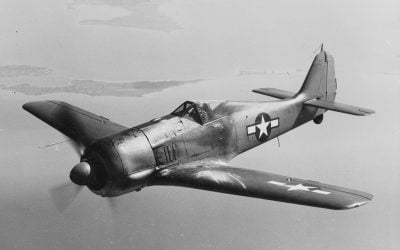
The warbird contingent, run in partnership with the National Museum of World War II Aviation, is unusually deep for a regional show. The Grumman F7F Tigercat is the standout rarity — a twin-engined naval fighter that arrived too late for the war it was designed for and survives today in very small numbers.
Alongside it the billing includes a B-25 Mitchell, an SBD Dauntless, a Corsair and a Skyraider, with the museum running static and interactive displays along the flight line between flying slots.
Worth Knowing Before You Go
Gates open at 8:30 in the morning and the flying programme runs from late morning into the middle of the afternoon. General parking is free; admission is ticketed, and several seating tiers had sold out in advance.
Bring ear protection for small children. This is standard advice at every airshow and it is routinely ignored until the first jet pass, at which point it is too late to do anything about it.
And if a manoeuvre looks slightly wider or gentler than the same team's routine at a coastal show, that is not the pilot being cautious. That is physics, correctly respected.
Sources: Pikes Peak Regional Airshow official performer listing; Hill Air Force Base and 388th Fighter Wing public affairs, with quotes from Maj. Sean Loughlin; KRDO; Springs Daily; Defense Visual Information Distribution Service.

0 Comments