
GE Aerospace says it is preparing to assemble the first XA102, the adaptive cycle engine it is developing for the US Air Force’s next fighter. In an announcement on 15 September, the company said it is buying hardware from suppliers and testing subcomponents ahead of building the first test engine under the Next Generation Adaptive Propulsion (NGAP) programme.
“Our team is working with suppliers to procure hardware and test subcomponents as we prepare for assembly of the first XA102 test asset.”
Jorge Perez, general manager of Edison Works Advanced Combat Engines, GE Aerospace
Datos rápidos
- Motor: GE Aerospace XA102 adaptive cycle engine
- Programa: US Air Force Next Generation Adaptive Propulsion (NGAP)
- Estado: Hardware procurement and subcomponent testing before assembly of the first test engine (announced 15 September 2026)
- Milestone passed: Assembly Readiness Review, May 2026
- Competitor: Pratt & Whitney XA103, which also passed its Assembly Readiness Review in May 2026
- Aeronave: Intended for the Boeing F-47; the first F-47 is expected to fly in 2028 with an interim engine
- Ground tests: Expected in the late 2020s
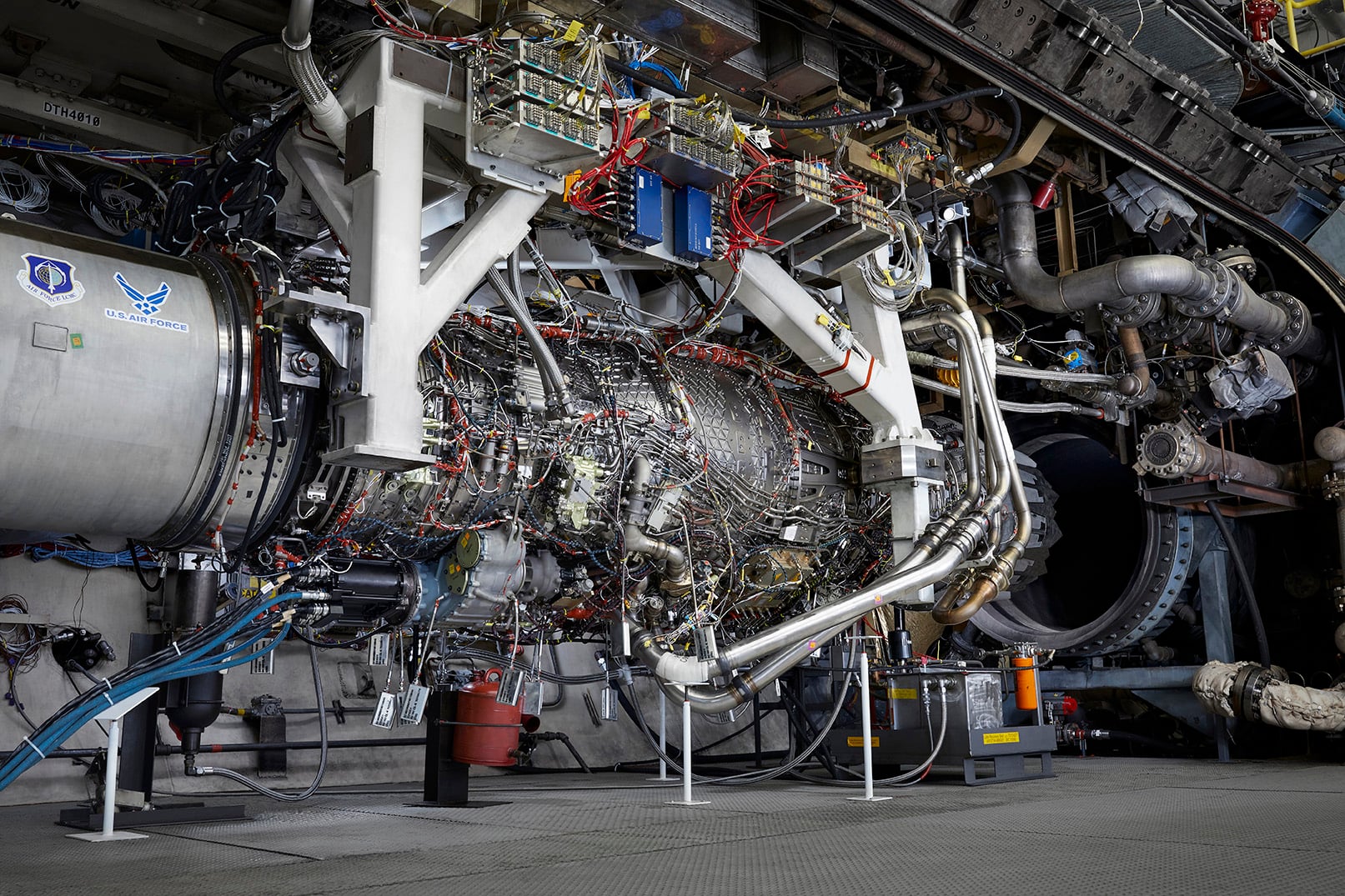
What an Adaptive Cycle Engine Does
Every jet engine is a compromise. A low-bypass turbofan, the kind in today’s fighters, gives plenty of thrust but burns fuel quickly; a high-bypass engine is efficient but cannot deliver combat power. An adaptive cycle engine adds a third stream of air that can be opened or closed in flight. Closed down, more air goes through the core for maximum thrust in combat. Opened up, the engine behaves more like a high-bypass design and saves fuel for range and loiter.
The third stream also provides a large flow of relatively cool air for thermal management, which matters more on every new fighter: radars, sensors, electronic warfare systems and future directed-energy weapons all produce heat that has to go somewhere. GE describes the technology as offering greater range and substantially more thermal-management capability than today’s combat engines.
Built on the XA100
The XA102 grows out of GE’s XA100, built under the earlier Adaptive Engine Transition Program. The first XA100 ran in GE’s Evendale altitude test cell from December 2020 to May 2021, and GE reported a 10 percent thrust increase and 25 percent better fuel efficiency than current engines. It was offered as a re-engining option for the F-35, which the Pentagon ultimately decided against in favour of an upgrade of the existing F135.
“This was the most heavily instrumented engine test in both GE and U.S. Air Force history.”
David Tweedie, then GE Edison Works general manager for advanced combat engines, on the first XA100 test in 2021
GE says the XA102 is its first engine to use model-based definition at every stage, from design through manufacturing and inspection, replacing traditional two-dimensional drawings. The company says the approach shortens development time and reduces cost.
The Race With Pratt & Whitney
GE is not alone. Pratt & Whitney, maker of the F-22’s F119 and the F-35’s F135, is building the rival XA103 under the same programme. Both engines passed critical design reviews in 2023 and 2024 and detailed design reviews in early 2025, and each company received a contract modification worth up to about $3.5 billion for prototype work in 2025. Both then completed Assembly Readiness Reviews in May 2026, and Pratt says testing is expected in the late 2020s. The Air Force has not yet chosen which engine will power the F-47.
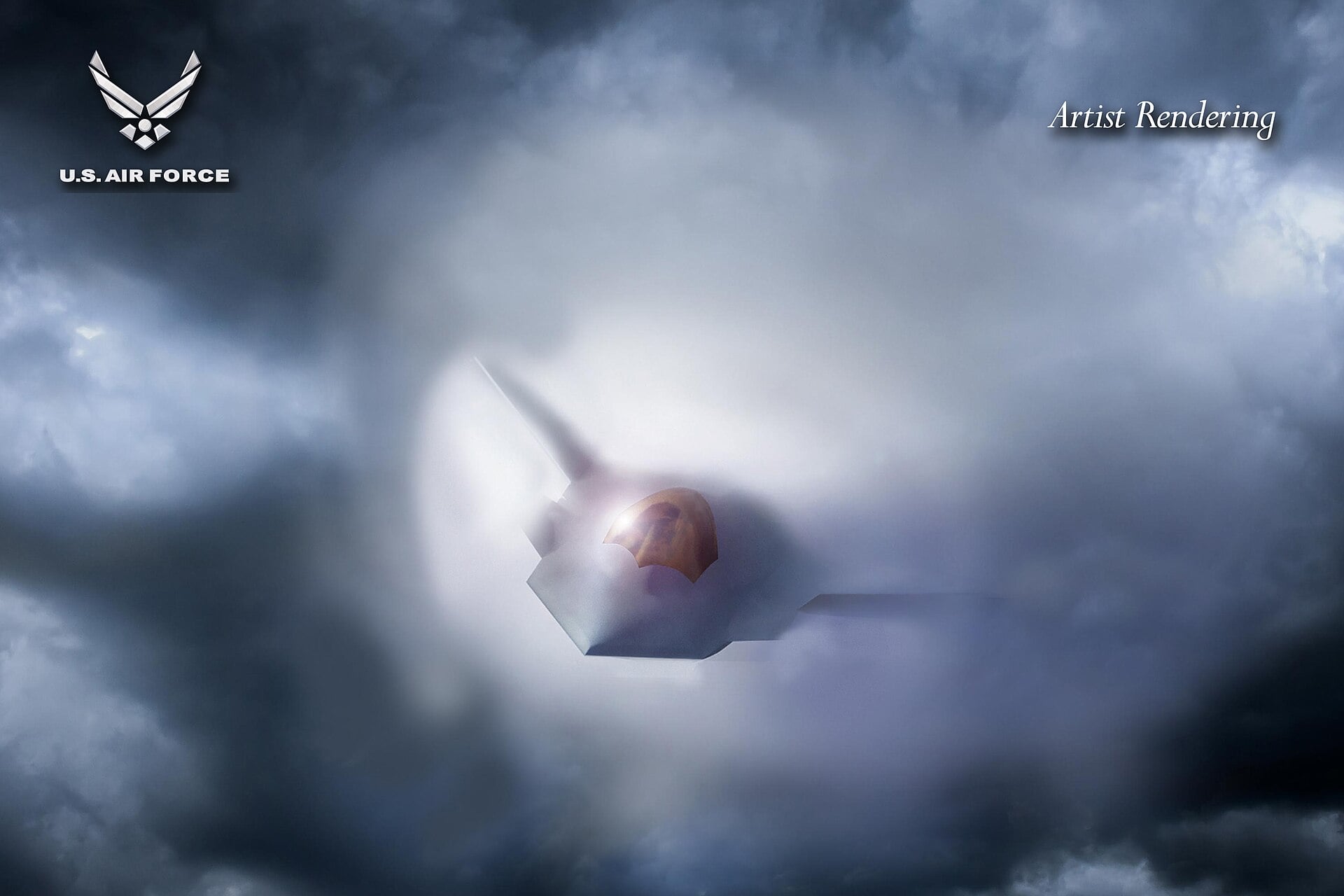
What the Viral Post Gets Wrong
A widely shared Instagram summary of the GE news is broadly accurate but implies the F-47 will fly on one of these engines in 2028. It will not. Boeing won the F-47 contract on 21 March 2025, and the first aircraft is now being built for a first flight in 2028, but the Air Force expects the production NGAP engine only around 2030. General Dale White, the Air Force’s director of critical major weapon systems programmes, has said the first flight will probably use an interim engine, an early non-production NGAP configuration or another propulsion arrangement.
The post also says an NGAD prototype had been flying in secret since 2020. That part is confirmed: Air Force leaders have said experimental X-plane demonstrators began flying in 2020. Its claim that three had flown by 2023 is not something we could verify from official statements. As our earlier coverage of the F-47’s timeline y its industrial base sets out, the engine is only one of the programme’s schedule risks.
Preguntas frecuentes
What is the GE XA102?
What is an adaptive cycle engine?
Will the F-47 fly with the XA102 engine?
What is the difference between the XA102 and XA103?
How is the XA102 related to the XA100?
When did Boeing win the F-47 contract?
Sources: GE Aerospace announcement on the XA102 (15 September 2026, via Defence Industry Europe, AviationPros and FlightGlobal); GE Aerospace, XA100 test release (May 2021); The Aviationist (May 2026, NGAP Assembly Readiness Reviews); Army Recognition (F-47 interim engine, quoting Gen. Dale White); Janes (NGAP contract modifications); Wikipedia (Boeing F-47); US Air Force imagery via Wikimedia Commons.


0 Comments