
In the mid-1950s Dassault built a small strike jet that nobody wanted. The French Air Force was not interested, and neither were the NATO air forces it had been pitched to. Then the French Navy took a look at a bigger, more powerful version, and France got its first home-grown carrier strike jet.
El Dassault Étendard IV flew from the decks of the carriers Clemenceau and Foch for nearly three decades, and its reconnaissance version kept going until 2000. It also became the parent of a far more famous aircraft, the Super Étendard. This is the story of the naval jet that was almost never built.
Datos rápidos
- Role: Carrier-based strike fighter and reconnaissance aircraft
- Fabricante: Dassault Aviation
- Primer vuelo: 24 July 1956 (naval prototype)
- Construido: 90: 69 Étendard IVM strike fighters and 21 Étendard IVP reconnaissance jets
- Motor: One SNECMA Atar turbojet without afterburner
- Carriers: Clemenceau and Foch
- Jubilado: IVM in July 1991; IVP on 27 July 2000
A private venture the Navy wanted
The Étendard grew out of lessons from the Korean War. In the early 1950s French manufacturers were offered two specifications, one for the French Air Force and one for NATO's air forces. Dassault answered both with a single basic design in two versions, the Étendard II and the lighter Étendard VI. Prototypes of both flew, but neither found buyers.
Dassault did not give up. As a private venture it had been working on a larger, more powerful variant, originally called the Mystère XXIV. The French Navy showed interest, so Dassault built a navalised prototype with new navigation and radar systems, folding wings, an arrester hook and a strengthened fuselage. It flew on 24 July 1956, and after trials with five pre-production aircraft the Navy ordered 69 Étendard IVM strike fighters and 21 Étendard IVP reconnaissance aircraft.
Jumpseat and Aerobuzz on the Étendard IVM and Super Étendard, the jets that shaped French naval aviation.
Small, nimble and subsonic
The Étendard was a lightweight attack jet with a sharply swept wing, double-slotted flaps, spoilers and leading-edge droops for slow carrier approaches, and wings that folded to save space below deck. It used the same SNECMA Atar family of engine as the Air Force's Mirage III, but without the afterburner. That kept it transonic: it could only exceed the speed of sound in a dive. Pilots valued it for its manoeuvrability.
It carried two 30 mm DEFA cannon and four underwing hardpoints for bombs, rockets, air-to-surface missiles and Sidewinder or Magic air-to-air missiles.
A compact Dassault Aida radar sat in the nose, together with a Swedish-made Saab bombing computer for accuracy. A refuelling probe in the nose let one Étendard top up another, and the type could also serve as a buddy tanker.
Clemenceau, Foch and a long career
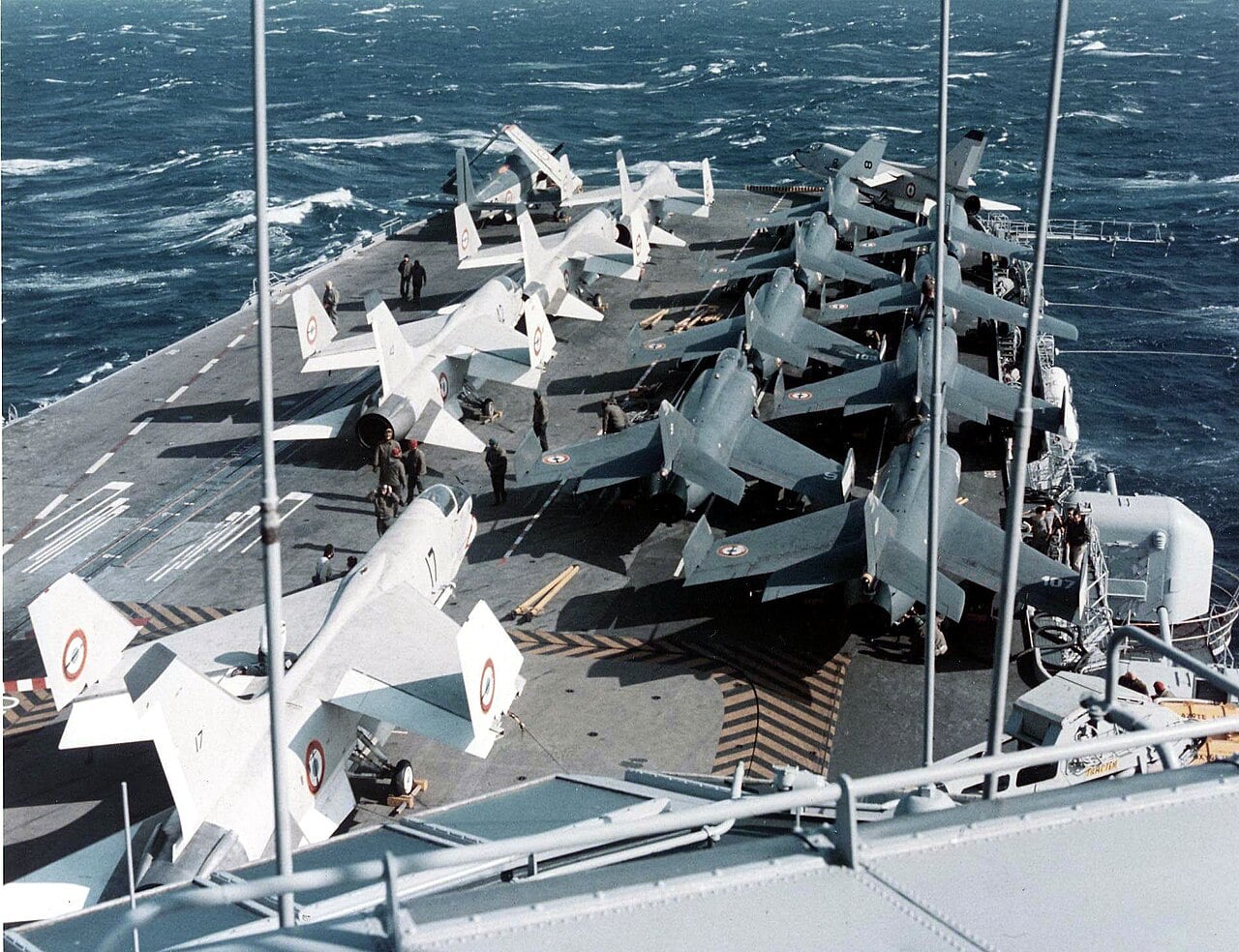
The French Navy received its first Étendards in December 1961, and in 1962 the type deployed for the first time aboard the newly built carriers Clemenceau and Foch. It shared their decks with the F-8 Crusader fighters bought from the United States and the Breguet Alizé anti-submarine aircraft.
The Navy's planned replacement was a navalised Jaguar SEPECAT, the Jaguar M. It never entered service. Dassault lobbied hard for an improved Étendard instead, and the Navy chose it: the Super Étendard, which went on to fame with Argentina in the Falklands War. The original kept flying alongside its successor, was withdrawn from front-line strike duties in 1987, and the last Étendard IVM fighters retired in July 1991 from the carrier training squadron 59S.
A short film of the Dassault Étendard IVM in French Navy service.
The reconnaissance Étendard IVP lasted longest. Its long nose held five OMERA cameras, with room in the belly for long-focus cameras in place of the guns, and its refuelling probe was fixed rather than retractable because the cameras left no space to stow it. The last IVPs were retired on 27 July 2000. Over its career the Étendard fleet reportedly flew some 180,000 hours and made about 25,300 carrier landings.
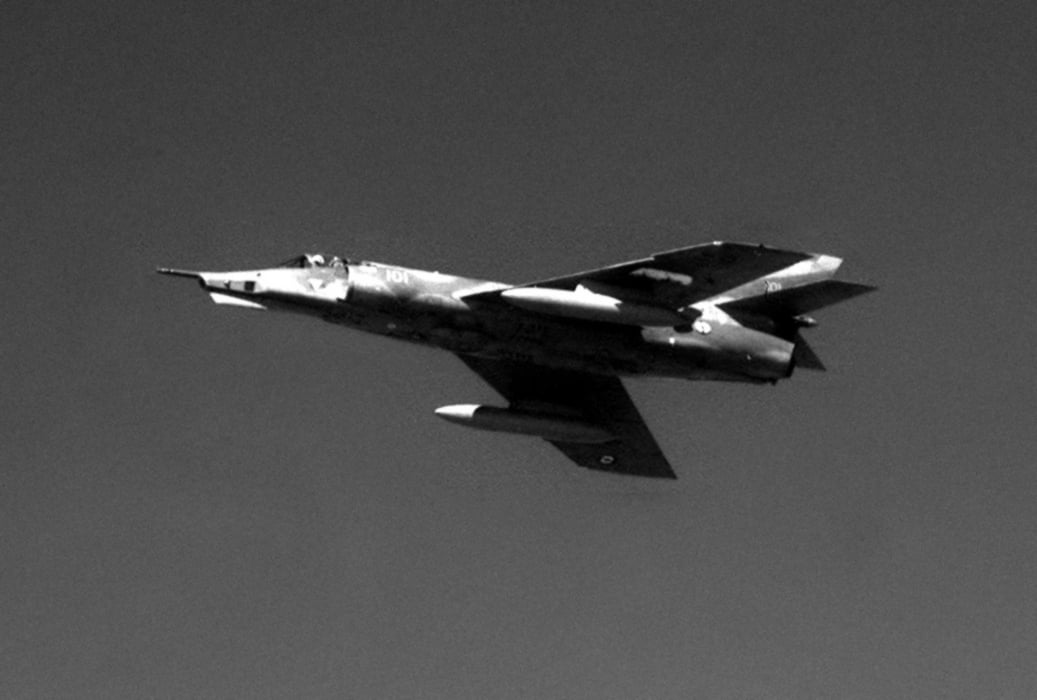
Not bad for a jet that started life as a design nobody had asked for.
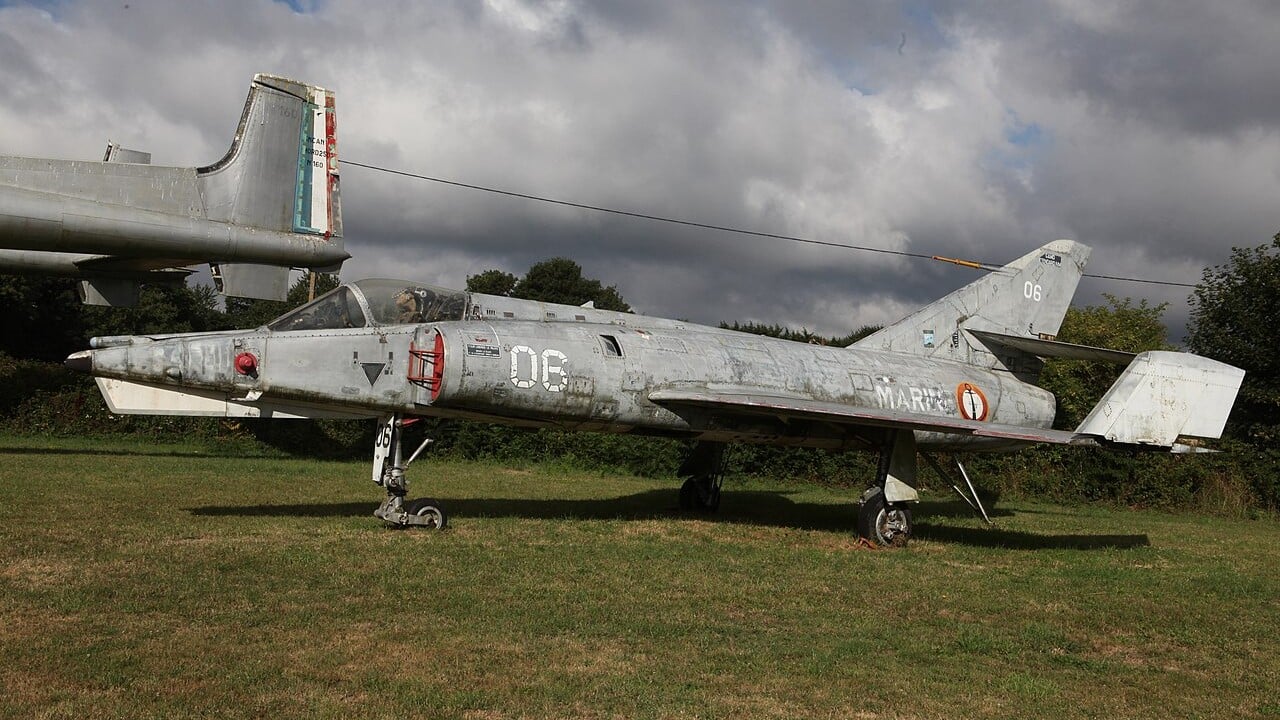
Preserved Étendards survive in French museums, among them the Étendard IVM of the Ailes Anciennes Armorique collection at Vannes shown at the top of this page.
Weapon Detective on the Étendard IV and Super Étendard as ship-killers.
Sources: Wikipedia (Dassault Étendard IV), MiGFlug Aircraft Encyclopedia
0 Comments