
On 10 January 1956, ground crews in Turkey and West Germany let go of the first nine of hundreds of giant plastic balloons. Each one carried a camera gondola about the size of a refrigerator. The cover story said they were studying the weather. In fact they were heading east, on the jet stream, straight across the Soviet Union and China.
This was Project Genetrix, known in Air Force paperwork as WS-119L. It was the first operational attempt by the United States to photograph the Soviet interior from balloons, months before the U-2 and long before spy satellites. It lasted less than a month, and it left behind a diplomatic mess, a handful of priceless photographs and one of the strangest footnotes of the space race.
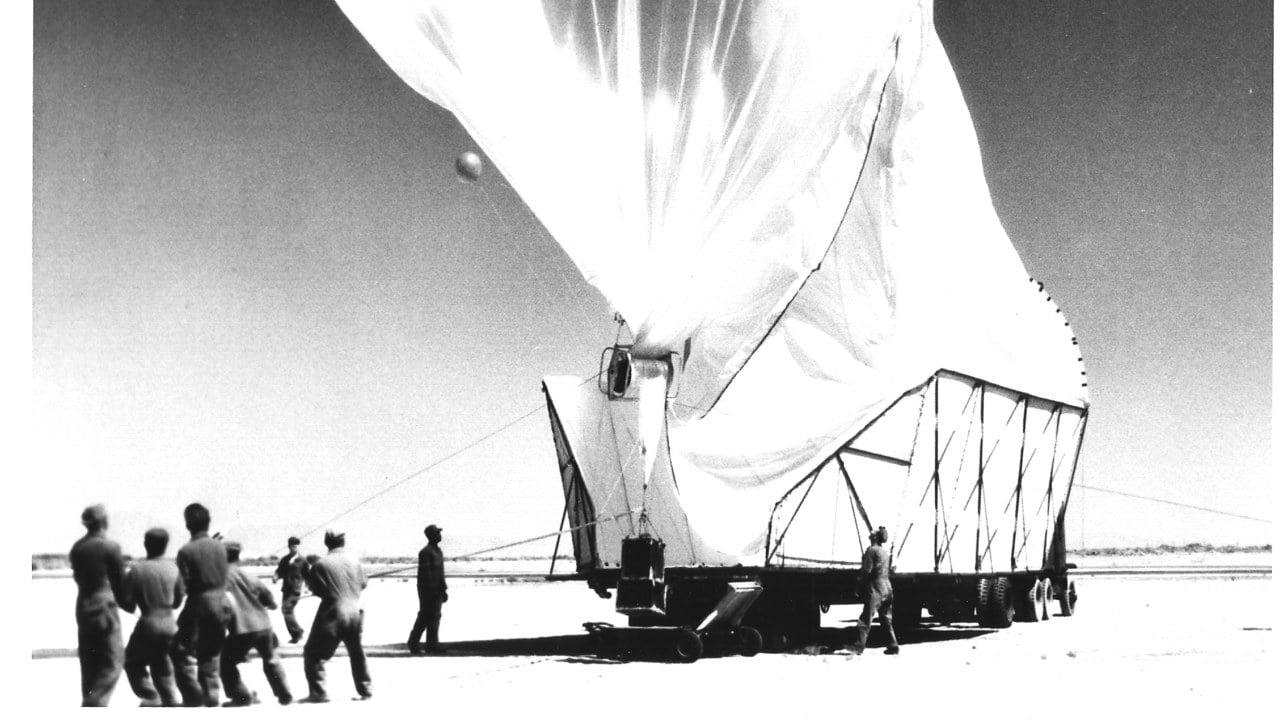
Header photo: a Project Moby Dick high-altitude balloon launch at Holloman Air Force Base around 1955, part of the US balloon programme that led to Genetrix. It is not a Genetrix launch.
Datos rápidos
- Programa: Project Genetrix (WS-119L), US Air Force with CIA and Navy involvement
- Launches: 10 January to 6 February 1956, about 448–516 balloons depending on the source
- Launch sites: Gardermoen (Norway), Evanton (Scotland), Oberpfaffenhofen and Giebelstadt (West Germany), Incirlik (Turkey)
- Carga útil: AN/DMQ-1 camera gondola under General Mills polyethylene balloons
- Recovery: Mid-air snatch by modified C-119s of the 456th Troop Carrier Wing over the Pacific
- Results: 44–54 gondolas recovered, 31–40 with usable photos
- Coverage: More than 1.1 million square miles of Soviet and Chinese territory
- Finalizado: 6 February 1956, after a Soviet protest note on 4 February
A camera on the wind
By the mid-1950s Washington knew almost nothing about what lay deep inside the Soviet Union. Aircraft could probe the edges, but the interior was out of reach. The Air Force’s answer, developed over several years under names such as Gopher, Grandson and Grayback, was to let the wind do the flying.
The balloons were built by the aeronautical division of General Mills. The largest type, the 128TT, swelled to about 39 metres across at altitude and could float for up to eight days. President Eisenhower approved the operation at the end of 1955, with the flights capped at 55,000 feet, well above the reach of any fighter of the day.
Underneath hung the AN/DMQ-1 gondola. Its main camera, with two angled lenses, fired at fixed intervals as the balloon drifted, while a second panoramic camera helped analysts work out where each frame had been taken. A photoelectric cell switched the cameras off in darkness. The “M” in the designation officially stood for meteorological equipment.

Catching a gondola in mid-air
Launching was the easy part. Getting the film back was the clever part. Once a balloon had crossed Asia and drifted out over the Pacific, a timer or radio command cut the gondola loose and it came down under a parachute. A beacon helped recovery aircraft find it.
Waiting were modified Fairchild C-119 Flying Boxcars of the 456th Troop Carrier Wing, operating from bases in Japan and Alaska. Trailing hooks from the open rear of the fuselage, a C-119 would fly over the descending parachute, snag its lines and winch the gondola aboard.
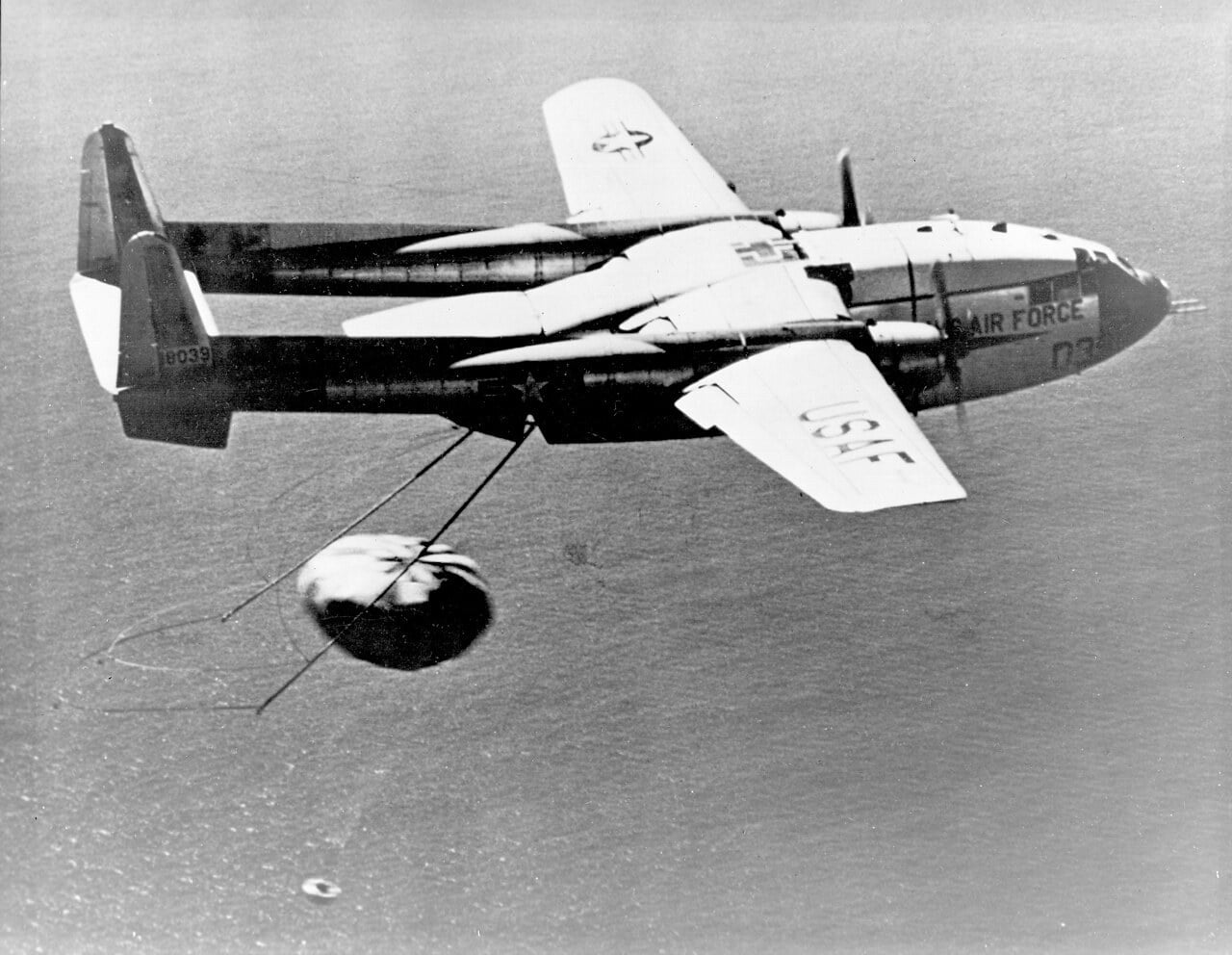
The technique outlived Genetrix by decades. In August 1960, a C-119J used the same trick to snatch the film capsule of Discoverer XIV in mid-air near Hawaii, the first mid-air recovery of a capsule returning from orbit and the opening act of America’s satellite spying era.
516 balloons, 27 days
Between 10 January and 6 February 1956, the balloons went up from five sites: Gardermoen in Norway, Evanton in Scotland, Oberpfaffenhofen and Giebelstadt in West Germany, and Incirlik in Turkey. The totals depend on whom you ask: Wikipedia gives 512 launches, StratoCat, The Space Review and a CIA history give 516, and Designation-Systems.net gives 448.
The results were disappointing. Hundreds of balloons were shot down, ran out of ballast or came down early. Soviet pilots learned that the balloons sank at dawn, as the gas cooled overnight, which brought them down within reach of MiG guns. Only 44 to 54 gondolas were recovered, depending on the source, and 31 to 40 of them produced usable pictures.
Those pictures still covered more than 1.1 million square miles of Soviet and Chinese territory, roughly 8 percent of the land mass, though much of the film showed nothing but cloud. One prize stood out: photographs of a huge new site near Dodonovo in Siberia, which analysts identified as a nuclear materials plant.
Moscow puts the evidence on show
The Soviets were not fooled. On 4 February 1956, the Soviet government handed the US Embassy in Moscow a note protesting the reconnaissance balloons, demanding that the flights stop and stating that some had been captured. Similar notes went to Turkey and West Germany.
Then Moscow put its trophies on display. Soviet officials laid out captured balloons, cameras, radios and parachutes in front of Soviet and Western journalists. An army officer walked the press through the hardware, all of it made in the USA, and warned that the balloons broke international law and could damage Soviet telephone lines. The message was clear: these gondolas carried reconnaissance cameras, not weather instruments.
British Pathé footage dated February 1956 of the Soviet press conference, apparently in Moscow, where officials displayed captured American balloons, cameras and parachutes.
In Washington, the enthusiasm drained away fast. On 6 February, Eisenhower told Secretary of State John Foster Dulles that the project should be suspended. Dulles’s own memorandum of the conversation, published in the State Department’s official Foreign Relations series, records his reply.
The launches stopped that day. On 8 February, the US reply to Moscow insisted the balloons had been meteorological, but promised to avoid launching more that might cross the Soviet Union. Eisenhower’s private verdict, as later quoted by the CIA, was blunt.
The film that flew to the Moon
Genetrix had one last, unintended passenger. Among the gondolas the Soviets recovered was American film designed to survive cold and radiation at high altitude. According to Wikipedia and the balloon historians at StratoCat, the Soviets reused stock from captured Genetrix gondolas in the camera of Luna 3.
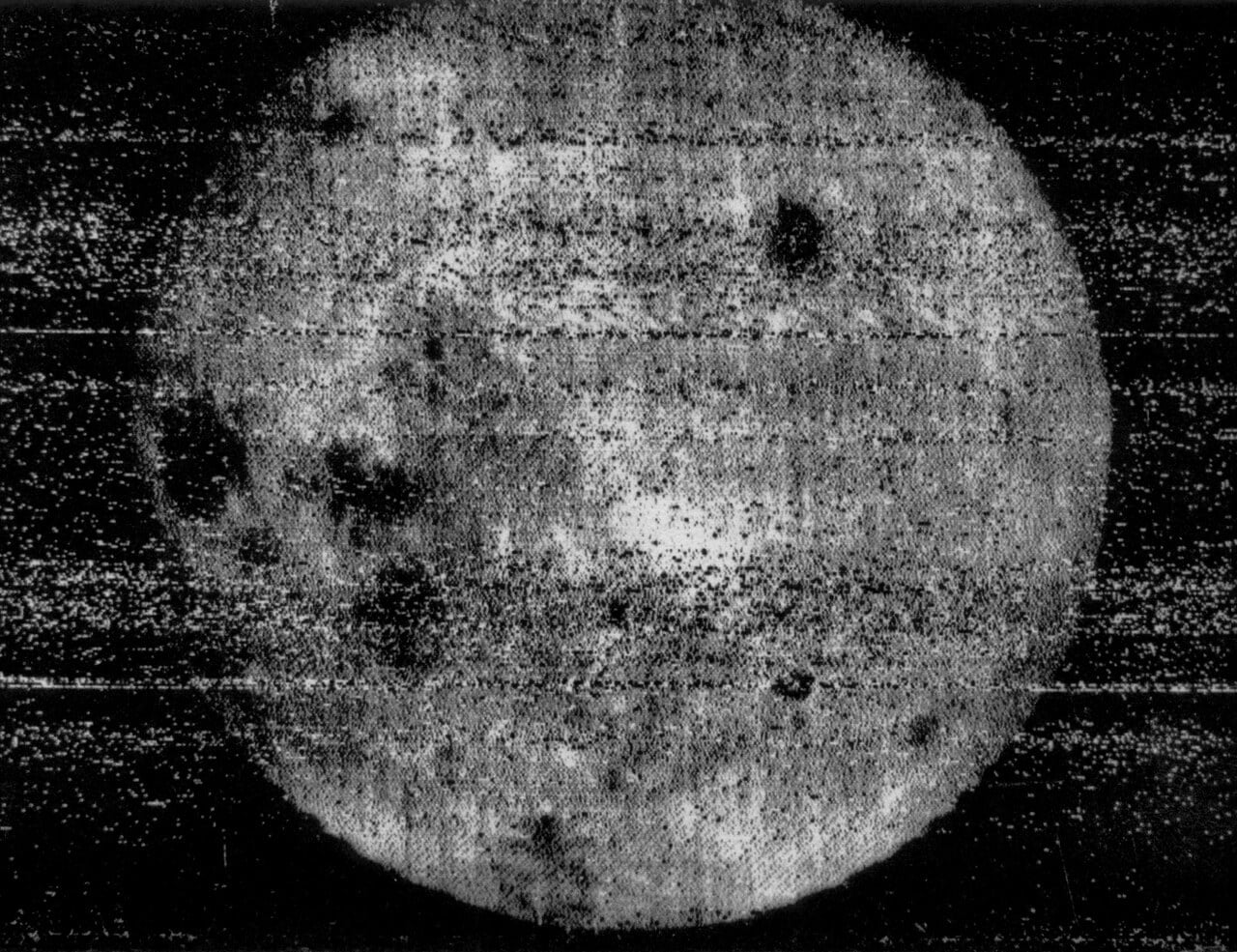
On 7 October 1959, Luna 3 looked back at the Moon and took the first photographs ever made of its far side. If the accounts are right, the first human view of the hidden half of the Moon was recorded on film that the US Air Force had sent over the Soviet Union for a very different purpose.
British Pathé’s 1959 newsreel on the first pictures of the far side of the Moon, taken by the Soviet probe Luna 3.
The Air Force tried balloons once more in 1958 with the higher-flying WS-461L, and that ended badly too. By then the U-2 had been crossing the Soviet Union since July 1956, flying exactly where its pilots aimed it, and the C-119s that had learned to catch falling gondolas were soon catching film from orbit.
Project Genetrix was a failure by almost every measure. But it proved that cameras could be sent over denied territory and their film brought home by aircraft, and that idea carried straight into the satellite reconnaissance programmes that followed.
Sources: Wikipedia (Project Genetrix), US State Department Office of the Historian (FRUS 1955–57, Vol. XXIV), Andreas Parsch / Designation-Systems.net, StratoCat, The Space Review (Dwayne A. Day), HistoryNet, CIA (via C&E Museum archive)
0 Comments