
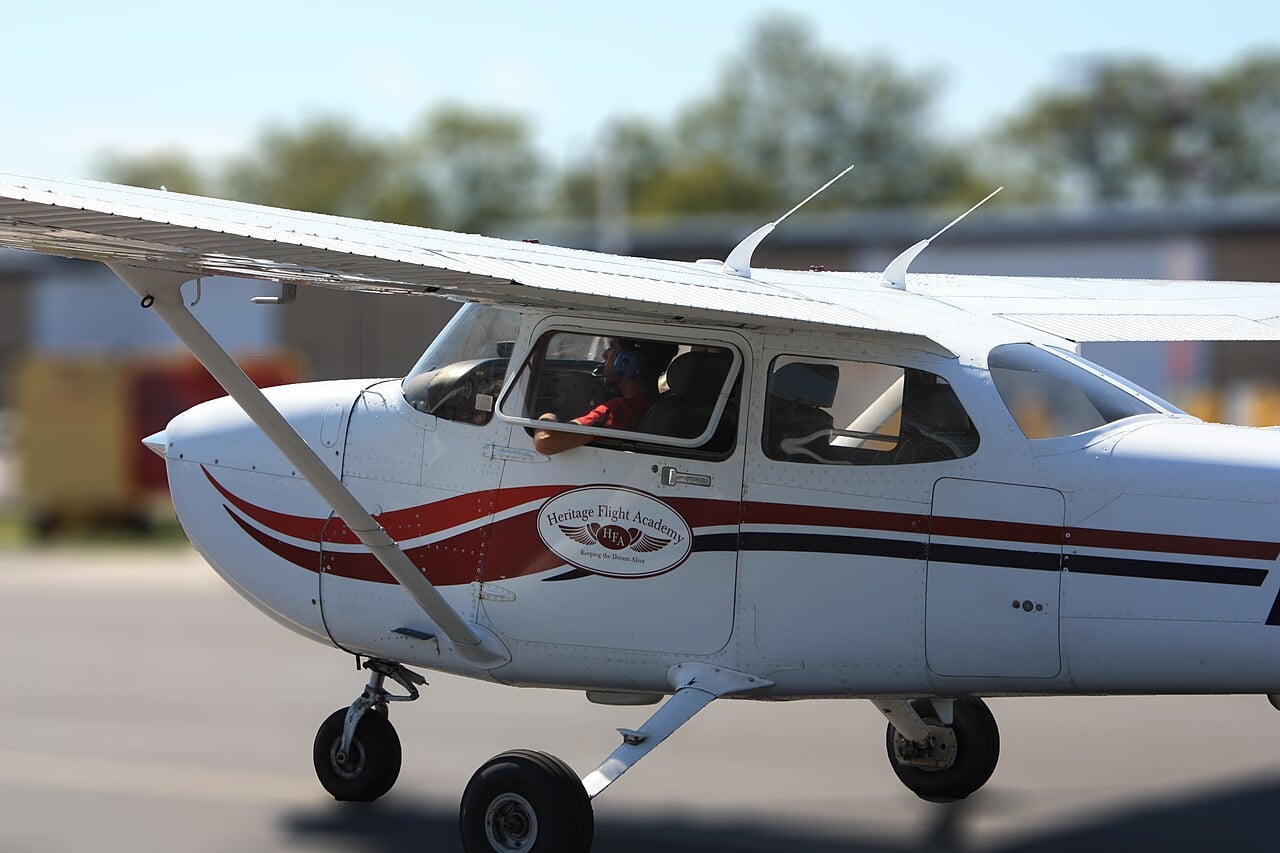
A Cessna 152 does not know what country it is in. The paperwork does. Two students can fly identical lessons in identical aircraft, one in Pietermaritzburg and one in Piła, and come home with licences that do completely different jobs.
Price comparisons of private pilot training usually stop at the hourly rate. This one goes further: what schools in nine countries actually publish, what those prices leave out, and the recognition rules that decide whether a bargain licence lets you fly where you live.
Datos rápidos
- FAA private pilot minimum: 40 hours; US average about 75 hours (FAA)
- EASA minimums: PPL(A) 45 hours; LAPL(A) 30 hours
- Cheapest full ICAO PPL found: South Africa, R120,000–230,000 (about $7,300–14,000)
- Cheapest EASA licence found: Czech aero club LAPL(A), 172,200 CZK incl. VAT (about $7,960)
- Typical US price: US$16,000–20,000 (Florida and Arizona schools)
- FAA to EASA (BASA): Air Law and Communication check plus EASA skill test; BasicMed not accepted
- Other licences into EASA: 100 hours as pilot, Air Law and Human Performance exams, skill test
- Exchange rates used: ECB reference rates, 5 November 2026
The minimum is a myth
Every flight school brochure starts with the same number. In the United States it is 40 hours, the minimum flight time in 14 CFR 61.109 for a private pilot certificate on single-engine aeroplanes, of which 20 must be dual instruction and 10 solo. In Europe it is 45 hours for the EASA PPL(A), with 25 dual and 10 supervised solo.
Almost nobody finishes on the minimum. The FAA’s own figure for the US average is approximately 75 hours, close to double the legal floor. AOPA is more cautious: it says there is no industrywide data, but estimates that most students land somewhere between 50 and 70 hours.
That gap matters more than any hourly rate. A school that quotes a price for 45 hours and a school that quotes for 65 hours are not selling the same thing, and the cheapest-looking number on a comparison site is usually the one that has quietly assumed you are a prodigy.
So this piece compares what schools actually publish, says what each price includes, and then deals with the part most cost guides skip: whether the licence you buy will let you fly where you live.
The rulebook in one table
First, the licences themselves. The ICAO-compliant private pilot licence is the global standard; nearly every national PPL, from the FAA certificate to South Africa’s SACAA licence, is built on the same Annex 1 template. Europe adds a lighter option, the Light Aircraft Pilot Licence (LAPL), which needs only 30 hours but stops at the edge of the EASA map.
| Licence | Minimum flight time | Medical | Where it works |
|---|---|---|---|
| FAA Private Pilot (USA) | 40 h (20 dual, 10 solo); US average about 75 h | FAA third class (60 months under 40, 24 months from 40); BasicMed possible later | ICAO licence; required to fly N-registered aircraft (14 CFR 61.3) |
| EASA PPL(A) | 45 h (25 dual, 10 supervised solo) | EASA Class 2 | ICAO licence; the standard licence for aircraft registered in EASA states |
| EASA LAPL(A) | 30 h (15 dual, 6 supervised solo) | LAPL medical | EASA states only; single-engine piston up to 2,000 kg, maximum 4 people on board |
| Transport Canada PPL | 45 h (17 dual, 12 solo) | Not verified in this research | ICAO licence |
| CASA PPL (Australia) | 40 h (35 h in an integrated course) | Class 2 for the flight test | ICAO licence |
| CAA NZ PPL | 50 h (40 h without cross-country privileges) | Varies; one school demands Class 1 for entry | ICAO licence |
| SACAA PPL (South Africa) | 45 h | Class 2 | ICAO licence |
Source/notes: FAA 14 CFR 61.109 and 61.23, FAA airmen FAQ; DGAC France Part-FCL quick reference; EASA Easy Access Rules FCL.105.A/110.A; Danish Civil Aviation and Railway Authority (medical validity); AESA Spain (LAPL validity); Edmonton Flying Club, quoting the Transport Canada standard; CASA; CAA New Zealand Part 61 Subpart D; Pietermaritzburg Aero Club; Nelson Aviation College. The Canadian medical requirement was not verified in this research.
Spain’s regulator AESA puts the LAPL’s limit bluntly: the licence is only valid in EASA member states. Inside that area it lets you fly single-engine pistons up to 2,000 kg with up to three passengers, once you have logged 10 hours as pilot in command after the licence is issued.
What the price lists actually say
United States. The private pilot licence cost in the US is the benchmark everyone else is measured against. Universal Flight Training in Sarasota, Florida, estimates US$16,000–20,000 for a Cessna 172 course built on 60–70 hours of aircraft time. SimpliFly in Mesa, Arizona, tells students to budget US$18,000–20,000. At the accelerated, career-school end, Epic Flight Academy in Florida lists its private course at US$36,147 from April 2026.
South Africa. The cheapest full ICAO PPL we found. Pietermaritzburg Aero Club currently quotes R180,000–230,000 and advises budgeting 55–65 hours rather than 45. Lanseria Flight Centre cites a South African average of R120,000–160,000. At ECB rates for 5 November 2026 that whole range is about US$7,300–14,000, and the club’s detailed 2022 cost sheet shows how: a Sling 2 cost R1,750 an hour to hire, with the instructor another R431.25.
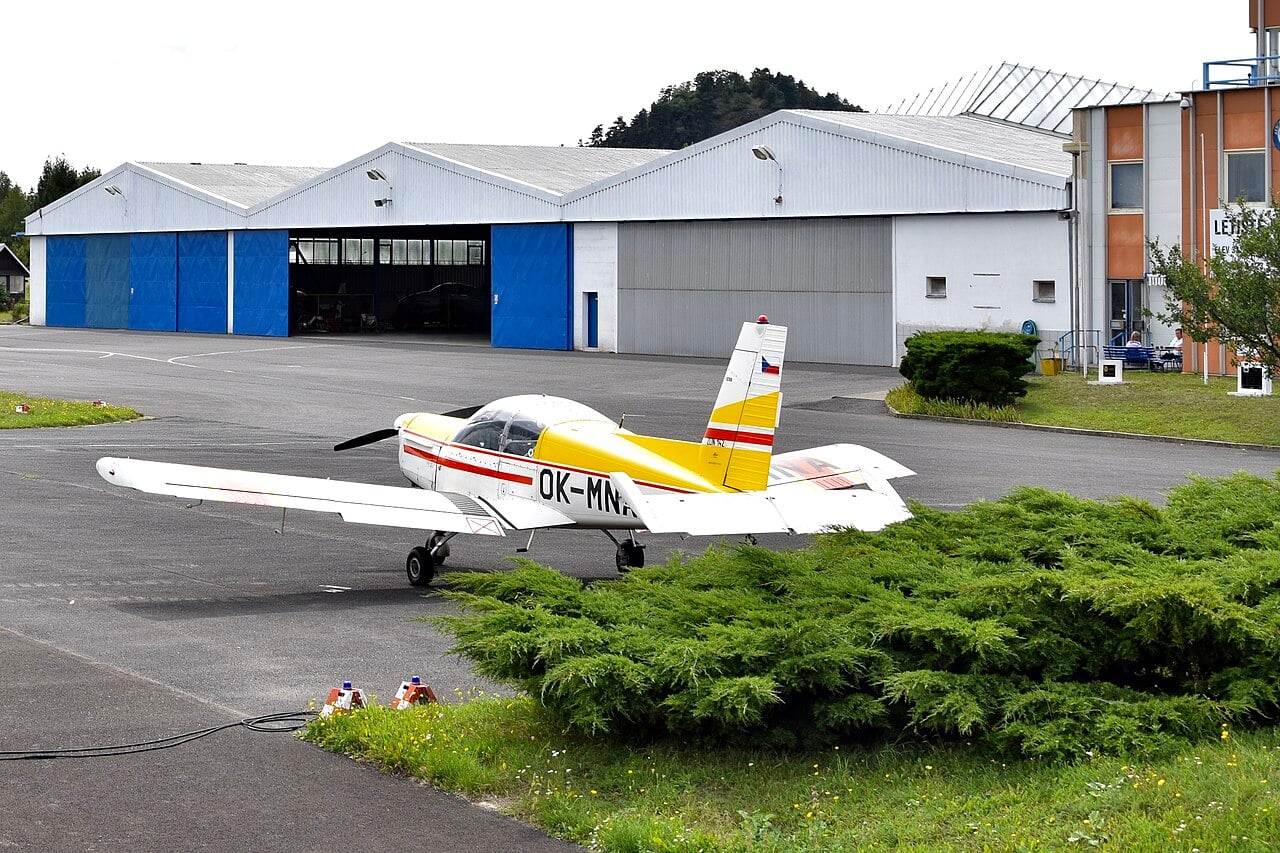
Czechia. The surprise of this research. Aeroklub Chrudim publishes an all-in 2026 PPL(A) price of 244,200 CZK including VAT in a Cessna 172, with the theory exam, medical, skill test, examiner fee and landing fees already in the sum. Its LAPL(A) comes to 172,200 CZK, about US$7,960, which makes it the cheapest EASA licence we found. Commercial schools cost more: Aero Academy in Prague starts at 311,575 CZK including 21% VAT, while BEMOAIR in Brno quotes 224,170 CZK before VAT on a Cessna 152.
There is a catch to the Chrudim price that no spreadsheet captures. Club members are expected to put in 40 volunteer hours a year, with a fine of 150 CZK for each hour skipped, plus radio duty.
Poland, Hungary and Spain. Aeroklub Ziemi Pilskiej in Piła charges 750 PLN an hour for a Cessna 152 on advance payment; non-members pay 23% VAT on top, which puts 45 hours at roughly 41,500 PLN. LOT Flight Academy charges 55,000 PLN for the flying plus 3,700 PLN for theory. In Hungary, Budapest Flight School quotes 3,600,000 HUF net on a Cessna 150, and AlphaJet 3,450,000 HUF plus about 150,000 HUF in exam and authority fees. Spain clusters around €10,000: World Aviation lists €9,907 and One Air €10,500 for 45 hours.
Canada, Australia and New Zealand. The Edmonton Flying Club’s February 2026 sheets give CA$17,820 at the minimum and CA$24,180 for a typical 60-hour student, before GST. Goldwings at Moorabbin, Melbourne, lists A$10,375 for the Recreational Pilot Licence and A$9,960 for the PPL step, which we read as about A$20,300 in sequence before flight tests and medical. Nelson Aviation College in New Zealand charges international students NZ$41,190 for a 58-hour Cessna 152 course.
| Country / school | Quoted price | Hours assumed | Aeronave | What is left out |
|---|---|---|---|---|
| USA, Florida: Universal Flight Training (Dec 2025) | US$16,000–20,000 | 60–70 h aircraft, 35–40 h instructor | Cessna 172 | Medical not mentioned; written test and checkride included |
| USA, Arizona: SimpliFly, Mesa | US$18,000–20,000 | Not stated | Not stated | Checkride about $1,500 and written test about $175 listed separately |
| USA, Florida: Epic Flight Academy (Apr 2026) | US$36,147 | Accelerated, about 3 months | Cessna 172 + simulator | Examiner paid directly; TSA fees extra for non-US citizens |
| South Africa: Pietermaritzburg Aero Club | R180,000–230,000 | Budget 55–65 h | Sling 2 or Cessna 172 | Entrance fee and annual subscription |
| South Africa: Lanseria Flight Centre (2025) | R120,000–160,000 (national average it quotes) | 45 h | Mixed fleet | Customised quote on request |
| Czechia: Aeroklub Chrudim (2026) | 244,200 CZK incl. VAT (LAPL 172,200 CZK) | 45 h (LAPL 30 h) | Cessna 172 | Almost nothing: exams, medical, skill test, examiner and landings included |
| Czechia: Aero Academy, Prague (2026) | 311,575 CZK incl. 21% VAT | 45 h | Bristell B23 or Cessna 172 | Airport fees, practical exam fee |
| Czechia: BEMOAIR, Brno (May 2025) | 224,170 CZK excl. VAT | 45 h incl. 5 h simulator | Cessna 150/152 | Exams, authority fees and medical not mentioned |
| Poland: Aeroklub Ziemi Pilskiej (2026) | 750 PLN/h net + 23% VAT for non-members; about 41,500 PLN for 45 h | 45 h | Cessna 152 | Medical and authority fees not mentioned |
| Poland: LOT Flight Academy | 55,000 PLN flight + 3,700 PLN theory | 45 h incl. 5 h simulator | Tecnam P2008T | Inclusions not stated |
| Hungary: Budapest Flight School (2026) | 3,600,000 HUF net (C172: 4,275,000 HUF) | 45 h | Cessna 150 or 172 | VAT, medical, official exam and landing fees |
| Hungary: AlphaJet | 3,450,000 HUF + about 150,000 HUF fees | 45 h | Cessna 150 | Exam and authority fees (the 150,000 HUF) |
| Spain: World Aviation (2026) | €9,907 | 45 h | Not stated | Not stated; its own FAQ estimates €10,000–12,000 |
| Spain: One Air | €10,500 | 45 h | Diamond / Cirrus | Accommodation and transport only |
| Canada: Edmonton Flying Club (Feb 2026 sheets) | CA$17,820 minimum; CA$24,180 average | 45 h minimum; 60 h average | Cessna 172S glass | GST |
| Australia: Goldwings, Moorabbin (2026) | A$10,375 RPL + A$9,960 PPL | Minimum hours | Piper Warrior / Cessna 172 | Flight tests, medical, ARN, landing fees |
| New Zealand: Nelson Aviation College (2027 intakes) | NZ$32,931 domestic; NZ$41,190 international | 58 h flight + 2 h simulator | Cessna 152 | Visa, travel, insurance |
Source/notes: Each school’s own published price page, accessed November 2026. Prices are as published and are not adjusted for the extra hours most students fly. No published PPL price list was found for the Philippines or Portugal; schools there quote on request.
Two candidates from the brief, the Philippines and Portugal, are missing for a simple reason: we could not find a published PPL price list. WCC Aviation in the Philippines, for example, lists a 45-hour course that bundles a dormitory, the Class II medical and the checkride, but answers the price question with “Inquire”.
The licence follows the registration
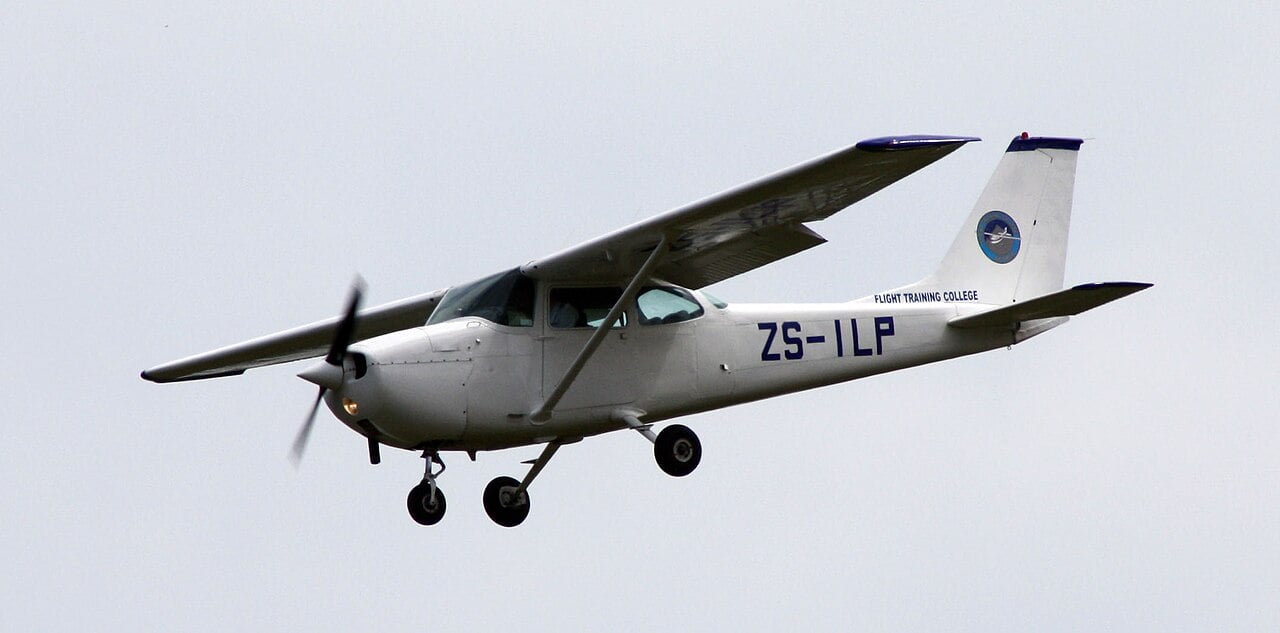
Here is the rule that turns a cheap licence into an expensive one. A pilot licence is not a passport to fly anything anywhere; it is tied to the country that registers the aircraft. Under 14 CFR 61.3, flying a US-registered aircraft requires an FAA certificate, with one narrow exception: inside a foreign country, a licence issued by that country may be used.
The FAA offers a back door the other way. Section 61.75 lets the holder of a foreign private licence from an ICAO state obtain a US private pilot certificate without another checkride. The conditions are strict. The applicant must read, speak, write and understand English, the foreign licence must not carry a limitation saying it falls short of ICAO standards, and the US certificate works only while the pilot has the foreign licence in hand or readily accessible in the aircraft.
A 61.75 certificate is a handy way for a European pilot to rent an N-registered Cessna on a Florida holiday. It is private privileges only, and the LAPL, which AESA says is valid only in EASA states, should not be counted on as a basis for one.
The European resident trap
For years, some Europeans trained cheaply in the US and then flew N-registered aircraft at home on their FAA licence. That door closed in June 2022, when new EU rules on third-country licences took effect.
The Irish Aviation Authority spelled out the scope: an aircraft registered in a third country but operated by someone established or residing in the EU must now be flown by a pilot holding an EU Part-FCL licence or a temporary validation. So a Florida licence alone no longer lets a Munich resident fly an American-registered aircraft from a German airfield.
How hard is it to swap? It depends entirely on where the original licence came from. Since 18 May 2021 the EU–US Bilateral Aviation Safety Agreement has included a pilot licensing annex. Under its procedures (TIP-L), an FAA private pilot converts to an EASA PPL(A) by showing knowledge of Air Law and Communication to an examiner, in a session that should last 30 to 60 minutes, then passing the EASA skill test. A single-engine rating must have been issued within the last 24 months, an EU Class 2 medical is required, and pilots flying on BasicMed are not eligible.
Every other country goes through the general route in Commission Delegated Regulation (EU) 2020/723. Converting a South African, Canadian, Australian or New Zealand PPL into an EASA PPL means passing written exams in Air Law and Human Performance, passing the PPL skill test, holding a medical, demonstrating language proficiency, and having at least 100 hours of flight time as a pilot. Validation instead of conversion lasts no more than a year.
That 100-hour line is the real price tag on a cheap overseas licence. A European who finishes a 60-hour PPL in South Africa cannot convert it on arrival at home; the extra 40 hours have to be flown first, at somebody’s hourly rate.
Medicals: the paperwork that can ground you
The medical you need follows the licence. An FAA third-class certificate lasts 60 calendar months if you are under 40 at the exam and 24 months from 40. Europe’s Class 2, required for the PPL, has the same 60-month validity under 40, but drops to 24 months between 40 and 50 and to 12 months after 50, according to the Danish aviation authority. The LAPL has its own lighter medical.
BasicMed, the FAA’s alternative to a medical certificate, is often sold as a reason to choose the US. Read the FAQ first. You must have held an FAA medical at some point after 14 July 2006, which rules it out for a brand-new student. It covers flying only within the US, at or below 250 knots, and Sweden’s Transportstyrelsen confirms that BasicMed is not approved for BASA conversion.
Elsewhere, CASA in Australia requires a Class 2 to take the PPL flight test, while Nelson Aviation College in New Zealand asks for a CAA NZ Class 1 before it will enrol you, which costs more and is harder to pass.
English, visas and the TSA
English is the hidden entry exam. The FAA 61.75 route demands it outright; EASA conversion requires proficiency under FCL.055, where an FAA “English proficient” endorsement counts as level 4; CASA requires its general English language proficiency assessment for anyone using the radio. Nelson asks international students for an IELTS score of 5.5.
Visas are where the US gets expensive for foreigners. Foreign students on full-time US courses usually train on an M-1 student visa, with its US$350 SEVIS fee set by a 2019 Department of Homeland Security rule, plus registration with the TSA Flight Training Security Program, a security threat assessment and fingerprinting before training begins. Epic lists US$254 for TSA registration and fingerprinting for non-US citizens. Our separate guide to the M-1 visa covers the process step by step.
Inside the EU, a European citizen needs no visa to train in Czechia or Spain, and the licence is issued straight into the system they will fly in at home. For many Europeans, that is worth more than any hourly saving.
The hidden costs nobody prints in bold
The examiner. In the US the checkride is paid directly to a Designated Pilot Examiner. Epic puts the average at about US$1,000 within a US$600–1,300 range; SimpliFly budgets about US$1,500. In Czechia, Chrudim lists 7,200 CZK for the skill test and 1,000 CZK for the examiner. Edmonton charges CA$450 for the flight test.
Exams and licence fees. SimpliFly puts the FAA written at about US$175. Pietermaritzburg’s 2022 sheet lists R2,070 for the PPL exams and R1,330 for the SACAA licence, while Transport Canada charged CA$150 for the written and CA$55 for the licence in Edmonton’s average sheet.
The medical. Epic budgets US$180 for the FAA exam, Chrudim 2,000 CZK and Pietermaritzburg about R3,000 in 2022.
Landing fees and VAT. Several European schools exclude landing fees, and Hungarian and Czech prices are often quoted net of VAT. In Poland, Piła adds 23% for non-members, so joining the club can matter as much as choosing the school.
The extra hours. This is the big one. At Chrudim’s 4,800 CZK an hour, the 15 extra hours that would take a 45-hour European quote to the 60-hour Canadian average add about 72,000 CZK, roughly US$3,300. That is our estimate, based on the club’s published rate.
El veredicto
On published prices, South Africa is the cheapest place to earn a full ICAO PPL, and a Czech aero club LAPL is the cheapest route into the European system. The US is not the cheapest country, but its FAA licence enjoys the smoothest conversion into Europe.
| País | Licence | Typical total (local) | In US$ (ECB, 5 Nov 2026) | Minimum hours | Recognition and limits | Visa notes |
|---|---|---|---|---|---|---|
| South Africa | SACAA PPL | R120,000–230,000 | $7,300–14,000 | 45 | ICAO licence. Converting to EASA outside BASA needs 100 h, two written exams and a skill test | Check South African study rules for your nationality |
| Czechia | EASA LAPL(A) | 172,200 CZK (aero club, all-in) | about $7,960 | 30 | EASA states only; max 2,000 kg and 4 people on board | Schengen rules apply to non-EU students |
| Czechia | EASA PPL(A) | 244,000–312,000 CZK incl. VAT | $11,300–14,400 | 45 | Full ICAO and EASA PPL; flies aircraft registered in any EASA state | Schengen rules apply |
| Hungary | EASA PPL(A) | 3.45–3.6 million HUF net, before fees and VAT | $10,700–11,100 before extras | 45 | As above | Schengen rules apply |
| Poland | EASA PPL(A) | 41,500–58,700 PLN | $10,600–15,000 | 45 | As above | Schengen rules apply |
| España | EASA PPL(A) | €9,907–10,500 at 45 h | $11,100–11,800 | 45 | As above | Schengen rules apply |
| Canada | Transport Canada PPL | CA$17,820–24,180 + GST | $12,800–17,300 | 45 | ICAO licence; conversion into EASA needs the 100 h route | Not researched here |
| Australia | CASA RPL + PPL | about A$20,300 before tests and medical | about $14,200 before extras | 40 (35 integrated) | ICAO licence; conversion into EASA needs the 100 h route | Not researched here |
| EE.UU | FAA Private Pilot | US$16,000–20,000 | $16,000–20,000 | 40 (average about 75) | ICAO licence; BASA conversion into EASA PPL without the 100 h rule | M-1 visa, $350 SEVIS fee, TSA security check |
| New Zealand | CAA NZ PPL | NZ$32,931–41,190 | $18,500–23,200 | 50 | ICAO licence; conversion into EASA needs the 100 h route | Nelson’s PPL is approved for student visa applications |
Source/notes: School price lists in the table above, converted at European Central Bank reference rates for 5 November 2026 (1 EUR = 1.1224 USD, 18.4268 ZAR, 24.289 CZK, 363.18 HUF, 4.389 PLN, 1.5675 CAD, 1.6033 AUD, 1.9966 NZD). Ranges are rounded. European figures are quoted at the 45-hour minimum and will rise with extra hours; the US and Canadian average figures already include extra hours.
The smartest choice is less about the price per hour than about where you will fly afterwards. Live in Europe and want to fly at home? An EASA PPL from Czechia, Poland, Hungary or Spain costs roughly what the US does once US hours are realistic, and needs no conversion. Want to fly American-registered aircraft on American holidays? An FAA certificate, or a 61.75 certificate on the back of your EASA PPL, does the job.
Going to South Africa for the price? Go with your eyes open: the licence is excellent, but a European resident will need 100 hours, two written exams and a skill test before it can be converted. Budget for them now, because the cheapest licence in the world is the one you can actually use.
Sources: FAA, eCFR, AOPA, EASA, DGAC France, AESA, Irish Aviation Authority, Transportstyrelsen, Swiss FOCA, Danish Civil Aviation and Railway Authority, CASA, CAA New Zealand, US Department of Homeland Security, European Central Bank, Universal Flight Training, SimpliFly, Epic Flight Academy, Pietermaritzburg Aero Club, Lanseria Flight Centre, Aeroklub Chrudim, Aero Academy, BEMOAIR, Aeroklub Ziemi Pilskiej, LOT Flight Academy, Budapest Flight School, AlphaJet, World Aviation, One Air, Edmonton Flying Club, Goldwings Aviation, Nelson Aviation College, WCC Aviation
Preguntas frecuentes
Which is the cheapest country to get a private pilot licence?
How many hours does a private pilot licence really take?
Can I convert an FAA private pilot licence to an EASA PPL?
Can an EU resident fly an N-registered aircraft with only an FAA licence?
What is the difference between an EASA PPL and an LAPL?
Do foreign students need a visa to learn to fly in the USA?
Publicaciones relacionadas
0 Comments