
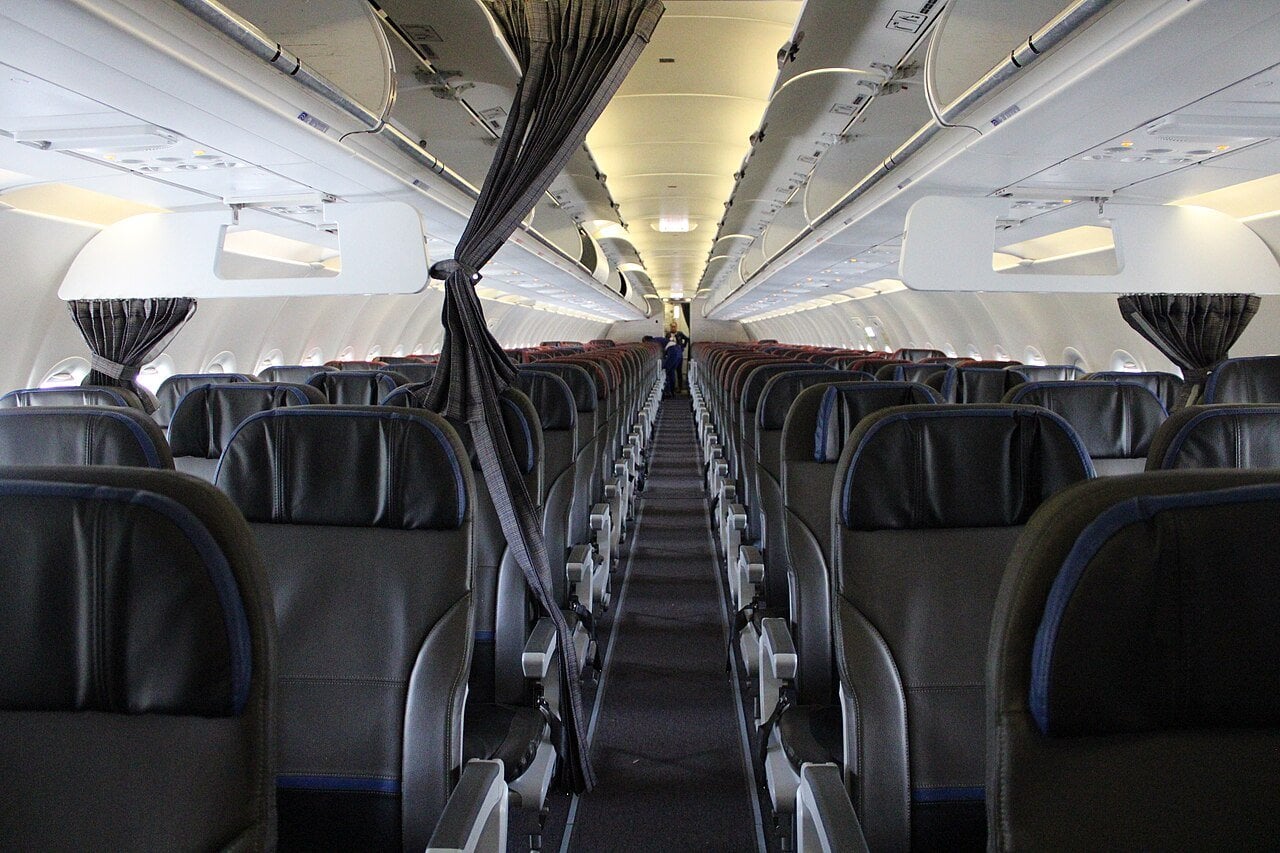
"Good morning, welcome aboard." You have heard it a hundred times, probably while juggling a phone, a boarding pass and a coffee. You smile back, or you do not, and you shuffle on towards row 23.
In those two seconds, the person at the door has already formed a view about you. Are you sober? Could you lift an overwing exit hatch? Is the bag on your shoulder going to fit anywhere? Are you travelling with a baby, and if so, which row are you heading for?
The flight attendant greeting is real hospitality. It is also the one moment of the whole journey when every passenger on the aircraft passes within arm's reach of a trained safety professional, and the international rulebook for cabin crew training treats it exactly that way.
Datos rápidos
- Training standard: ICAO Doc 10002, Cabin Crew Safety Training Manual, 2nd edition, 2020
- Boarding task: Perform passenger boarding and pre-pushback tasks
- Intoxication rule (US): 14 CFR 121.575(c): no boarding if a person appears intoxicated
- Exit rows (US): 14 CFR 121.585: suitability check before taxi or pushback
- Carry-on bags (US): 14 CFR 121.589: doors stay open until bags are verified stowed
- Infants: Seating monitored so enough oxygen masks are available in the row
- Also watched for: Unruly behaviour, passengers needing assistance, possible human trafficking
The Job Description Nobody Reads
The International Civil Aviation Organization publishes a Cabin Crew Safety Training Manual, ICAO Doc 10002. Its second edition, from 2020, breaks a cabin crew member's working day into tasks, and one of them is simply called "Perform passenger boarding and pre-pushback tasks". Managing the boarding process is a sub-task in its own right.
The manual's list of what that may include is longer than most passengers would guess. Verifying boarding passes, as per operator procedures. Monitoring carry-on baggage against the airline's allowance while staying vigilant for suspicious items. Watching for passengers who may raise security concerns, may be under the influence of psychoactive substances, or display unruly behaviour.
It goes on: monitoring for intoxicated passengers who should be denied boarding, for passengers who may need specific assistance, for passengers with infants and the rows they sit in, and for possible cases of trafficking in persons. Then come the exit rows. That is a great deal to take in while saying good morning to two hundred people.
Are You Sober Enough to Fly?
The most immediate question is the bluntest. In the United States, the rule for airlines is not a matter of airline policy or crew discretion about manners. It is federal regulation, set out in 14 CFR 121.575.
That section bars airlines from serving alcohol to anyone who appears to be intoxicated, and requires them to report to the FAA within five days any disturbance caused by a person who appears to be intoxicated on board. ICAO's manual lists policies on alcohol and on handling passengers who appear to be intoxicated among the topics cabin crew must be trained in, along with prevention techniques. The boarding rule itself is one short sentence.
The key word in the US rule is appears. Nobody at the door is administering a breath test. The crew member is reading speech, balance, smell and behaviour in a couple of seconds, and the door is the last point at which a problem can be solved without a diversion. Once the aircraft is airborne, the options shrink dramatically.
Who Would You Want Next to You in an Evacuation?
The second question is the one that surprises people most. Cabin crew are quietly sizing up who could help in an emergency. ICAO's manual even defines the term.
Those able-bodied passengers matter later in the flight. In the minute or so before take-off and landing, cabin crew run through a mental review of what they would do if things went wrong, and Doc 10002 includes in it the visual identification of potential able-bodied passengers, the number of passengers on board and the special categories of passengers who will need help. We explain that ritual in our piece on the silent review. The raw material for it is gathered at the door.
One flight attendant with 25 years of experience, writing on Quora in an answer republished by Quartz, described the same mental checklist from the inside: whether a passenger is intoxicated, what their attitude is, whether they are physically fit, whether they have any injury or limp, whether they are travelling alone and how comfortable they are in English.
Morning Brew goes through flight attendant training, the safety side of the job most passengers never see.
The Exit Row Is a Job, Not a Perk
For the seats beside the emergency exits, the observation becomes a legal requirement. Under 14 CFR 121.585, US airlines must determine the suitability of each person they allow in an exit seat. The rule lists what disqualifies someone, including lacking the mobility, strength or dexterity to open the exit and remove the hatch, being under 15, being unable to understand printed instructions or crew commands, or having responsibilities such as caring for small children.
The rule then closes the loop at the aircraft. No airline may allow taxi or pushback unless at least one required crew member has verified that no exit seat is occupied by a person the crew member judges likely to be unable to perform the functions. ICAO's manual includes the same check among boarding tasks: making sure exit rows are occupied by passengers who are able and willing to assist, as per operator procedures.
There is a safety valve for passengers, too. US airlines must invite anyone in an exit seat who cannot or does not wish to perform those functions to identify themselves for reseating, and they may not require the passenger to give a reason.
The Bag on Your Shoulder
The door is also where the overhead bin battle is won or lost. US regulation says an airline may not allow carry-on baggage on board unless it has been screened for size and amount under an approved carry-on baggage programme, and a passenger whose bags exceed the allowance may not board.
The rule ends with a requirement that explains a lot of last-minute bag shuffling. No airline may allow all passenger entry doors to be closed for taxi or pushback until at least one required crew member has verified that every article of baggage is stowed properly. A roller bag wedged in an aisle is not just untidy. It holds the door open.
Why boarding takes as long as it does, and which boarding method is fastest, is a separate science covered in our story on airplane boarding methods. The crew member at the door is the one who sees the queue forming first.
Babies, Oxygen Masks and Quieter Concerns
A passenger carrying an infant draws a specific glance, and it has nothing to do with noise. Doc 10002 lists monitoring passengers with infants in rows to ensure sufficient oxygen masks are available. Each row of seats has only so many masks that drop from the panel above, so where babies sit is a safety matter, not a seating preference.
The door is also where crews are trained to notice passengers who need help: people with reduced mobility, unaccompanied children, travellers who seem lost or unwell. Spotting them at the threshold means the right help can be arranged before the doors close.
Then there is the hardest category. ICAO's manual devotes a chapter to training cabin crew to identify and respond to trafficking in persons, and lists monitoring for possible cases among the boarding tasks. A passenger who does not seem to be in control of their own documents, or who seems frightened of a travelling companion, may first be noticed by the person saying hello.
Why It Still Feels Like a Welcome
None of this means the smile is fake. A warm greeting is how good cabin crew get an honest, unguarded reaction in return. A passenger who answers clearly, makes eye contact and moves with purpose has told the crew a great deal without being asked a single question.
It also means the greeting deserves an answer. Take out one earphone. Say hello back. If you are in an exit row and would rather not be, say so. The person at the door is not judging your outfit. They are building a picture of the cabin they may one day have to empty in ninety seconds.
Inside Edition on how flight attendants are trained to handle unruly passengers.
Next time someone says good morning at the aircraft door, know that you have just passed the first safety check of your flight. Most people never realise they took it.
Sources: ICAO Doc 10002 Cabin Crew Safety Training Manual (2nd edition, 2020), 14 CFR 121.575, 121.585 and 121.589 (eCFR), Quartz
0 Comments