
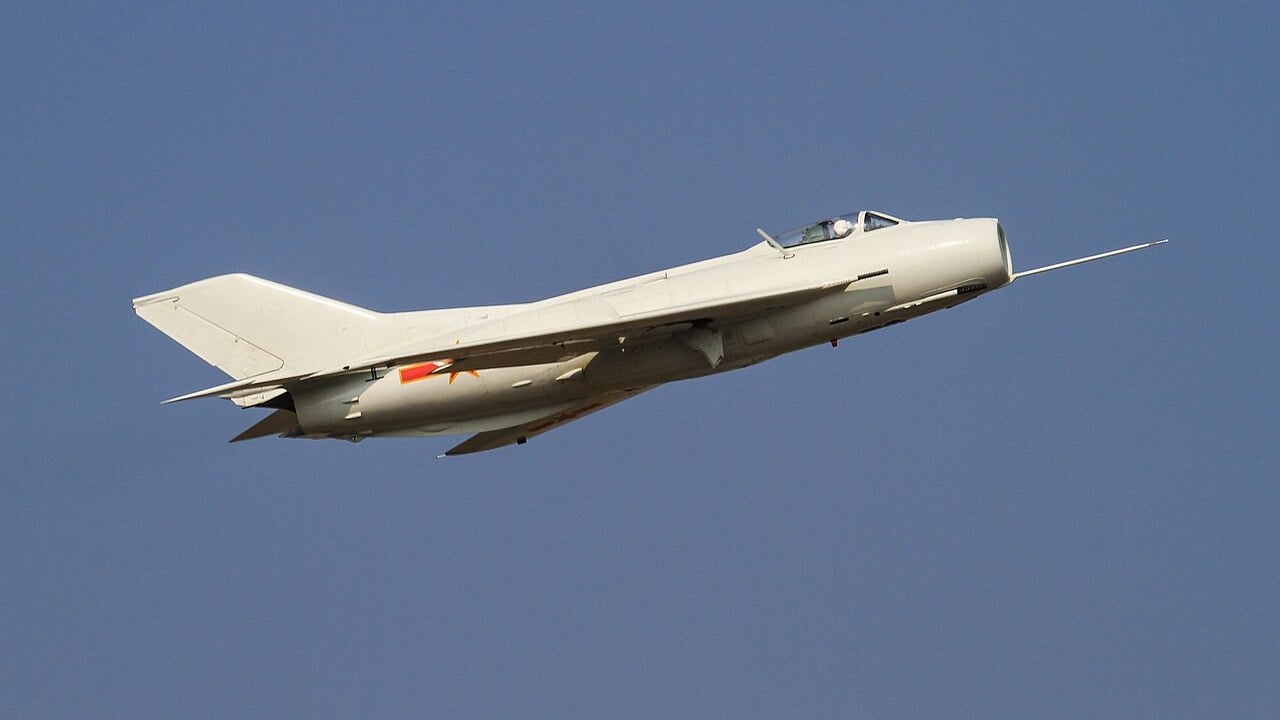
On 2 June 1972, northeast of Hanoi, Major Phil Handley of the US Air Force had a problem. His F-4E Phantom was in a dogfight with two MiG-19s, he had fired all four of his air-to-air missiles, and none of them had guided.
So he used the gun. Closing on the trailing MiG at Mach 1.2, just 500 feet above the ground and at a 90-degree crossing angle, he fired a burst from his 20 mm M61 cannon and destroyed it. The Gathering of Eagles Foundation credits it as the highest-speed air-to-air gun kill in the history of aerial combat.
The MiG he shot down was almost certainly not built in the Soviet Union. North Vietnam’s MiG-19s were nearly all Chinese-made Shenyang J-6s, the licence-built “Farmer” that China went on producing long after the Soviets had moved on. By the time the line closed in 1986, more than 4,500 had been built.
Datos rápidos
- Tipo: Twin-engine supersonic fighter; Chinese licence-built MiG-19
- Fabricante: Shenyang (trainers also built at Tianjin)
- Primer vuelo: 30 September 1959 (definitive J-6)
- Construido: More than 4,500 from 1958 to 1986, including JJ-6 trainers
- Motores: Two Wopen-6 turbojets (Tumansky R-9 derivative)
- Velocidad máxima: About 1,540 km/h, Mach 1.45, at altitude
- Armament (J-6C): Three 30 mm cannon, plus rockets, bombs or missiles
- NATO name: Farmer; export designation F-6
China’s first supersonic fighter
The J-6 was China’s version of the MiG-19, the Soviet Union’s first mass-produced supersonic fighter, whose story Afterburner told in MiG-19 Farmer: el primer supersónico soviético. The Soviets themselves gave the MiG-19 a fairly short front-line career, but the Chinese came to value its agility, its turning performance and its heavy 30 mm cannon.
The start was rough. Early Chinese production from 1958 was so poor that the People’s Liberation Army Air Force would not accept it. Production was halted, the jigs were scrapped, and the line restarted with fresh Soviet help. The definitive J-6 first flew on 30 September 1959 and entered service in the early 1960s.
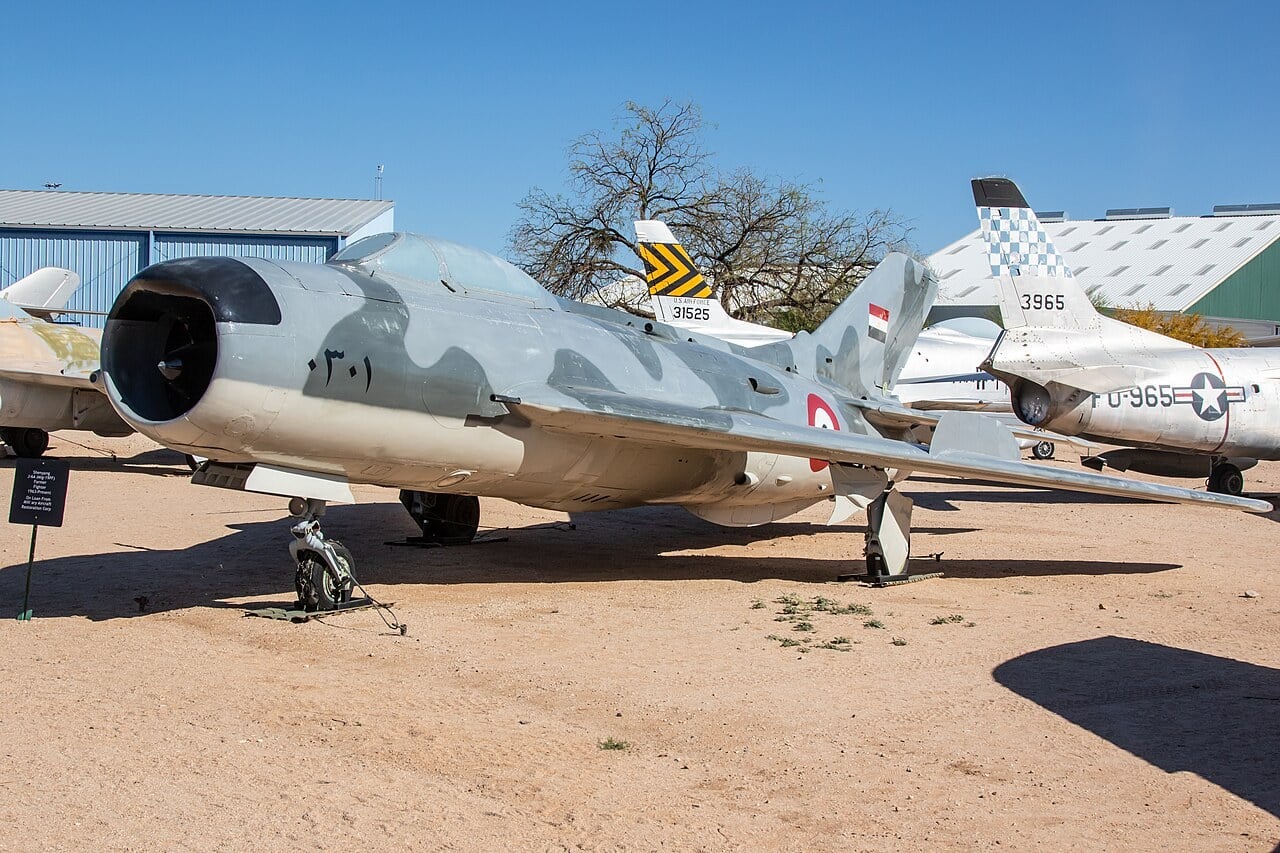
What came out of Shenyang was a twin-engined fighter powered by two Wopen-6 turbojets, Chinese versions of the Tumansky R-9, with a top speed of about Mach 1.45 at altitude. The day-fighter J-6C carried three 30 mm cannon. There were radar-equipped interceptors, a reconnaissance version, and a two-seat JJ-6 trainer that the Chinese designed themselves.
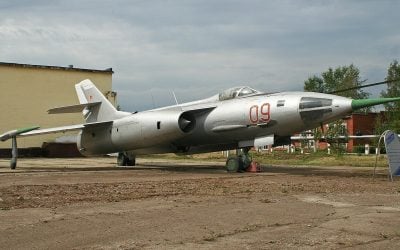
Dark Skies on the MiG-19, the rushed and dangerous Soviet fighter that China would build as the J-6.
Over Hainan and Vietnam
The J-6’s first brush with American aircraft came in 1965, when a USAF Caza estelar F-104 flown by Captain Philip E. Smith strayed into Chinese airspace over Hainan Island. According to accounts of the incident, a Chinese fighter damaged his aircraft with cannon fire, the Starfighter then lost power, and Smith ejected. He was held prisoner until March 1973.
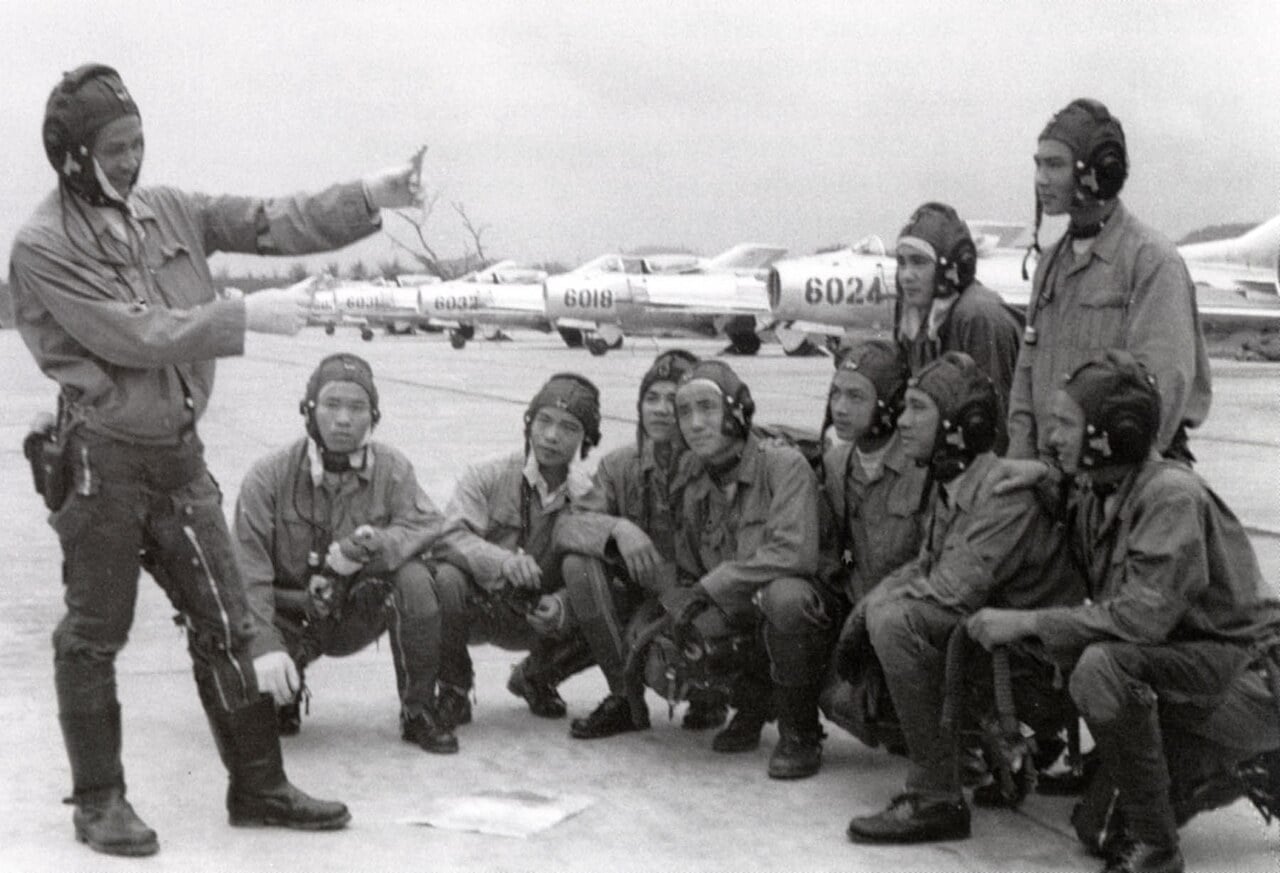
In North Vietnam, the J-6 equipped the 925th Fighter Regiment of the Vietnamese People’s Air Force, formed in 1969 at Yen Bai. China supplied the aircraft, though the regiment’s strength seldom exceeded about 54 of them. The three 30 mm guns could put far more metal into a target in a short burst than an American 20 mm cannon, and the VPAF credits its J-6 pilots with victories over US F-4 Phantoms.
Handley’s gun kill on 2 June 1972 was the other side of that story. His F-4E carried an internal M61 Gatling gun, and when the missiles failed, that was what decided the fight. Afterburner has told the story of the top American ace of the war, Charles DeBellevue.
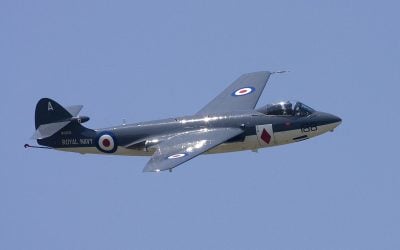
The story of Major Phil Handley’s supersonic gun kill on a MiG-19 over North Vietnam on 2 June 1972.
Pakistan’s workhorse
No foreign air force embraced the J-6 like the Fuerza Aérea de Pakistán, which knew it by its export designation, F-6. Between 1965 and 1980, Pakistan received 260 of them, and they served with ten squadrons at various times.
The Pakistanis did not leave the fighter as delivered. The Pakistan Aeronautical Complex carried out around 140 modifications, adding Martin-Baker ejection seats, Western avionics, AIM-9 Sidewinder missiles and French rockets. F-6s of Nos. 11, 23 and 25 Squadrons fought in the 1971 war against India, flying interception and close air support missions; claims for that war remain disputed between the two sides. The single-seat F-6 was finally retired in 2002.
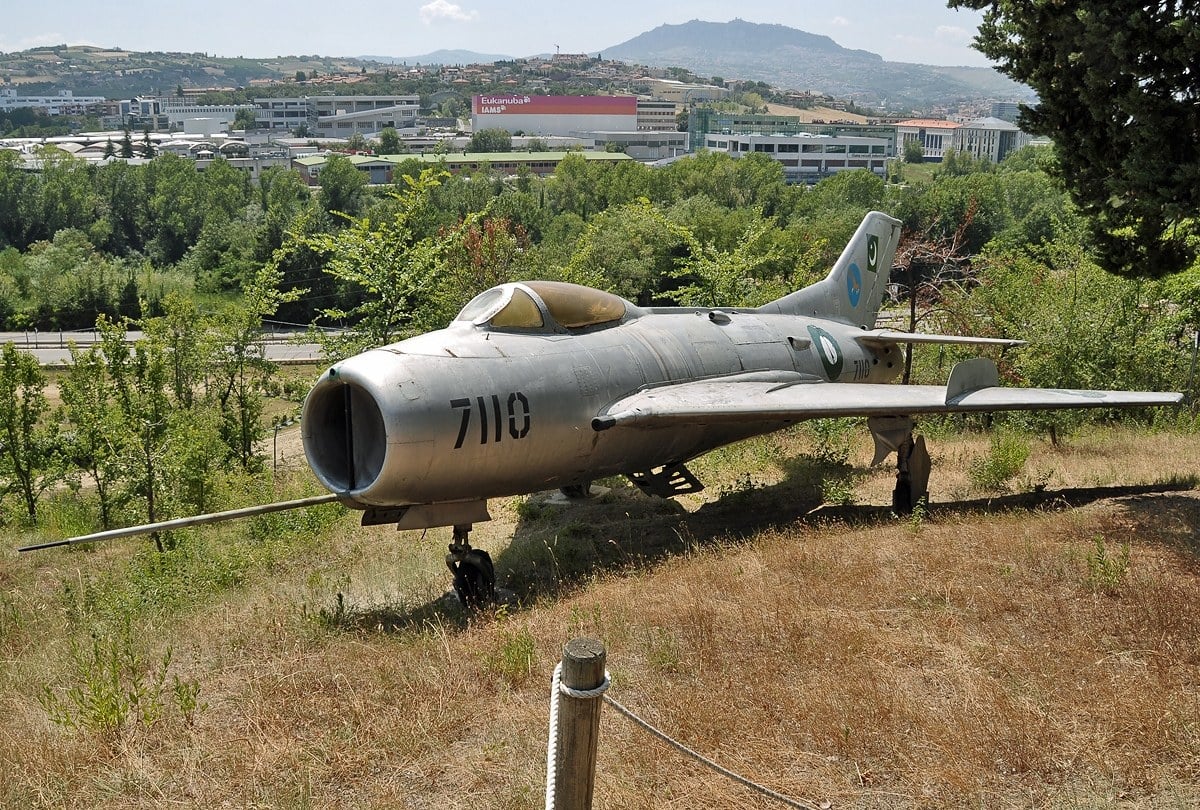
The type also went to Albania, Egypt, Iraq, Iran, Somalia, Sudan, Zambia and the Tanzania Air Force Command, among others. Operator lists in the 2020s still included North Korea, Sudan, Tanzania and Myanmar, more than six decades after the first one flew.
The fighter that became a missile
In China, the J-6 left front-line service in the late 1990s, but the PLA did not throw the airframes away. Work on converting them into unmanned aircraft was first reported in 2013, and the drone version is known in the West as the J-6W.
In March 2026, Reuters reported on analysis by the Mitchell Institute for Aerospace Studies showing converted J-6 drones at six air bases near the Taiwan Strait, five in Fujian and one in Guangdong. Senior fellow J. Michael Dahm estimated that the PLA had deployed 200 or more of them near the strait, and that more than 500 airframes had been converted in total.
The logic is arithmetic. A 1960s fighter is cheap; the missile needed to shoot it down is not. An air defence radar sees a fast jet heading for Taiwan, and someone must decide whether it is a modern fighter or a pilotless antique flying on a one-way trip.
Few aircraft have had a career like it. The J-6 began as a copy China could not build properly, became its first supersonic fighter, fought over Vietnam and the Indian subcontinent, and may end its days as a guided weapon. Phil Handley’s Mach 1.2 gun kill proved it could be beaten. Six decades on, its owners are betting that sheer numbers can still make it count.
Sources: Wikipedia (Shenyang J-6), Gathering of Eagles Foundation, Reuters (via Aaj English TV), Asia Times, ACIG.org
0 Comments