
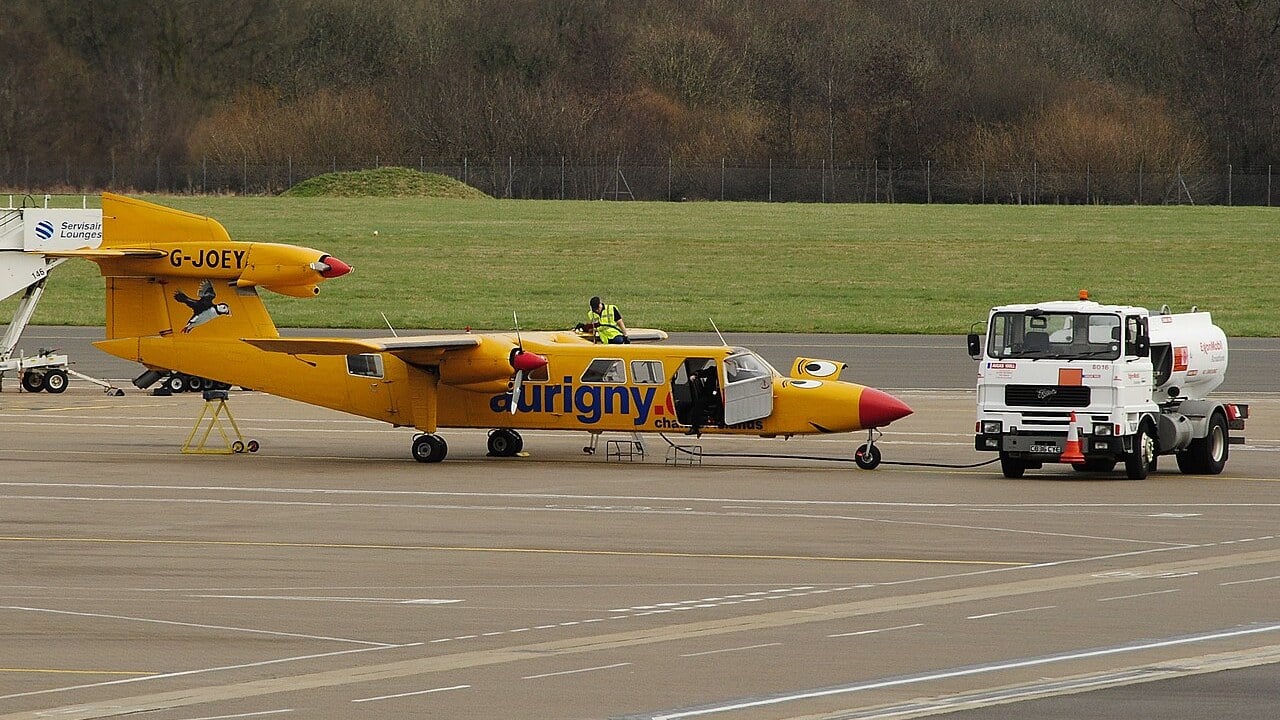
On Sunday 28 June 2015, a small yellow airliner with a red nose and a cartoon face flew from Southampton to Alderney and on to Guernsey. Fire crews gave it a water salute at all three airports. When it finally parked and the pilot shut down the engines, the cabin went completely silent, and several passengers patted the aircraft on the nose as they climbed out.
The aircraft was G-JOEY, Aurigny’s best-loved Britten-Norman Trislander, and it had a fan club, a series of children’s books and thousands of supporters campaigning to keep it on the island. Few airliners inspire that kind of affection. Then again, few airliners have an engine sticking out of the top of the tail.
Datos rápidos
- Tipo: Three-engined piston feederliner and utility aircraft
- Fabricante: Britten-Norman (later Fairey Britten-Norman)
- Primer vuelo: 11 September 1970
- Motores: Three Lycoming O-540 flat-six piston engines of 260 hp, one on top of the tail fin
- Seats: Up to 18 passengers (16 in Aurigny service)
- Producción: 73 delivered by 1982, plus seven completed but unsold
- Entró en servicio: July 1971 with Aurigny
- Aurigny service: 1971 to 2017; G-JOEY’s final flight 28 June 2015
Stretching the Islander
In the 1960s, John Britten and Desmond Norman had a hit on their hands. Their twin-engined BN-2 Islander, built on the Isle of Wight, was selling well to small airlines around the world. The obvious next step was a bigger aircraft that could share as much as possible with the Islander and keep development costs low.
In 1968 the company flew a stretched Islander, the BN-2E Islander Super, but dropped it in favour of something more radical. For the new design, the fuselage was stretched and strengthened to carry up to 18 passengers. More seats needed more power, and the solution was a third engine. Instead of hanging it on the wing, Britten-Norman mounted it on the aircraft’s centre line, high on an elongated tail fin.
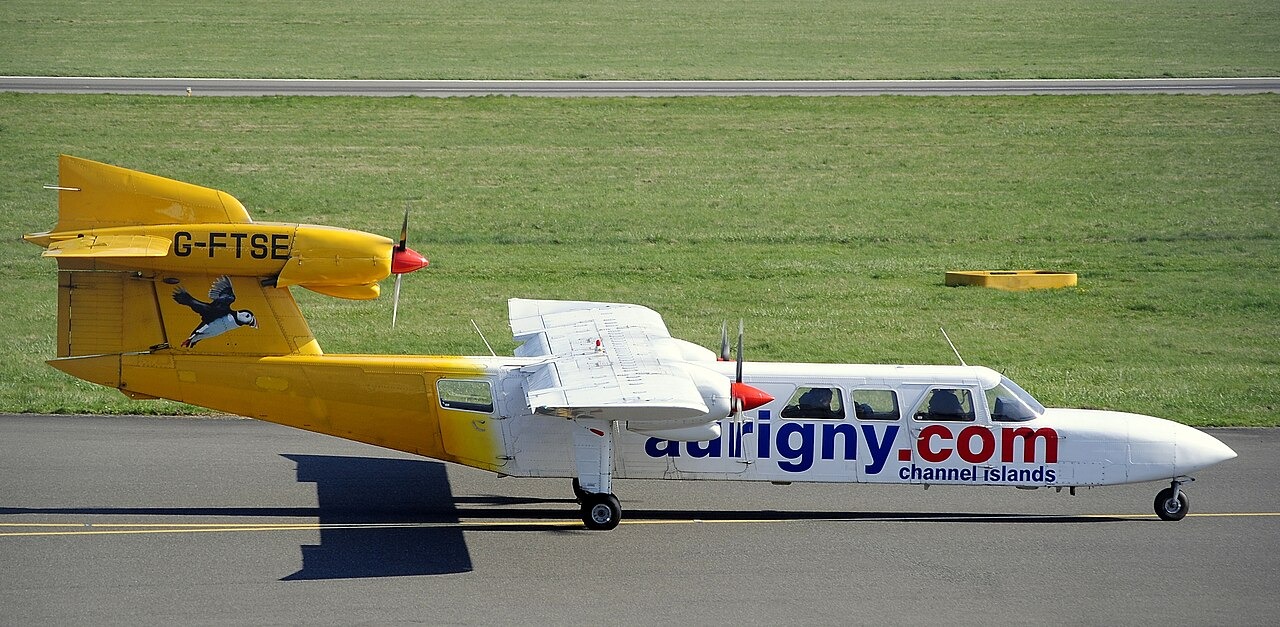
The result looked odd, but it worked. The Trislander kept the Islander’s wing, used a fixed tricycle undercarriage and was so similar in construction that the two types shared a final assembly line. All three engines were 260-horsepower Lycoming O-540 flat-six piston engines driving two-bladed propellers, which made the Trislander a true trimotor in an age of jets.
First flight at Farnborough
The prototype was converted from the second Islander prototype and first flew on 11 September 1970. Britten-Norman was confident enough to show it at the Farnborough Air Show the same day. It was marketed as a feederliner with good low-speed handling, a short takeoff run, low noise and cheap operating costs, and some aircraft were fitted with rocket-assisted takeoff gear for very short strips.
In 1975 Britten-Norman received the Queen’s Award to Industry for technological innovation for the Trislander. By then, the company had been taken over by the Fairey Aviation Group in 1972, and most production had moved to Fairey’s factory at Gosselies in Belgium. Some Trislanders were also built in Romania and delivered via Belgium to Britain for certification. British production ended in 1982, with 73 Trislanders delivered and seven more completed but unsold. A plan for the American firm International Aviation Corporation to build it as the Tri-Commutair came to nothing.
Cockpit view of a takeoff in Aurigny’s Trislander G-JOEY (The jet jock).
The Channel Islands’ trimotor
The Trislander’s first and most famous operator was Aurigny, founded in Guernsey in 1968 to fly Islanders on the short hop to Alderney. In July 1971, only a month after deliveries began, Aurigny became the first airline to put the Trislander into service. It became the largest operator of the type, flying 16 at its peak, and the bigger aircraft let it expand to the south coast of England and northern France.
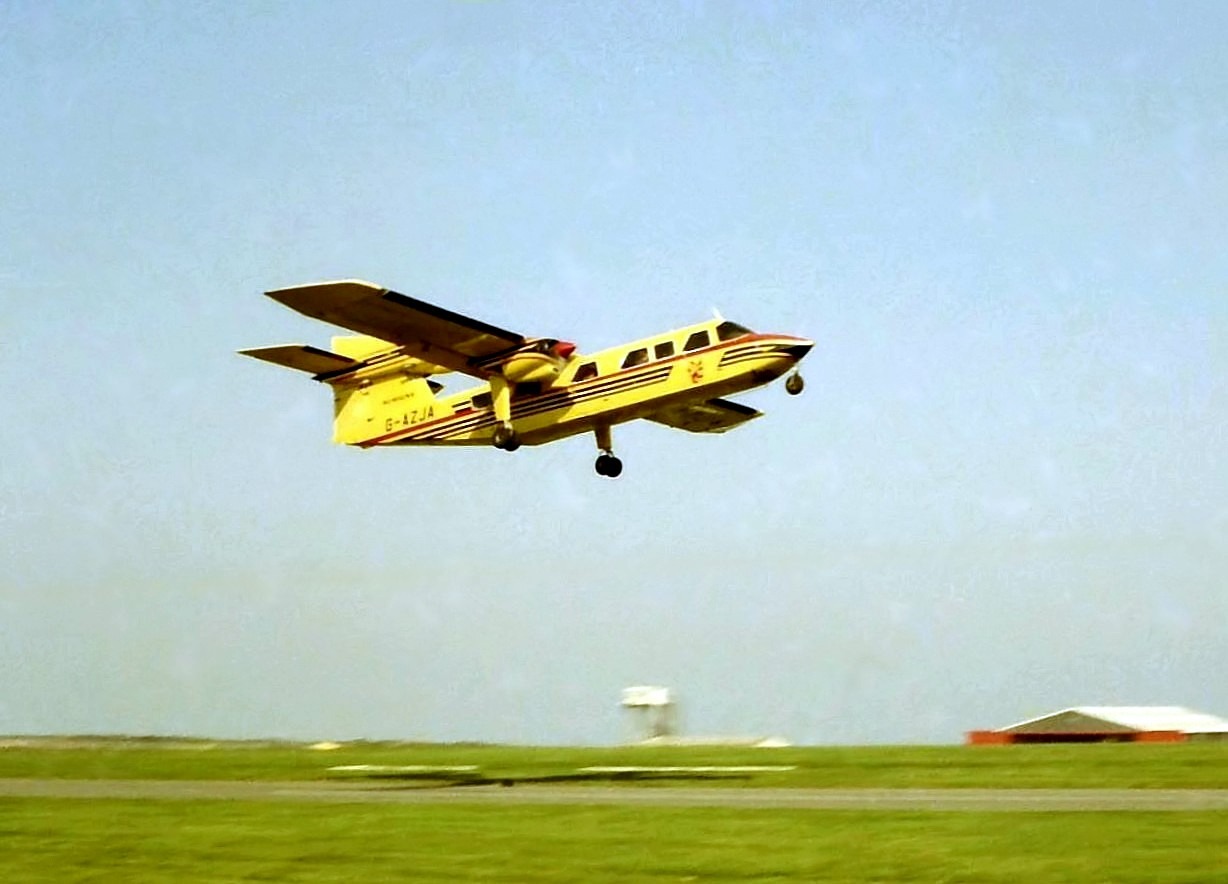
For four decades, Trislanders linked Guernsey, Jersey, Alderney, Southampton and Dinard. Some passengers flew them hundreds of times: one Alderney commuter, Susie Gallienne, told the BBC in 2015 that she had made about 1,500 Trislander flights. At the end of 2011, Aurigny and Eurocontrol introduced a GPS approach based on the European EGNOS satellite system for the Trislanders at Alderney and Southampton, allowing them to fly in lower visibility and poorer weather than before.
Joey and the red nose
One Trislander became a local celebrity. G-JOEY starred in children’s books first published in 1982. In 1988, for the BBC’s first Comic Relief, it was given a red nose, and later that year Aurigny’s engineers painted on the rest of the face. Joey flights, Joey certificates and a Joey club followed.
G-JOEY’s retirement flight with Aurigny in 2015 (RobProv).
By 2014, though, the fleet was showing its age. Six Trislanders were still flying from Alderney to Guernsey and Southampton, spare parts could take up to two years to arrive, and Aurigny trialled a 19-seat Dornier 228 as a replacement. Its chief executive explained the economics to the BBC.
The first Dornier arrived in late 2014. Aurigny’s commercial director Malcolm Coupar called the Trislander “a wonderful servant”, but the decision was made. G-JOEY flew its final flight in June 2015, flown by Captain David Rice, the airline’s flight operations director.
Where they are now
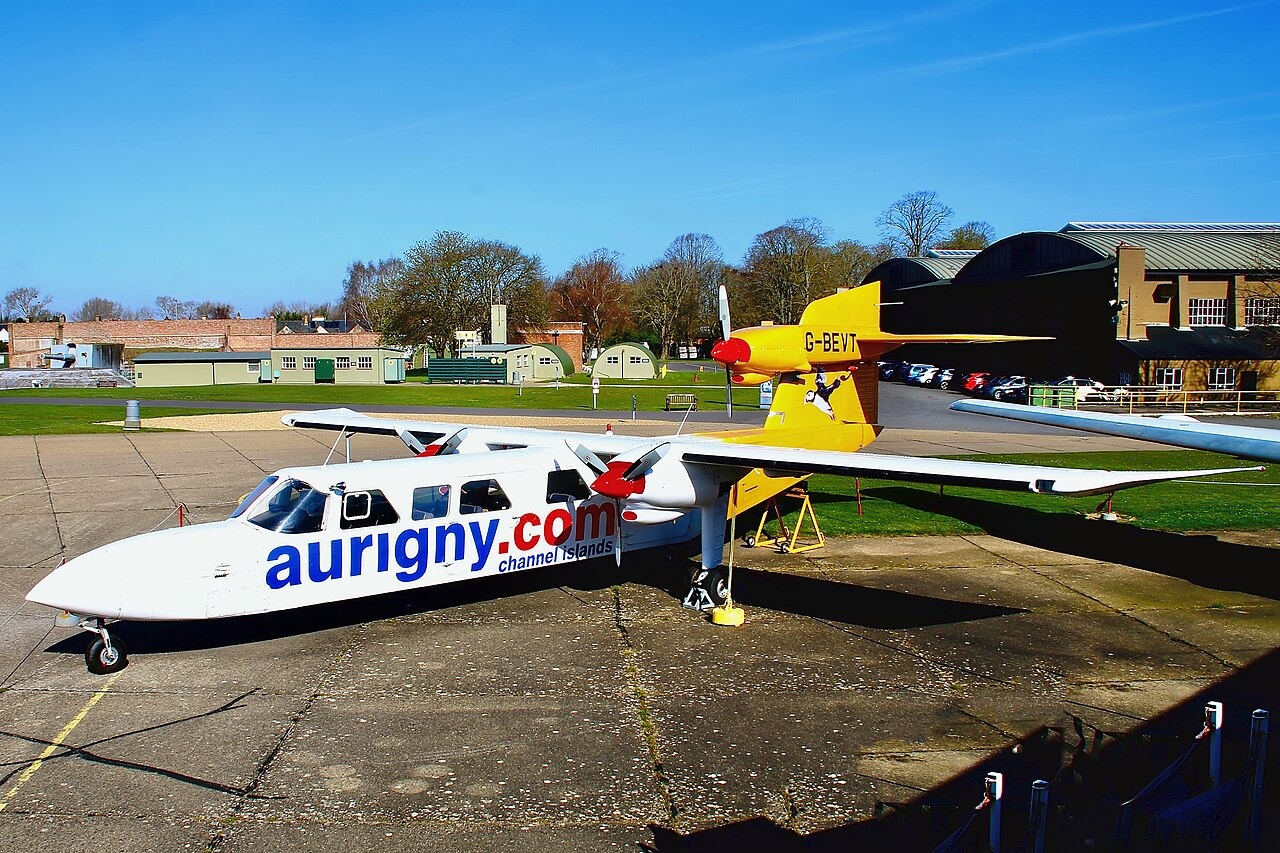
Joey did not leave the island. More than 5,000 people backed a Facebook campaign to keep it in Guernsey, and in January 2019 it went on show hanging from the ceiling of Oaty & Joey’s Playbarn at Oatlands Village. Aurigny’s last Trislanders were withdrawn in 2017, ending 46 years of service with the airline. Another ex-Aurigny aircraft, G-BEVT, is preserved at IWM Duxford in the airline’s white and yellow livery.
Elsewhere, the type flew with LIAT in the Caribbean, Loganair in Scotland, Blue Islands in Jersey and Great Barrier Airlines in New Zealand. A handful are still working in the 2020s, with operators such as Anguilla Air Services and Guyana’s Roraima Airways, a long way from the Isle of Wight.
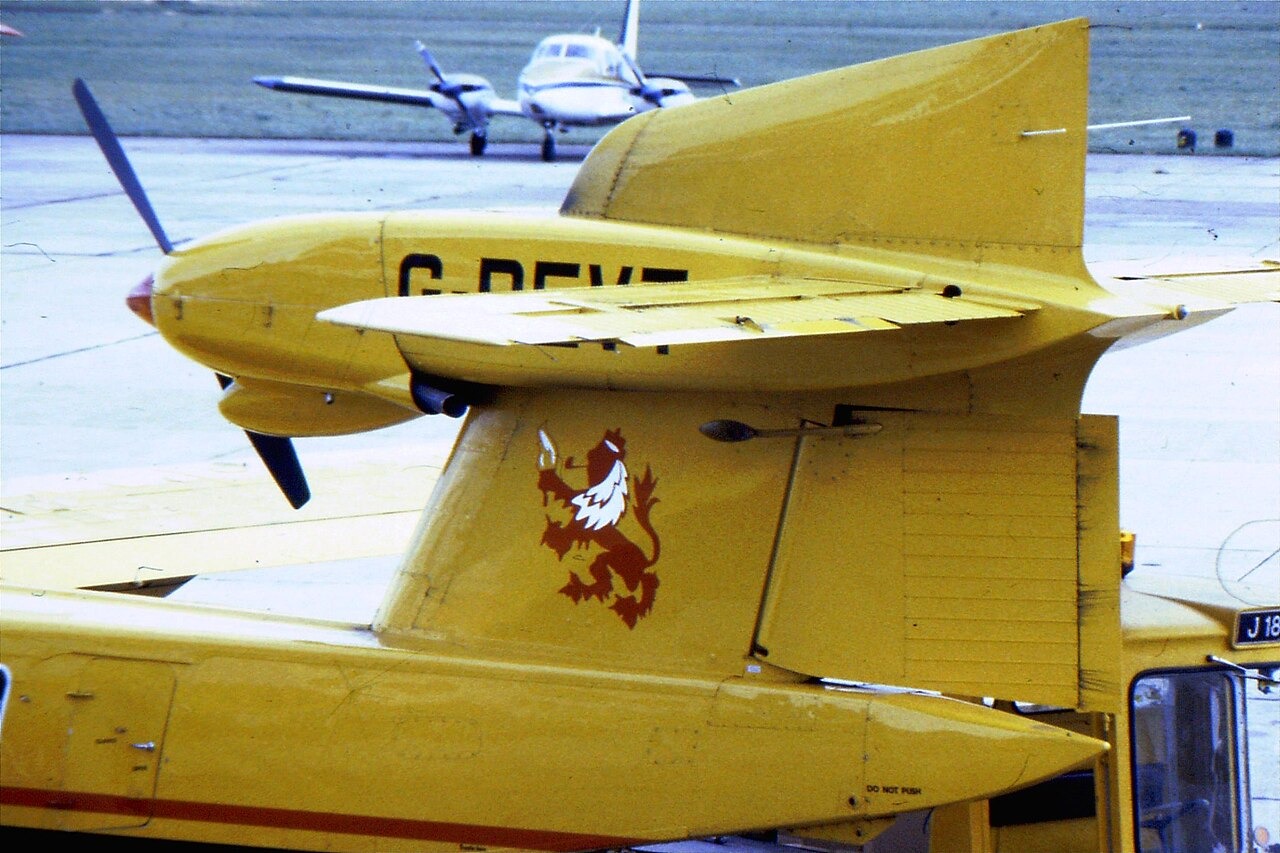
The Trislander was never going to win a beauty contest. But it carried islanders between their homes for nearly half a century, and in Guernsey it is remembered less as an aircraft than as a friend with a red nose.
Just Planes marks the end of 46 years of Trislander service at Aurigny.
Sources: BBC News, Guernsey Press
Header photo: NMOS332 / Wikimedia Commons, CC BY-SA 2.0

0 Comments