
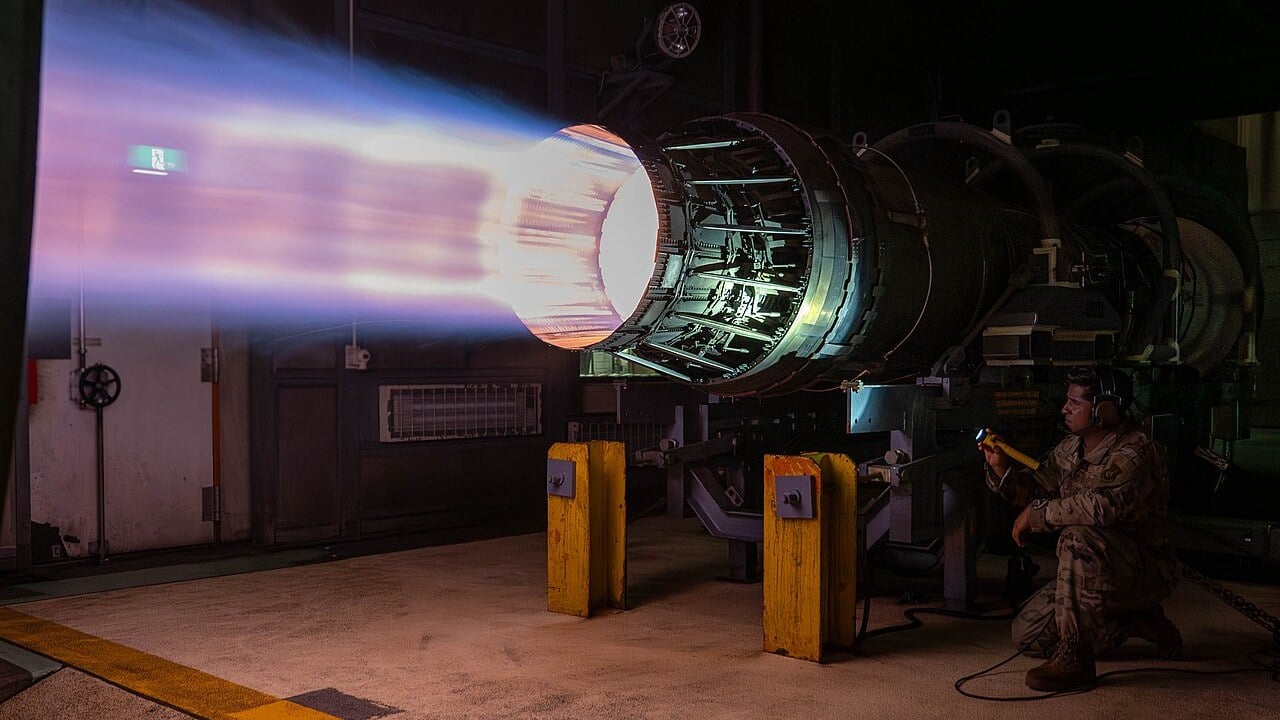
Fifty-eight companies just joined a $16.1 billion club. The entry fee was paid the other way round: each of them received exactly $1,000. On Friday 20 November 2026, the Pentagon’s daily contracts announcement listed a new multiple-award contract for “advanced propulsion enterprise work” for the US Air Force, with a cumulative ceiling of $16.1 billion and work that could run until November 2041.
That is roughly 15 years of potential engine work, spread across a pool that runs from start-ups to the established engine primes. The catch is in the small print. A ceiling is a maximum, not a promise, and at award the service obligated just $58,000 in fiscal 2027 research, development, test and evaluation money.
Datos rápidos
- Anunciado: Friday 20 November 2026, Pentagon daily contracts announcement
- Cliente: US Air Force; contracting activity Air Force Materiel Command
- Ceiling: $16.1 billion cumulative maximum (not guaranteed spending)
- Tipo: Multiple-award IDIQ contract for advanced propulsion enterprise work
- Awardees: 58 companies, each awarded $1,000
- Obligated at award: $58,000 in fiscal 2027 RDT&E funds
- Ordering period: Work expected to be completed by November 2041
- Origen: Advanced Propulsion Acquisition Contract (APAC), solicited in March 2026
Who is on the list
Breaking Defense, which first reported the award on the evening of 20 November, counted 58 vendors, each competitively selected. Names published from the announcement include Amentum, Boeing, Booz Allen Hamilton, GE Aerospace, Honeywell, Aerojet Rocketdyne, Lockheed Martin, Northrop Grumman, RTX and Rolls-Royce. Work will be performed at each awardee’s location, and Air Force Materiel Command is the contracting activity.
The contract is an indefinite-delivery, indefinite-quantity (IDIQ) vehicle. In plain English, it is a hunting licence rather than a pay cheque. The 58 firms now hold a ticket to compete for individual task orders as the Air Force finds money and needs, and the service is under no obligation to spend anywhere near the full $16.1 billion.
From March notice to November award
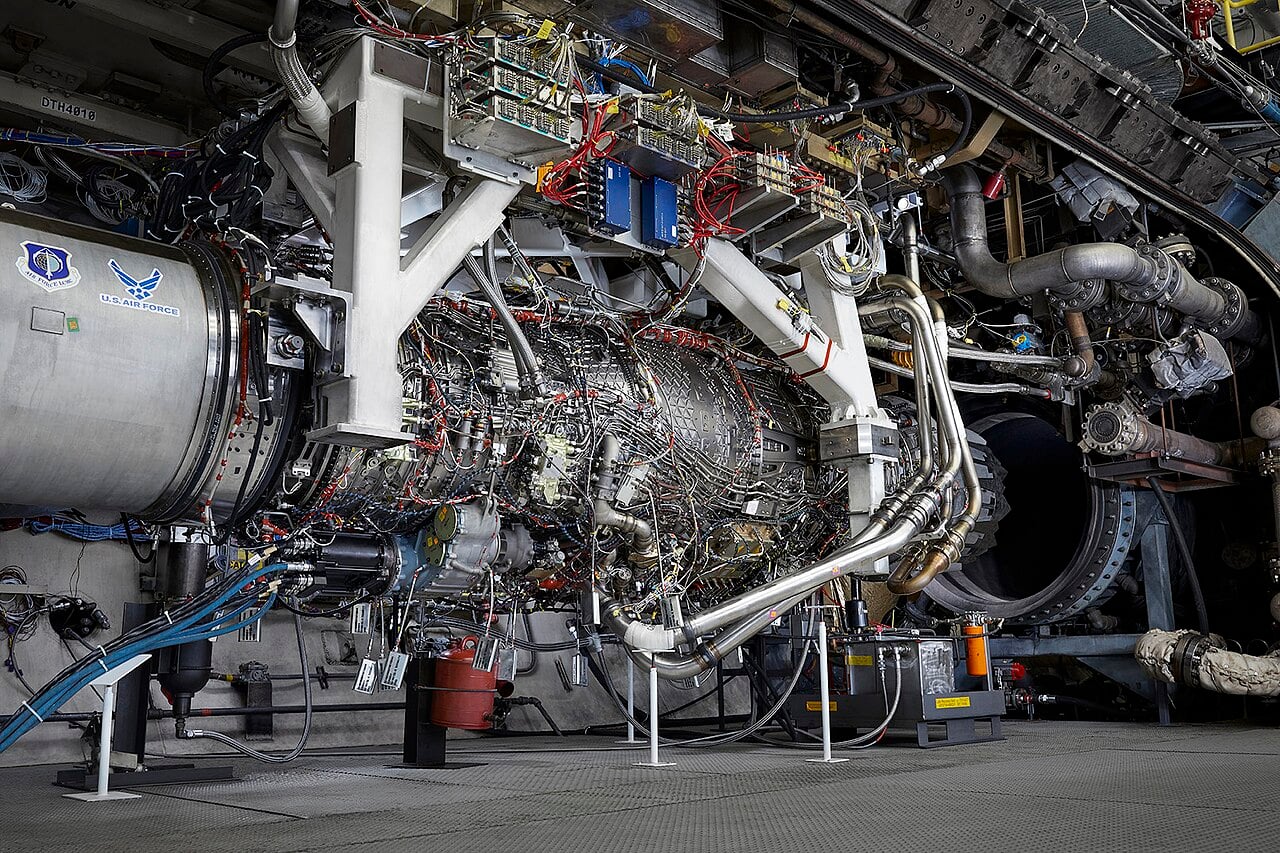
The vehicle is not a surprise. In a notice dated 13 March 2026, the propulsion directorate of the Air Force Life Cycle Management Center described a $16 billion contract called the Advanced Propulsion Acquisition Contract, or APAC, according to Air & Space Forces Magazine. The solicitation covered everything from technology maturation and concept demonstrations to production, fielding and sustainment.
That March notice also admitted the effort had no dedicated funding yet, and said no contracts would be awarded until it did. It pointed to “future Air Force, inter-agency, and outside agency funding” without naming the sources. Proposals were due on 13 April, and the Air Force said it would let new firms join the pool after two years.
Whether that funding gap has now closed is unclear. Breaking Defense said the Air Force did not immediately respond to questions about the contract’s funding and expected scope. Each $1,000 award is a token sum. The real money, if it comes, will flow through task orders under the advanced propulsion contract.
Why the Air Force wants a propulsion pool
Engines are suddenly the bottleneck in almost every US airpower plan. The Air Force needs small, cheap powerplants for Collaborative Combat Aircraft drones and missiles, and earlier in 2026 it awarded several design contracts for future CCA propulsion. It is also funding adaptive-cycle engines through the Next Generation Adaptive Propulsion programme, which could power the F-47 sixth-generation fighter.
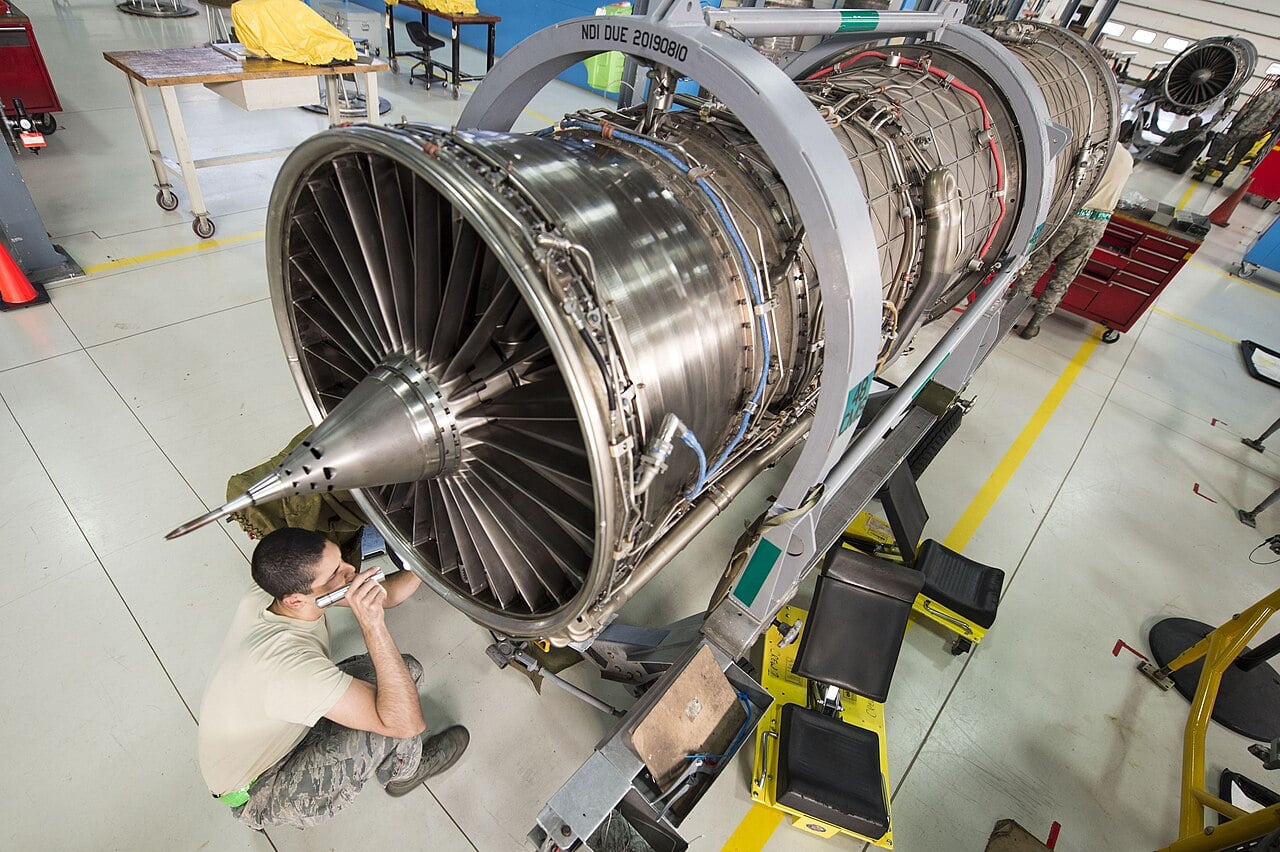
There is plenty of work on existing fleets too. The Air Force flies large engine fleets on fighters such as the F-15E Strike Eagle y el F-16 Fighting Falcon, and Air & Space Forces Magazine noted in March that APAC could also be used to field upgrades and new sustainment concepts for aircraft already in service.
RTX’s own video on the Pratt & Whitney XA103, one of the adaptive-cycle engines in the Air Force’s separate Next Generation Adaptive Propulsion programme.
APAC does not replace those programmes. It is a fast lane for buying engine work once a requirement appears, so the propulsion directorate does not have to run a fresh full competition each time. If the money follows, the 58 companies holding a $1,000 ticket could be sharing in billions of dollars of engine work into the 2040s.
If it does not, the Air Force will have built a very large garage with very few cars in it. Either way, the race for the next generation of US military engines now has a starting grid, and it is 58 companies wide.
Sources: US Department of War contracts announcement (20 Nov 2026), Breaking Defense, Air & Space Forces Magazine, TheFly / TipRanks
Header photo: Airman Nathaniel Jackson / US Air Force, public domain



0 Comments