
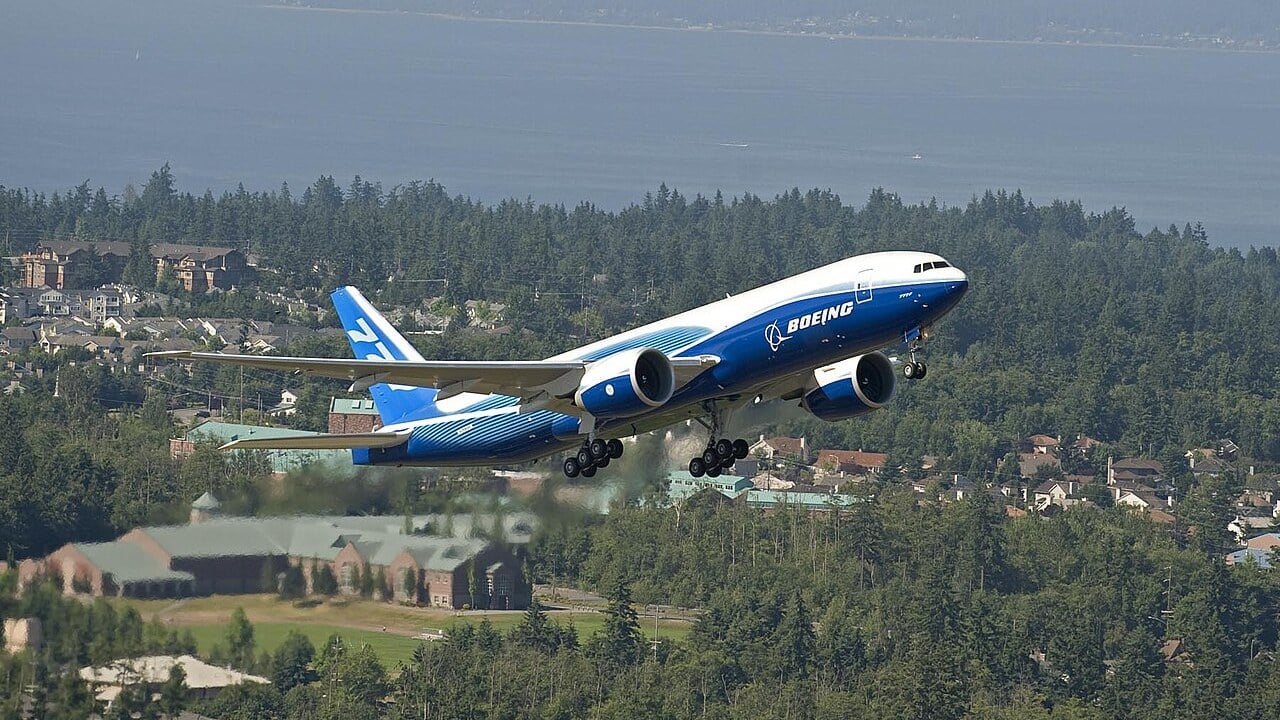
Boeing has not finished a 777 Freighter in nearly two months. Not because of a strike, an engine shortage or a regulator. According to a Reuters exclusive published late on 23 October 2026, the line in Everett, Washington, stopped because a small Florida supplier stopped sending one wing part.
Three Boeing workers told Reuters that 777F production has been halted for almost two months by a dispute with the supplier, Vaero, and has still not resumed even though the two companies reached a settlement in late September. The same dispute also disrupted the 767 line, which builds the 767 Freighter and the KC-46 Pegasus aerial refuelling tanker. Boeing declined to comment, and Vaero did not respond to Reuters.
Datos rápidos
- Qué: Boeing 777 Freighter production halted for nearly two months, according to three Boeing workers who spoke to Reuters
- Informado: Reuters exclusive, 23 October 2026
- The part: Fixed trailing-edge rib kit for the wing
- Supplier: Vaero, Jacksonville, Florida (the former Kaman Aerospace plant), sole source of the kits per Boeing’s complaint
- Claimed cost: Up to $6.5 million a day, according to Boeing’s August complaint
- Also hit: 767 line, including the 767 Freighter and KC-46 tanker
- Not affected: 777X, which has a composite wing
- Estado: Settlement reached in late September; 777F production not yet resumed, workers say
- 777F deliveries in 2026: 21 so far, per Boeing data cited by Reuters
The part Boeing calls “indispensable”
The component is the fixed trailing-edge rib kit. As Law.com explained when it first reported the lawsuit in August, the kits provide wing attachment points and help distribute loads. Boeing’s complaint, filed in King County Superior Court in Washington state, described the part as “indispensable” and Vaero as the sole supplier.
According to the complaint, which Reuters reviewed, Vaero had stopped delivering the kits, stalling work at the Everett wing-production facility that supports the 777F and 767 programmes. Boeing put the cost of the disruption at as much as $6.5 million a day.
Boeing told the court that without the kits it could not complete the fixed trailing edge of a 777 wing due for delivery in December, and that the wing could not be joined to the fuselage. It asked for an injunction forcing Vaero to deliver the parts, plus damages.
A Kaman plant under new owners
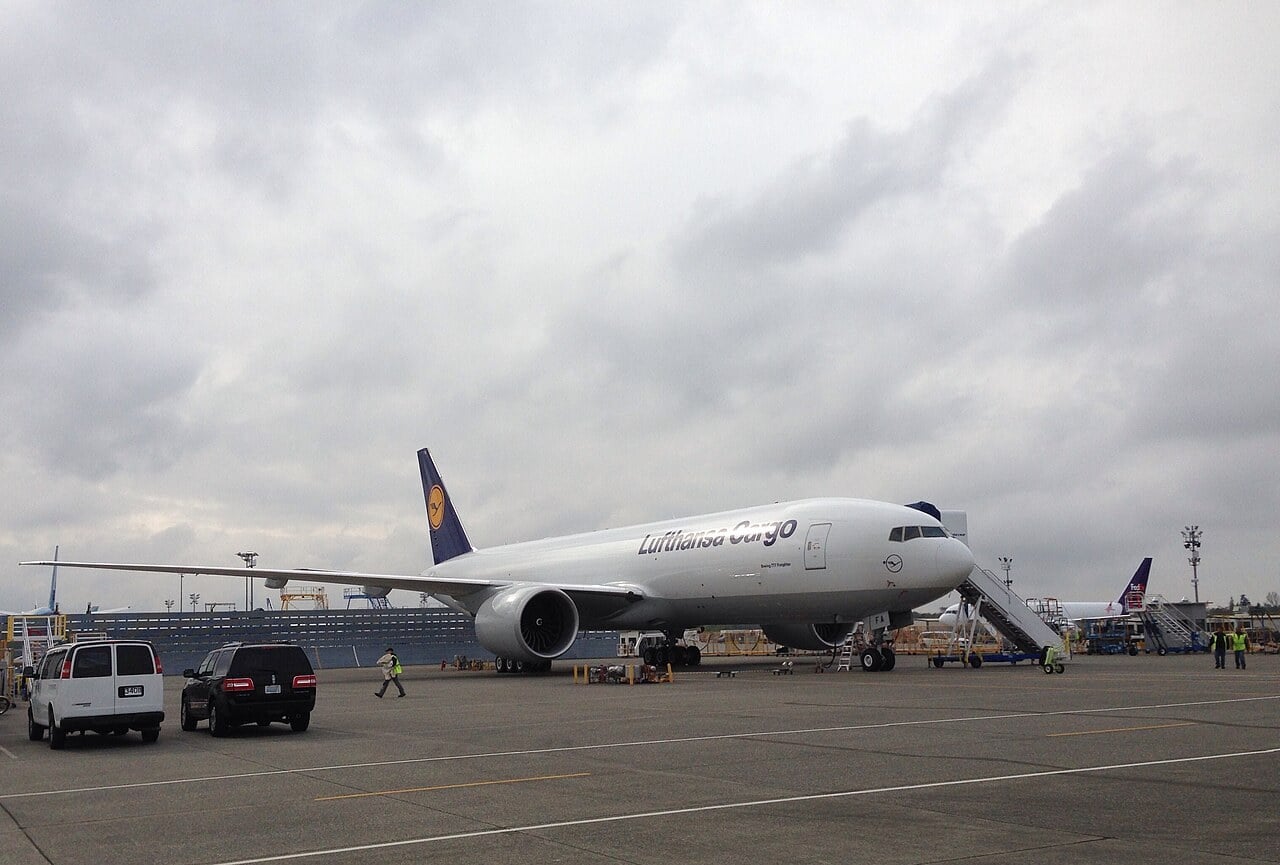
The Jacksonville factory is not new to Boeing. It belonged to Kaman Aerospace until Kaman sold it in November 2024 to a private equity firm, and it was later rebranded Vaero Jacksonville, according to the New York Law Journal. In its complaint Boeing said it had issued hundreds of orders to Kaman between 2015 and late 2024, and that it only learned of the sale months after the fact.
Boeing alleges that Vaero first accepted orders on the old terms, then pushed for large price increases, including tens of millions of dollars in new payments on orders it had already accepted. Those are Boeing’s allegations. When the case was reported in August, Vaero had not yet filed a response, and it has not commented publicly since.
Reuters says the companies settled in late September. One worker said Boeing has received some 767 parts since then. The 777F line, according to the three workers, is still waiting.
Two jets pulled off the line
One Boeing worker told Reuters that, without the Vaero parts, two partially assembled 777 Freighters were removed from the final assembly line. Using data from the consultancy IBA, Reuters identified one of them as destined for FedEx. FedEx did not respond to a request for comment.
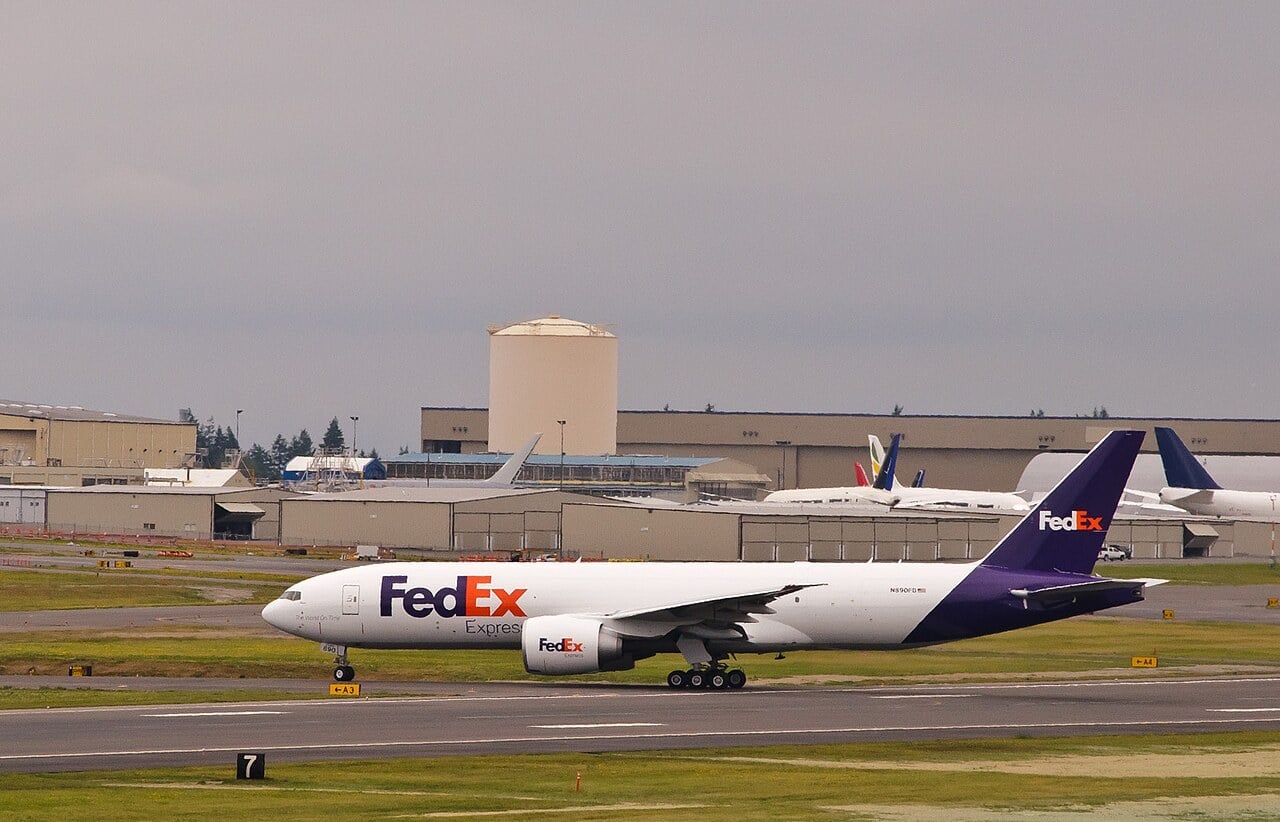
Two of the workers said Boeing is trying to bring production of the rib kit in-house. The 777X family is not affected, because it uses a different, composite wing. Boeing also has a handful of freighters whose wings were assembled before the dispute, and those could still be delivered before the end of the year.
Boeing has delivered 21 777 Freighters so far in 2026, according to company data cited by Reuters. Its own third-quarter figures, published on 13 October, showed only five deliveries from the whole 777 line in July, August and September.
Footage of the assembly of the very first 777 Freighter in Everett, on the line that has now been idle for nearly two months.
The worst aircraft to stall
The timing could hardly be more awkward. The 777F, which first flew from Everett on 14 July 2008 and entered service with Air France in February 2009, is the freighter Boeing has been fighting to keep building. An emissions standard adopted by the United States bars first airworthiness certificates for new 777Fs from 1 January 2028, and in September the FAA granted an exemption for up to 35 more 777Fs to bridge the gap.
The bridge leads to the 777-8 Freighter, which is not expected to deliver before 2028. Customers keep signing anyway: on 30 September, Ethiopian Airlines ordered two 777Fs and eight 777-8Fs. Every month the current line stands still is a month of a production window that already has an expiry date.
Reuters summed it up as a lesson in how fragile aerospace supply chains are. A company that builds some of the largest twin-engine aircraft in the world has spent two months waiting on a kit of ribs from Florida.
Sources: Reuters, Law.com / New York Law Journal, Airways Magazine, Boeing, Wikipedia (Boeing 777)
0 Comments