
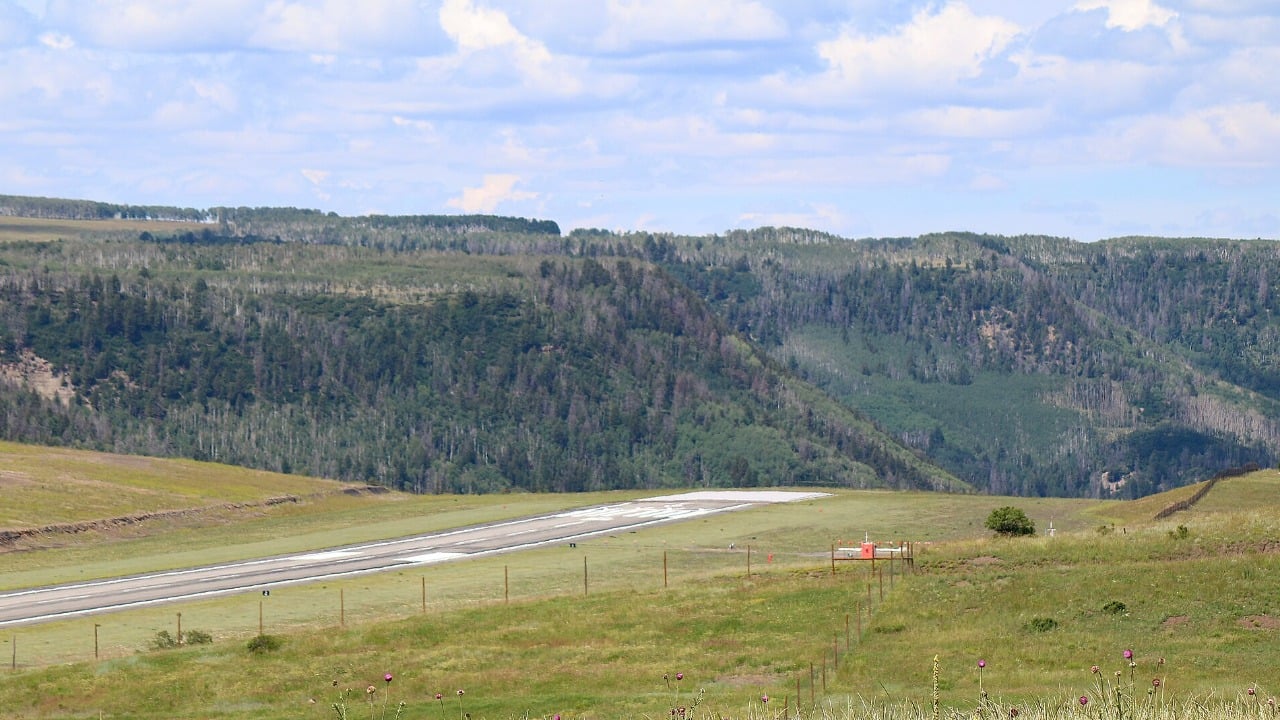
Telluride Regional sits on a mesa in south-west Colorado at 9,069.7 feet, which makes it the highest commercial-service airport in the United States by a wide margin. The runway is 7,111 feet long and ends, at both ends, in air. The FAA’s own airport record is unusually candid about what this does to the flying: “ARPT ON 1000 FT MESA; STRONG VERTICAL TURBULENCE IN AREA OF MESA EDGE”, with “RISING TERRAIN ALL QUADRANTS” thrown in for completeness.
Forty miles of mountain away, Aspen-Pitkin County sits at 7,837.9 feet in a valley ringed by peaks between 12,500 and 14,000 feet, with a runway restricted to aircraft of 95 feet wingspan or less. Europe has a word for fields like these. It has a formal category, a set of recommended practices, and an expectation that a captain will go and look at the place before being allowed to command a flight into it.
America has something different, and it is stranger and more interesting: a rule that lets an airline captain qualify for the hardest airport in the country by watching a video.
Quick Facts: the FAA special-airport rule
The regulation: 14 CFR 121.445, “Pilot in command airport qualification: Special areas and airports”
Who designates: the Administrator, for airports with difficult terrain, obstructions or complex procedures
How a captain qualifies: an entry to the airport as a pilot flight crewmember within the preceding 12 calendar months, o qualification “by using pictorial means acceptable to the Administrator”
The exception most people miss: none of it applies if the ceiling is at least 1,000 ft above the lowest MEA, MOCA or initial approach altitude and visibility is at least 3 statute miles
Where the current list lives: not on a public FAA page. It is tied to operations specifications C050 and C067 in WebOPSS; the last public notice, N 8900.640, took effect 13 September 2022 and was cancelled a year later
The European equivalent: AMC1 ORO.FC.105(b)(2);(c) — Category A, B and C aerodromes. There is no pictorial option for Category C, and no public register either
Telluride (KTEX): elevation 9,069.7 ft, runway 7,111 x 100 ft, no control tower
Aspen (KASE): elevation 7,837.9 ft, runway 8,006 x 100 ft, maximum wingspan 95 ft
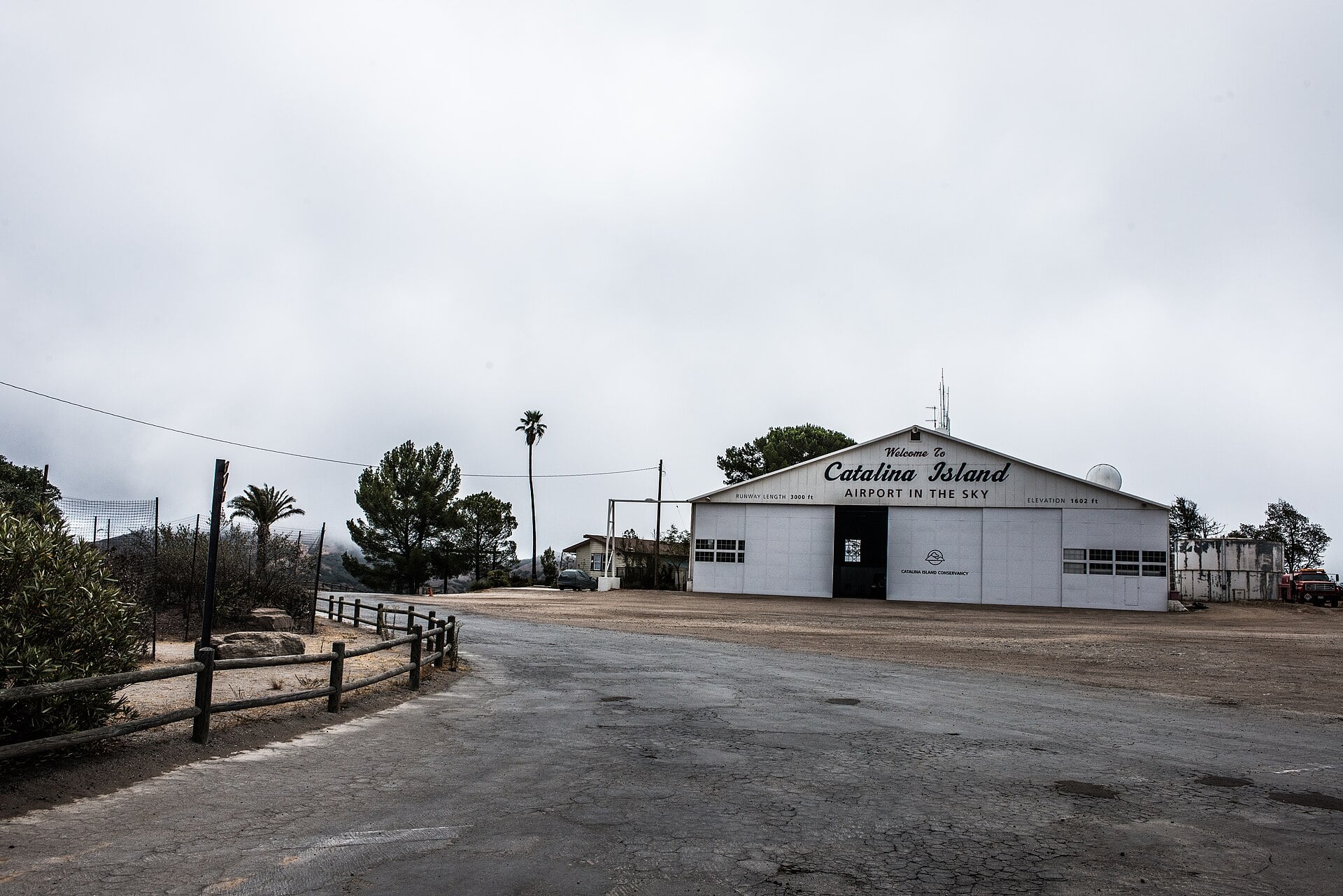
Catalina (KAVX): elevation 1,602 ft, runway 3,000 x 75 ft, operator limit 12,500 lb, not a special airport at all
Airport figures from the FAA National Flight Data Center, data effective 1 to 29 October 2026
The rule almost nobody outside an airline has read
Part 121 of the Federal Aviation Regulations governs scheduled airline operations in the United States, and buried in Subpart N is a short section with an unglamorous title: Pilot in command airport qualification: Special areas and airports. It opens by giving the Administrator the power to designate airports that require special qualification, singling out difficult terrain, obstructions and complex approach or departure procedures.
Then it says how a captain gets qualified, and this is the part worth reading twice. Within the preceding 12 calendar months, either the pilot in command or the second in command must have made an entry to that airport — a real takeoff and landing, as a pilot flight crewmember — or the pilot in command must have qualified for that airport “by using pictorial means acceptable to the Administrator”.
Pictorial means. The phrase has been in the regulation for decades and it has aged into something the drafters cannot have envisaged. In 1970 it meant a slide carousel and a briefing folder. Today it means a high-definition cockpit video of the approach, a terrain visualisation, an annotated chart package, a tablet walkthrough — a production an operator builds once and issues to every captain on the fleet. And it is a complete substitute. A captain who has never physically been to Aspen can be legally qualified to command an airliner into it.
There is a second escape hatch in the same section, and it is the one that quietly does most of the work. Paragraph (c) switches the whole requirement off when the weather is good: specifically, when the ceiling is at least 1,000 feet above the lowest MEA, MOCA or initial approach altitude for the airport’s instrument procedure, and visibility is at least 3 miles. On a clear Colorado morning, Aspen is not a special airport. On a low, grey one, it is.
That is a very American piece of regulatory design: performance-based, weather-indexed, and placing the burden on the operator’s own programme rather than on a bureaucratic visit.
The list is not where you think it is
Here is where the trail goes cold for anyone trying to look this up. There is no tidy public FAA page listing the special airports. The notices that used to publish it — N 8900.206 in 2013, N 8900.304 in 2015, N 8900.640 in 2022 — were all cancelled twelve months after taking effect, which is simply how FAA notices work. The live list is attached to operations specifications C050 and C067 and maintained in WebOPSS, the FAA’s web-based operations safety system, with a revision history inspectors reach through the Dynamic Regulatory System.
So the honest answer to “which US airports are special airports?” is: the current answer lives in each operator’s own operations specifications, and the public versions are snapshots that have formally expired. Anyone publishing a confident current list is reading a cancelled notice.
What those snapshots do show is how counter-intuitive the designations are. The 2015 notice lists the obvious mountain fields — Aspen, Telluride, Eagle, Jackson Hole, Hailey, Gunnison, Durango, Hayden, Mammoth Lakes, South Lake Tahoe, Missoula, Reno, Flagstaff — but also Burbank, Ontario, Palm Springs, Burlington, Binghamton and Elmira. San Diego made it for rising terrain close to the runway. Washington National made it for special arrival and departure procedures. So did San Francisco.
And the reasons are specific rather than generic. Butte: numerous obstructions, no tower. Cody: no approach control or tower, non-precision approaches only. Gunnison: uncontrolled, numerous obstructions, complex departure procedures. Gustavia on St Barth’s, which Americans reach through the same rule: severe mountainous terrain, and departure on runway 28 prohibited outright. Kathmandu carries a host-nation simulator requirement on top of the American one. The 2022 update added Mexico City and the new Felipe Angeles field beside it, plus Eilat-Ramon and Comayagua, and removed Beijing Daxing.
Wendover Productions on the fight over shifting Aspen’s runway 80 feet west — the physical expression of that 95-foot wingspan limit in the FAA record.
Europe asks you to go and look
The European equivalent lives in AMC1 ORO.FC.105(b)(2);(c), the acceptable means of compliance sitting under Regulation (EU) 965/2012. It sorts aerodromes into three categories. Category A is the easy case: an approved instrument approach procedure, at least one runway with no performance-limited procedure for take-off or landing, published circling minima no higher than 1,000 ft above aerodrome level, and night capability. Category B is anything that fails that test or needs extra considerations. Category C, in the text’s own deadpan phrasing, is “an aerodrome that requires additional considerations to a category B aerodrome”.
Three differences from the American rule matter. The first: there is no pictorial option for Category C. A briefing alone does not qualify you; you either ride along and watch, or you fly it in a simulator. The second: the European text says should, not must, because an AMC is a recommended means of compliance rather than binding law — the binding rule, ORO.FC.105 itself, never uses the words Category A, B or C at all.
The third is the one that catches writers out. Because each operator maintains its own Category B and C list in its own operations manual, there is no European register either. The FAA keeps its list in WebOPSS; EASA never had one to keep. Two systems, opposite philosophies, and the same practical outcome: if you want to know whether your flight is going somewhere hard, the answer is in a document only the airline holds.
A Citation CJ4 onto runway 27 at Telluride. The mesa edge arrives exactly where the FAA record says the vertical turbulence does.
The shortest runways in America are not on any list
Which brings us to the gap that makes the whole thing make sense. Ask what the shortest runways in the United States are and you will be given fields like Catalina and Block Island. Neither is a special airport. Neither ever has been.
The reason is jurisdictional rather than operational. Section 121.445 lives in Part 121, which governs scheduled airline operations with large aeroplanes. The genuinely short fields are not served by Part 121 carriers at all, because nothing a Part 121 carrier flies can use them. Catalina’s operator caps the field at 12,500 lb maximum take-off weight, which is the dividing line between a light twin and an airliner, and that is the end of the conversation.
| Aeropuerto | Runway | Elevation | Special airport? | What the FAA record says |
|---|---|---|---|---|
| Block Island State (BID) | 2,502 x 100 ft (763 m) | 108 ft (33 m) | No | Deer and birds on and in the vicinity of the airport; no tower |
| Catalina (AVX) | 3,000 x 75 ft (914 m) | 1,602 ft (488 m) | No | Pilots cannot see aircraft at the opposite end because of the gradient; runway 04 final has a 2.1 per cent downslope; airport limit 12,500 lb |
| Telluride Regional (TEX) | 7,111 x 100 ft (2,167 m) | 9,070 ft (2,764 m) | Yes | Airport on a 1,000 ft mesa; strong vertical turbulence near the mesa edge; rising terrain all quadrants |
| Aspen-Pitkin County (ASE) | 8,006 x 100 ft (2,440 m) | 7,838 ft (2,389 m) | Yes | Terrain will not allow normal traffic patterns; mountains from 12,500 to 14,000 ft nearby; maximum wingspan 95 ft |
Runway and elevation figures: FAA National Flight Data Center airport records, data effective 1 to 29 October 2026. Special-airport status from FAA Notice N 8900.304 and its successors.
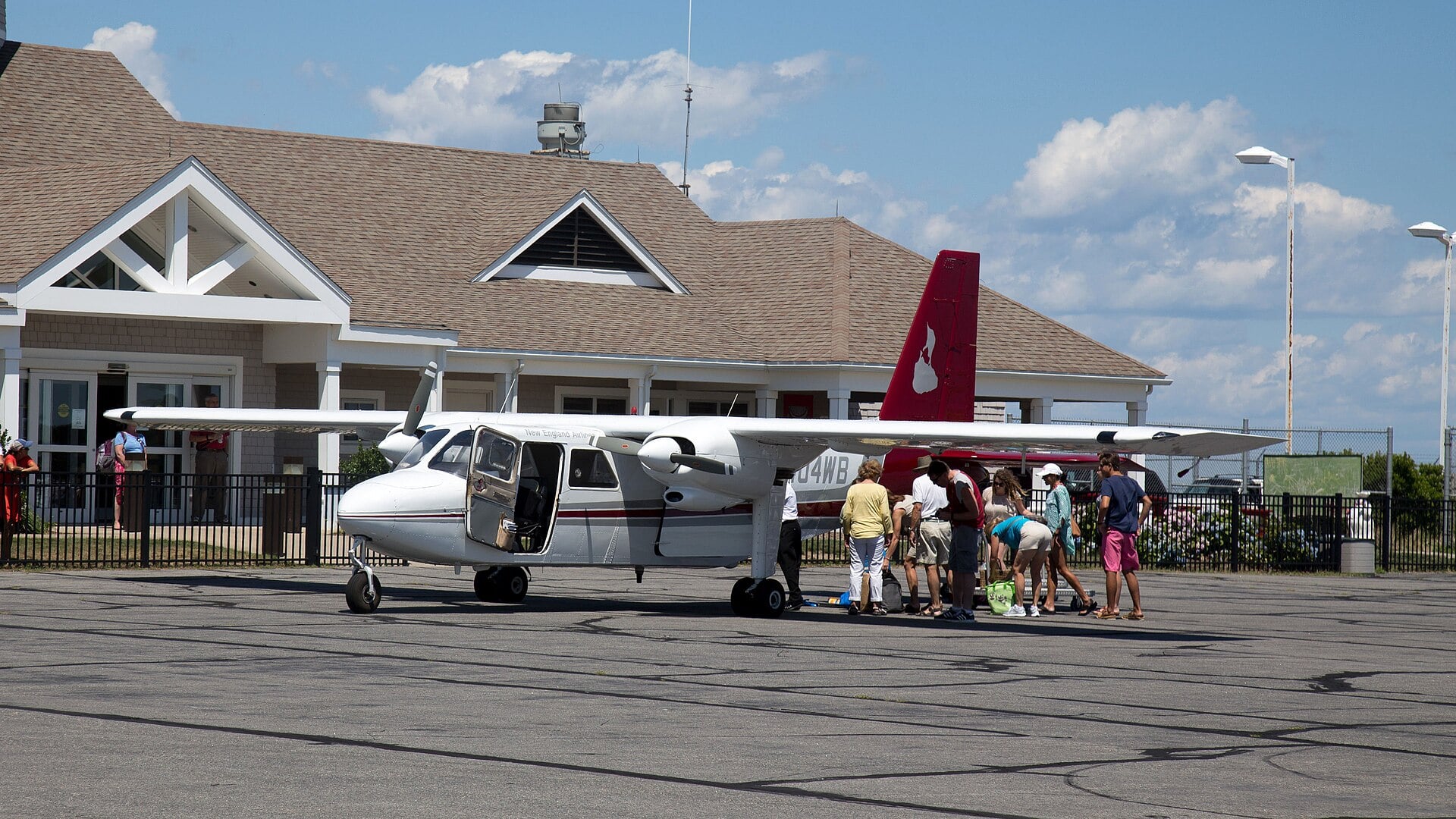
Block Island is the clearer illustration. Its 2,502-foot strip takes scheduled commuter flights on Britten-Norman Islanders, nine-seat twins operating under Part 135 rather than Part 121. No special-airport rule touches them. The qualification machinery that governs Aspen simply does not reach the smallest fields, not because they are easy, but because the regulation was written for airliners and airliners do not go there.
Two answers to one problem
Strip away the paperwork and both systems are answering the same question: how do you let commercial aeroplanes into places that punish unfamiliarity, without either banning the flights or pretending the fields are ordinary?
Europe answers it with exposure. Go and sit in the jumpseat, or fly the approach in a simulator, and the regulator trusts that having seen it once you will not be surprised. America answers it with preparation. Build a good enough briefing package, index the whole requirement to the weather, and trust that a captain who has studied the terrain in detail and only meets it on a 1,000-foot ceiling is adequately defended.
Neither is obviously right. The European approach costs money and crew time and produces pilots who have genuinely been there. The American approach scales, refreshes instantly when a procedure changes, and treats a cockpit video as what it now actually is: a better briefing tool than a slide carousel, and in some respects a better one than a single jumpseat ride three seasons ago.
What both agree on is the thing that would surprise most passengers. The airport that frightens you on approach — the one on the mesa, the one in the valley, the one where the runway ends in a cliff — is not the one the regulators worry about most. They worry about the familiar-looking one with a hidden ridge on the missed approach. That is why San Francisco is on the list and Catalina is not.
A Cessna 310R into Catalina’s 3,000-foot runway. No special-airport rule applies here — and the crest in the middle of the runway is clearly visible on the roll-out.
Sources: 14 CFR 121.445, eCFR current edition; FAA National Flight Data Center airport records for AVX, TEX, ASE and BID, data effective 1 to 29 October 2026; FAA Notice N 8900.304, Special Pilot-In-Command Qualification Airport List: Updates, effective 27 May 2015; FAA Notice N 8900.640, Update to the Special Pilot-In-Command Qualification Airports List, effective 13 September 2022; AMC1 ORO.FC.105(b)(2);(c) to Regulation (EU) 965/2012; Aspen Public Radio and Aspen Journalism reporting on the Pitkin County runway realignment.
Preguntas frecuentes
What is an FAA special airport?
How does a pilot qualify for an FAA special airport?
What does pictorial means mean in 14 CFR 121.445?
Is there a public list of FAA special airports?
Which US airports are special airports?
How short are the shortest runways in the United States?
Does weather change whether the FAA special airport rule applies?
How does Europe handle difficult aerodromes instead?
Publicaciones relacionadas
Saba, Lukla and Courchevel: The World’s Shortest Runways
London City and Key West: What Fits on a 5,000-Foot Runway
Europe’s Most Extreme Airports: Highest, Steepest, Shortest
The World’s Most Dangerous Airport Approaches
Fighter Jet Takeoff and Landing: The Real Numbers, F-104 to F-35


0 Comments