
The runway at Oakland seemed to go on for miles, and the old Piper Apache used most of it. Its wing tanks and auxiliary tanks were full, and the cabin behind the pilot was stuffed with a huge ferry tank, also brimmed. Barry Schiff, later one of America’s best-known aviation writers, was pointing the overloaded twin at Hilo, Hawaii, 2,327 miles away. It was his first ocean crossing, and his relief would have to wait another 16 hours.
No passengers. No cargo. Nobody waiting at the other end except the aeroplane’s new owner. That, in one scene, is a ferry flight: a flight whose only job is to move the aircraft itself.
Most ferry flights are far less dramatic. A brand-new airliner flies from the factory to its airline. A business jet flies empty to the city where its next charter starts. A light single with an expired inspection hops to the nearest workshop. The aeroplane is the payload, and the pilot is its driver.
Datos rápidos
- Ferry flight: A flight whose purpose is to move the aircraft itself, not to carry paying passengers or cargo
- Common types: Delivery flights, positioning legs, flights to maintenance or storage, evacuation and export flights
- US rules: 14 CFR 91.501(b): ferry flights of large aeroplanes and multi-engine turbojets may be flown under Part 91 when no common carriage is involved
- Unairworthy aircraft: Need a special flight permit (US) or permit to fly (Europe), often called a “ferry permit”
- Engine-out ferry: 14 CFR 91.611: only required flight crew may be carried
- Buying a seat: Not possible: a paid seat makes the flight commercial
- Ocean crossings: Atlantic legs as short as about 675 nm; Pacific legs about 2,000 nm need ferry tanks (AOPA, 2014)
What “ferrying” a plane actually means
To ferry an aircraft is to fly it from where it is to where it needs to be, for its own sake rather than for anyone on board. The industry uses several names for the same idea. Delivery flights take new aircraft from manufacturer to customer. Positioning or repositioning flights move an aircraft empty to the start of its next job. Maintenance ferries take it to a hangar, a paint shop or storage.
American regulations treat the ferry as its own kind of operation. Under 14 CFR 91.501(b), “ferry or training flights” of large aeroplanes and multi-engine turbojets may be flown under the general operating rules of Part 91 rather than the airline or charter rules, as long as no common carriage is involved. In plain English: an airline can move an empty jet without running it as a scheduled service, because nobody is buying a ticket.
That is the key to almost every question people ask about ferry flights. A ferry is, by definition, not selling transport. The moment somebody pays to ride along, it stops being a ferry and becomes a commercial flight with all the rules that come with it.
Healthy aircraft and sick ones
There are really two kinds of ferry flight, and it helps to keep them apart. The first is an aircraft that is fully airworthy and simply needs to be somewhere else. A new airliner on its delivery flight normally carries its certificate of airworthiness; legally, it is just a flight with nobody aboard but crew.
The second is an aircraft that cannot meet its airworthiness requirements at the moment but is still capable of safe flight: an annual inspection that ran out, damage beyond published limits, a one-off export. That aircraft needs paperwork before it can move, a special flight permit in the United States or a permit to fly in Europe. Either is often called a “ferry permit”. How those permits work, and how differently the FAA and EASA write them, is a story Afterburner has already told in Special Flight Permit vs Permit to Fly; here it is enough to know that the permit exists, and that in the United States it is also what allows a light aircraft to cross an ocean heavier than its certificated maximum weight when the extra weight is ferry fuel.
Sometimes the aircraft is literally missing an engine. Section 91.611 lets airline operators ferry a four-engined aeroplane, or a three-engined turbine aeroplane, with one engine inoperative to a base where it can be repaired. The conditions are strict: tested performance data, VFR weather, no climb-out over thickly populated areas, and a crew trained for exactly this flight. And one more line.
So can I buy a seat on one?
This is the question behind the search results, and the honest answer is no. You cannot buy a ticket on a ferry flight, because selling the seat would turn it into commercial transport.
The rules on who may simply ride along are more nuanced than the myth that nobody may ever be aboard. On a one-engine-out ferry under 91.611, only the required flight crew may be carried. On a special flight permit, the FAA’s airworthiness certification order, 8130.2L, says that when the aircraft’s flight characteristics have not been appreciably altered, people other than the crew may be carried on non-revenue flights, with the normal Part 91 passenger rules applying. An aircraft flying on a permit, overloaded with fuel or carrying damage, is another matter, and the FAA writes limitations to match.
What about the “empty leg” deals that private jet charter companies advertise? Those are positioning flights that the operator has chosen to sell. Once a seat is sold, the leg is flown as a commercial charter under charter rules, not as a ferry. The jet was going anyway; you just paid to make its trip commercial.
Aviation International News follows the ferry flight of a Daher TBM 910 from France to California.
Across an ocean, alone, in a single
Then there is the ferry trade that gives the word its romance: the pilots who deliver small aeroplanes across oceans. Light aircraft are built in a handful of countries and bought all over the world, and many of them reach their owners under their own power.
Helen Cernik, a Cirrus instructor profiled by AOPA in 2014, had made a dozen ocean crossings in single-engine piston aeroplanes, nine across the Atlantic and three across the Pacific. On the Atlantic, she told AOPA, the longest leg is 675 nautical miles, so the aircraft she delivered typically did not need ferry tanks; the hard part was weather. Her first crossing, in May 2010, began with an unplanned eight-day weather stop at Goose Bay in Canada.
The Pacific is a different animal. Legs there typically run to about 2,000 nautical miles, Cernik said, so ferry tanks are essential. That is why Schiff’s Apache was so heavy. In his account, written for AOPA Pilot, he described navigating long before GPS, by counting the dots and dashes of a Consolan low-frequency station and homing on a US Coast Guard cutter, Ocean Station November, stationed in a grid halfway to Hawaii.
The fuel that makes these flights possible is also their biggest risk. AOPA’s Air Safety Institute built one of its Real Pilot Story films around ferry pilot Kerry McCauley, who discovered a serious problem with his auxiliary fuel tank while flying solo over the North Atlantic.
AOPA Air Safety Institute’s Real Pilot Story: ferry pilot Kerry McCauley and an auxiliary fuel tank problem over the North Atlantic.
How much does a ferry flight cost? There is no list price. Ferry companies quote each job individually, and the bill depends on the distance, the fuel, any permits and modifications, insurance and the pilot’s airline trip home.
A wartime profession
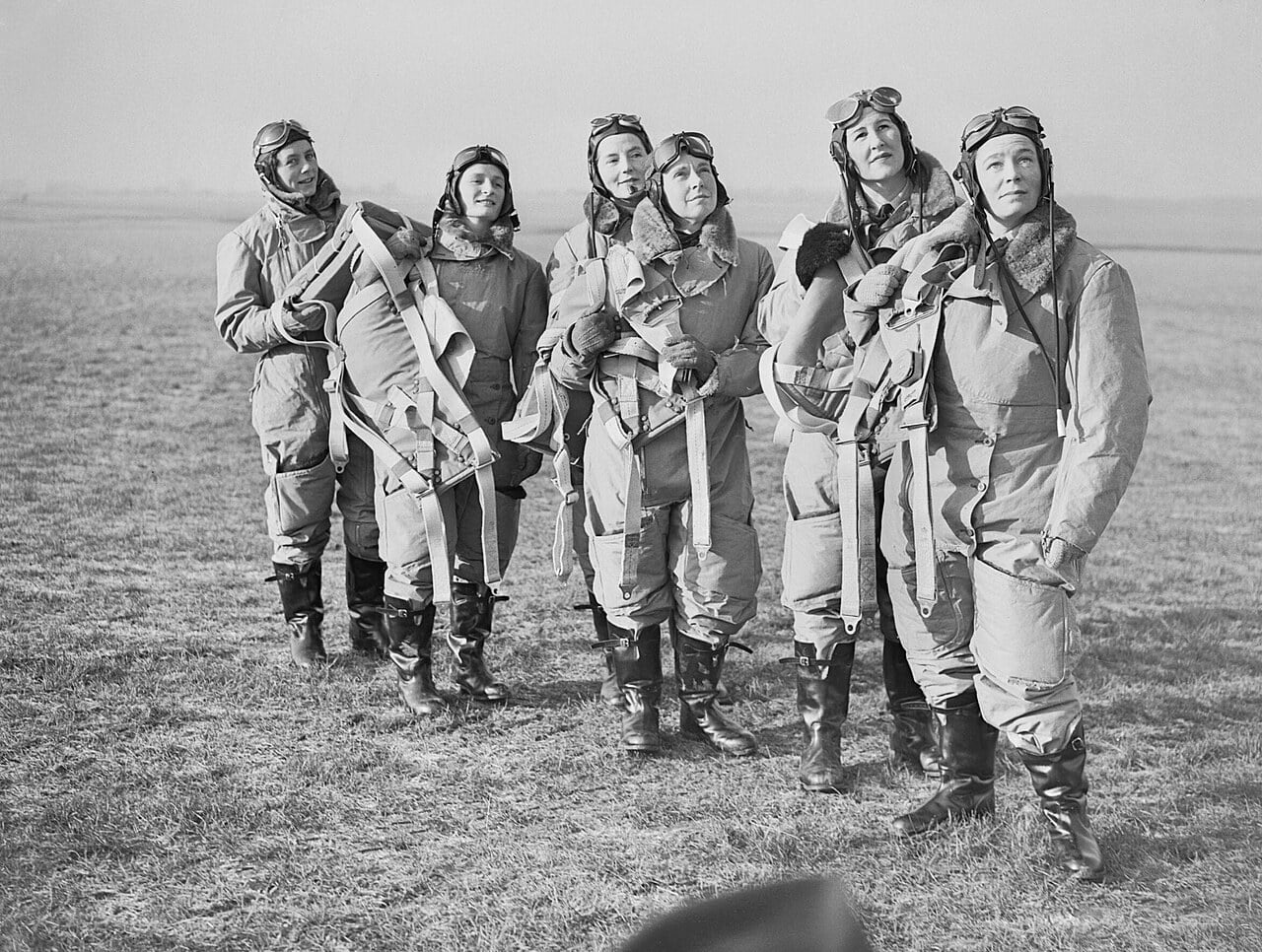
Ferrying aircraft became a profession in the Second World War. In Britain, the civilian Air Transport Auxiliary ferried new, repaired and damaged military aircraft between factories, maintenance units and front-line squadrons, freeing combat pilots to fight. Women flew for it from the first winter of the war; a group of them was photographed in flying kit at Hatfield in January 1940.
The United States followed with the Women’s Auxiliary Ferrying Squadron, founded by Nancy Harkness Love. Ferrying was never safe work: Cornelia Fort, who had been airborne over Pearl Harbor on the morning of the attack, was killed in 1943 while ferrying a trainer.
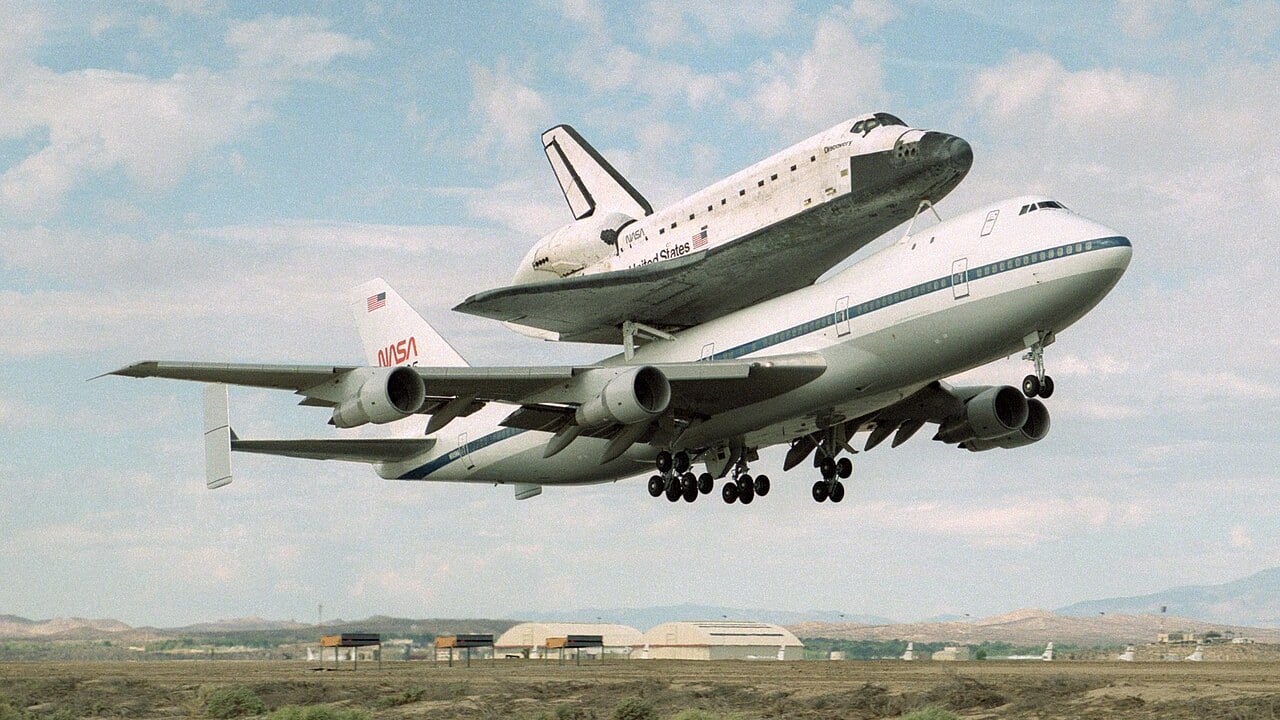
Even the most famous ferry flights in history carried no passengers. NASA used the same word for flying a Space Shuttle orbiter home to Florida on the back of its modified 747 Shuttle Carrier Aircraft. One aeroplane, bolted to another, going somewhere for its own sake.
WNEP’s report on a pilot celebrating his 900th transatlantic crossing.
So the next time an airliner lands with its cabin dark and its windows empty, or a small single taxis in at Goose Bay with an immersion suit on the right-hand seat, you will know what you are looking at. Not a flight that failed to sell. A ferry flight, doing exactly what it was meant to do.
Sources: US Code of Federal Regulations (14 CFR 91.501, 91.611), FAA Order 8130.2L, FAA Flight Standards special flight permit guidance, AOPA, AOPA Pilot, AOPA Air Safety Institute, Imperial War Museums, NASA
Header photo: NASA / Dennis Taylor, public domain



0 Comments