
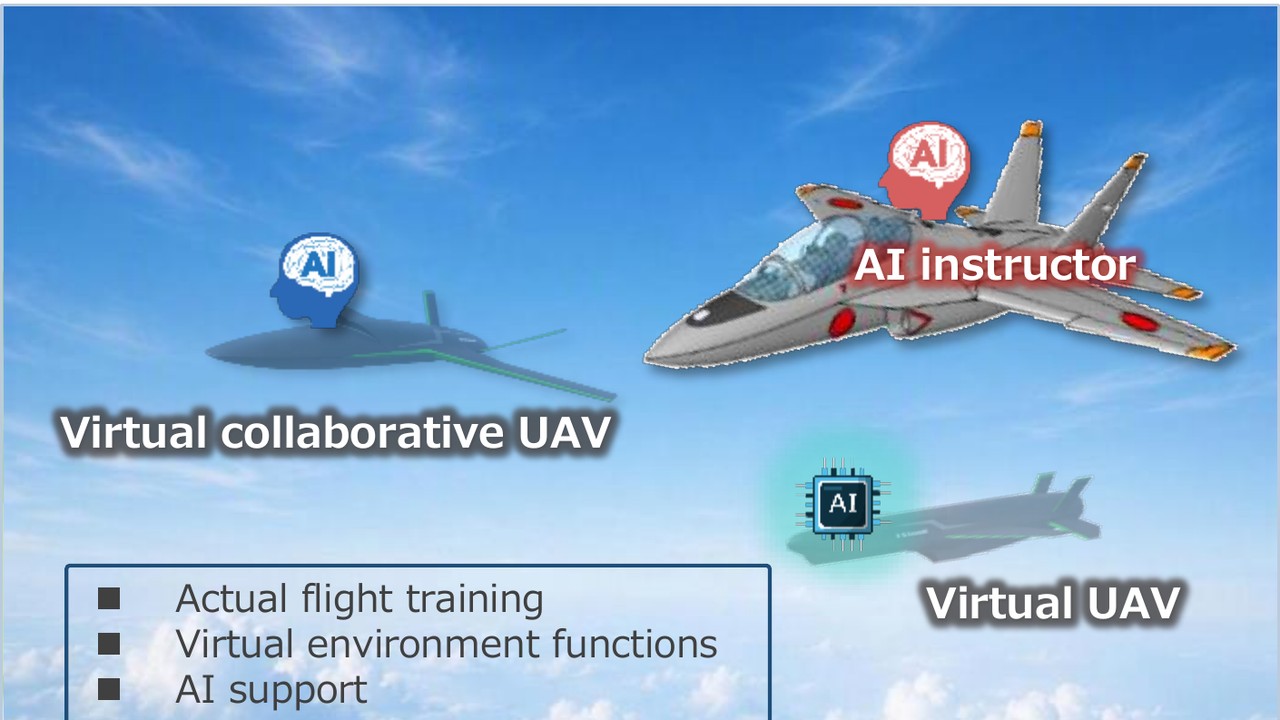
Japan's next jet trainer may come with an instructor who is not in the cockpit at all. In an investor presentation dated 6 October 2026, Kawasaki Heavy Industries showed a concept for a next-generation trainer aircraft, built around an AI instructor, virtual drones and a shared training data platform.
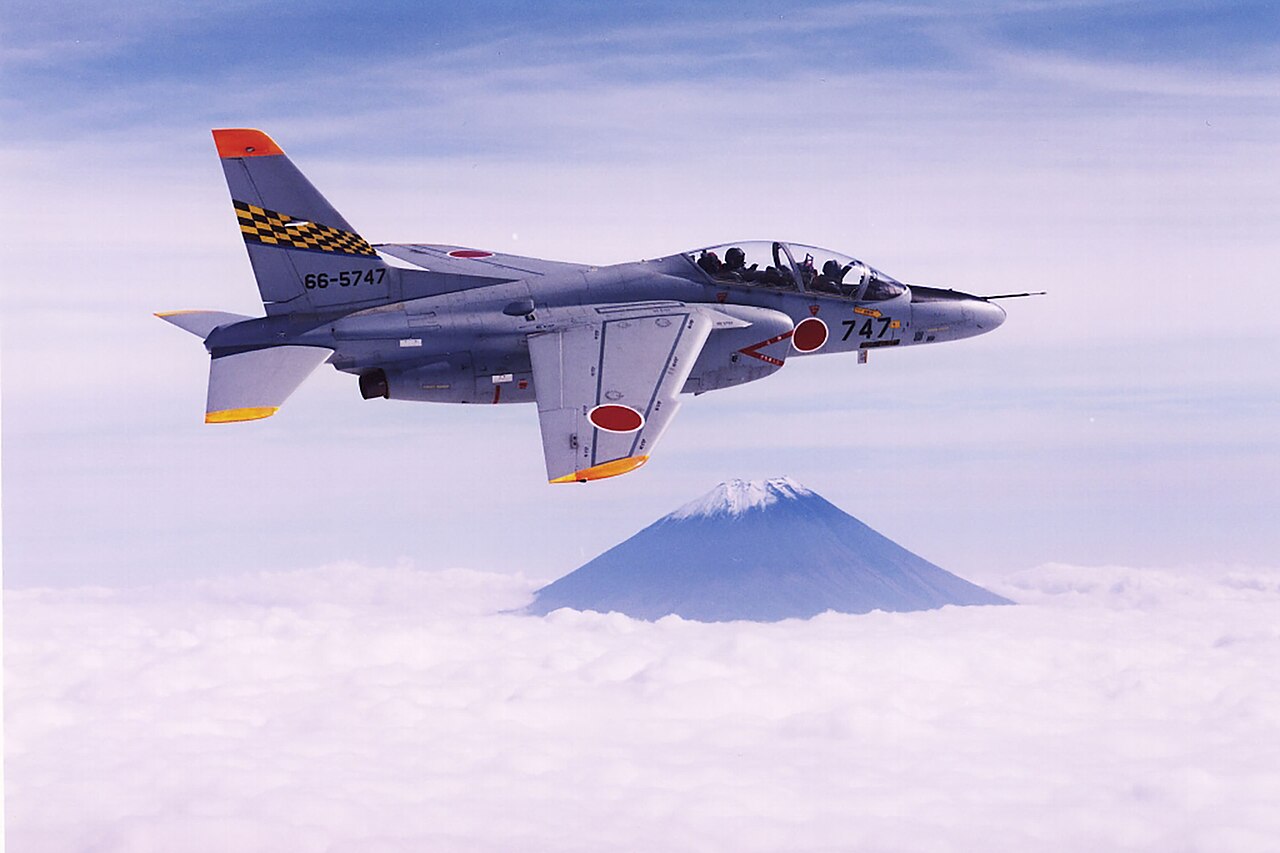
The aircraft it would replace is Kawasaki's own: the T-4, the twin-engine jet that has trained Japanese fighter pilots since 1988 and that the Blue Impulse aerobatic team has flown since 1995. The presentation lists "development of next trainer aircraft and integrated training system" as one of the company's key defence initiatives, with a photo of the T-4 next to it.
Datos rápidos
- Fuente: Kawasaki Heavy Industries, Group Vision 2030 progress report, 6 October 2026
- Qué: concept for a next-generation trainer aircraft and an integrated training system
- Características principales: AI instructor, virtual UAVs and collaborative UAVs, common training data platform
- Layout shown: tandem two-seater with twin vertical tails
- Not disclosed: engine, performance, schedule, budget
- Aircraft it would replace: the Kawasaki T-4, in service since 1988
What Kawasaki Actually Showed
The concept appears on two slides of the presentation, under the heading "New Ways of Warfare". It is not a stand-alone aircraft pitch. Kawasaki describes an integrated education and training system with three parts: an advanced ground training device for simulator training and simulated combat, a next-generation trainer aircraft for actual flight training with virtual environment functions, and a data platform that ties the two together.
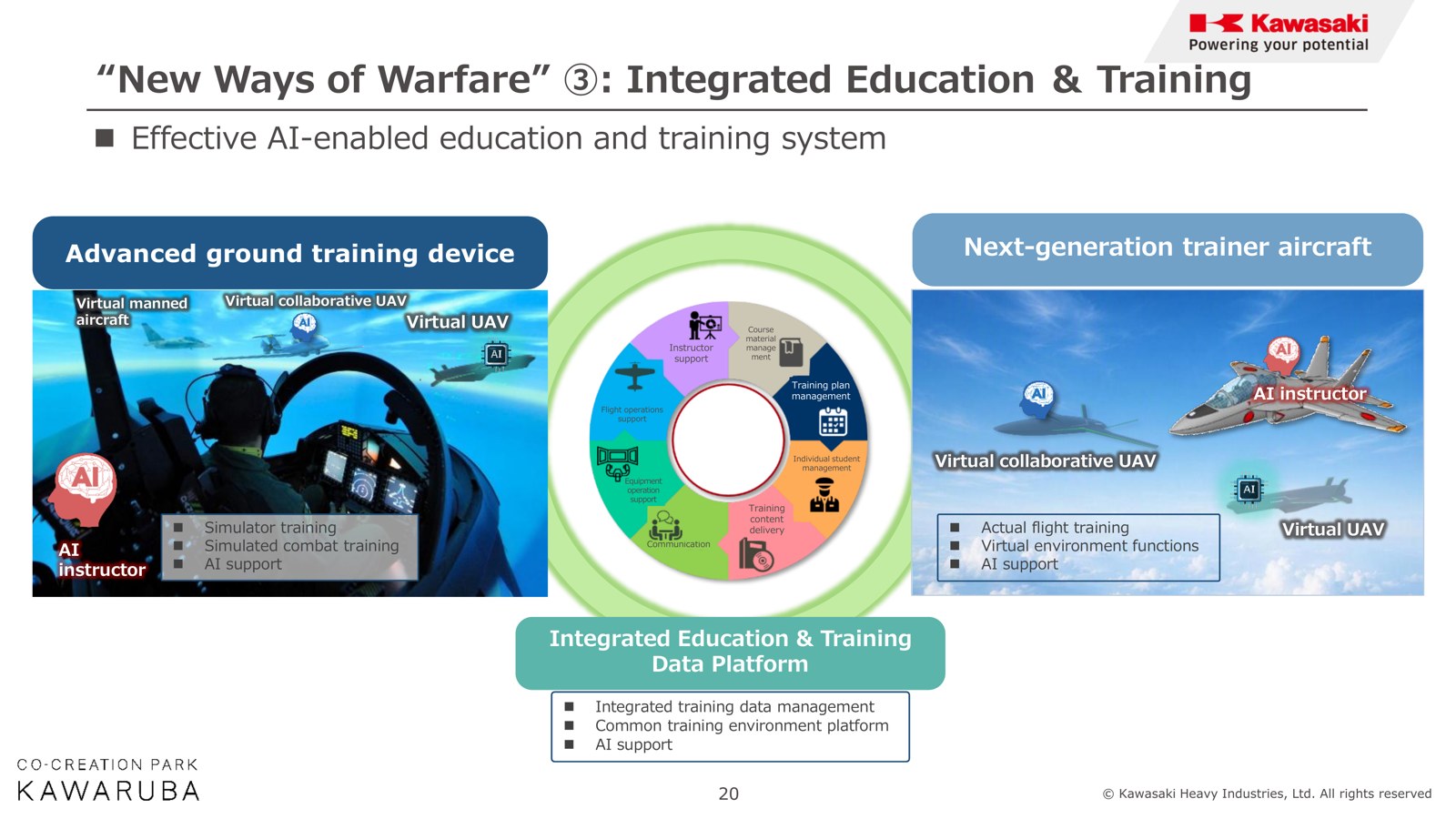
Both the simulator and the aircraft carry an "AI instructor" in Kawasaki's graphic, and both show virtual unmanned aircraft flying alongside the student. The idea is easy to follow: a trainee practises working with drone wingmen long before they ever fly with a real one, because those drones exist only in the training system.
The illustration of the aircraft itself is small. It shows a tandem two-seat jet with swept wings and twin vertical tails in Japan Air Self-Defense Force markings. Alert 5, which reported on the slides, noted that the layout resembles the Boeing T-7A Red Hawk. Kawasaki gives no engine type, performance figures, schedule or budget, so this is a concept, not a design.
The T-4 Needs a Successor
The T-4 first flew as a prototype in 1985, and the first production aircraft went to the Japan Air Self-Defense Force in September 1988. Kawasaki built 208 production T-4s plus four prototypes, each powered by two Ishikawajima-Harima F3 turbofans. It is a subsonic jet designed in the early 1980s, long before drone wingmen and AI-assisted training were part of the plan.
Japan has been studying a replacement since 2021. In 2024, Japanese media reported that Tokyo was considering the T-7 Red Hawk, and Mitsubishi Heavy Industries showed its own trainer concept at the DSEI Japan show in 2025. Kawasaki's slides put the T-4's original builder into the conversation too.
Why Kawasaki Wants In
The trainer sits inside a much bigger number. In the same presentation, Kawasaki raised its forecast for defence revenue in FY2030 to around 700 to 800 billion yen, and set a target of more than one trillion yen by the mid-2030s. It credits Japan's rising defence spending and the shift to what it calls new ways of warfare: AI, unmanned systems and stand-off weapons.
A trainer programme is long-term work. Whoever wins it can expect to supply aircraft, simulators and support for many years, and Kawasaki clearly wants a say in what follows the T-4. For now, it has shown a picture and a plan. The aircraft itself is still years away.
Until then, the T-4 keeps flying, most visibly with Blue Impulse. The video below shows the team at the Hyakuri Air Festival in 2019.
Sources: Kawasaki Heavy Industries, Alert 5, JoongAng Ilbo, Wikipedia
Preguntas frecuentes
What is Kawasaki’s next-generation trainer concept?
What aircraft would Kawasaki’s new trainer replace?
Does the Kawasaki trainer concept look like the T-7A Red Hawk?
What is the AI instructor in Kawasaki’s training system?
What engines does the Kawasaki T-4 use?
Who else is competing to replace Japan’s T-4 trainer?
Publicaciones relacionadas
KF-21 Boramae: South Korea Delivers Its First Production Fighter
0 Comments