
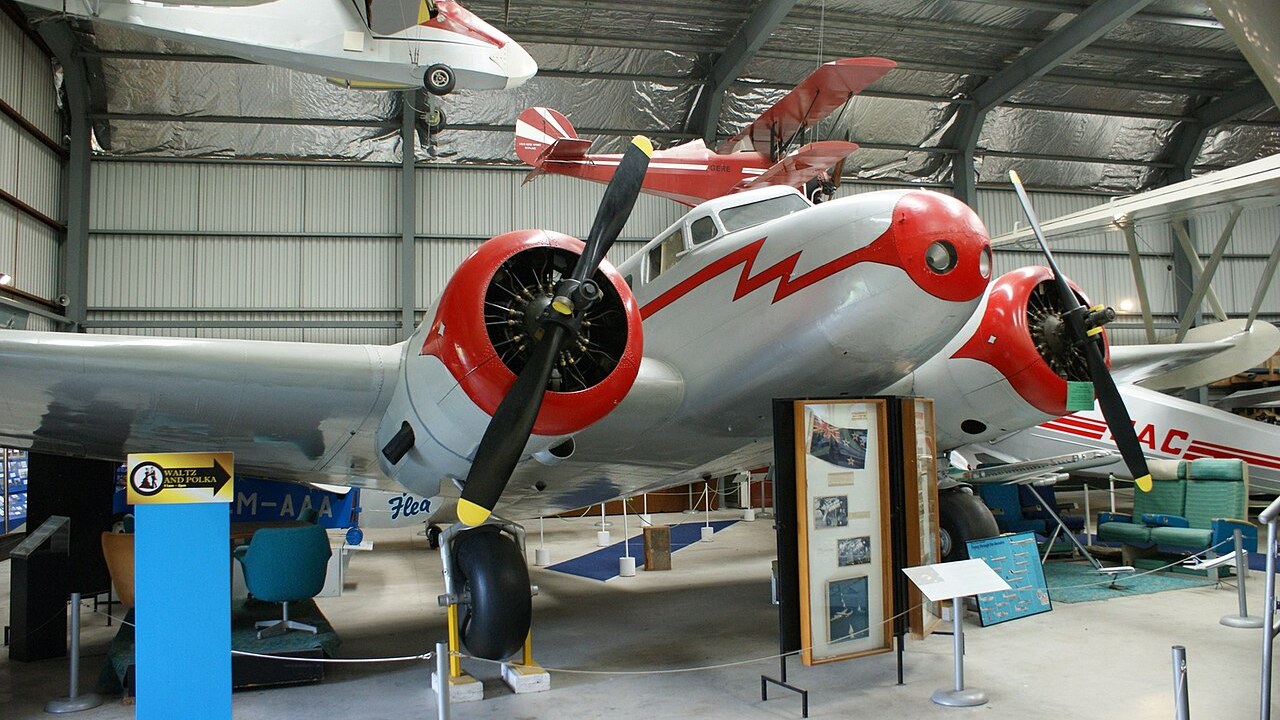
This week a team of archaeologists, divers and Purdue University representatives went ashore on Nikumaroro, an uninhabited atoll in Kiribati, to look at a shape in a lagoon. If they are lucky, it is the wreck of the most famous lost aeroplane in history: Amelia Earhart's Lockheed Electra 10E.
Most people know the story of Earhart's disappearance. Far fewer know much about the machine she vanished in. It was not a record-breaking racer or a purpose-built explorer. It was a modified 1930s airliner, and its story says a lot about how the search is being run today.
Quick Facts: Lockheed Electra 10E
Tipo: Twin-engine, all-metal airliner (Model 10 Electra family)
First flight of the Model 10: 23 February 1934
Diseñadores: Lloyd Stearman and Hall Hibbard
Engines (10E): Two Pratt & Whitney R-1340 Wasp S3H1, 600 hp each
Construido: 149 Electras in all; 15 of them the 10E version
Earhart's aircraft: Bought with $50,000 from Purdue's Amelia Earhart Fund for Aeronautical Research; built July 1936
Lost: 2 July 1937, en route from Lae, New Guinea, to Howland Island
An Airliner Built to Beat Boeing and Douglas
Lockheed designed the Model 10 Electra in the early 1930s to compete with the Boeing 247 and the Douglas DC-2. It was the company's first all-metal, twin-engine design, by Lloyd Stearman and Hall Hibbard, and took its name from a star in the Pleiades. The prototype first flew on 23 February 1934 with Marshall Headle at the controls.
Its most famous design feature came from a student. During wind-tunnel tests at the University of Michigan, a young assistant named Kelly Johnson suggested replacing the single tail with twin tails and removing oversized wing fillets. Both changes went into production. Johnson joined Lockheed and later led the Skunk Works, which built aircraft such as the SR-71 Blackbird. The twin tail became a Lockheed trademark, seen on everything from the Hudson hacia P-38 Lightning.
The basic Electra 10A used two Pratt & Whitney R-985 Wasp Junior engines of 450 hp and carried ten passengers. The 10E was the hot-rod version: it swapped in the larger R-1340 Wasp S3H1 of 600 hp per engine. Only 15 were built, out of 149 Electras in total.
Purdue's "Flying Laboratory"
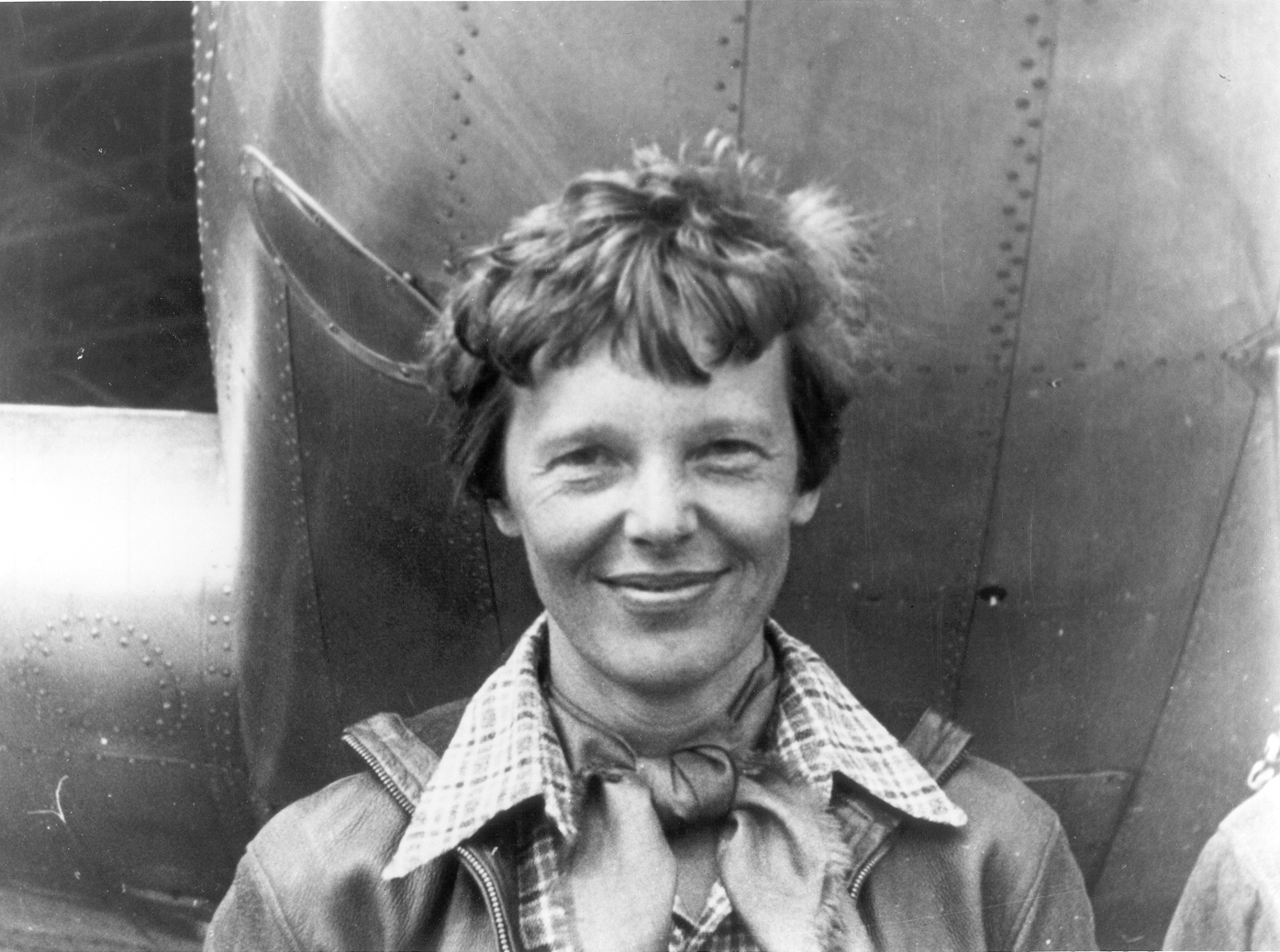
Earhart joined Purdue University in 1935 as a visiting faculty member, advising women on careers and acting as a technical adviser to its Department of Aeronautics. Purdue then set up the Amelia Earhart Fund for Aeronautical Research and gave $50,000 towards the purchase of a Lockheed Electra 10E. Lockheed built the aircraft in July 1936, fitted with extra fuel tanks and other extensive modifications for long-distance flying.
Purdue Research Foundation still describes the aircraft it funded as the "flying laboratory", and says Earhart intended to return it to Purdue after the flight. That is why the university is a partner in this week's expedition, almost 90 years later.
Two Attempts Around the World
The first attempt to fly around the world began on 17 March 1937, heading west from Oakland to Hawaii. It ended at Luke Field, the Navy facility at Pearl Harbor, when the heavily loaded Electra ground-looped on take-off. The landing gear collapsed, both propellers struck the ground and the aircraft slid on its belly. Witnesses, including an Associated Press journalist, said they saw a tyre blow; the cause has never been settled.
While the Electra was being repaired, Earhart and her husband George Putnam raised more money for a second attempt, this time flying west to east. On 2 July 1937, at 10:00 local time, Earhart and her navigator Fred Noonan took off from Lae, New Guinea, in the heavily loaded Electra, bound for tiny Howland Island in the central Pacific. They never arrived.
Searching for Amelia Earhart, a full-length special. Video: National Geographic
Others Have Flown Her Route Since
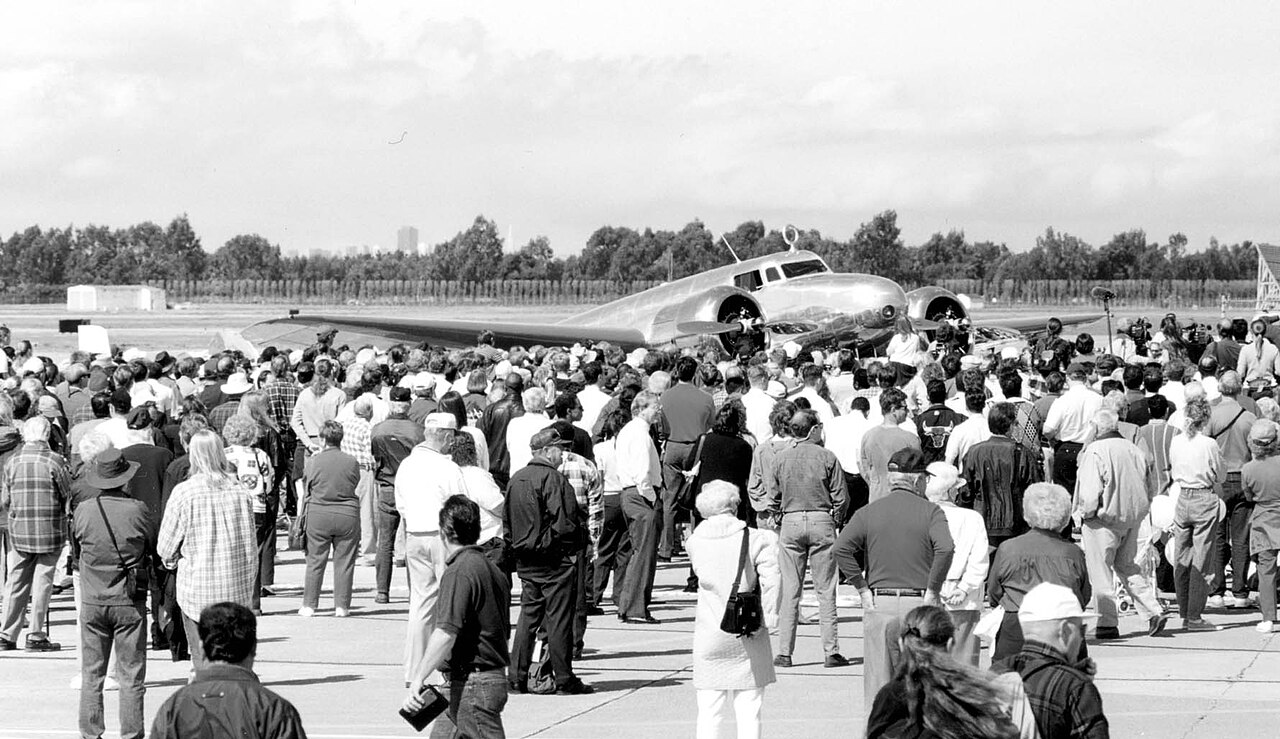
The Electra's story did not end in 1937. In 1967 Ann Pellegreno flew a Lockheed 10A around the world along Earhart's route. In 1997 Linda Finch did the same in a restored 10E, arriving back in Oakland on 28 May 1997 to a crowd of well-wishers.
A close look at a surviving Lockheed 10E Electra, the same model Earhart flew. Video: ExploreAmericana
What the Searchers Hope to Find
The Taraia Object expedition, run by the Archaeological Legacy Institute with Purdue Research Foundation and Purdue University, is the first dedicated to one particular anomaly: a shape in satellite images of the Nikumaroro lagoon. Its 17-strong team was due to begin fieldwork on 14 October. An aluminium twin-engine airliner from 1936, with two large radial engines, would leave very different wreckage from a boat or a pile of coral, and that is what the divers will be checking.
The expedition team reaches Nikumaroro in October 2026. Video: TODAY
Whatever they find, the aircraft itself deserves to be remembered as more than the backdrop to a mystery. It was a fast, modern airliner, shaped by a student who went on to design the Blackbird, rebuilt into a long-range "flying laboratory" with a university's money. Afterburner will report on the expedition's results when they are published.
Sources: Wikipedia (Lockheed Model 10 Electra; Amelia Earhart); Purdue Research Foundation (amelia.prf.org); Purdue University (July and October 2026 releases); Wikimedia Commons (photo descriptions).
0 Comments