
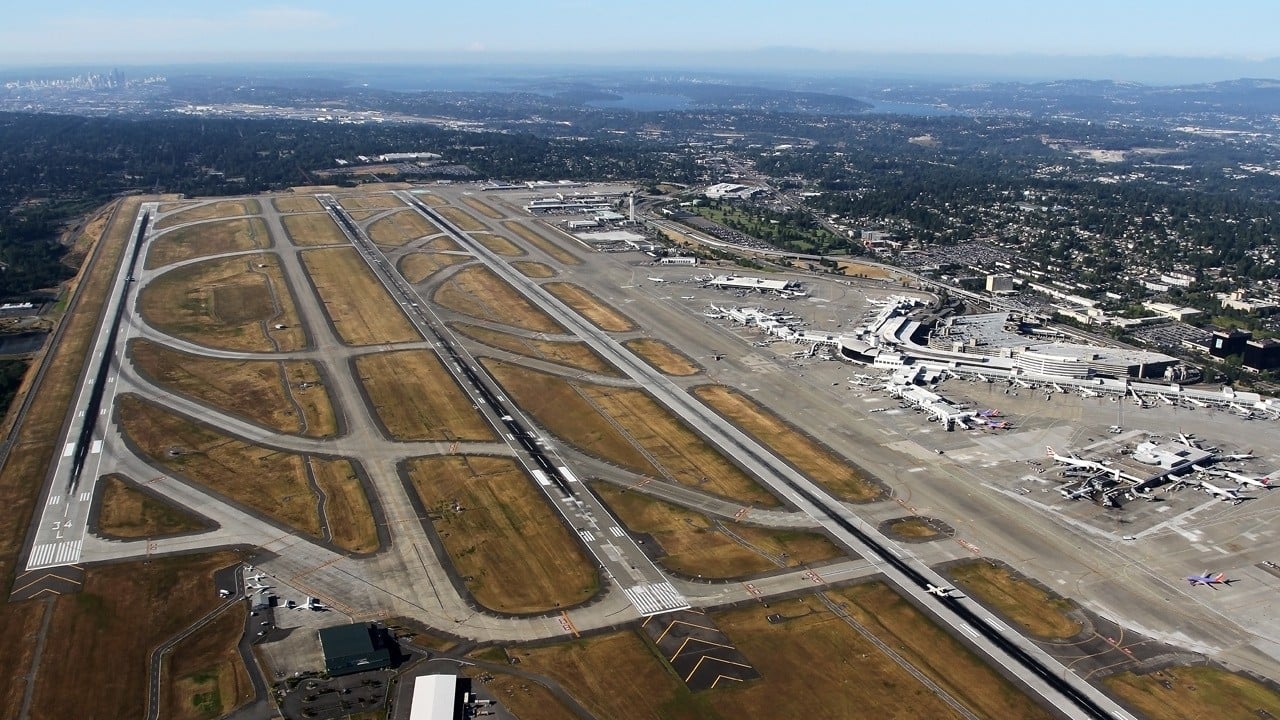
Live near a big American airport and one day a letter may arrive offering you new windows, new doors and sometimes a new ventilation or air-conditioning system, free of charge. At some airports there is one catch: before work starts, you sign a legal document that stays with your property.
That offer is the end of a long chain that starts with a line on a map. The line is the 65-decibel noise contour, and whether your house sits inside it or a few metres outside decides whether anyone pays to quieten your bedroom. This is how it works, and who actually writes the cheque.
Afterburner has already covered the aircraft side of the noise story: how jets are certified in FAA noise stages and Heathrow’s quota count, and how hush kits kept old jets flying. This is the third leg: the land around the airport.
Datos rápidos
- Regla: 14 CFR Part 150, Airport Noise Compatibility Planning (voluntary for airports)
- Metric: DNL: yearly day-night average sound level, with a 10 dB penalty for flights between 22:00 and 07:00
- Key line: Homes are not considered compatible above DNL 65 dB without extra sound insulation
- Contours required: DNL 65, 70 and 75 dB, current and at least five years ahead
- Insulation test: Inside DNL 65 and interior noise of 45 dB or more; treatment must cut at least 5 dB
- Age limit: Homes generally built before 1 October 1998
- Who pays: FAA AIP grant: 80% of noise programmes at large and medium hubs, 90-95% at smaller airports; rest from the airport or passenger facility charges
- The catch: Programmes such as Sea-Tac’s require an avigation easement
DNL: one number for a whole year of noise
The FAA does not measure annoyance one flight at a time. It uses the day-night average sound level, or DNL: a yearly average of all the aircraft noise at a spot, with every flight between 22:00 and 07:00 penalised by 10 decibels. Because decibels are logarithmic, the Port of Seattle explains it plainly to its neighbours: night-time noise is weighted at a level ten times that of daytime noise.
Under 14 CFR Part 150, an airport that wants to take part draws noise exposure maps using an FAA-approved computer model fed with its runways, flight tracks, fleet mix and day and night traffic. The maps must show continuous contours at DNL 65, 70 and 75 dB, both for current operations and for a forecast at least five years ahead, and count how many people live inside each one.
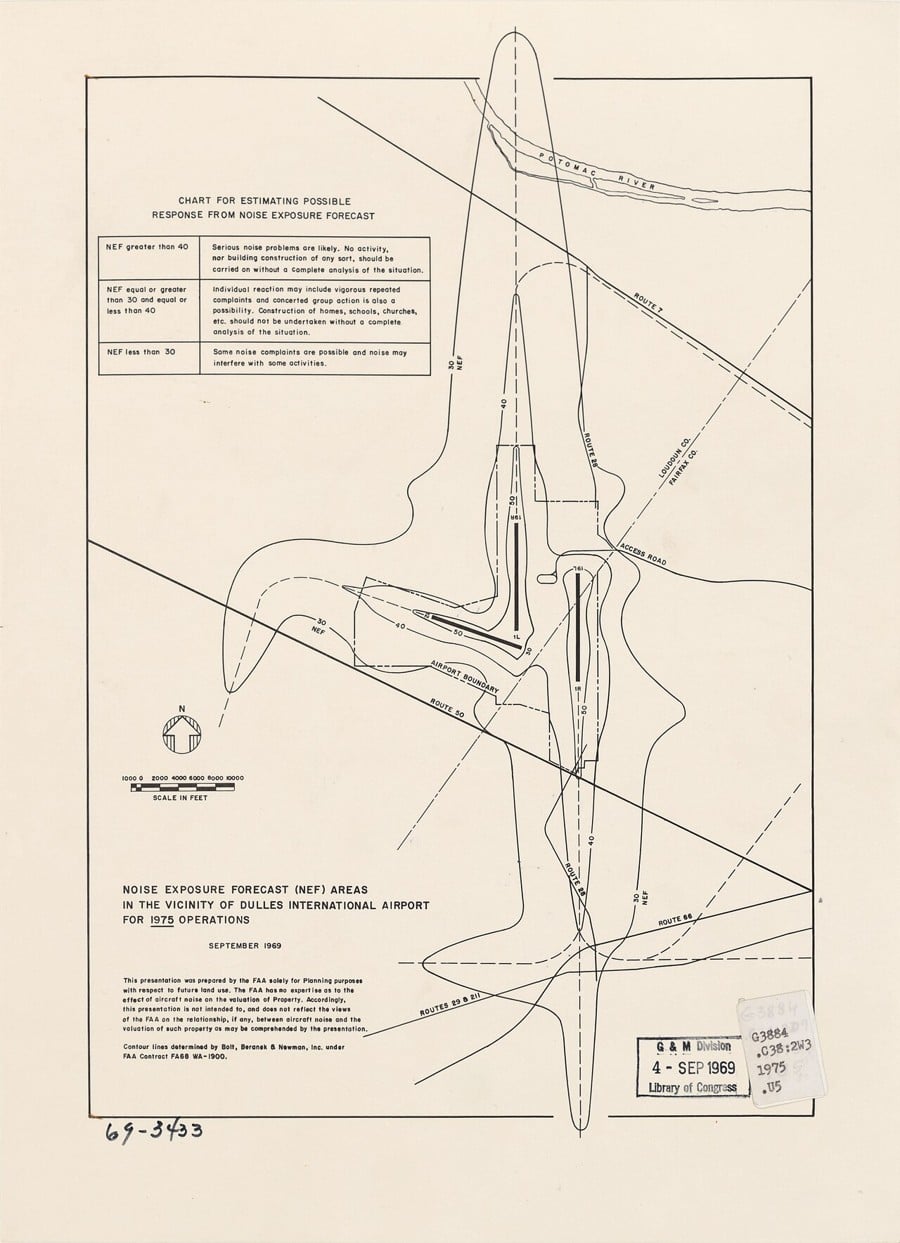
Then comes the line that matters. Part 150 says that, for its purposes, all land uses are considered compatible with noise below DNL 65 dB. Between DNL 65 and 75, homes are “not compatible” unless they are built or modified to cut outdoor-to-indoor noise by at least 25 to 30 dB; above 75, they are not considered compatible at all. Normal house construction, the regulation notes, already gives about 20 dB.
Where the 65 came from
The number is older than most of the airliners flying over it. In 1976 the US Department of Transportation’s Aviation Noise Abatement Policy called DNL 65 to 75 “significant” exposure and identified 65 as the level above which aircraft noise creates a significant annoyance for most residents. Congress then passed the Aviation Safety and Noise Abatement Act of 1979, and the FAA wrote Part 150 to carry it out.
By the FAA’s own count, the number of Americans exposed to significant aircraft noise has fallen from roughly 7 million in the mid-1970s to just over 400,000, while passenger numbers grew several times over. Quieter engines did most of that work. The contours shrank, and the houses left inside them became the target of sound insulation.
WJZ reports on Maryland’s Board of Public Works approving a contract in May 2023 to sound-insulate 18 homes near Baltimore/Washington International airport.
Who qualifies for free windows
Being inside the 65 line is only step one. The FAA’s Airport Improvement Program guidance sets a two-step test. The house must be in the existing or forecast DNL 65 contour, and its measured interior noise, with windows and doors closed, must be 45 dB or higher in habitable rooms. The treatment must then cut that interior level by at least 5 dB and bring it below 45.
There is a date rule too. For homes, the FAA generally funds insulation only for buildings that existed before 1 October 1998, so new houses built next to a known noise zone are not rewarded with free upgrades. Bathrooms, halls, garages and storage areas usually do not count as habitable space.
The work itself is unglamorous: acoustic windows and doors, caulking and weatherstripping, attic sealing and insulation, and in some cases central ventilation or air conditioning so residents can keep the windows shut. At Seattle-Tacoma International, the Port says construction in most homes is typically finished within ten working days.
So who actually pays?
Mostly the flying public. For large and medium hub airports, an FAA Airport Improvement Program grant covers 75 percent of eligible costs, rising to 80 percent for noise programmes. At smaller airports the federal share is 90 to 95 percent. AIP money comes from the Airport and Airway Trust Fund, which is fed by aviation user fees and fuel taxes. The rest typically comes from the airport, through its own revenue or passenger facility charges added to tickets.
At Sea-Tac, the Port of Seattle tells homeowners that the FAA and the Port pay the basic cost of labour and materials; the owner’s costs are limited to things such as adjusting blinds and curtains or preparing the house. The price is the paperwork. Participants must grant the Port an avigation easement, a recorded legal right that runs with the property.
WHAS11 meets a Louisville resident who, as the station’s headline puts it, missed free sound insulation by one decibel.
Part 150 also carries a less-known sting. Under federal law, someone who buys property near an airport after a noise exposure map has been published, and who knew or is deemed to have known about it, cannot usually recover damages for that noise unless the airport later changes significantly, for example with a new runway layout or a big rise in night flights.
Is 65 still the right line?
The FAA itself has asked. Its Neighborhood Environmental Survey, with more than 10,000 responses from people living around 20 US airports, was published in January 2021. At DNL 65, the 1992 version of the classic annoyance curve predicted that 12.3 percent of people would be highly annoyed. The new survey found between 60.1 and 70.9 percent.
In 2023 the FAA opened a formal review of its civil aviation noise policy, including noise metrics and thresholds. Part 150 itself still draws the line at 65. For the families just outside it, the contour is not an abstraction. It is the difference between new acoustic windows and the old ones, rattling as the next jet goes over.
Sources: 14 CFR Part 150 and Appendix A (eCFR), FAA History of Noise, FAA Airport Improvement Program overview and AIP Handbook noise appendix, FAA Program Guidance Letter 12-09, 49 U.S.C. 47109, Federal Register (13 January 2021; 1 May 2023), Port of Seattle Sound Insulation Program, CSCOS, WJZ, WHAS11
Header photo: Timo Breidenstein / Wikimedia Commons, GFDL 1.2



0 Comments