
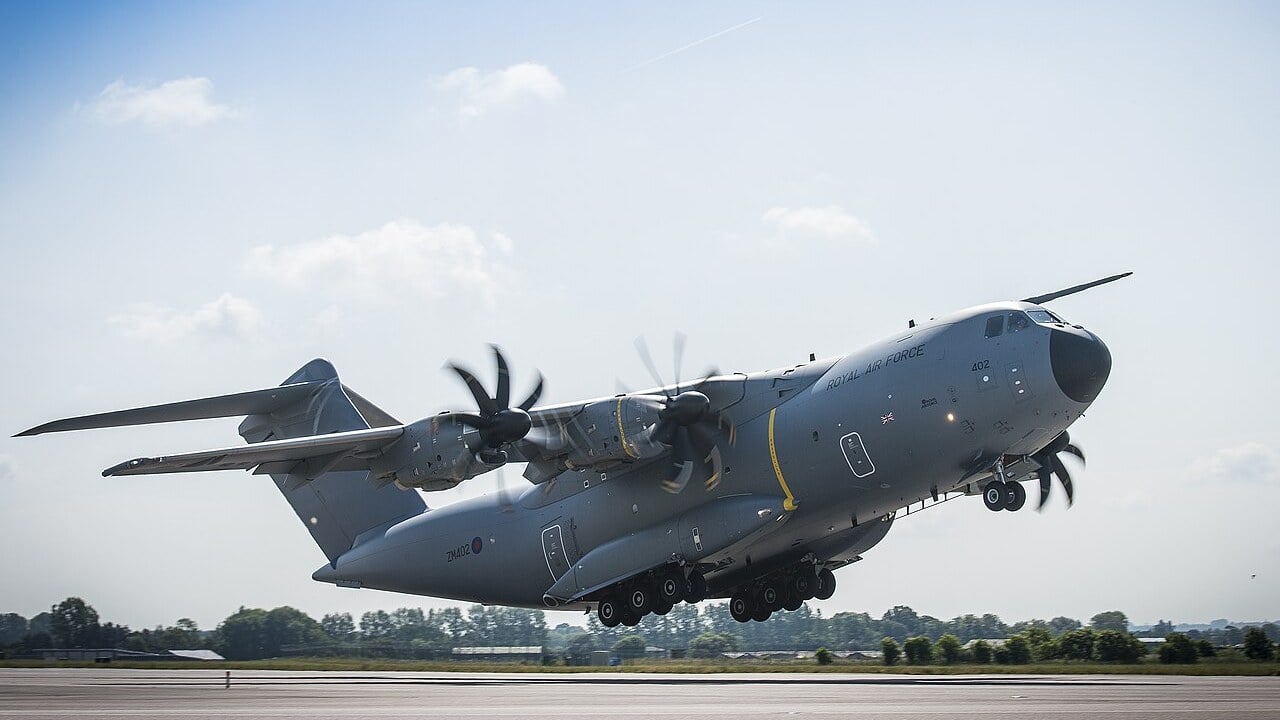
For more than three hours on Monday afternoon, a Royal Air Force Atlas A400M drew slow, ever-wider circles in the sky over Warminster. The four-engine transport had taken off from MOD Boscombe Down near Amesbury just before 2pm on 26 October 2026, and within the hour it was squawking 7700, the transponder code for a general emergency.
It did not head straight back to the runway it had just left. Instead the Atlas, flying as RRR4952, kept orbiting over Wiltshire until around 5pm, then turned south and landed at Bournemouth Airport in Dorset. There have been no reports of anyone being hurt.
Datos rápidos
- Aeronave: Airbus A400M Atlas C.1, Royal Air Force (reported as ZM417)
- Indicativo de llamada: RRR4952
- Fecha: Monday 26 October 2026
- Salido: MOD Boscombe Down, Wiltshire, just before 2pm
- Emergency: Squawk 7700, around 2.30pm according to squawk7700.com data cited by the Mirror
- Causa: “Minor technical complication” (RAF to the Mirror); reportedly nose landing gear; not officially detailed
- Landed: Bournemouth Airport, about 5.16pm
- Lesiones: No se han reportado casos
What happened on board
The RAF told the Mirror that the aircraft had a “minor technical complication”, which the paper reported was connected to the nose landing gear. The Ministry of Defence has not published a fuller explanation, and the exact nature of the fault has not been officially confirmed. Local outlet Wiltshire 999s likewise reported that MOD sources described the problem as “minor”.
According to flight data from squawk7700.com cited by the Mirror, the 7700 code went out at around 2.30pm, at just under 11,000ft. The Wiltshire Times, quoting a local aviation enthusiast group, put the declaration a little later, at about 2.55pm. Both agree on what followed: a long holding pattern over Warminster, Wylye and the country around Longleat.
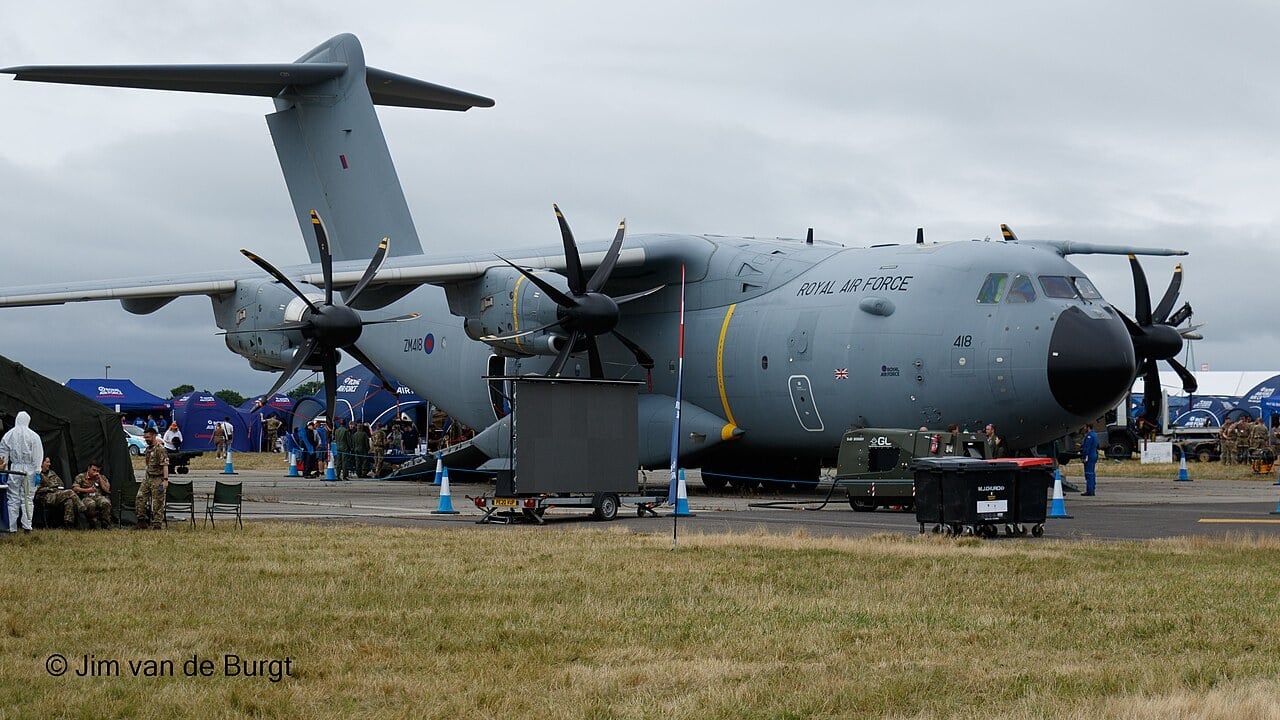
Wiltshire 999s and UKNIP identified the aircraft as Atlas C.1 ZM417. Wiltshire 999s also reported that the crew appeared to be staying airborne to burn off fuel while they waited for engineering advice, and that a diversion to Bournemouth was under consideration. Neither detail has been confirmed by the RAF.
Why Bournemouth?
Both the Mirror y el Wiltshire Times reported that the Atlas was expected to return either to Boscombe Down or to Bournemouth, which they described as an A400M maintenance hub. By 5pm it had left the Wiltshire holding area. The Wiltshire Times said it reached Bournemouth at 5.17pm and circled for a few minutes more, while AirNav Radar data cited by UKNIP shows a landing at about 5.16pm, around three hours and 18 minutes after take-off.
The Ministry of Defence’s tour of the RAF’s A400M Atlas with an Air Loadmaster at RAF Brize Norton.
The squawk itself says little about the problem. Code 7700 tells air traffic control that an aircraft has an emergency and needs priority handling, but not whether the cause is mechanical, medical or something else. Long holds are not unusual when a crew needs time to work through checklists and talk to engineers on the ground before committing to a landing.
A fleet living away from home
The Atlas was not flying from Boscombe Down by chance. The RAF’s main air-mobility hub, RAF Brize Norton in Oxfordshire, is in the middle of runway resurfacing and upgrade work, and its big transports have been scattered around the country while it is closed.
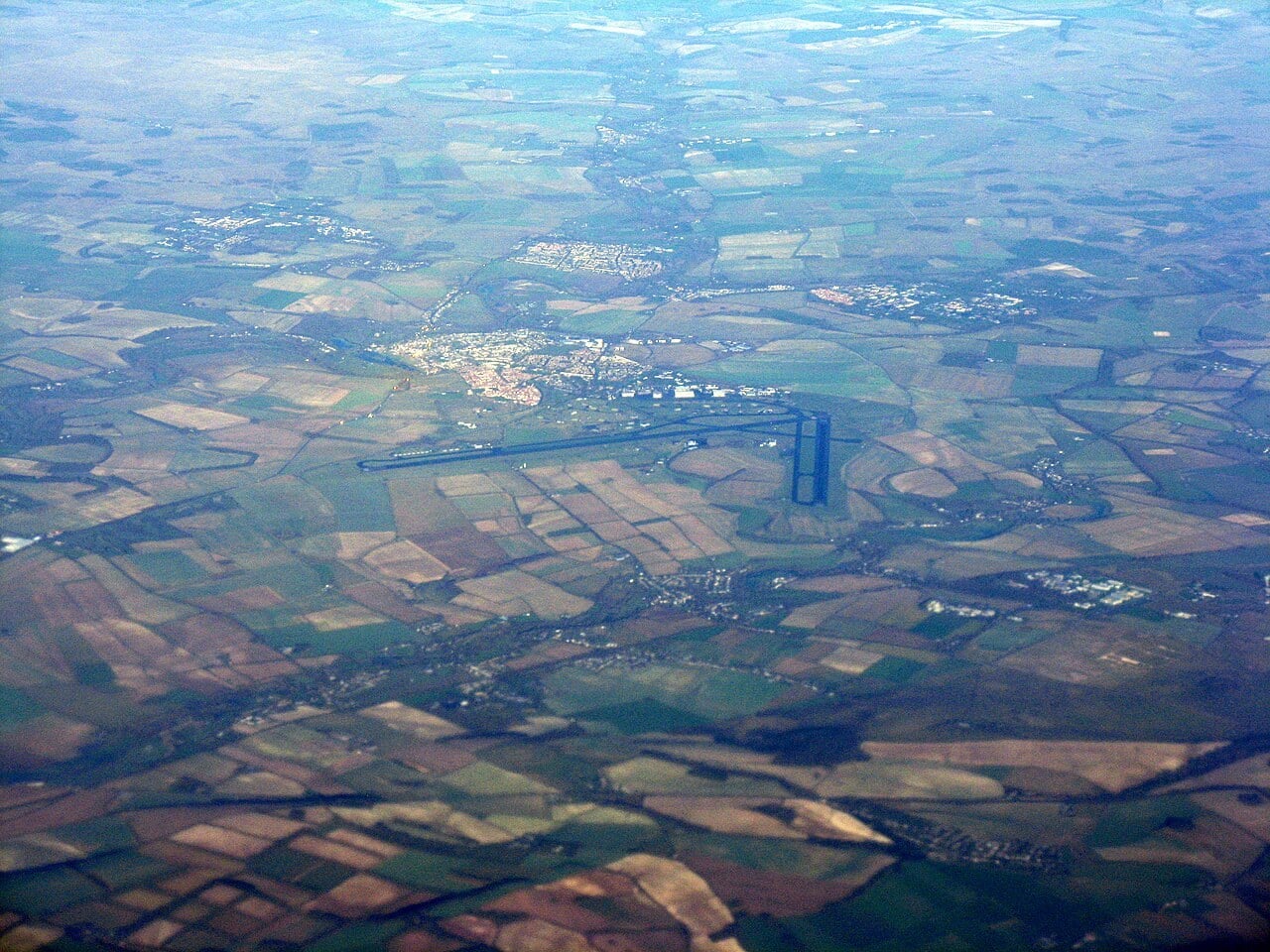
Bournemouth Airport announced on 30 June 2026 that the Atlas and C-17 Globemaster fleets would operate mainly from MOD Boscombe Down in Wiltshire, with Bournemouth used when required, until the Brize Norton works are completed later this autumn. The A330 Voyager fleet moved to Prestwick, East Midlands and Stansted.
Boscombe Down, the long-time home of British military flight testing, has had an unusually busy summer as a result, with heavy transports sharing the airfield with the Empire Test Pilots’ School.
Spotter footage from MOD Boscombe Down in August 2026, when the Wiltshire airfield was the temporary home of the RAF’s C-17 and Atlas fleets.
The Atlas in RAF service
The A400M has been in RAF service since 2014. According to the Ministry of Defence, the Atlas C.1 is flown by two pilots and a Weapon Systems Operator and can carry up to 37 tonnes of cargo or 116 fully equipped troops. It is the RAF’s tactical airlifter, able to operate from short and unprepared strips, as well as a long-range strategic transport.
Monday’s emergency was the latest in a run of precautionary declarations by RAF aircraft. The Mirror noted that a Typhoon had squawked 7700 over the North Sea after a bird strike the previous Thursday, and that a P-8A Poseidon had declared an emergency shortly after leaving RAF Lossiemouth the week before.
As emergencies go, this one looks as undramatic as the RAF’s own description: a technical niggle, a careful crew, a lot of patient circling and a safe landing at an airfield with the right engineers on hand. What caused it, and whether the Atlas has flown again, remains to be confirmed.
Sources: The Mirror, Wiltshire Times, Wiltshire 999s, UKNIP, Bournemouth Airport, Dorset View, Ministry of Defence
0 Comments