
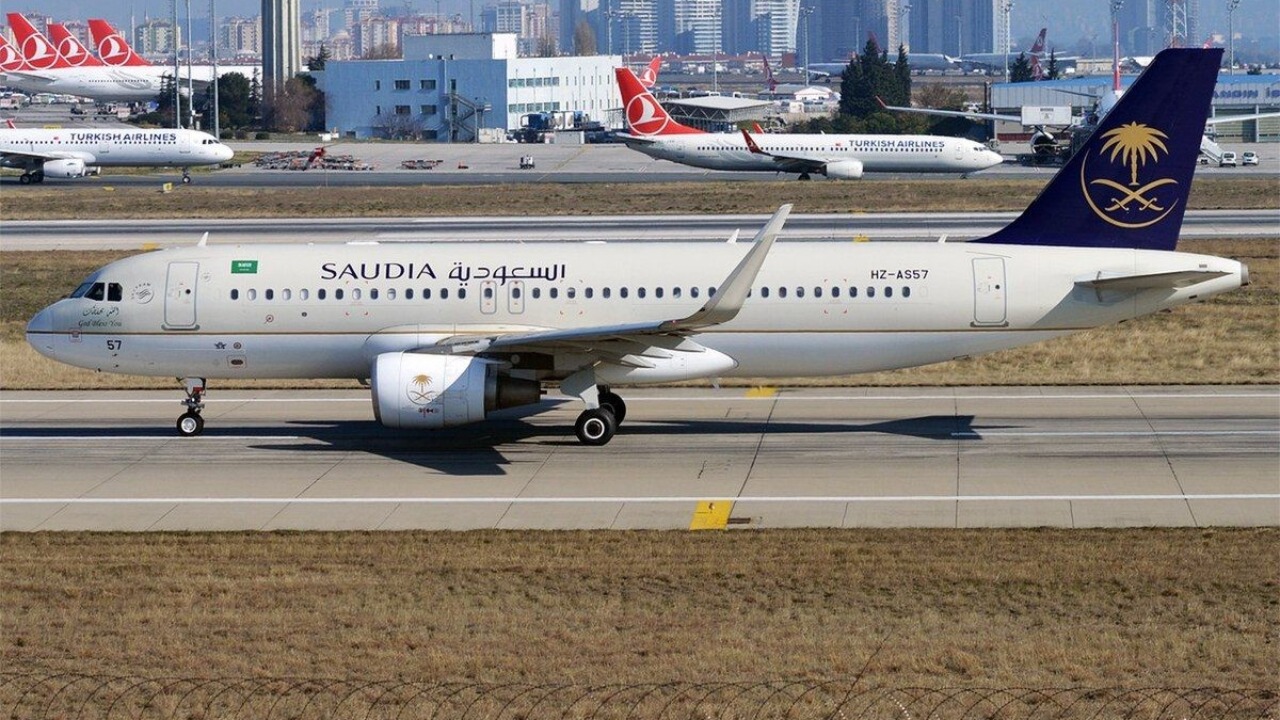
The first images showed a column of black smoke rising over King Khalid International Airport. The next showed what was underneath it: a Saudia narrowbody standing at the terminal, its cabin burned out, fire crews around it. Nobody is believed to have been on board.
It happened on Thursday, 8 October 2026, the third straight day of Houthi attacks on Saudi airports. Yemen’s Houthi movement says a ballistic missile struck the airport in Riyadh and hit its target. Several aviation outlets identify the aircraft as a Saudia A320, and photographs suggest it is a write-off.
Almost everything else is still contested. Saudi Arabia has not confirmed that the aircraft was struck, Saudia has not commented, and sources briefed on the incident told Reuters the damage may have come from shrapnel rather than a direct hit. Here is what is established, and what is only claimed.
Datos rápidos
Fecha: Thursday, 8 October 2026
Ubicación: King Khalid International Airport (RUH), Riyadh, Saudi Arabia
Aeronave: A Saudia narrowbody parked at the terminal, widely reported as an Airbus A320; no registration published
Daño: Heavily damaged by fire and likely a hull loss; no official write-off announced
People on board: Reportedly none; no injuries aboard reported
Houthi claim: A ballistic missile “struck its target with precision”
Alternative account: Shrapnel from an interception or another projectile, according to sources cited by Reuters
Official Saudi position: Coalition says it destroyed two ballistic missiles aimed at Riyadh; no confirmation of an aircraft hit
Respuesta de la aerolínea: Lufthansa Group suspended Riyadh flights through 16 October; Air India and Air India Express until 10 October
What is confirmed
A Saudia aircraft caught fire while parked at a terminal at Riyadh’s main airport on Thursday. Reuters reported that it was heavily damaged, citing three people briefed on the matter, and said video it had verified showed thick smoke and flames rising from the airport. Aviation Week, Aviation24.be, aeroTELEGRAPH and One Mile at a Time all reported the burned aircraft, and none of the reporting suggests anyone was aboard.
Flight operations stopped. According to The National, quoted by aeroTELEGRAPH, the airport was closed for about two hours that morning before reopening. The knock-on effect was severe: Aviation Week cited Flightradar24 data showing 335 cancelled flights at RUH on 8 October, and Reuters cited Cirium data showing that almost half of Riyadh departures had been cancelled by 1500 GMT.
The Saudi-led coalition said it destroyed two ballistic missiles fired at Riyadh and one aimed at Khamis Mushait. Saudi officials said debris from an intercepted missile fell on a kindergarten and a medical complex in the capital, and the civil defence agency reported material damage from shrapnel.
What is only claimed
The Houthis’ version is simple. Their military spokesman, Yahya Saree, said a ballistic missile hit King Khalid Airport at midday and struck its target with precision. Accounts on social media went further, describing footage of a direct hit on a parked Saudia A320. One widely shared post called it a drone strike, which does not match the Houthis’ own claim.
The competing explanation came from the people Reuters spoke to: shrapnel from an interception, or another projectile, hit the aircraft. That would be consistent with the coalition’s statement that missiles aimed at Riyadh were destroyed in flight. It would also be no consolation to Saudia. A narrowbody that burns at the gate is lost either way.
What has not happened is just as telling. Saudia, the government media office and the General Authority of Civil Aviation did not respond to Reuters’ questions, and Aviation Week noted that GACA had not confirmed the 8 October strike. No registration for the Saudia A320 has been published, and no hull loss has been declared.
Three days, two airports
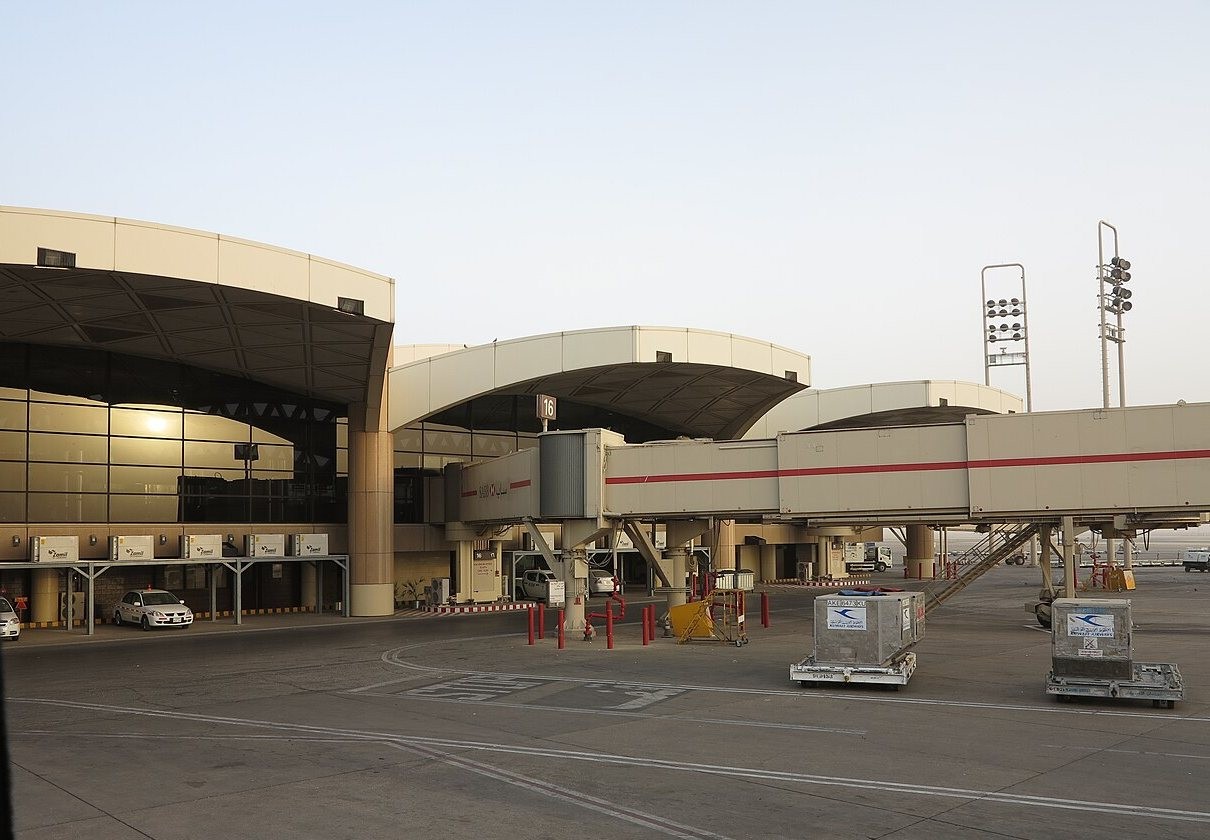
Thursday was not an isolated event. According to Saudi Arabia’s civil aviation authority, attacks on Abha and Riyadh airports on 6 and 7 October killed three people and injured 36. In Abha, two women of Moroccan and Algerian nationality died and 28 people were hurt. In Riyadh, a Sudanese resident was killed and eight people were injured.
The attacks follow Houthi missile fire at Riyadh’s airport in September, which Afterburner covered at the time, and come as Saudi and Yemeni government forces push to retake territory along the Red Sea coast, according to Euronews. The Houthis have also warned workers to keep away from Saudi energy facilities.
According to Euronews, the warning excludes the airspace over Mecca and Medina. The Saudi-led coalition said the attacks on civilians and civilian objects would not go unpunished, and a spokesman for the UN Secretary-General said targeting civilian facilities is prohibited under international humanitarian law.
Airlines pull back
Foreign carriers moved quickly. Lufthansa Group suspended flights to the city up to and including 16 October; according to aeroTELEGRAPH, the group normally serves Riyadh with Lufthansa from Frankfurt and ITA Airways from Rome. Air India and Air India Express cancelled Riyadh services until 10 October; one Air India flight from Delhi turned back mid-route. IndiGo diverted a Hyderabad flight to Dammam and cancelled several more.
For airline security departments, the question is no longer whether Saudi airspace is in a conflict zone. EASA had already warned operators off part of the Jeddah flight information region in its conflict-zone bulletin last month. The new question is whether a capital-city airport, hundreds of kilometres from Yemen, can be treated as safe on the ground.
FRANCE 24 report on the Houthi claims of renewed attacks on Riyadh’s airport and the fighting in Yemen.
Until Saudi Arabia says more, the burned-out Saudia A320 remains the clearest piece of evidence in the dispute. Missile, drone or debris, a parked airliner at Saudi Arabia’s capital-city airport is now a casualty of the Yemen war, and every airline flying to Riyadh has noticed.
Sources: Reuters via The Express Tribune, 9 October 2026; Aviation Week (Aaron Karp), 8 October 2026; aeroTELEGRAPH, 8 October 2026 (two reports); One Mile at a Time, 9 October 2026; Euronews, 8 October 2026; Aviation24.be; AirLive; InsideFlyer, 9 October 2026; Gulf Business, 8-9 October 2026; FlightGlobal, 8 October 2026; Türkiye Today, 8 October 2026.
Preguntas frecuentes
What happened at Riyadh King Khalid International Airport on 8 October 2026?
Was anyone hurt on the Saudia A320 at Riyadh?
Did a Houthi missile directly hit the Saudia A320?
Which airlines suspended flights to Riyadh after the attack?
What did the Houthis say to airlines about Saudi airspace?
Is the Saudia A320 at Riyadh a hull loss?
Publicaciones relacionadas
King Khalid Airport: Houthi Missiles Reach Riyadh for the First Time
EASA Warns Airlines Off Part of Saudi Arabia’s Jeddah FIR
Houthi Missiles Target Khamis Mushait, Home of Saudi Arabia’s F-15s
Decisivo e innegociable: los pilotos exigen veto sobre las rutas en zonas de guerra.
0 Comments