
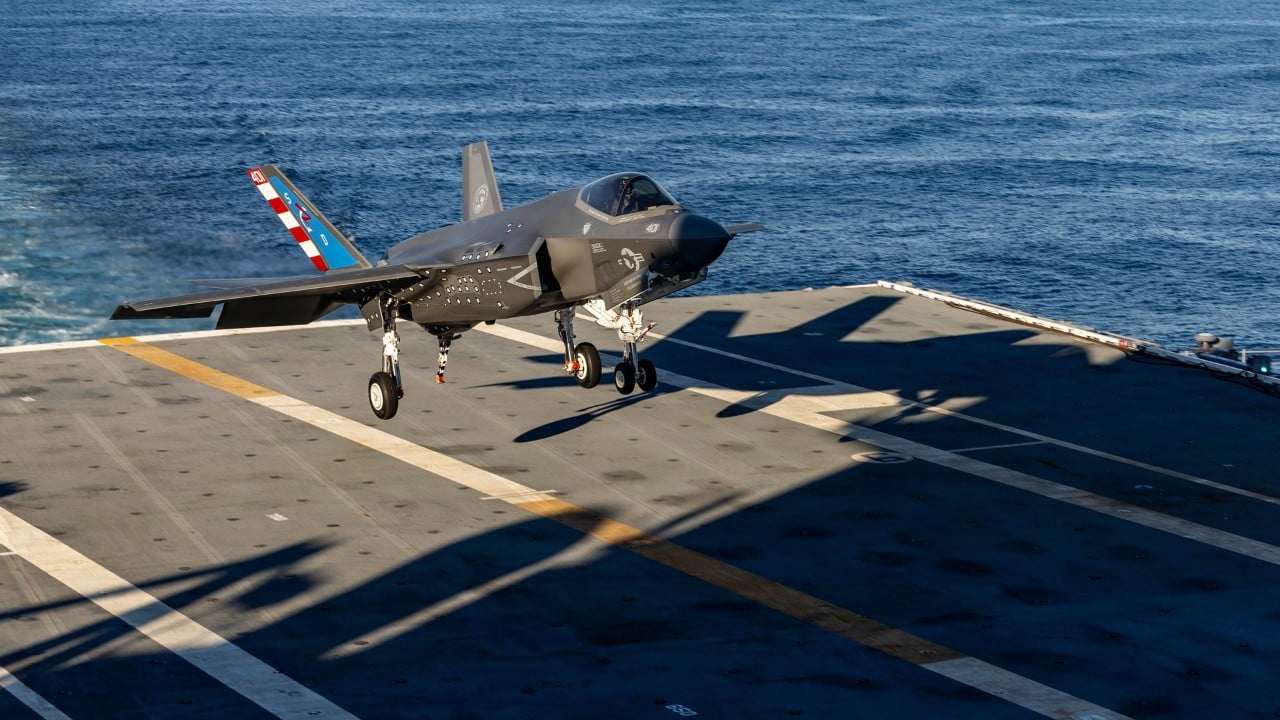
Eleven years after the F-35C made its first arrested landing on a Nimitz-class carrier, the Navy's stealth fighter has finally trapped aboard the ship class that is supposed to carry it into the 2070s. On 13 October 2026, an F-35C from the "Salty Dogs" of Air Test and Evaluation Squadron 23 (VX-23) caught a wire on the future USS John F. Kennedy (CVN 79) in the Western Atlantic. The next day, the same team flew the first F-35C catapult launch from a Ford-class deck.
It sounds like a formality. It is not. The first ship of the class, USS Gerald R. Ford, entered service in 2017 without being able to operate the F-35C at all, and it still deploys with Super Hornets. Kennedy is the first Ford-class carrier built from the start to take the Navy's fifth-generation jet.
Quick Facts
- First arrested landing: 13 October 2026, Western Atlantic
- First catapult launch: 14 October 2026
- Ship: Future USS John F. Kennedy (CVN 79), second Ford-class carrier
- Squadron: VX-23 "Salty Dogs", NAS Patuxent River
- Test: Aircraft Compatibility Testing (ACT)
- Recovery and launch systems: Advanced Arresting Gear (AAG) and EMALS
- Preliminary acceptance: 29 September 2026
- Formal delivery: Planned for spring 2027
Two Jets, One Wire, One Catapult
Two VX-23 test pilots flew F-35Cs out to the ship on 13 October as part of its Aircraft Compatibility Testing. As TWZ noted, the imagery shows two jets, side numbers 401 and 403, but only one trapped that day; the other was carrying inert JDAM bombs. The F-35 Integrated Test Force from Naval Air Station Patuxent River had detached a team to the ship with a specially instrumented aircraft.
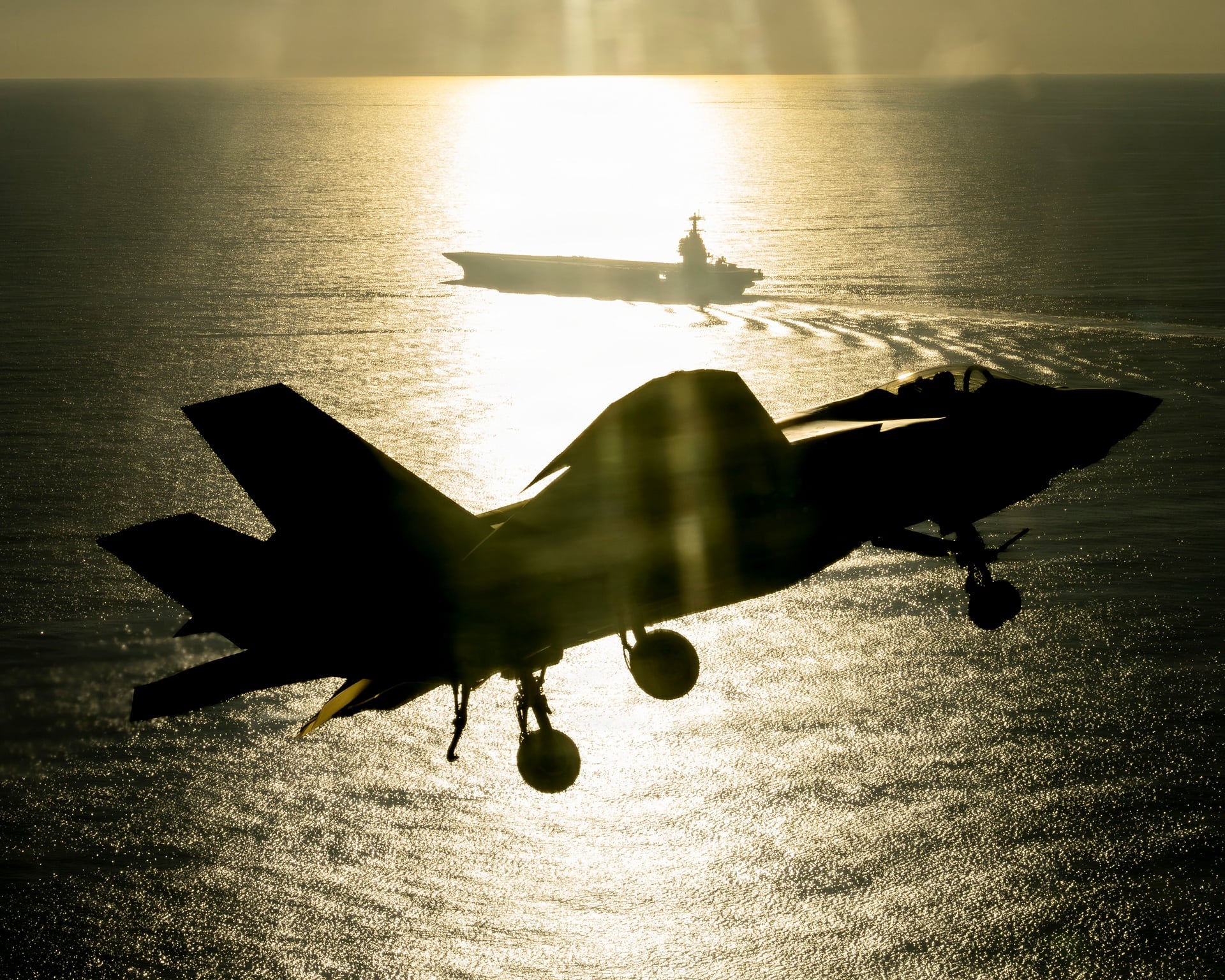
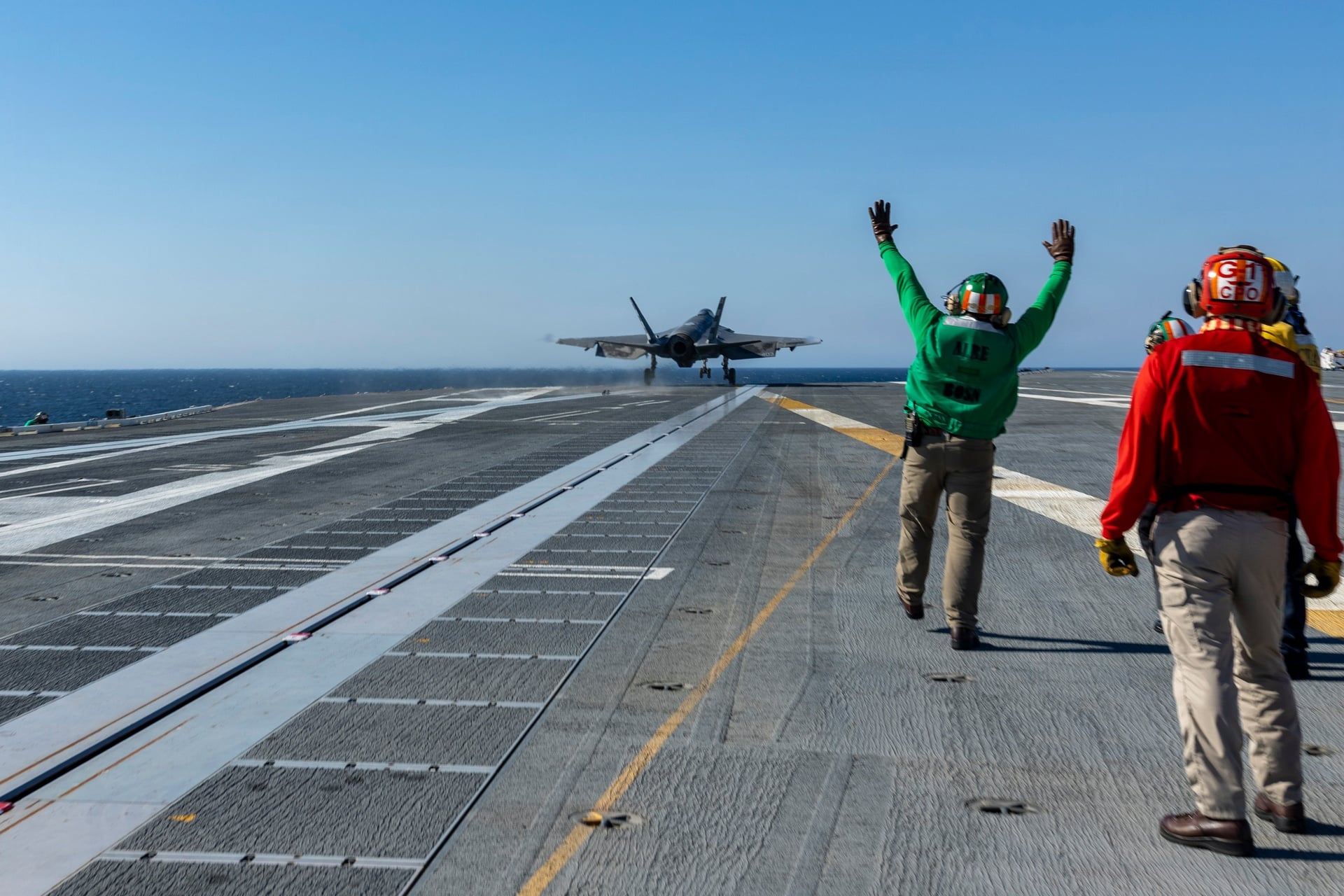
On 14 October the ship's electromagnetic catapult, EMALS, put an F-35C back into the air. That second step matters as much as the first: a carrier that can recover a jet but not launch it is a very expensive runway. The Navy's own photo caption was unambiguous about what had happened.
Why Kennedy, Not Ford
Gerald R. Ford was designed before the F-35C's full shipboard requirements were settled, and the Navy deferred those changes to a later maintenance period. The jet needs tougher jet blast deflectors, secure spaces for its mission systems and classified data, different maintenance and IT facilities, and workshops for its low-observable coatings.
After pressure from Congress, the Navy switched Kennedy to a single-phase delivery, building the F-35C modifications in during construction instead of bolting them on after commissioning. The carrier completed acceptance trials in August, the Navy took preliminary acceptance from Newport News Shipbuilding on 29 September, and formal delivery is planned for spring 2027.
What Comes Next
One trap and one launch prove compatibility, not readiness. Aircraft Compatibility Testing runs the ship's launch and recovery systems through their paces with each aircraft type, at different weights and wind conditions, before an operational air wing ever embarks. The Ford class has had well-documented trouble with both EMALS and the Advanced Arresting Gear, so the data from these sorties will be studied closely.
The F-35C itself is long past the test stage. It first trapped aboard USS Nimitz on 3 November 2014 and has since deployed on Nimitz-class carriers. Now the newest carrier in the fleet can finally take it too.
USNI News footage of the F-35Cs approaching for the first landing aboard the future USS John F. Kennedy (CVN 79).
Sources: U.S. Navy / DVIDS; TWZ; Naval News; Naval Today; Defence Industry Europe; USNI News
0 Comments