
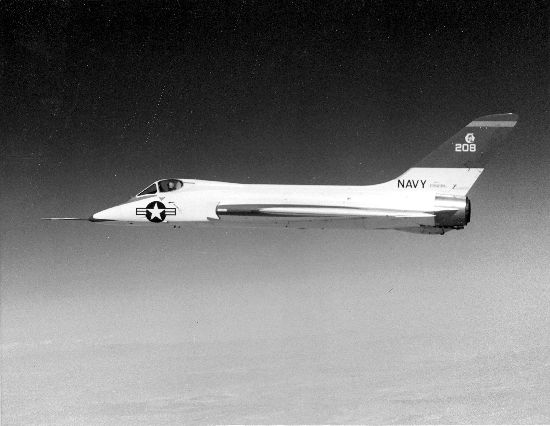
Some aircraft are cancelled because they fail. The Douglas F5D Skylancer was cancelled because it was too good, too late, and built by the wrong company. It went supersonic on its very first flight, handled beautifully, and impressed every pilot who flew it — and the Navy still killed it after just four were built.
Then it found an afterlife stranger than most fighters ever get: a young test pilot named Neil Armstrong used it to work out how to survive bailing out of a spaceplane.
Informations clés
- Taper: Douglas F5D-1 Skylancer, supersonic naval fighter
- Premier vol : April 21, 1956, supersonic on the first sortie
- Moteur: Pratt & Whitney J57 with afterburner
- Construit: four
- Annulé: officially for being too similar to the F8U Crusader
- Seconde vie : NASA research aircraft, flown by Neil Armstrong
A better Skyray
The Skylancer began as an improved version of the Douglas F4D Skyray, the tailless delta interceptor. But Douglas reworked it so thoroughly — a thinner wing, a longer fuselage, a more powerful J57 — that the result was effectively a new aircraft, and earned its own designation. It was fast, clean and, by all accounts, a delight to fly.
On paper and in the air it did everything asked of it. The problem was timing. The Navy had already committed to Chance Vought's F8U Crusader, a supersonic fighter filling the same role. Two aircraft, one job.
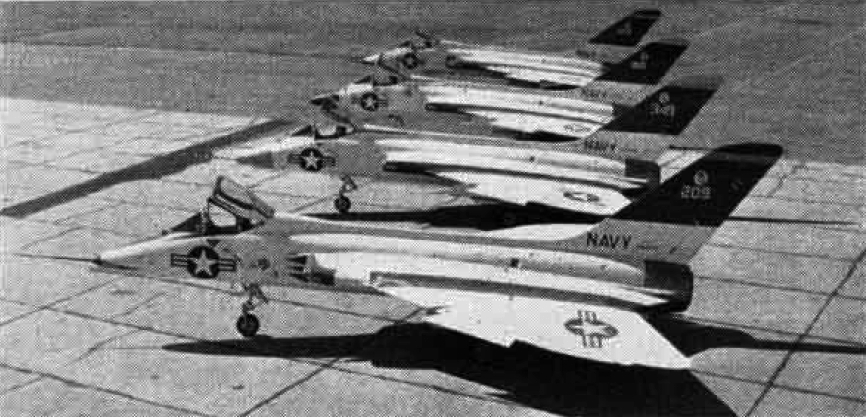
When being better just wasn't good enough.
Killed by politics as much as duplication
The official reason for cancellation was redundancy: the Skylancer was too much like the Crusader to justify buying both. But many historians see another factor. Douglas already built a huge share of the Navy's aircraft — the Skyray, the A-4 Skyhawk, the Skywarrior. Spreading the work to Vought made industrial and political sense in a way that had nothing to do with which jet was better.
So after four airframes, the order stopped. It was one of those decisions where the losing aircraft was arguably the finer machine — and everyone involved seemed to know it.
Original footage of the Skylancer's first flight at Edwards.
Neil Armstrong's spaceplane rehearsal
The four orphaned Skylancers were too good to scrap, so NASA took them on. And in 1960 a NASA test pilot named Neil Armstrong — nine years before Apollo 11 — realised the F5D was oddly perfect for a very specific job. Its wing planform and glide characteristics closely matched the X-20 Dyna-Soar, the U.S. Air Force's planned rocket-launched spaceplane.
Armstrong flew the Skylancer repeatedly to develop launch-abort manoeuvres for the Dyna-Soar — how a pilot might glide a stricken spaceplane back to a runway. Dyna-Soar was cancelled before it ever flew, and Armstrong went to the Moon by a different road. But one of his Skylancers survives today, on display outside the Armstrong Air & Space Museum in his Ohio hometown.
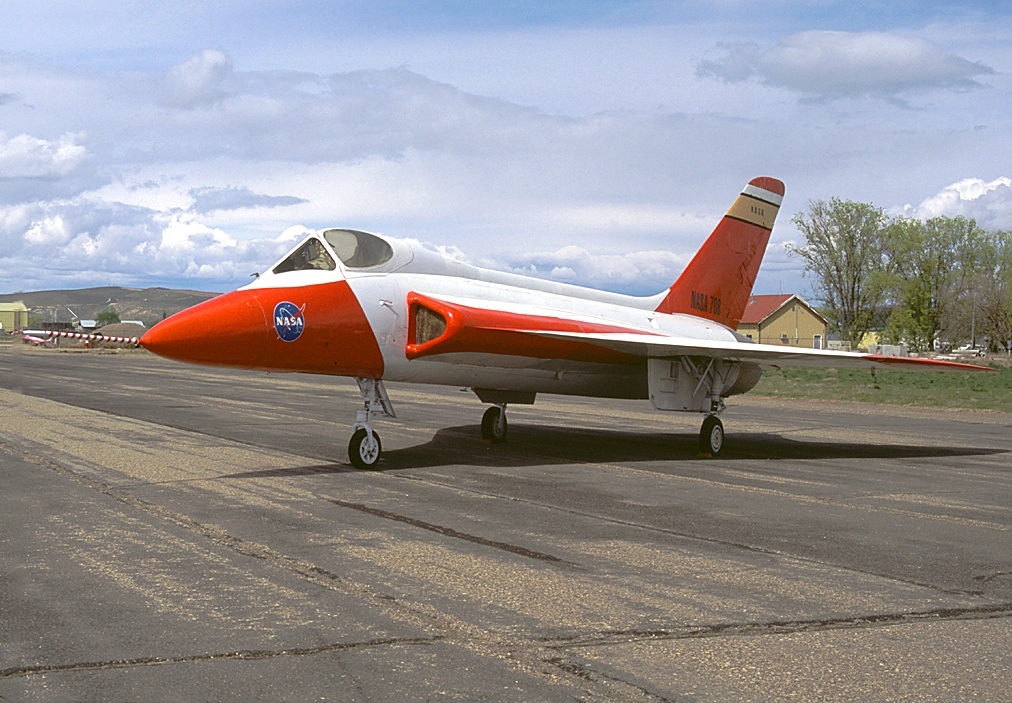
A closer look at the fighter that was too good to build and too useful to scrap.
Four aircraft, no squadrons, no combat. On the ledger of naval aviation the Skylancer is a rounding error. But it flew supersonic on day one, out-classed the jet that beat it, and helped a future Moonwalker learn how to fall out of space. Not bad for a fighter nobody wanted.
Sources: Wikipedia (Douglas F5D Skylancer); NASA Armstrong Flight Research Center; Vintage Aviation News.
0 commentaire