
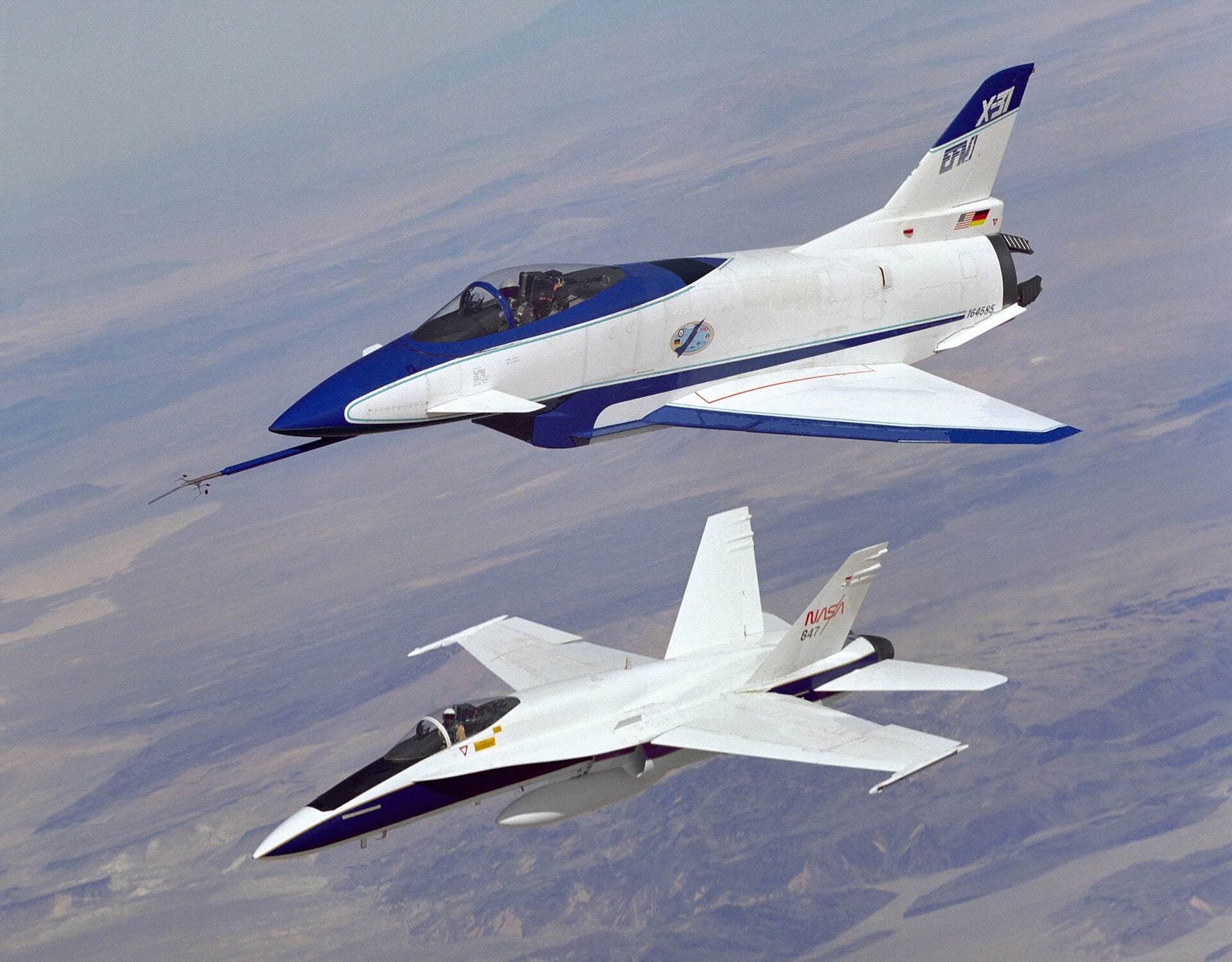
Every fighter pilot is taught to respect the stall. Pull too hard, raise the nose too far, and the wing stops producing lift and the aircraft stops doing what you want. On 29 April 1993, over the Mojave Desert, the second Rockwell-MBB X-31 deliberately went past that limit, pitched its nose up to about 70 degrees, swung around and came out flying the opposite way in a tighter turn than any conventional fighter could manage.
The manoeuvre was named after the German engineer who had argued for years that fighters should be able to fight beyond the stall: Wolfgang Herbst. The Herbst maneuver, or J-turn, became the signature trick of the most successful X-plane of its era.
Informations clés
- Manoeuvre: Herbst maneuver (also called a J-turn), a post-stall 180-degree turn
- First performed: 29 April 1993 by the second X-31
- Nommé d'après : Dr Wolfgang Herbst of Messerschmitt-Bölkow-Blohm (MBB)
- Angle of attack: About 70 degrees
- Aéronef: Rockwell-MBB X-31, two built, first flight 11 October 1990
- Technologie clé : Three thrust-vectoring paddles plus fly-by-wire flight controls
What Is the Herbst Maneuver?
In a normal turn, a fighter keeps its angle of attack, the angle between wing and oncoming air, below the stall so the wing keeps lifting. A tight, fast reversal still takes a lot of sky. The Herbst maneuver takes a different route. The aircraft pitches up sharply to a very high angle of attack, bleeding off speed, then rolls around its velocity vector while almost stopped in the air, and finally drops its nose and accelerates away on the reverse heading.
The result is a 180-degree turn with a minimum radius, faster than any conventional aircraft can manage. The catch is energy: the jet comes out of it slow and vulnerable. Unlike Pugachev’s Cobra, a manoeuvre best known from airshows that ends with the aircraft pointing the same way it started, the Herbst maneuver actually changes direction, which is why Wikipedia’s account calls it more useful in combat.
How the X-31 Made It Possible
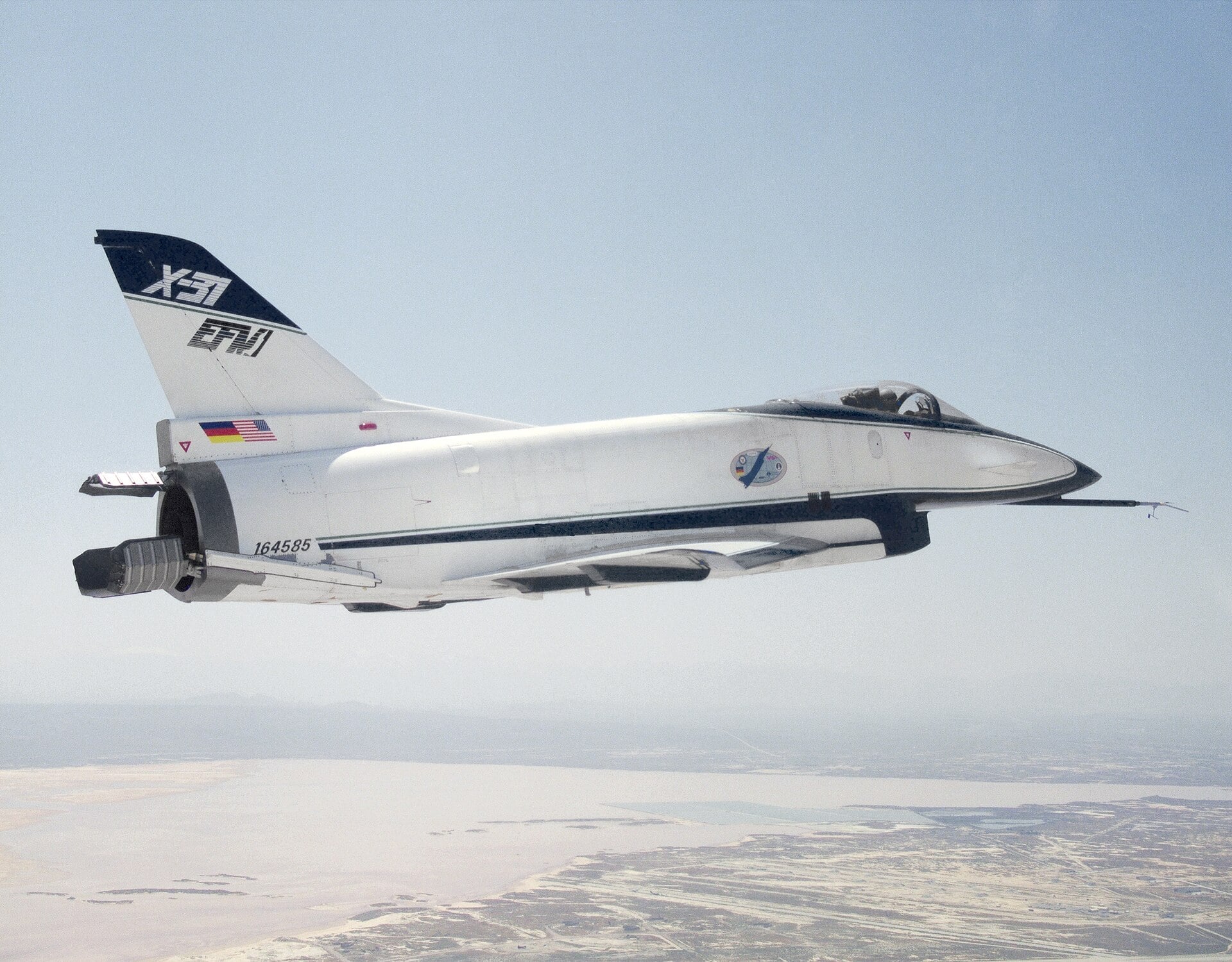
The X-31 was a joint programme between Rockwell International and Germany’s MBB, backed by DARPA, NASA, the US Navy and the German defence ministry. Two aircraft were built, the first flying on 11 October 1990. Behind the engine sat three paddles that could deflect the exhaust to steer the aircraft, even when the wings and control surfaces had lost most of their effect.
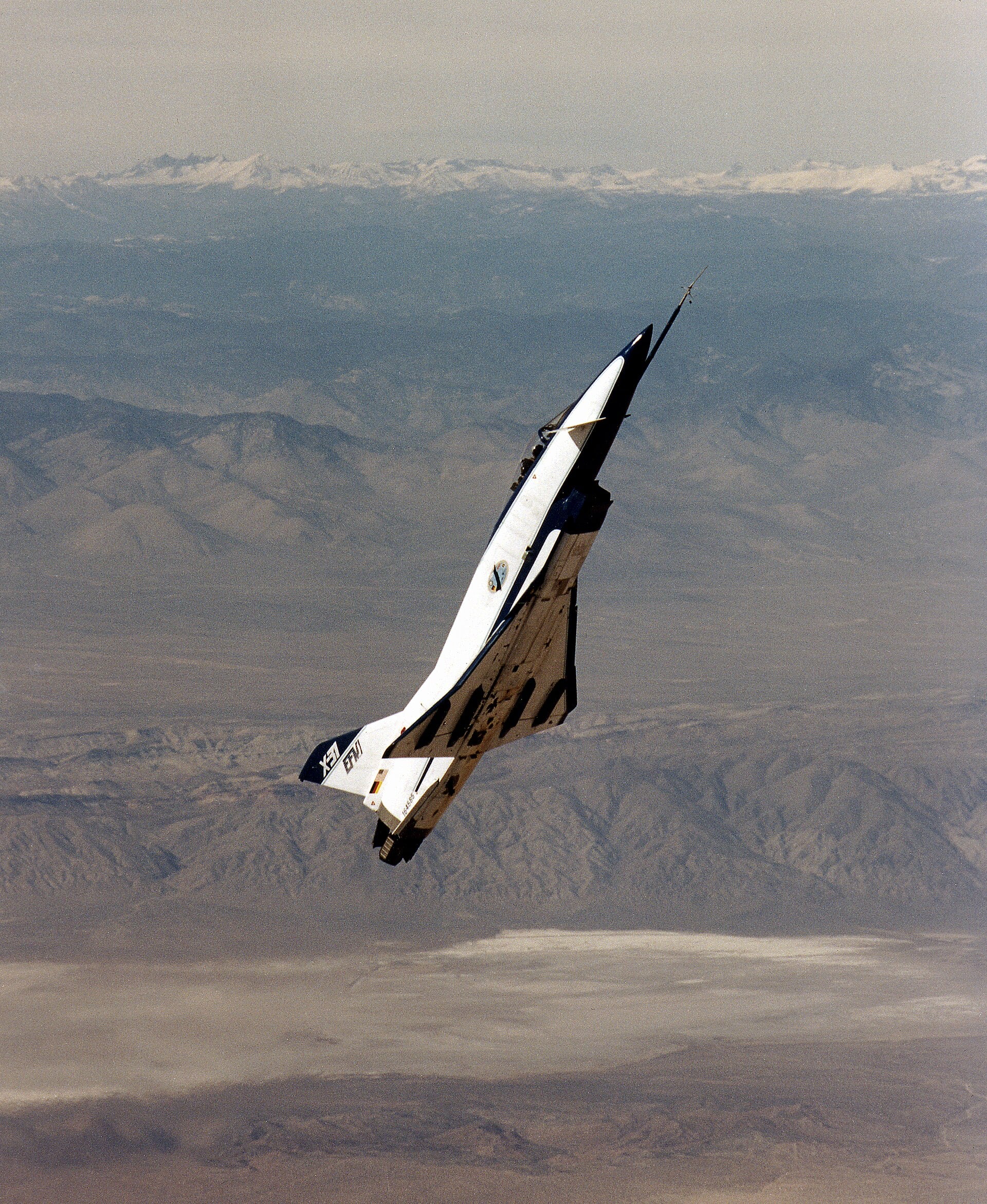
A digital flight control system blended the paddles, canards and conventional surfaces so the pilot could simply command the manoeuvre. On 6 November 1992, the X-31 flew in controlled flight at 70 degrees angle of attack. Five months later it flew the first Herbst maneuver.
The Dogfight Results
From late 1993 the X-31 flew close-in combat evaluations against F/A-18 Hornets at Edwards, in unchoreographed engagements. The results were striking.
The programme went on to a record 580 flights, including 21 demonstration flights at the 1995 Paris Air Show, despite losing the first aircraft in January 1995 when ice in its pitot tube fed the flight computers false airspeed data. The pilot ejected safely. The surviving X-31 later flew the US-German VECTOR programme and is now displayed at the Deutsches Museum Flugwerft Schleissheim near Munich.
Why Today’s Fighters Still Care
Modern dogfighting is dominated by helmet-sighted, high off-boresight missiles that can be fired at targets well off the nose, which reduces the need to point the aircraft at the enemy at all. But the X-31’s lessons on thrust vectoring and post-stall control live on in fighters that use vectoring nozzles today, and in tailless designs that need thrust vectoring to steer at all.
NASA’s footage of the X-31 flying a Herbst turn:
A second NASA clip shows the X-31 in post-stall flight:
Sources: NASA, Wikipedia (Herbst maneuver, Rockwell-MBB X-31), GlobalSecurity.org

0 Comments