
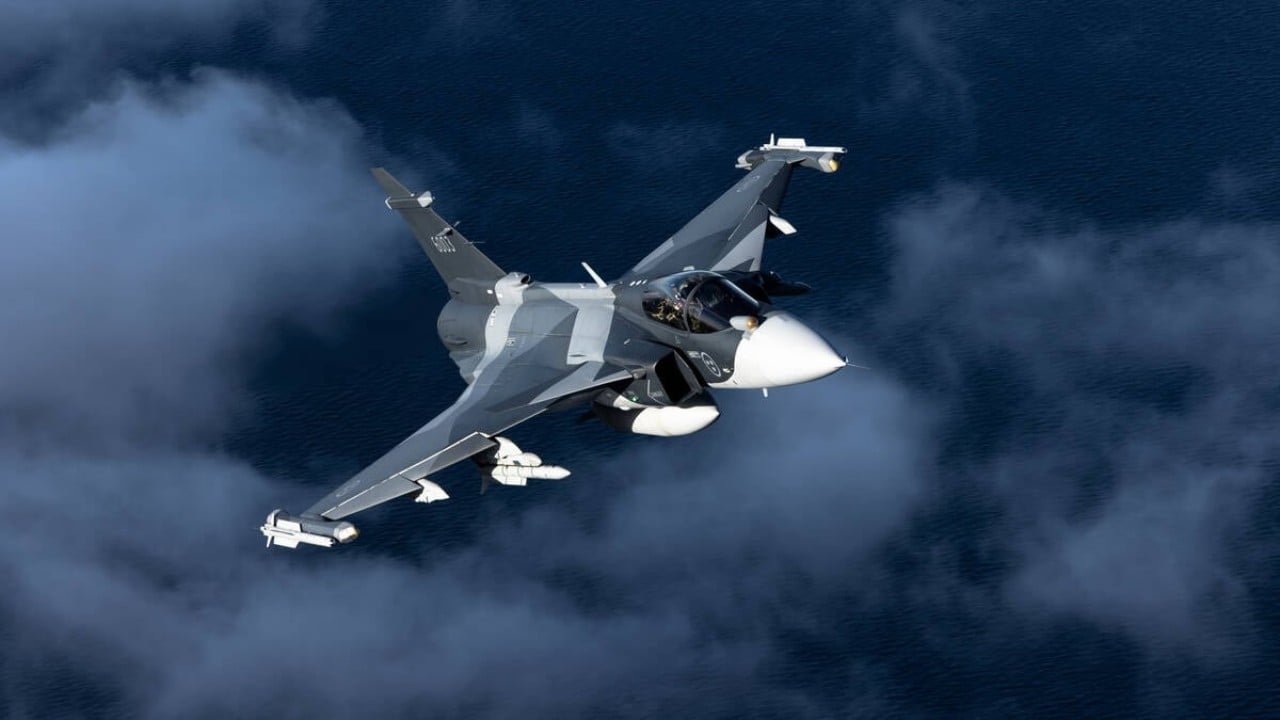
Every second a Saab Gripen is in the air, a computer is quietly stopping it from tumbling out of the sky. The Gripen was designed to be aerodynamically unstable, because an unstable jet turns harder and faster, and it only flies straight because its fly-by-wire system corrects it continuously, far faster than any pilot could.
On 15 October Saab announced that Sweden's Defence Materiel Administration, FMV, has ordered a new generation of that computer. The order is worth SEK 1.3 billion, with deliveries planned during 2030. It is not the kind of contract that comes with a roll-out ceremony. It is, however, the box that the entire aeroplane depends on.
Informations clés
- Client: Swedish Defence Materiel Administration (FMV)
- Contractor: Saab
- Valeur: SEK 1.3 billion
- Portée: Develop a new-generation flight control computer for Gripen
- Livraisons : Planned during 2030
- Annoncé : 15 October 2026
- Gripen flight controls: Triplex digital fly-by-wire
Replacing the brain of an unstable fighter
Saab says the new computer will replace the current version with a future-proof design built to meet long-term requirements for availability, performance and security of supply. The work will be done in close cooperation with FMV. The company describes the flight control computer as a central component of Gripen's flight control system that contributes to safe and precise manoeuvring.
Security of supply is the phrase that matters. Electronics age faster than airframes: processors and components go out of production long before the jets they fly in are retired. Keeping an old design alive eventually means hunting for obsolete parts or redesigning the box. Sweden has chosen to redesign it now, with deliveries in 2030, so that the computer can be supported for as long as the Gripen serves.
The order fits a pattern. Earlier in October, Saab and GKN Aerospace agreed to deepen their cooperation on the RM16, the Gripen E's engine, which is derived from the General Electric F414. Sweden is working through the parts of the Gripen that its long-term readiness depends on, one subsystem at a time.
When the software got it wrong: 1989 and 1993
Swedes have good reason to take the Gripen's flight control computer seriously. Its first flight was delayed by around 18 months because of flight control problems, and when the first prototype, 39-1, finally flew on 9 December 1988, the software was still young. On 2 February 1989, landing at Linköping, test pilot Lars Rådeström got into a pilot-induced oscillation caused by problems with the system's pitch-control routine. The prototype crashed on the runway. Rådeström walked away with a broken elbow, and a Swedish television crew caught the whole thing on camera.
An alternate angle of the 2 February 1989 crash of Gripen prototype 39-1 at Linköping, caused by pilot-induced oscillation.
Saab and the US firm Calspan reworked the software and tested the changes on a modified Lockheed T-33 variable-stability aircraft, the NT-33A. Flight testing resumed 15 months after the accident. Then, on 8 August 1993, production aircraft 39102 crashed during a display over Stockholm's Water Festival. Rådeström again lost control during a low-altitude roll and ejected. Saab later found that the control laws were amplifying the pilot's quick, large stick inputs too much. The jet came down on the island of Långholmen, in an empty area, in front of tens of thousands of spectators.
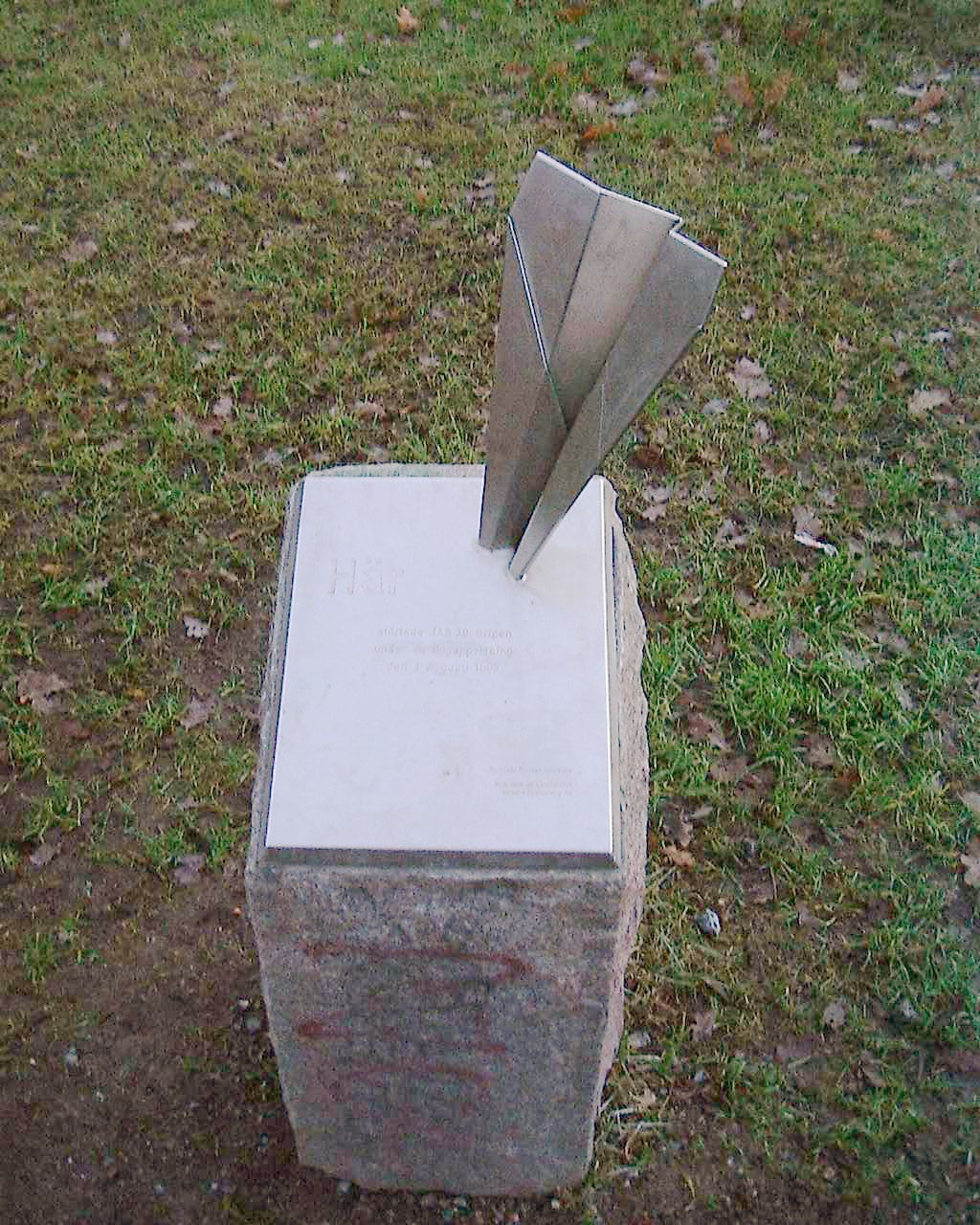
Both crashes were traced to the flight control laws, and both were fixed. The Gripen went on to enter Swedish service in 1997 and has served without needing its basic concept rethought. That history explains why a new flight control computer is treated as a development programme with years of verification ahead of it, not a simple parts swap. The software has to be every bit as trustworthy on new hardware as it is today.
Sources: Saab press release (15 October 2026), EDR Magazine, Defence Industry Europe, UK Defence Journal, Wikipedia (Saab JAS 39 Gripen)
0 Comments