
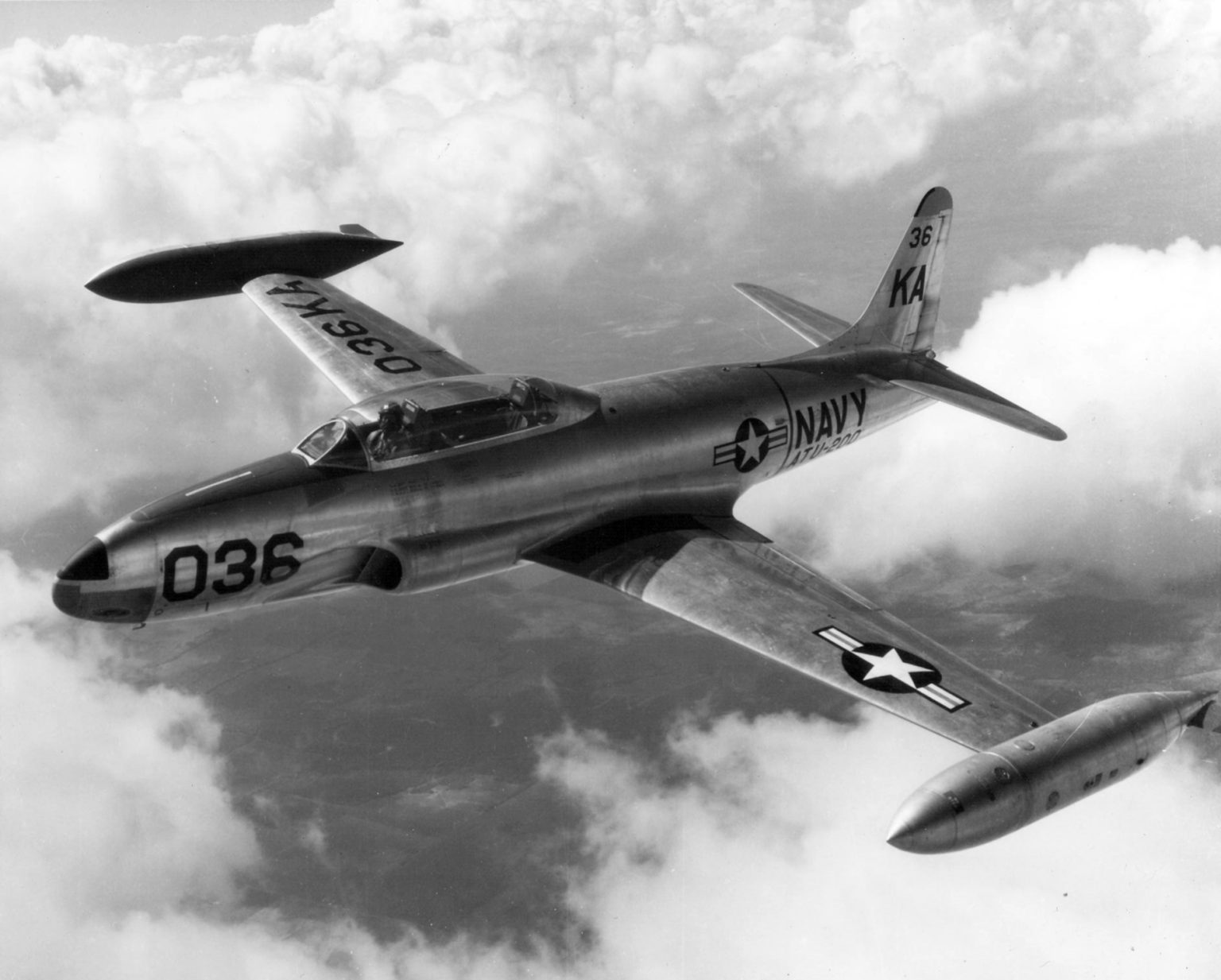
Lockheed T-33 Shooting Star
“T-Bird”
The two-seat jet that taught the Western world to fly jets — a stretched, tandem-cockpit development of America’s first operational jet fighter, the P-80/F-80 Shooting Star. More than 6,500 were built, over thirty air forces flew it, and it remains one of the very few genuine 1950s military jets a civilian can still fly today.
The jet that taught the free world to fly jets
The T-33 began life not as a trainer but as a fighter. In the closing years of World War II, Lockheed’s Kelly Johnson and the Skunk Works designed the P-80 Shooting Star — redesignated F-80 in 1948 — America’s first operational jet fighter. As the jet age arrived, the U.S. needed a way to convert propeller-trained pilots onto jets, so Lockheed stretched the F-80 fuselage by about three feet to add a second, tandem cockpit for an instructor. The result first flew in 1948 as the TF-80C, soon redesignated T-33A.
It was an instant success: docile, rugged and cheap to operate. For a generation of Western military aviators, the road to any fighter cockpit ran through the T-33. From the late 1940s onward it became the near-universal jet trainer of the United States and its allies — a straightforward, forgiving aeroplane that turned prop pilots into jet pilots by the tens of thousands.
Production ran into the late 1950s: Lockheed built 5,691, Canadair built 656 as the CT-133 Silver Star under licence, and Kawasaki built 210 in Japan — about 6,557 in all. Some air forces flew the T-Bird for half a century, long after the fighters it once fed had gone to museums. Today it has a third act as a beloved warbird — and one of the very few Cold War jets a civilian can actually fly, including through MiGFlug.
01The T-33 Shooting Star’s origins: how a fighter became the world’s jet schoolmaster
The single-seat P-80 first flew in January 1944 and reached squadron service before the war’s end, though it saw no WWII air combat in theatre. Built around a British-derived centrifugal-flow turbojet, it was straightforward and stable — exactly the wrong recipe for a cutting-edge dogfighter, but exactly the right one for a trainer.
By stretching that airframe and adding an instructor’s cockpit, Lockheed turned a middling fighter into a legendary teacher. The T-33 proved so honest and so cheap that it spread to more than thirty air forces and soldiered on into the 2010s, the last military examples retiring around 2017 — nearly seventy years after the first flight.
What makes the T-33 special
Straight wing, centrifugal engine
The T-33 kept the F-80’s clean, unswept laminar-flow wing and a single centrifugal-flow Allison J33 turbojet fed by wing-root intakes. Simple, reliable and easy to maintain, it was perfectly suited to high-tempo training and to export operators with limited infrastructure alike.
Docile, forgiving handling
The T-33 was deliberately benign: predictable stalls, honest controls and no swept-wing surprises let student pilots build confidence, while the tandem dual-control layout let an instructor take command instantly. That gentleness is exactly why it lasted as a primary jet trainer for decades.
Longevity and ruggedness
Wingtip fuel tanks extended range and endurance without complicating the airframe, and the structure proved remarkably durable — many airframes accumulated thousands of hours over 40–50-year careers. That toughness underpins its survival today as a flyable warbird.
02The T-33’s handling: why a gentle jet made the best teacher
A trainer needs the opposite virtues of a front-line fighter. Where a combat aircraft is tuned for agility at the edge of control, the T-33 was tuned for predictability: it did what the student asked and forgave what the student got wrong. Pilot reports praise its honest stall and stable approach. Those qualities let mass-conscript and allied air forces safely turn raw pilots into jet aviators — and kept the type in schoolhouses long after faster designs arrived.
03The T-33’s F-80 fighter bloodline: from Shooting Star to T-Bird
The T-33 shares its wing, tail and basic fuselage with the P-80/F-80 fighter; the visible difference is the roughly three-foot fuselage plug that made room for a second cockpit. That shared ancestry gave the trainer a genuine fighter’s feel — enough that armed versions could carry nose machine guns, and in a handful of air forces the type flew light-attack and reconnaissance sorties as well as training.
Full T-33A specifications
Baseline note: the figures below describe the Lockheed T-33A as the United States Air Force bought it — the Allison J33-A-35 aircraft of the mid-1950s production blocks, unarmed, on wingtip tanks. Deltas for the Navy TV-2 (T-33B from 1962), the armed AT-33A, the Canadair CT-133 Silver Star with its Rolls-Royce Nene, and the Kawasaki-built Japanese aircraft are given in grey. Three cautions before the numbers. First, this is a stretched P-80C and nothing else: where a figure is quoted against its single-seat parent it is the P-80C that is meant, and the P-80/F-80 and the F-94 Starfire have their own entries here rather than being folded into this one. Second, published performance for the T-33A is unusually scattered — 600 mph at sea level in the standard tables against 525 mph on the National Museum of the USAF fact sheet, and ceilings of 45,000, 46,800, 47,500 and 48,000 ft from four respectable sources for what is nominally the same aeroplane. The best-attested pair is used and the spread is flagged where it falls. Third, a great many surviving T-33s have been re-engined, re-instrumented or rebuilt over seventy years, so no single table describes any particular airframe flying today. Figures verified 3 September 2026.
Dimensions & weights
- Crew
- 2 — instructor behind pupil in tandem, dual controls throughout, under a single-piece clamshell canopy hinged at the rear. The back seat is not raised; the instructor looks past the pupil rather than over him, which is the T-33’s worst feature as a teaching aeroplane and the exact fault the Navy’s T2V SeaStar was built to cure
- Length
- 11.51 m (37 ft 9 in). The P-80C measures 10.49 m (34 ft 5 in)
- Fuselage stretch over the P-80C
- 0.98 m (38.5 in) of plug, inserted mostly ahead of the wing with a shorter section behind it, to make room for a second seat and its controls. Note the arithmetic: the two aeroplanes’ quoted lengths differ by about 1.02 m, so historyofwar.org’s account of "98 cm in front of the wings and 30.5 cm behind" cannot both be right — 98 cm is the whole stretch, not the forward half of it
- Wingspan
- 11.85 m (38 ft 10.5 in) over the tip tanks. Canadian sources quote 12.93 m (42 ft 5 in) for the CT-133, a different tip-tank installation rather than a different wing
- Height
- 3.56 m (11 ft 8 in)
- Wing area
- 21.81 m² (234.8 sq ft). The P-80C’s 22.07 m² (237.6 sq ft) is the same wing measured to a slightly different convention
- Aspect ratio
- 6.4 — a straight, unswept, comparatively long wing. It is why the T-33 is docile at low speed and why it runs out of aeroplane above about Mach 0.8
- Aerofoil
- NACA 65-213 — a laminar-flow section, thickened at the root for the fuel cells
- Empty weight
- 3,794 kg (8,365 lb). The Japanese Air Self-Defence Force published 3,017 kg for its Kawasaki aircraft, a stripped configuration rather than a lighter airframe
- Gross weight
- 5,475 kg (12,071 lb) in the normal training configuration
- Maximum take-off weight
- 6,832 kg (15,061 lb). GlobalAir rounds to 15,100 lb and the USAF museum to 15,000 lb; the CT-133 is heavier at 7,630 kg (16,822 lb)
- Wing loading
- 251 kg/m² (51.4 lb/sq ft) at gross weight — low by jet standards and the reason a fresh pupil can be let loose in one. A contemporary F-86F sits near 70 lb/sq ft
Performance
- Maximum speed
- 970 km/h (600 mph, 520 kn) at sea level. The National Museum of the USAF fact sheet says 525 mph and Warbird Alley 600 mph; the lower figure is a service placard, the higher a clean demonstrated maximum. Both are defensible and they are not describing the same thing
- Limiting Mach number
- M0.80 — the Japanese service figure, and the practical ceiling on the aeroplane’s usefulness. Beyond it the unswept wing and the thick canopy make their objections known
- Cruise speed
- 732 km/h (455 mph, 395 kn)
- Rate of climb
- 24.7 m/s (4,870 ft/min) at sea level
- Climb penalty against the P-80C
- roughly 29 per cent — the fighter manages 34.9 m/s (6,870 ft/min) on the same engine. That single number is the whole bargain of the T-33: a second seat, a second set of controls and 1,600 lb of extra empty weight, paid for out of climb
- Service ceiling
- 14,630 m (48,000 ft) in the standard tables. The USAF museum says 45,000 ft, Warbird Alley 46,800 ft and the JASDF 47,500 ft. Take 45,000–48,000 ft as the honest band
- Range
- 2,052 km (1,275 mi, 1,108 nmi) with tip tanks. historyofwar.org gives 1,025 miles as the normal range and the USAF museum 1,000 miles, which is the same aeroplane flown to a mission profile rather than to dry tanks
- Endurance
- about 3 hours on internal fuel and tip tanks at economical cruise — long enough for the type’s second career as a liaison hack and a currency-flying machine for desk-bound pilots, which is what kept Japanese and European T-33s alive for decades after the training role had gone
- Combat radius, AT-33A
- ~400 km (215 nmi) with a light bomb or rocket load and a reserve. No authority publishes a formal radius for the armed conversions; this is a working figure from the range and the stores drag, and it should be read as an order of magnitude
- Thrust-to-weight ratio
- 0.45 at gross weight with water-alcohol injection running, about 0.38 dry. Adequate, never more
- CT-133 Silver Star, for comparison
- 920 km/h (570 mph) maximum and 14,000 m (45,900 ft) ceiling on the Nene. Broadly the same aeroplane; the Canadian engine buys reliability and Canadian content rather than performance
Propulsion & systems
- Engine
- 1 × Allison J33-A-35 centrifugal-flow turbojet — a de Havilland Goblin descendant by way of the General Electric I-40, and by 1950 already an old design. The T-33 flew behind it until the end of production in 1959
- Rated thrust
- 20.5 kN dry (4,600 lbf); 24.0 kN (5,400 lbf) for take-off with water-alcohol injection. Warbird Alley quotes 5,200 lbf, which is a different block of the same engine
- Engine architecture
- Single-sided centrifugal compressor, fourteen through-flow combustion chambers, single-stage axial turbine — simple, tolerant, easy to teach on, and thirsty. The centrifugal layout is why the T-33 has a fat waist and wing-root intakes rather than a slim axial fuselage
- Air intakes
- Wing-root, one each side, with boundary-layer splitter plates — inherited unaltered from the P-80
- Internal fuel
- 353 US gal (1,336 l), against 425 US gal on the P-80C. The fuselage cell shrank from 207 to 95 US gal to make room for the second cockpit; nylon bag cells replaced the wing’s self-sealing tanks to claw back part of the loss
- External fuel
- Two permanently fitted wingtip tanks, about 230 US gal (871 l) each, for roughly 813 US gal (3,078 l) total. They are the T-Bird’s signature and its structural nuisance: they are load-bearing, they set the roll inertia, and they are the reason the aeroplane rolls like a lorry and lands like a feather
- Escape system
- Ejection seat in both cockpits — not standard on the earliest airframes, and Canadian CT-133s later spent decades as the Aerospace Engineering Test Establishment’s ejection-seat testbed at CFB Cold Lake, a 46-year second career that outlasted the type’s training role by three decades
- Undercarriage
- Retractable tricycle, no arrester hook, no catapult fittings — the Navy’s TV-2 was a land-based trainer only. Carrier capability required the separate T2V-1 SeaStar, with a raised rear seat, boundary-layer control, powered leading-edge flaps, a strengthened leg and a hook
- Armament provision
- None as built — two 0.50 in M3 Brownings in the nose on gunnery-training airframes, where the P-80 carried six; underwing pylons and hardpoints on the AT-33A export conversions
- Mission fits
- Camera nose on the RT-33A, target-towing gear on the TT-33A, radio-control equipment on the DT-33 drone directors and QT-33 targets — and, on the NT-33A, the variable-stability system that made one T-33 the most-flown handling-qualities laboratory in aviation
- CT-133 delta
- Rolls-Royce Nene 10, 22 kN (5,000 lbf), built in Canada; some Canadian references quote 5,100 lbf. A larger, simpler engine in a locally modified fuselage — the reason a Silver Star sounds and smells different from a T-Bird on the same ramp
- Boeing Skyfox delta
- 2 × Garrett TFE731-3A turbofans, 16.5 kN (3,700 lbf) each — 60 per cent more thrust, 17 per cent less engine weight and 45 per cent less fuel burn on about 70 per cent of the original airframe. Flown 23 August 1983; nobody bought it
04The T-33’s numbers: max speed, ceiling and cost, and why sources disagree
Published figures for the T-33 vary by source and variant. Museum fact-sheets often quote a typical cruising figure around 525 mph, while the commonly cited maximum is about 965 km/h (600 mph) — in all cases firmly subsonic. Service-ceiling figures range from roughly 45,000 to 49,200 ft. Period unit-cost estimates cluster around US$100,000–130,000 in 1950s dollars, but treat these as approximate; as a simple single-turbojet trainer it was cheap to run, though no authoritative cost-per-hour figure exists in open sources. The values above are hedged toward the most commonly quoted numbers.
Armament & payload
The T-33 was armed as an afterthought, and the afterthought went to war for fifty years
The T-33 was designed to carry nothing. Lockheed took a fighter, removed four of its six guns to make room for a pupil, and sold the result as a machine for teaching people to fly jets. That should have been the end of the matter. Instead the aeroplane was cheap, plentiful, forgiving and available under the Military Assistance Programme, and by the late 1950s Lockheed was quietly converting T-33As into AT-33As with underwing pylons for air forces that wanted a jet they could shoot with and could not afford anything else. The armament that resulted is modest to the point of embarrassment — two 0.50 in machine guns, a couple of 500 lb bombs, eight unguided rockets, an optical sight and a pilot’s eye — and it killed people in Cuba, East Timor and half a dozen Latin American confrontations across five decades. Fits varied enormously and often locally: Indonesia armed its nominally unarmed T-33As with machine guns salvaged from scrapped Il-28s and bomb racks taken off retired B-25s, and no two Latin American AT-33 fleets were configured alike.
Gun
- 2 × 0.50 in (12.7 mm) M3 Browning in the nose on gunnery-training and armed airframes, roughly 300 rounds per gun. The P-80C carried six of the same gun; four bays were given up for the second cockpit and its plumbing
- Most T-33As left the factory with no guns at all. The gun bays existed, the wiring often existed, and whether a given air force fitted the weapons was a matter of budget and doctrine rather than of variant
- Optical gyro gunsight in the front cockpit; the instructor in the back has no sight and no trigger, which is one more reason the rear seat is a poor place from which to teach weapons
- Indonesia’s field-rearmed T-33As used a pair of machine guns and a gunsight cannibalised from scrapped Ilyushin Il-28 bombers — an improvisation, not a Lockheed kit
- The gun was the whole of the Cuban T-33s’ air-to-air capability at Playa Girón in April 1961, and it was sufficient against piston-engined B-26 Invaders that had had their defensive turrets removed
Air-to-air
- No air-to-air missile was ever fitted to a service T-33. There is no Sidewinder rail, no radar, no fire-control system and no provision for any of them
- Air-to-air work meant the two nose guns, a gunsight and visual acquisition — a 1944 fighter’s toolkit in a 1948 airframe
- That toolkit produced the type’s only air-to-air kills. The Fuerza Aérea Revolucionaria fielded about four T-33s at the Bay of Pigs, one of which was destroyed on the ground on 15 April and another lost when Lt Orestes Acosta flew into the sea; the survivors, alongside Hawker Sea Furies, broke Brigade 2506’s air support. Spanish-language accounts credit the two types jointly with seven B-26s on 17 April alone, and nine FAL B-26s were lost in all, four American contract aircrew among the dead
- Radar-guided all-weather interception was the job of the F-94 Starfire, built on two TF-80C airframes and covered in its own entry here. Confusing the two is the single most common error made about this aeroplane
- In JASDF service in the 1970s the T-33 flew the opposite role, as a dissimilar adversary for F-104 crews — carrying nothing at all
Air-to-surface guided
- None, in any variant, in any air force, at any point in the type’s seventy-year career
- The aircraft has no radar, no laser designator, no data bus and no weapon-management system. Aiming is done through an optical sight by a pilot who can see the target
- This is worth stating plainly because the AT-33 is sometimes listed alongside genuine light-attack types such as the A-37 Dragonfly. The Dragonfly could be given guided weapons; the T-33 could not, and never was
- Late Bolivian and Canadian-refurbished airframes gained new radios, navigation kit and instruments under programmes such as the Kelowna Flightcraft rework of the late 1990s, but no weapon-aiming capability beyond the sight
Bombs
- AT-33A: underwing pylons rated for up to 2,000 lb (907 kg) of bombs in total — in practice two 500 lb or 250 lb general-purpose weapons, one under each wing
- The tip tanks are fixed and load-bearing, so every pound of ordnance hangs from the wing between root and tip on a structure never designed to carry it. Fatigue life, not payload, is what limits an armed T-33
- Practice bomb carriers and small blue practice bombs were far commoner than live weapons: for most of the fleet, for most of its life, the pylons taught weapon delivery rather than performed it
- Indonesian T-33As deployed to East Timor in 1976 flew counter-insurgency strikes with bomb racks salvaged from withdrawn B-25 Mitchells — the clearest documented case of the type dropping bombs in anger
Rockets
- Up to eight 5 in HVAR unguided rockets on underwing rails — the standard AT-33A fit and, on the evidence, the weapon the type actually used
- The Cuban T-33s at the Bay of Pigs were rocket-armed, and rockets, not guns, did much of the damage to the exile B-26s and to the beachhead
- Later conversions in several Latin American air forces carried 2.75 in FFAR pods in place of individual rails; fits are poorly documented and varied by operator
- Rocket delivery from a T-33 is a dive attack flown on the gunsight. It is accurate enough against a truck column and useless against anything that shoots back with radar
Pods & other stores
- Two wingtip tanks, permanently fitted. They are not a store in the ordinary sense — they are part of the aeroplane, hold roughly 460 US gal between them, and define both its silhouette and its roll response
- Target-towing gear: the Yugoslav TT-33A and equivalent conversions elsewhere trailed banner and sleeve targets for gunnery practice, which for many air forces was the T-33’s longest-running paid employment
- Drone-director radio-control equipment on the DT-33A and the Navy’s TV-2D (DT-33B from 1962), flying alongside and commanding pilotless targets. The QT-33A and TV-2KD/DT-33C went the other way and became the targets
- Camera nose on the single-seat RT-33A — 85 built, almost all for export under the Military Assistance Programme, and for several small air forces their only tactical reconnaissance asset
- The NT-33A variable-stability testbed carried a full in-flight simulation system in the nose and flew handling-qualities research for over forty years, standing in for aircraft from the X-15 to the F-16 and the Space Shuttle before retirement in 1997
Three typical loadouts
- Advanced flying training, USAF 1955
- Clean, no guns fitted, two wingtip tanks full. Roughly 813 US gal of fuel, two pupils’ worth of instruction and nothing else. This is what the overwhelming majority of the 6,557 aircraft built did for the overwhelming majority of their flying hours.
- Gunnery and weapons conversion
- Two 0.50 in M3 Brownings with about 300 rounds per gun, gyro sight, practice bomb carriers under each wing, gun camera. Flown against a banner streamed by another T-33 in the target-tug fit — the type frequently trained against itself.
- AT-33A light attack, Latin America 1965–2017
- Two nose guns, plus either 2 × 500 lb general-purpose bombs or 8 × 5 in HVAR rockets on the underwing pylons, tip tanks full, low-level ingress and a dive attack on the sight. Against irregular forces without radar-guided air defence this was, for fifty years, enough.
Sourcing caveat: no single authority publishes a consolidated weapons table for the T-33, because there was never a single armament standard. Gun, pylon and rocket figures here come from historyofwar.org and the National Museum of the USAF fact sheet, cross-checked against published English- and Spanish-language operator listings; the AT-33A’s 2,000 lb and eight-HVAR figures are historyofwar.org’s. Fits attributed to individual air forces — Indonesian, Cuban, Bolivian — rest on those national accounts and are not independently confirmed by a manufacturer document. Figures verified 3 September 2026.
Variants
Lockheed built a trainer nobody ordered, and then everybody wanted one of every kind
The T-33 is not really a design so much as a decision. In May 1947 Lockheed, watching squadrons wreck P-80s because there was no way to teach a piston pilot to fly a jet with an instructor aboard, spent a million dollars of its own money on a two-seat conversion the Air Force had not asked for. A P-80C came off the line in August 1947, gained 38.5 in of fuselage and a second cockpit, and flew on 22 March 1948 with Tony LeVier in the front seat. It was designated TP-80C, then TF-80C when the Air Force became a separate service, then T-33A on 5 May 1949. Production ran until 1959 and reached 6,557 aircraft: 5,691 from Lockheed, 656 from Canadair and 210 from Kawasaki.
What followed was a family tree of unusual breadth for a trainer, because an aeroplane that is cheap, available and structurally unfussy gets used for everything. The T-33 became a reconnaissance aircraft, a target tug, a drone director, a drone, a gunship of sorts, a variable-stability flying laboratory, a chase plane and, in two separate attempts, the basis of an entirely different aeroplane. It also became the aircraft on which a substantial fraction of the world’s Cold War fighter pilots first flew a jet.
Two things are routinely confused and should not be. The F-94 Starfire is a different aeroplane — a radar-equipped, afterburning all-weather interceptor built on two TF-80C airframes, with its own entry here — and so is the P-80/F-80 Shooting Star that fathered them both. The T-33 shares a fuselage lineage with each and a mission with neither.
- TP-80C / TF-80C (1948, 20 built)
- The prototypes and pre-production aircraft, a P-80C with a fuselage plug, a lengthened one-piece canopy, four fewer guns and a smaller fuselage fuel cell. Redesignated T-33A on 5 May 1949. Two of these airframes were taken away to become the F-94 Starfire prototypes.
- T-33A (1948–1959, 5,691 by Lockheed)
- The definitive trainer and, in raw numbers, one of the most-produced jets in history. Sold, given and lent worldwide under the Military Assistance Programme; the USAF’s only jet trainer from 1948 until the T-37 arrived in 1957, and its principal advanced trainer until 1961.
- TV-2, from 1962 T-33B (649–699 airframes)
- US Navy and Marine Corps aircraft diverted from USAF production, the first 28 delivered as TO-2 before the designation changed. Land-based only: no hook, no catapult fittings, no carrier capability whatever, which is a persistent misconception about the Navy’s T-Birds.
- AT-33A (conversions, from the late 1950s)
- The armed export variant: underwing pylons and hardpoints for up to 2,000 lb of bombs or eight 5 in HVAR rockets, usually with the two nose guns fitted. Bought by Bolivia, Burma, the Dominican Republic, Ecuador, Mexico, Nicaragua, Paraguay and Uruguay among others, and the reason a trainer has a combat record at all.
- RT-33A (85 built)
- Single-seat tactical reconnaissance conversion with cameras in the nose and equipment in the rear cockpit space, built almost entirely for export. For several small air forces it was the only reconnaissance aircraft they had.
- DT-33A / DT-33B / QT-33A / TV-2KD (conversions, 1950s–1960s)
- The drone business at both ends: directors that flew alongside pilotless targets and radio-controlled targets that were the pilotless targets, the latter flyable from the front seat for ferrying. The Navy’s TV-2D and TV-2KD became DT-33B and DT-33C in the 1962 tri-service redesignation.
- NT-33A (1 principal aircraft, 1954–1997)
- The variable-stability testbed, operated latterly by Calspan, with a computer-driven in-flight simulation system that let one T-33 impersonate the handling of almost any other aeroplane. It supported the X-15, the Space Shuttle, the F-16 and a generation of flying-qualities standards, and is arguably the single most scientifically productive airframe of the whole 6,557.
- Canadair CT-133 Silver Star Mk 3 / T-33AN (656 built, company designation CL-30)
- Canadian licence production with the Rolls-Royce Nene 10 of 22 kN (5,000 lbf) in place of the Allison, a locally modified fuselage and a different tip-tank installation. Twenty Mk 1s were US-built loans and a single Mk 2 the Nene prototype. Canadian Forces Silver Stars outlived the training role by three decades in electronic-warfare, target and ejection-seat-testbed work; the last was retired from the Aerospace Engineering Test Establishment at CFB Cold Lake in 2005.
- Kawasaki T-33A (210 built, 1956–1959)
- Japanese licence production for the Air Self-Defence Force, which operated 278 T-33s in all counting 68 supplied directly from the United States. They trained pilots, flew liaison and currency sorties, and in the 1970s played dissimilar adversary to F-104 crews. Fifty-nine were lost in accidents; after a fatal crash at Iruma in November 1999 the surviving eight were grounded, and the fleet was struck off charge in June 2000.
- Lockheed T2V-1 SeaStar, from 1962 T-1A (first flight 16 December 1953)
- The carrier-capable relative and a genuinely different aeroplane: raised rear cockpit so the instructor can see forward, powered leading-edge flaps with boundary-layer control, redesigned tail, strengthened undercarriage with catapult fittings and an arrester hook. In Navy service from May 1957 into the 1970s, replaced by the T-2 Buckeye.
- Boeing Skyfox (1 prototype, flown 23 August 1983)
- The last attempt to keep the airframe relevant: two Garrett TFE731-3A turbofans in place of the J33, a new nose and tail and modern avionics on about 70 per cent of an existing T-33, offered as a rebuild kit. Sixty per cent more thrust on 45 per cent less fuel, a tenfold better time between overhauls, and no customers — Portugal signed a letter of intent for 20 kits and Boeing walked away. The prototype went on display at the Palm Springs Air Museum in 2024.
Disposition and survivors, verified 3 September 2026. No air force anywhere still operates the T-33 in any form. The Bolivian Air Force, the last military operator, retired its AT-33s in a ceremony at El Alto on 31 July 2017 after 44 years; Mexico withdrew its last aircraft in 2007, Japan struck its fleet off charge in June 2000, Greece retired in 2000, Canada in 2005 and Uruguay in 1997. Bolivia has been shopping for a lead-in fighter trainer replacement — L-15, M-346, T-50 and Yak-130 have all been evaluated — without concluding a purchase. The civil fleet is by far the largest thing left: Warbird Alley counts about 50 T-33s and CT-133s in warbird operators’ hands, overwhelmingly in the United States, and these are original airframes rather than reproductions — nobody has ever built a replica T-33, and there would be no reason to. Airworthy examples fly with the Jet Aircraft Museum in London, Ontario and Waterloo Warbirds in Canada among many private owners; museum airframes number in the hundreds worldwide, including the NT-33A testbed at the National Museum of the USAF and a polished T-33A at the Udvar-Hazy Center. One long-running commercial operation has ended: Boeing retired its two CT-133 chase aircraft on 4 December 2020 after 66 years, replacing both with a single T-38 — some reference pages still list those Silver Stars as active and should not be believed. Two further corrections to the received account. The T-33 is often credited to "more than 30 air forces"; about 30 national operators can actually be named from the standard sources, and the same sources variously say "more than 20" and "roughly 25" in their own prose, so treat 30 as the generous end of a soft number. And Bolivia’s celebrated counter-insurgency jets played no part in the campaign they are most often associated with: the first Bolivian T-33ANs arrived in 1973–74, six years after the 1967 Ñancahuazú operation against Guevara. Their armed work was internal security and counter-narcotics, and sortie-level detail for it is not corroborated in the open sources consulted here.
Seven decades of the Shooting Star
XP-80 first flight
Lockheed’s Skunk Works flies the prototype Shooting Star, the fighter from which the T-33 would descend.
P-80 enters service
The Shooting Star becomes America’s first operational jet fighter, though it sees no WWII air combat in theatre.
Two-seat T-33 flies
The TF-80C / T-33A first flight: the F-80 fuselage is stretched about three feet for a second, tandem cockpit.
First jet-vs-jet kill
An F-80 is credited with the first jet-versus-jet aerial victory over Korea — a claim later disputed by historians.
Canadair licence
Canadair begins CT-133 Silver Star production, re-engined with the Orenda-built Rolls-Royce Nene.
Kawasaki and export
Kawasaki builds T-33s under licence in Japan, and the type spreads to more than thirty air forces worldwide.
Bay of Pigs
Cuban gun-armed T-33s help defeat the CIA-backed invasion, shooting down B-26 bombers over the beachhead.
Canada retires the Silver Star
The RCAF flies the last CT-133 Silver Stars after more than fifty years of service.
The last military T-33s
Bolivia retires its T-33s, ending front-line military service — but the warbird era continues.
From the flight line: twelve T-33 stories
The fighter that became a schoolmaster
A three-foot stretch turned a frontline fighter into a legend.
Read the full story
Taught the free world to fly jets
Tens of thousands of pilots earned their jet wings in a T-Bird.
Read the full story
First jet-vs-jet kill (the F-80 in Korea)
Its ancestor opened the jet-combat age.
Read the full story
Canada’s Silver Star
A Rolls-Royce heart in a Lockheed airframe.
Read the full story
Bay of Pigs, 1961
Three old trainers helped topple an invasion.
Read the full story
The half-century jet
Built in the 1940s, still flying in the 2010s.
Read the full story
Survivors in the air
One of the most accessible Cold War jets flying today.
Read the full story
Fly the T-Bird with MiGFlug
Take the controls of a real Cold War jet trainer.
Read the full story
The thirty-nation jet
A world map painted in Shooting Stars.
Read the full story
Simplicity by design
One straight wing, one honest engine.
Read the full story
Kawasaki’s licence-built T-Bird
The Shooting Star, built in Japan.
Read the full story
The trainer that made the fighters
Behind every Cold War ace, a T-Bird.
Read the full story
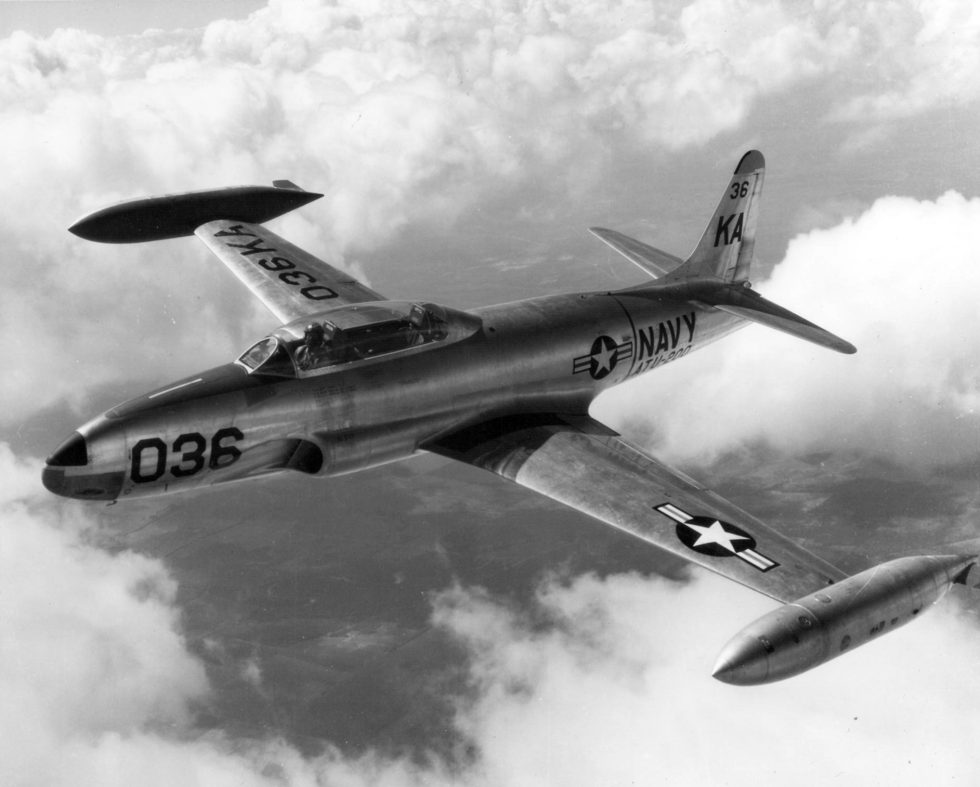
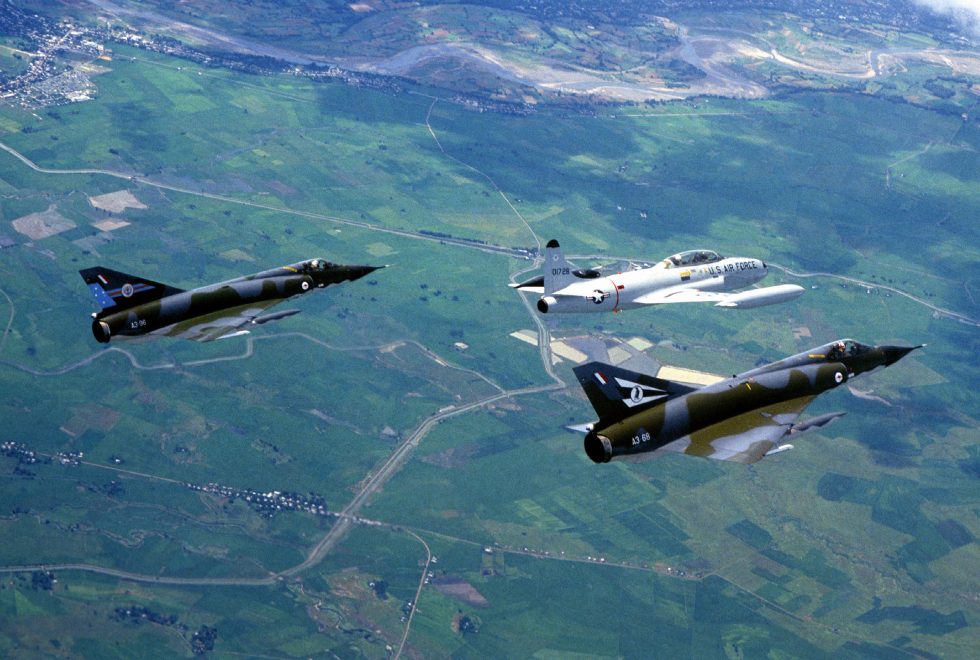
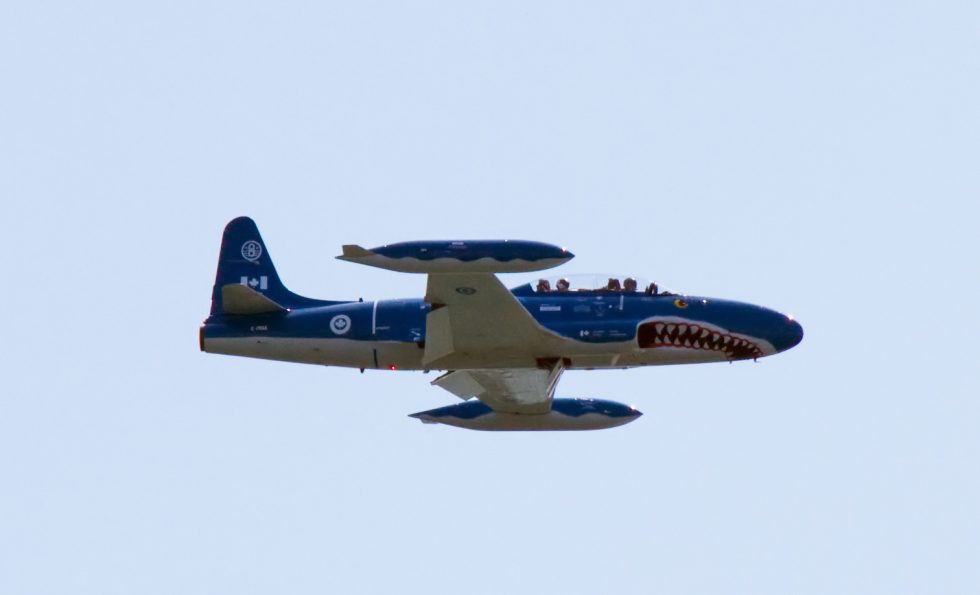
The T-33 in pictures
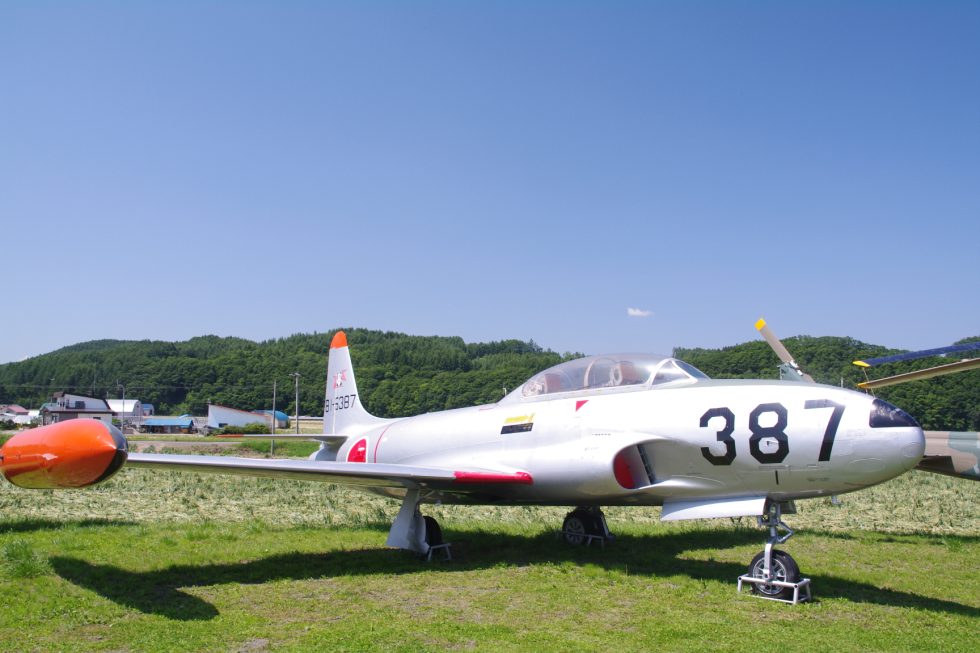
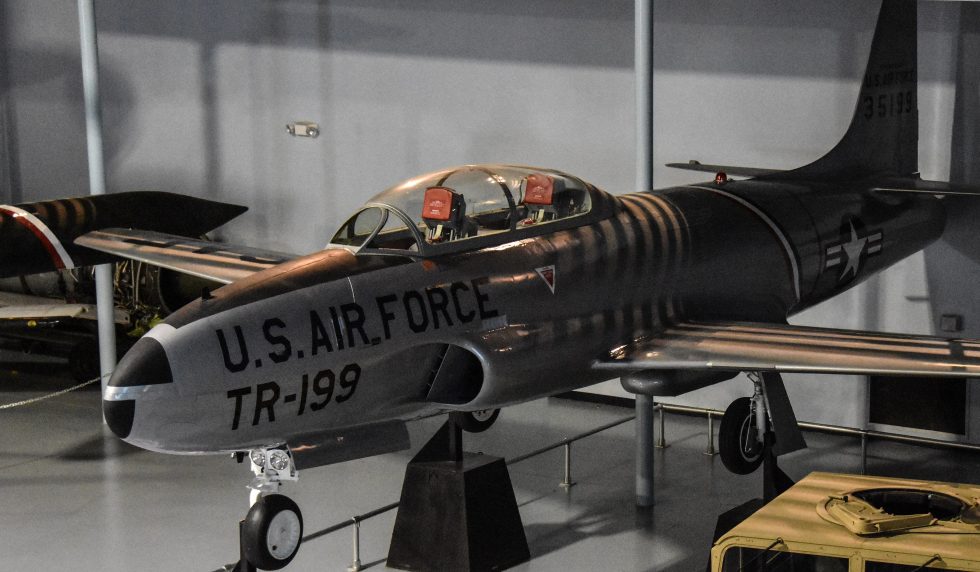
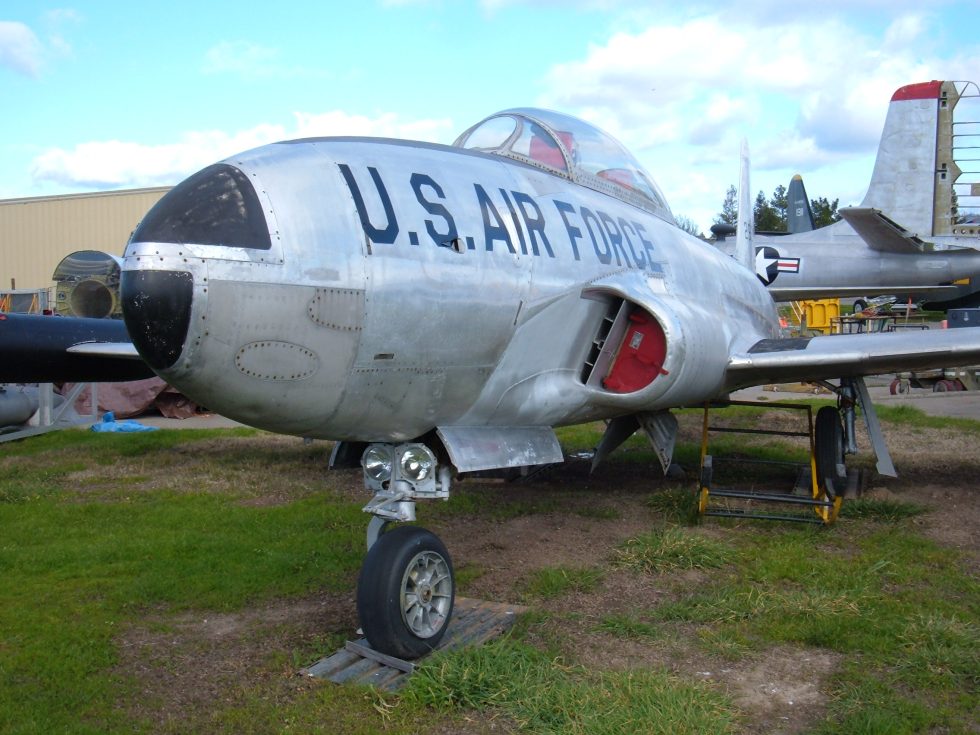
The T-33 in motion
The T-Bird remains a familiar sight at airshows across North America and Europe, where preserved Shooting Stars and Canadair Silver Stars still fly in period colours — slim silhouette, wingtip tanks and that unmistakable 1950s jet whistle.
The T-33 Shooting Star in motion
AirshowStuffVideos — one of the most-watched T-33 Shooting Star films on YouTube.
Where the Shooting Star flew
A trainer that occasionally went to war
The T-33 was overwhelmingly a trainer and utility aircraft, but armed variants saw action in several minor conflicts. The most famous is the Bay of Pigs in April 1961, when Cuba’s gun-armed T-33s helped shoot down invading B-26 bombers and dominated the air over the beachhead. Elsewhere, armed T-33s and Canadair Silver Stars flew light-attack, counter-insurgency and reconnaissance sorties with various air forces.
Its fighter ancestor the F-80 scored what the USAF long credited as the first jet-versus-jet aerial victory — 1st Lt Russell J. Brown claiming a MiG-15 over Korea on 8 November 1950. That claim is genuinely disputed: Soviet records do not confirm the loss, and some historians credit a US Navy F9F Panther with the first jet kill. Treat it as a contested claim, not settled history.
Compare the combat record of every military aircraft. Figures as of July 2026.
Everything people ask about the T-33 Shooting Star
Can I fly in a T-33 Shooting Star?
Is the T-33 easy to fly?
Is the T-33 fast? Is it supersonic?
How is the T-33 related to the P-80/F-80?
How many T-33s were built?
Is the T-33 still flyable today?
You can actually fly the T-33.
Pick your cockpit.
Some legends only live in museums — others are fuelled and waiting. MiGFlug has put civilians in real military jet cockpits since 2004.
 Fly the L-39 AlbatrosThe world’s most-flown jet trainer — aerobatics included
 Fly the F-104 Starfighter“The missile with a man in it”
 Fly the MiG-21The Cold War’s most-produced jet
 Fly the T-33 Shooting StarAmerica’s first jet trainer
 Fly the DH VampireA piece of early jet history
 Fly the S.211Agile Italian jet trainer
 Fly the MB-326The classic Aermacchi jet
 Fly the MiG-15The Soviet legend of the Korean War
Continue the tour
Every fact, checked
- MiGFlug — Lockheed T-33 Jet Flight ExperienceBooking details for the flyable T-33 experience from Toronto, Canada.
- National Museum of the U.S. Air Force — T-33A fact sheetOfficial specifications and service history for the T-33A.
- National Air Force Museum of Canada — CT-133 Silver StarThe Canadair-built Silver Star and its long RCAF career.
- Air & Space Forces Magazine — Airpower at the Bay of PigsHow Cuba’s armed T-33s helped defeat the 1961 invasion.
- Smithsonian National Air and Space Museum — Lockheed T-33ACollection notes on the type and its development from the F-80.
- This Day in Aviation — 8 November 1950The disputed first jet-versus-jet victory by an F-80 over Korea.
- AOPA — Taming the T-BirdPilot report on flying the T-33 and its forgiving handling.