
At 05:30 on 25 October 1983, the first Army Rangers stepped out of a Hercules over the south-western tip of Grenada. They jumped from about 500 feet, low enough to stay under the anti-aircraft fire. Below them lay a half-finished runway, blocked with vehicles and barricades, and around it Cuban and Grenadian guns were already shooting.
Circling above were the aircraft that made the jump survivable: AC-130 Spectre gunships of the Armée de l'air des États-Unis, hunting for the guns that were firing at the transports.
Forty-three years ago today, Operation Urgent Fury began. On the ground, it was a short, sharp campaign against a small army. In the air, it was a crowded, improvised and sometimes tragic fight over an island of 133 square miles, and the lessons it taught reshaped how the US military goes to war.
Informations clés
- Opération: Urgent Fury, US-led invasion of Grenada
- Began: 05:00 H-hour, 25 October 1983; Rangers jumped at 05:30
- Commandant: Vice Adm. Joseph Metcalf III, Joint Task Force 120
- Key aircraft: AC-130H Spectre, MC-130E Combat Talon, C-130, AH-1T SeaCobra, UH-60A Black Hawk, CH-46, CH-53, A-7E Corsair II
- Jump height: About 500 feet over Point Salines
- Helicopters lost to fire on day one: Two AH-1T SeaCobras plus Black Hawks at Richmond Hill
- US casualties: 19 killed, 116 wounded (US Army figures)
- Héritage: Goldwater-Nichols Act, signed 1 October 1986
The runway that started it all
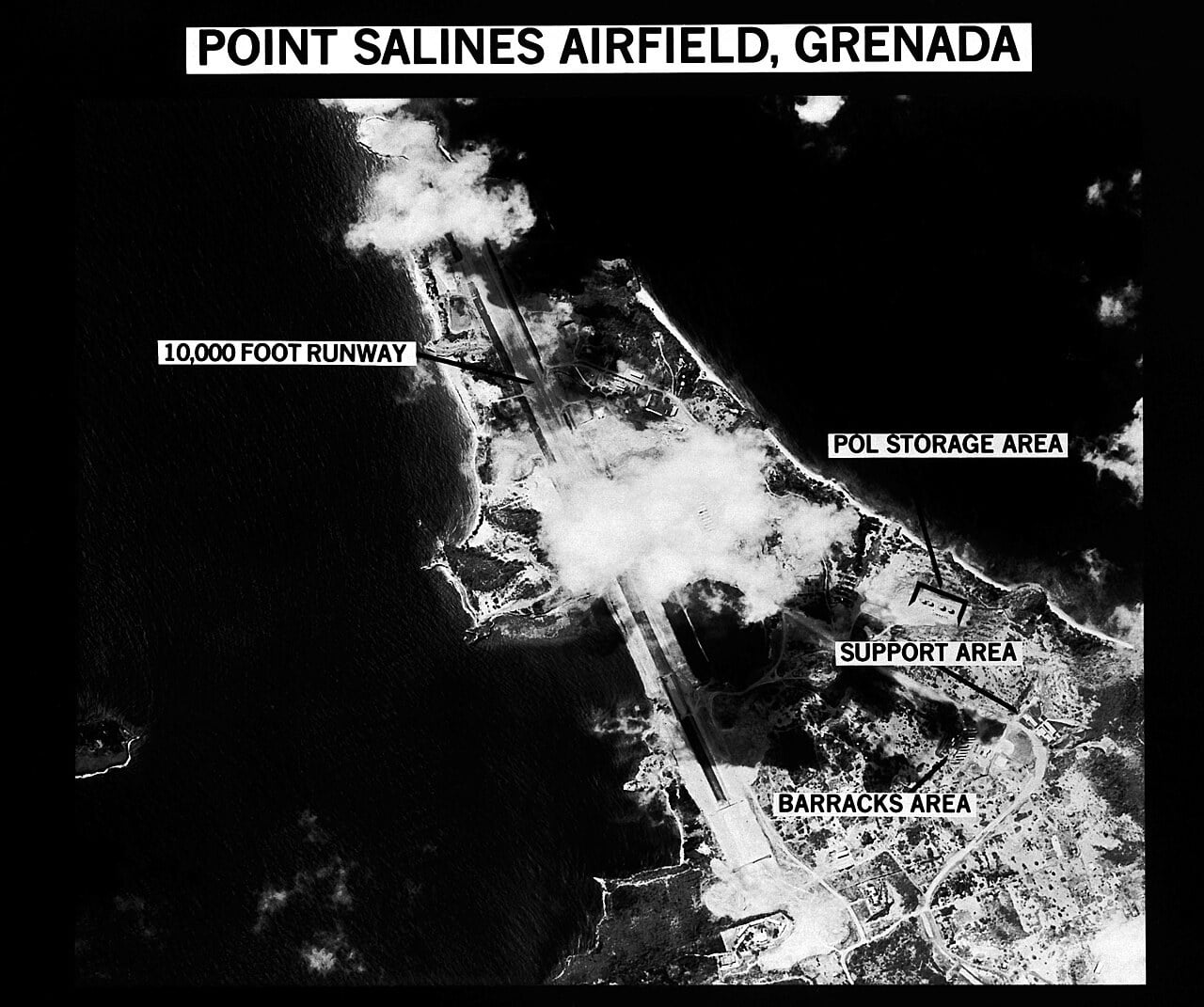
The trigger was an airport. Grenada’s revolutionary government, led by Maurice Bishop, was building a new international airport at Point Salines with help from Cuba and several other countries. Its runway, about 9,000 feet long according to most accounts, could take the largest Soviet transport aircraft. Bishop’s government said it was for tourist jets, which could not use the short strip at Pearls Airport in the north.
Washington did not believe it. In March 1983 President Ronald Reagan warned that the runway and its fuel tanks suggested a future Cuban-Soviet military airbase. Then, in October, the island’s government tore itself apart. Bishop was placed under house arrest, freed by a crowd, and executed by firing squad on 19 October. A military council under Hudson Austin took over and imposed a shoot-on-sight curfew.
About 600 American medical students were on the island. With the Iran hostage crisis still fresh, and after an appeal from the Organisation of Eastern Caribbean States, Reagan ordered an invasion. The carrier USS Independence and an amphibious group led by USS Guam were diverted towards Grenada. Planning had to be done in days.
Combat Talons and Spectres over Point Salines
The Rangers came from Hunter Army Airfield in Georgia, led in by five MC-130E Combat Talons of the 8th Special Operations Squadron, two of them guiding formations of C-130 transports. The plan was to land on the runway. Mid-flight, word came that it was blocked, and the Rangers rigged for a parachute assault inside the aircraft.
Things went wrong early. The lead Talon lost its radar in cloud about 20 miles out, and the formations had to reorganise, costing roughly half an hour. The Army’s official history says the first two planes carrying the lead assault company had to abort their drops after navigation and radar failures.
Talon 64-0568, flown by squadron commander Lt Col James Hobson with Twenty-Third Air Force commander Maj Gen William Mall aboard, finally dropped the Ranger runway-clearing teams under searchlights and heavy fire. Two Spectres suppressed the guns so the rest could follow. Hobson received the Mackay Trophy for the mission.
The AC-130H crews of the 16th Special Operations Squadron stayed busy all day. They knocked out anti-aircraft positions, scouted the runway, and around 15:30 destroyed a BTR-60 armoured personnel carrier that charged the Ranger lines. The official Army account records the airfield declared secure at 07:35, with the first C-130 landing moments later.
Cobras down at Fort Frederick
In the north, Marines of the 2nd Battalion, 8th Marines flew from USS Guam in CH-46 Sea Knights et CH-53 Sea Stallions and took Pearls Airport against light resistance. When a heavy machine gun opened up on the helicopters, Marine AH-1T SeaCobras silenced it.
Around St. George’s, the capital, it was a different war. A team of Navy SEALs sent to protect Governor-General Sir Paul Scoon was trapped at his residence by Grenadian armoured cars, and called in AC-130s, Marine Cobras and Navy A-7s to hold them off. Fort Frederick, above the town, bristled with anti-aircraft guns.
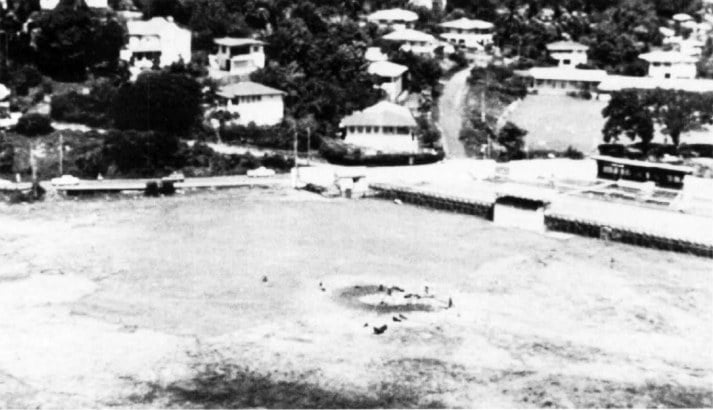
Two SeaCobras of HMM-261 attacking positions near the fort were shot down. Capt. Tim Howard, badly wounded and with his right arm shattered, put his burning Cobra down in a sports field. His front-seater, Capt. Jeb Seagle, pulled him clear, applied a tourniquet and then drew Grenadian soldiers away; according to the US Naval Institute’s Proceedings, he was captured and killed. Seagle was awarded the Navy Cross.
A CH-46 landed in the field under fire to rescue Howard while the second Cobra covered it. That Cobra was hit, spiralled down and crashed into the sea, killing Maj. Pat Giguere and 1st Lt. Jeffrey Scharver. Three of the four Cobra crewmen were dead.
Black Hawks and a hospital
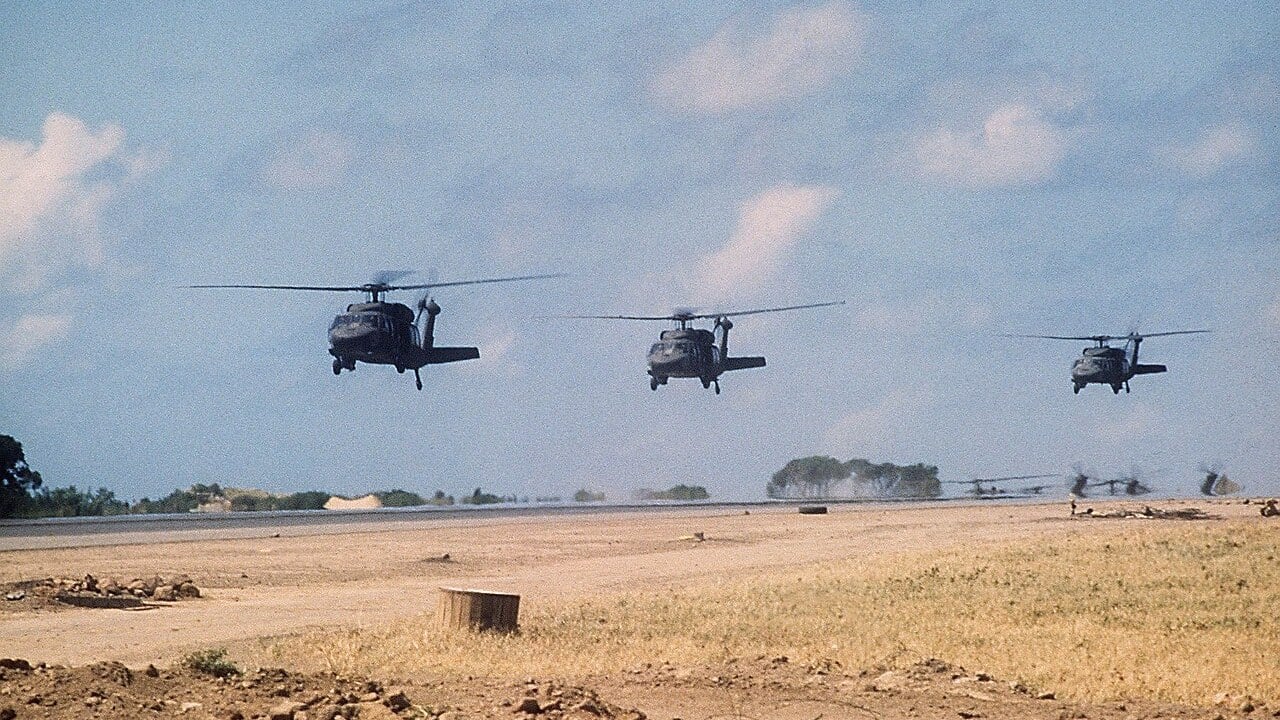
The Army’s brand-new UH-60 Black Hawks also paid. Daylight raids on Richmond Hill prison and Fort Rupert ran into anti-aircraft fire that nobody had briefed. Two helicopters went down and Task Force 160 pilot Capt. Keith Lucas was killed. One damaged Black Hawk reached USS Guam with its pilot shot through the leg, and a deck crew had to hose water into its intakes to stop the engines.
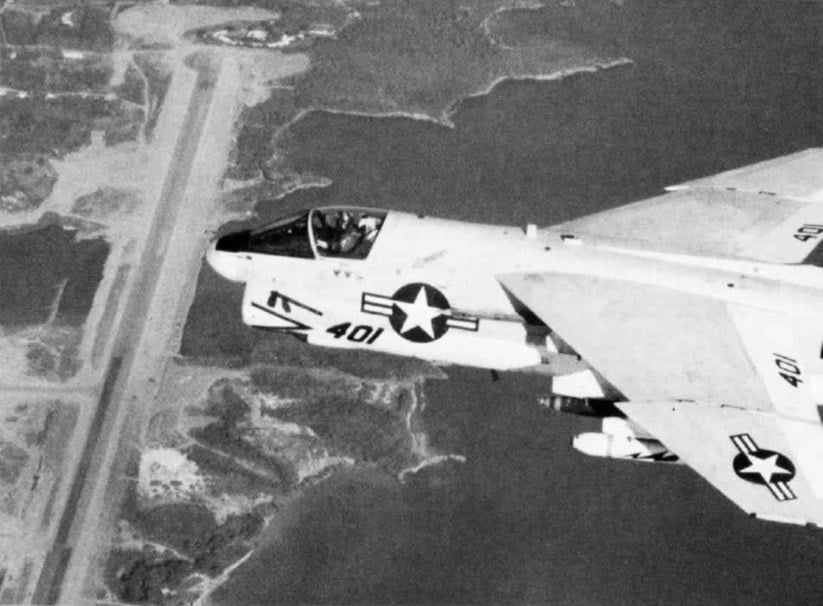
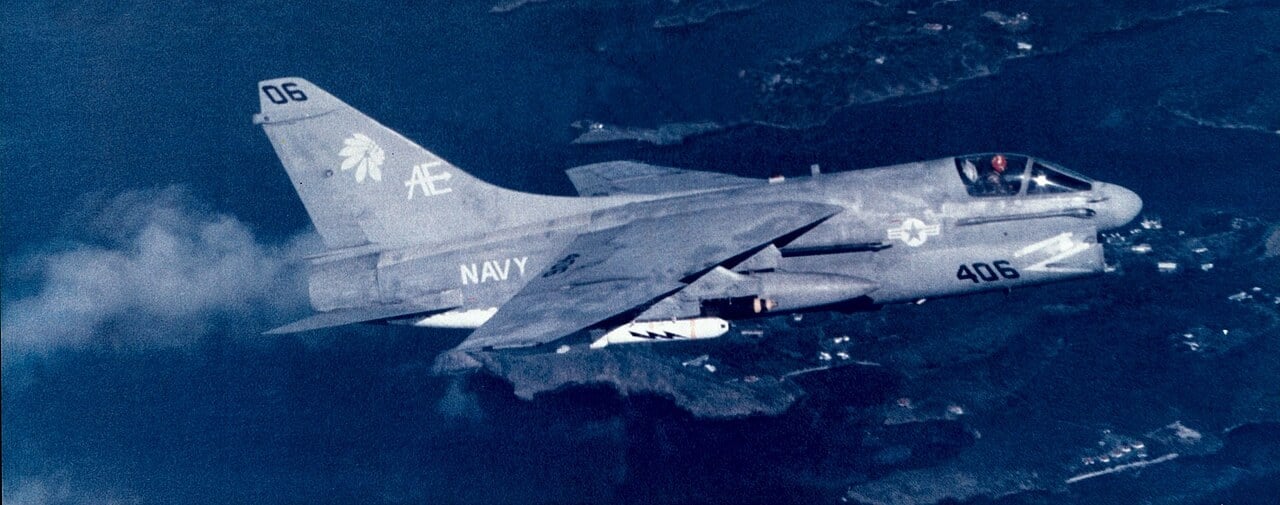
A-7E Corsair IIs from Independence struck Fort Frederick and Fort Rupert the same day. One raid aimed at anti-aircraft guns hit a mental hospital close to Fort Frederick. The Army’s official history says eighteen patients were killed; it also notes the Grenadian military had placed gun positions near the hospital.
More mistakes followed. On 27 October, an A-7 called in by a Marine air-naval gunfire team strafed the command post of the 82nd Airborne’s 2nd Brigade, wounding seventeen soldiers, one of whom died. That afternoon, a rushed air assault on the Calivigny barracks ended with three Black Hawks wrecked in a tangle on the landing zone and three Rangers killed. The barracks turned out to be almost empty.
Maj Gen William J. Mall Jr., who flew aboard the lead Combat Talon into Point Salines, gives his account of Operation Urgent Fury.
Tourist maps and Goldwater-Nichols
Organised resistance collapsed within days, and on 3 November Reagan declared the mission completed. The Army’s figures list 19 Americans killed and 116 wounded, 25 Cubans killed and 59 wounded, and 45 Grenadians killed and 358 wounded. At least 24 Grenadian civilians died, 18 of them at the hospital.
The post-mortems were blunt. Some troops went in with tourist maps overlaid with hand-drawn grids. Army and Marine units on the same island could not talk to each other directly, and on 28 October an Army battalion stumbled into Marines near Ross Point with neither side aware of the other. Only luck prevented a firefight.
A Senate staff study later found that Grenada revealed “serious problems in the ability of the Services to operate jointly.” Together with the disaster at Desert One in 1980, it drove the Goldwater-Nichols Act, signed on 1 October 1986, which gave the Chairman of the Joint Chiefs and the unified commanders the authority to make the services fight as one.
The Army Heritage Center Foundation on why Urgent Fury became the catalyst for joint-service doctrine, told by a battalion commander who fought there.
Today the runway at Point Salines carries tourist jets, under a new name: Maurice Bishop International Airport. The Spectres that circled it that dawn are long retired, but every joint operation since, from Panama to Iraq, has been planned under rules written because of what went wrong in the skies over Grenada.
Sources: US Army Center of Military History (Operation Urgent Fury, CMH Pub 70-114-1), Naval History and Heritage Command (Grenada, Operation Urgent Fury, adapted from All Hands, May 1984), US Naval Institute Proceedings (August 2025), US Air Force biography of Maj Gen James L. Hobson Jr., Air Force Historical Foundation, Wikipedia (United States invasion of Grenada; Lockheed MC-130; Goldwater-Nichols Act)
0 Comments