
Boeing Vertol CH-46 Sea Knight
The Phrog
The tandem-rotor “Phrog” that carried US Marines from Vietnam to Iraq for half a century, flew from the Saigon embassy roof in 1975, rescued Canadians and Swedes at sea, and ended its days flying diplomats in Kabul.
The CH-46: how a Philadelphia tandem-rotor became the Marines’ workhorse for fifty years
The Sea Knight came out of the Philadelphia company that Frank Piasecki had founded and that, by 1955, had been renamed Vertol. Its engineers had already made the tandem-rotor helicopter famous with the piston-engined H-21 “Flying Banana”. In 1956 they began the Model 107, a cleaner design that put two of the new turboshaft engines at the back beside the rear rotor pylon and left the whole cabin free for troops and cargo. The prototype flew on 22 April 1958. The Army ordered a few for evaluation but saved its money for the larger machine that became the Chinook; Boeing bought Vertol in 1960; and in 1961 the Marine Corps chose the Model 107M as its new medium assault helicopter. After its first flight in August 1962 it was designated CH-46A Sea Knight, and it reached the fleet in 1964.
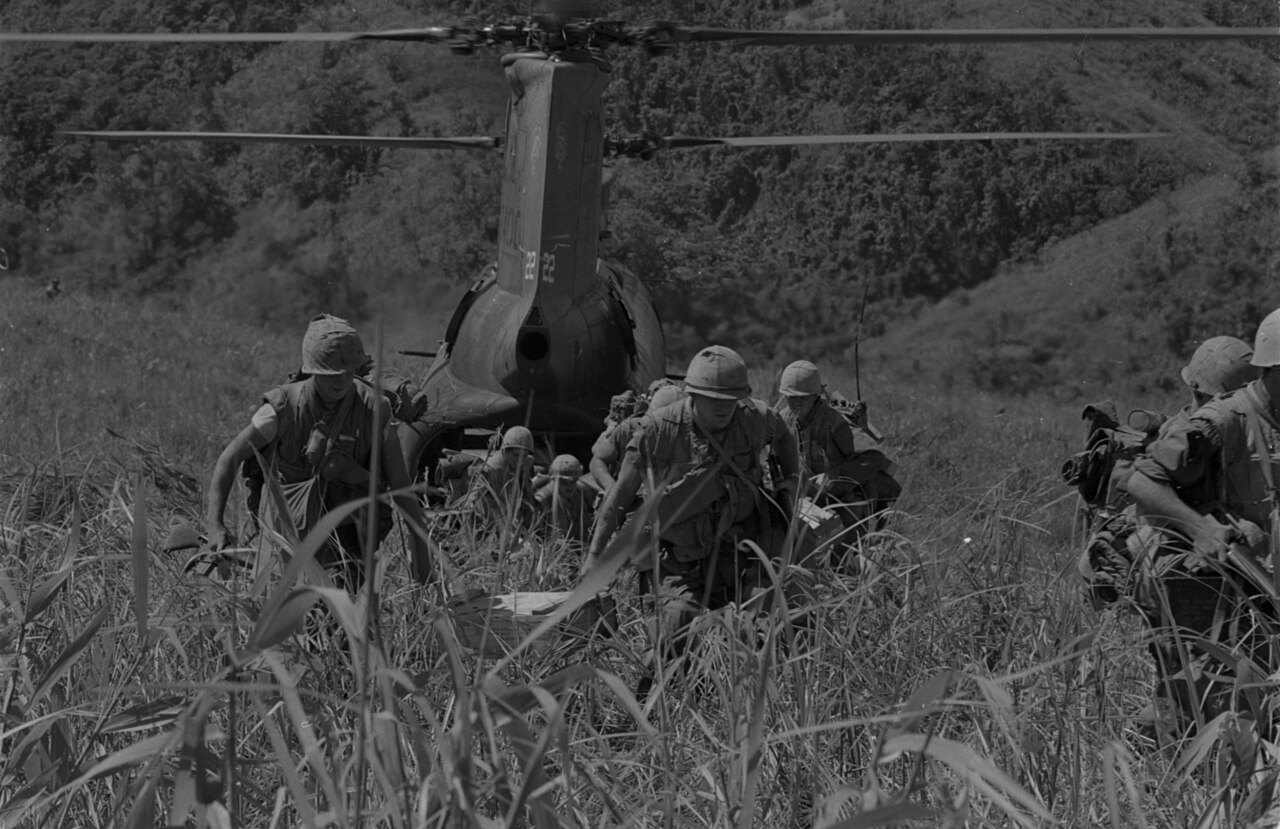
In Vietnam the CH-46 became the Marines’ main troop carrier, slotting between the Huey and the big CH-53, but its early career was painful. Engines ingested debris and lasted as little as 85 hours before filters were fitted, and in 1967 a series of crashes traced to failures in the rear rotor pylon grounded the fleet for all but emergencies. Marines and Boeing Vertol technicians rebuilt 80 aircraft on Okinawa, the more powerful CH-46D arrived late in 1967, and the type settled into decades of service. Over the years almost every airframe was upgraded to CH-46E standard with fibreglass rotor blades and uprated T58 engines. Marines nicknamed it the “Phrog” for its frog-like face and early green paint, and coined slogans such as “Phrogs Phorever”.
It served in every Marine operation from Vietnam to Grenada, Beirut, the Gulf, the Balkans, Afghanistan and Iraq, where it flew thousands of casualty evacuations. The Navy used it for ship resupply and rescue until 2004. Abroad it served as Canada’s CH-113 Labrador rescue helicopter for 41 years, as Sweden’s Hkp 4 and, built by Kawasaki as the KV-107, with all three Japanese services and Saudi Arabia. The Marines replaced it with the MV-22 Osprey, retiring their last Sea Knights in 2015 in a ceremony at the Smithsonian’s Udvar-Hazy Center. Even then it was not finished: refurbished Phrogs flew State Department staff in Afghanistan and Iraq until the fall of Kabul in 2021, and civil Model 107s still work for commercial operators today.
01The CH-46 in Vietnam: crisis, rebuild and the last flight from Saigon
The Sea Knight’s introduction to war was rough. On 15 July 1966, during Operation Hastings, Marine CH-46s collided and were shot down in a landing zone that became known as Helicopter Valley. Within days the whole fleet was grounded while better engine filters were fitted, because sand and debris were destroying engines in as little as 85 hours. Worse followed in 1967, when aircraft began breaking up in flight. On 31 August a CH-46A disintegrated on a medical evacuation flight to USS Tripoli, and when another failed the next day at Marble Mountain the Marines grounded the type except for emergencies, halving their airlift. Investigators from NAVAIR and Boeing Vertol found structural failures around the rear pylon; 80 helicopters were shipped to Futenma on Okinawa, reinforced and returned to service between December 1967 and February 1968.
Boeing’s technical representative John Morgenstern, who arrived at the squadron in 1967, spent much of that period assessing battle damage, counting 53 holes in one aircraft and 46 in another; he went on to support the CH-46 for 47 years. By the end of the war more than a hundred Sea Knights had been lost to enemy fire. On 29 and 30 April 1975 Marine CH-46s and CH-53s flew Operation Frequent Wind, the evacuation of Saigon. The last helicopter to lift off the roof of the US embassy was a CH-46 of HMM-164, and another, “Lady Ace 09” of HMM-165, carried out Ambassador Graham Martin.
02The CH-46’s long goodbye: Miramar, Camp Pendleton and the Udvar-Hazy Center
The Marines began replacing the CH-46 with the MV-22 Osprey in 2006, squadron by squadron. At its peak, according to the Marine Corps, the community had about 145 Phrogs in 17 squadrons; in the final years of the transition it was down to five squadrons and about 60 aircraft. Pilots were sorry to see it go. “I know it is time for the ‘Phrog’ to retire, but I’m not happy to see it go,” Capt. Brett Bishop of HMM-364 said before the type’s last appearance at the Miramar air show in October 2014.
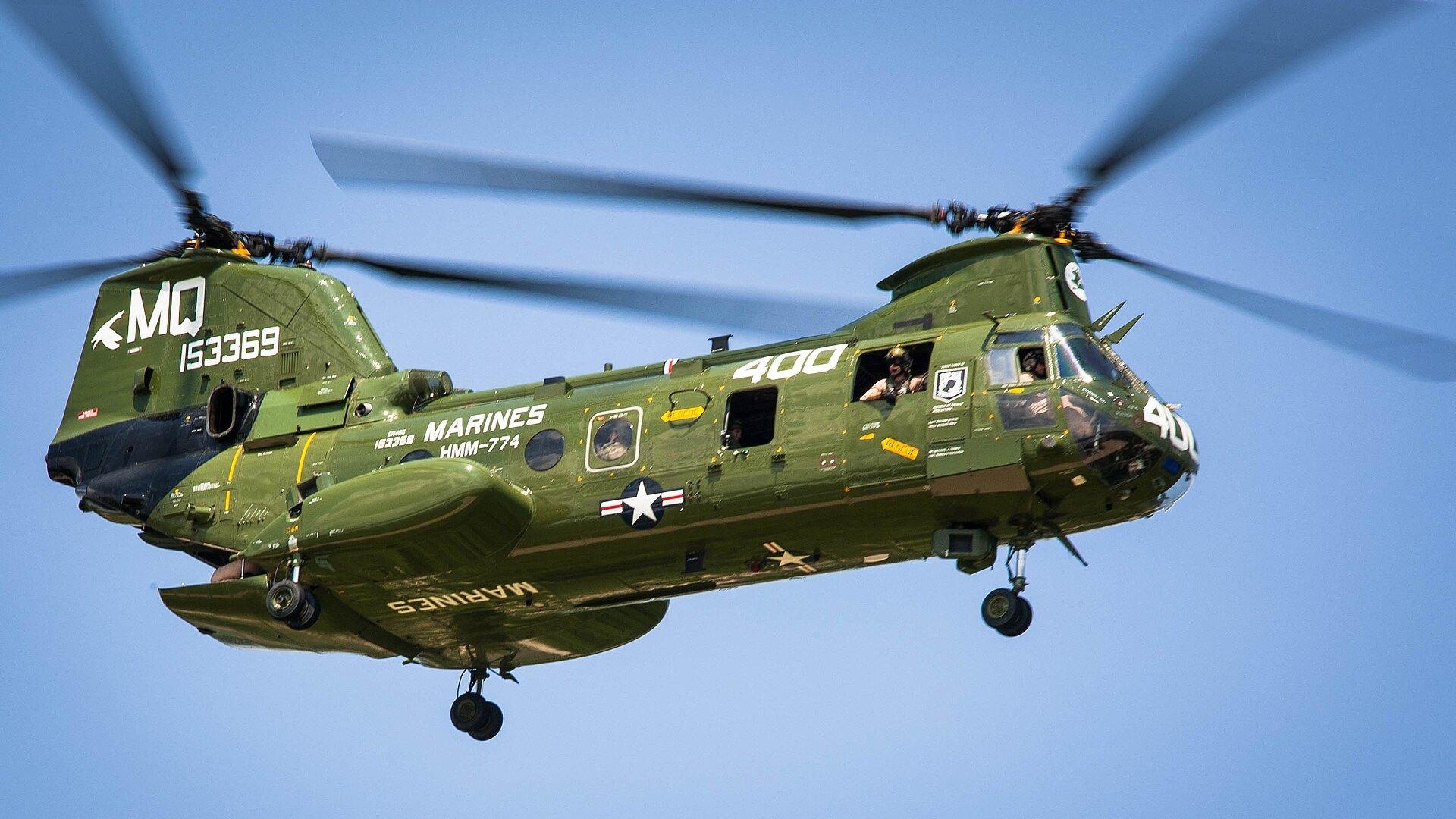
On 10 April 2015 at Camp Pendleton, HMMT-164, the first active-duty squadron to receive the CH-46A in 1966, became the last to give up the CH-46E, with ten former commanding officers watching. The reserve squadron HMM-774 completed the transition later that year. The final ceremony came on 1 August 2015 at the Smithsonian’s Steven F. Udvar-Hazy Center outside Washington, where CH-46D 153369, freshly repainted in Vietnam-era markings, made the last public appearance of an airworthy Marine Sea Knight. That airframe’s logbook spans Vietnam, where 1st Lt. Joseph Donovan earned the Navy Cross for a rescue under fire in April 1969, Afghanistan in 2004 and Iraq during the surge.
What makes the CH-46 special
Two rotors, no tail rotor
Like the Chinook that grew from the same Vertol design office, the CH-46 used two three-blade rotors turning in opposite directions, one at each end of the fuselage, so no power was wasted on an anti-torque tail rotor and the centre of gravity could move over a long cabin. Both T58 engines sat beside the rear pylon and were coupled, so either could drive both rotors. The rotors folded for shipboard stowage, essential for a helicopter that spent much of its life on amphibious ships.
A cabin with a ramp
The whole fuselage was a cargo bay with a rear loading ramp that could be removed or left open in flight, an internal winch to pull pallets aboard and a belly hook rated at 10,000 lb. A CH-46E could carry 24 troops or 15 stretchers. Its nose-up stance, created by the tall rear landing gear in the sponsons, made loading easier and helped give it the squatting, smiling face that earned the nickname Phrog. It could even land on calm water and float for a while.
Reliable enough to outlast its replacement’s critics
After its troubled start the Sea Knight became one of the most dependable aircraft in the Marine Corps. Late in its career its squadron commanders said its safety record was among the best of any type in service, and maintainers praised a mature supply system that made repairs quick. Its longevity prompted the Marine saying “never trust a helicopter under 30”. The CH-46E upgrade, with fibreglass blades, airframe reinforcement and 1,870 shp T58-GE-16 engines, kept it relevant until the Osprey was ready.
03The CH-46’s variants and foreign cousins
- Vertol 107 and 107-II: prototype of 1958 and the commercial airliner version, first ordered by New York Airways, which flew passengers between Manhattan rooftops and the airports.
- YHC-1A: three evaluation aircraft for the US Army.
- CH-46A: first Marine production model with 1,250 shp T58-GE-8B engines, 17 passengers or 4,000 lb of cargo. UH-46A/D and HH-46A/D: Navy resupply and rescue versions.
- CH-46D: 1,400 shp T58-GE-10 engines and improved rotor blades, 25 troops or 7,000 lb. CH-46F: final production model with revised avionics, 1968–71.
- CH-46E: about 275 A, D and F airframes rebuilt with T58-GE-16 engines, fibreglass blades and stronger structure; later Dynamic Component Upgrade.
- CH-113 Labrador and CH-113A Voyageur: Canadian rescue and army transport versions, 1963–2004.
- Hkp 4A–D: Swedish air force and navy versions, Boeing- and Kawasaki-built, retired in 2011.
- Kawasaki KV-107: Japanese licence production for the Ground, Maritime and Air Self-Defense Forces, Tokyo police, Saudi Arabia and Sweden.
Boeing Vertol CH-46E Sea Knight specifications
Specifications
- Crew
- 5 (2 pilots, crew chief, aerial gunner/observer, tail gunner)
- Capacity
- 24 troops, or 15 stretchers and 2 attendants, or 7,000 lb (3,200 kg) of cargo
- Length
- 13.67 m (44 ft 10 in) fuselage; 25.40 m (83 ft 4 in) rotors turning
- Height
- 5.11 m (16 ft 9 in) to top of rear rotor head
- Rotor diameter
- 2 × 15.24 m (50 ft), tandem, 3 blades each
- Empty weight
- 7,047 kg (15,537 lb)
- Max take-off weight
- 11,022 kg (24,300 lb)
- Powerplant
- 2 × General Electric T58-GE-16 turboshafts, 1,870 shp (1,390 kW) each
- Maximum speed
- 267 km/h (144 kn) at sea level
- Cruise speed
- 265 km/h (143 kn)
- Range
- 1,020 km (550 nmi) with 2,400 lb payload
- Service ceiling
- 5,180 m (17,000 ft)
- Climb rate
- 8.7 m/s (1,715 ft/min)
- Armament
- Optional 2 door-mounted .50-calibre machine guns and a ramp-mounted M240D
Costs & production
- Cost per flight hour
- Hedged estimate only: no official figure found in the sources opened. A twin-turbine medium helicopter of this size and age is likely to cost in the low-to-mid thousands of US dollars per flight hour; as an indication of full contracted cost, the State Department charged nearly US$1,500 per seat for a seven-minute Embassy Air CH-46 hop in Kabul in 2019
- Production
- 524 H-46s built in the United States, 1962–1971, plus Kawasaki KV-107s and civil 107-IIs
- Programme
- Marine Corps medium-lift helicopter from 1964 until the MV-22 transition was completed in 2015
04The CH-46’s operating costs: cheap to keep, expensive to fly in Kabul
The Sea Knight’s great economic virtue was maturity. By the 2000s Marine maintainers described a supply system so well established that parts were easy to obtain and repairs quick, and the helicopter was simple compared with the tiltrotor that replaced it. No official cost per flight hour was found in the sources opened for this page, so the table gives only a broad estimate for a twin-turbine medium helicopter of its class and age.
The most public price tag came late in its life. The State Department’s Embassy Air operated refurbished, civil-registered CH-46Es, flown and maintained by DynCorp, to keep diplomats off dangerous roads in Afghanistan and Iraq. In fiscal 2017 the CH-46s flew 32,000 scheduled flights plus 3,500 special missions. A September 2019 Inspector General audit found a seven-minute flight from Kabul airport to the embassy cost nearly US$1,500 per seat, an increase of almost 400 percent in four years, because more of the programme’s operating cost was being recovered through ticket prices.
The CH-46 from Philadelphia to Kabul
First flight
The Vertol 107 prototype flies on 22 April.
Marine choice
Boeing Vertol’s Model 107M is selected as the Marines’ medium assault helicopter.
Canadian Labrador
Canada’s first CH-113 Labrador, serial 11301, enters rescue service at Trenton, Ontario.
Into service
CH-46A deliveries to the Marine Corps and UH-46A deliveries to the Navy begin.
Grounded and rebuilt
Rear-pylon failures ground the fleet; 80 aircraft are modified on Okinawa and the CH-46D arrives.
Frequent Wind
A CH-46 of HMM-164 is the last helicopter to leave the US embassy roof in Saigon on 30 April.
Estonia rescue
Swedish Hkp 4s take part in the rescue effort after the ferry MS Estonia sinks in the Baltic.
Navy and Canada retire
The US Navy retires its H-46s on 24 September; Canada retires the last Labrador.
Last air show
HMM-364 flies the Phrog at the Miramar air show in October before retirement.
Marine farewell
HMMT-164 gives up its CH-46Es on 10 April; the final ceremony is held at the Udvar-Hazy Center on 1 August.
Left at Kabul
Seven State Department CH-46s join the Kabul airlift and are disabled and abandoned at the airport.
Argentine interest
Argentina’s air force chief asks to buy surplus CH-46s to support its Antarctic bases.
Stories & eyewitnesses: the CH-46 in war and rescue
Helicopter Valley
A bloody landing in 1966 introduced the CH-46 to war.
Read the full story
Fifty years with one helicopter
Boeing’s John Morgenstern supported the CH-46 for nearly half a century.
Read the full story
Off the embassy roof
In April 1975 Sea Knights flew the final evacuation of Saigon.
Read the full story
Canada’s Labrador
For 41 years the CH-113 was Canada’s long-range rescue helicopter.
Read the full story
The night the Estonia sank
Swedish Sea Knights flew in the Baltic’s worst peacetime disaster.
Read the full story
Thousands of casualty evacuations
In Iraq and Afghanistan the Phrog became the Marines’ air ambulance.
Read the full story
The last airworthy Phrog
On 1 August 2015 a Vietnam veteran helicopter closed the Marine chapter.
Read the full story
Embassy Air
Retired Phrogs became a diplomatic airline in war zones.
Read the full story
Abandoned at Kabul
In August 2021 seven Sea Knights were left behind.
Read the full story
A CH-46 in the desert
Pima’s Sea Knight served with more than ten Marine units over 41 years.
Read the full story
The CH-46 in pictures
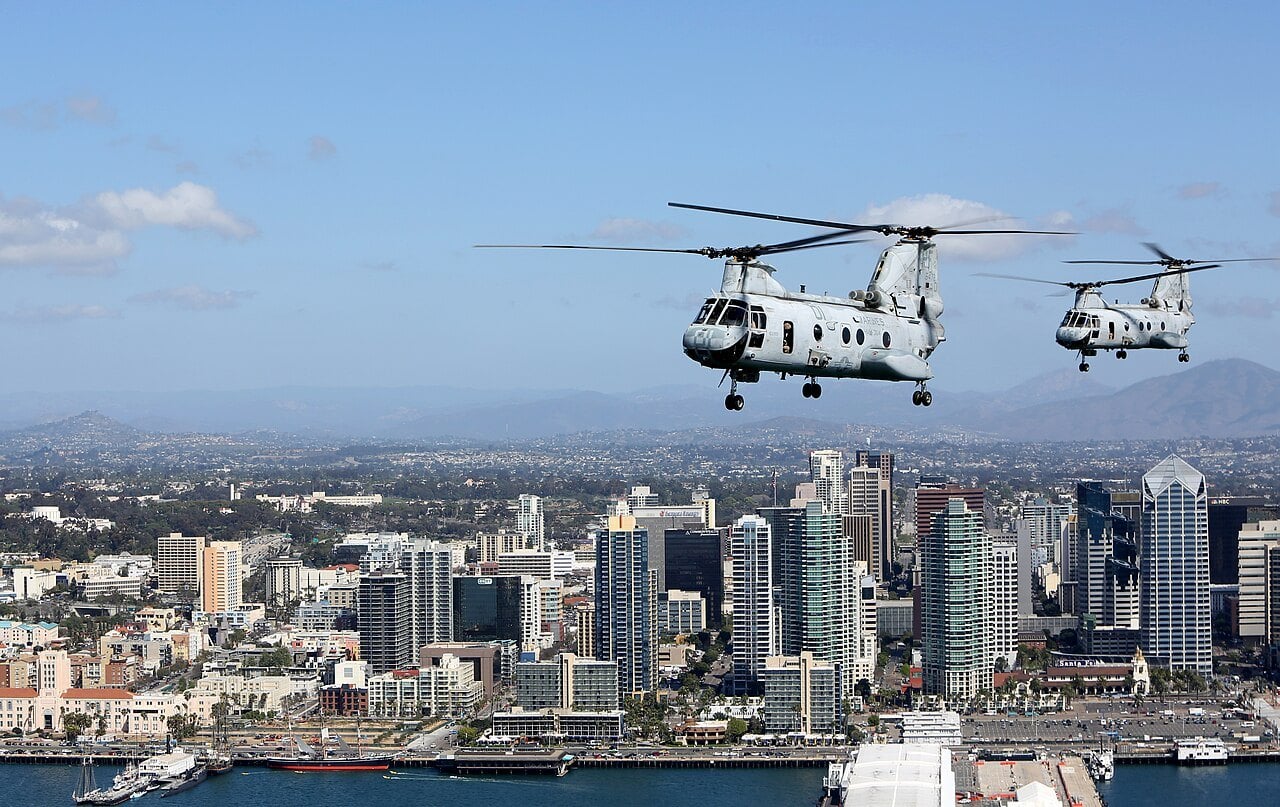
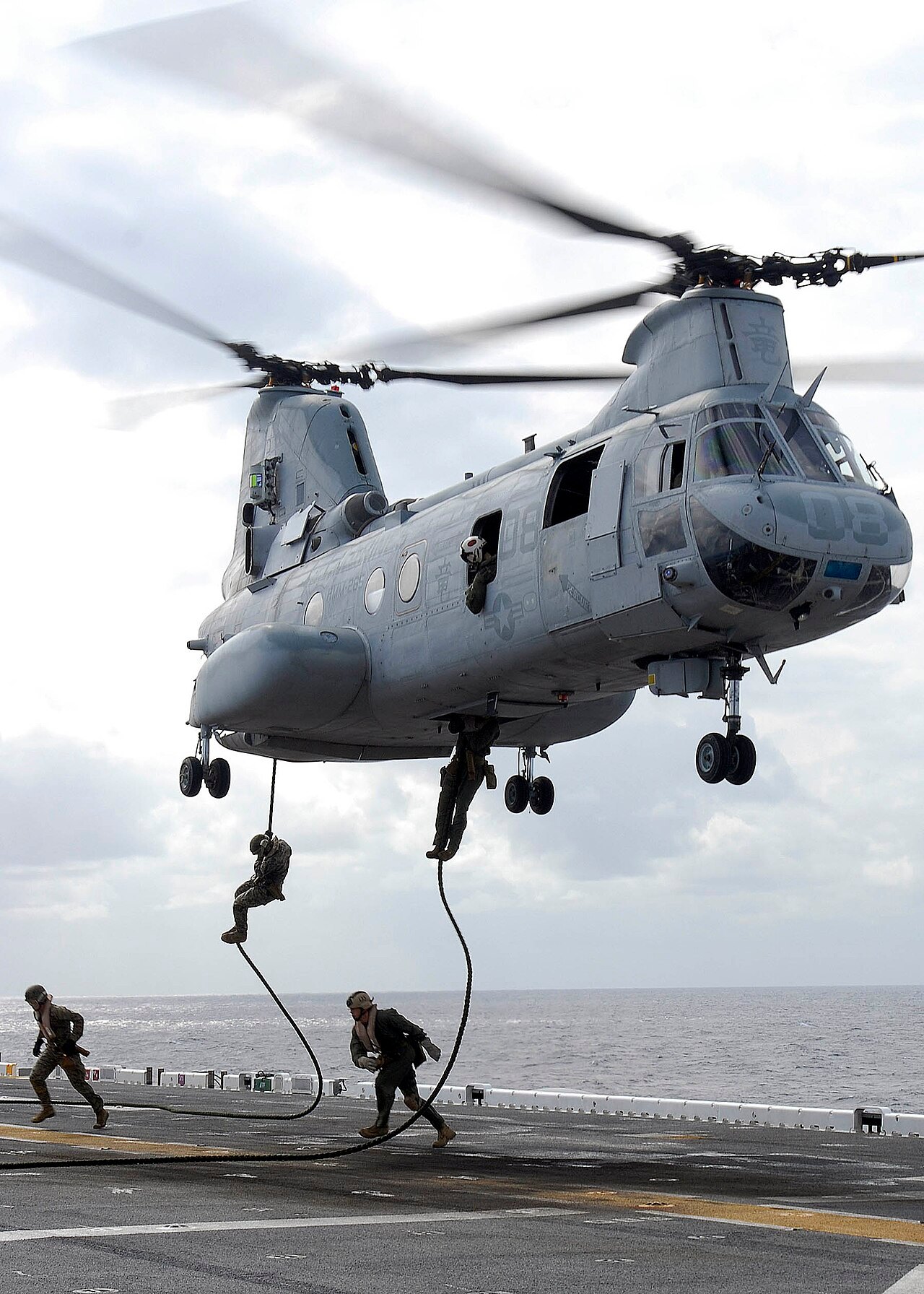
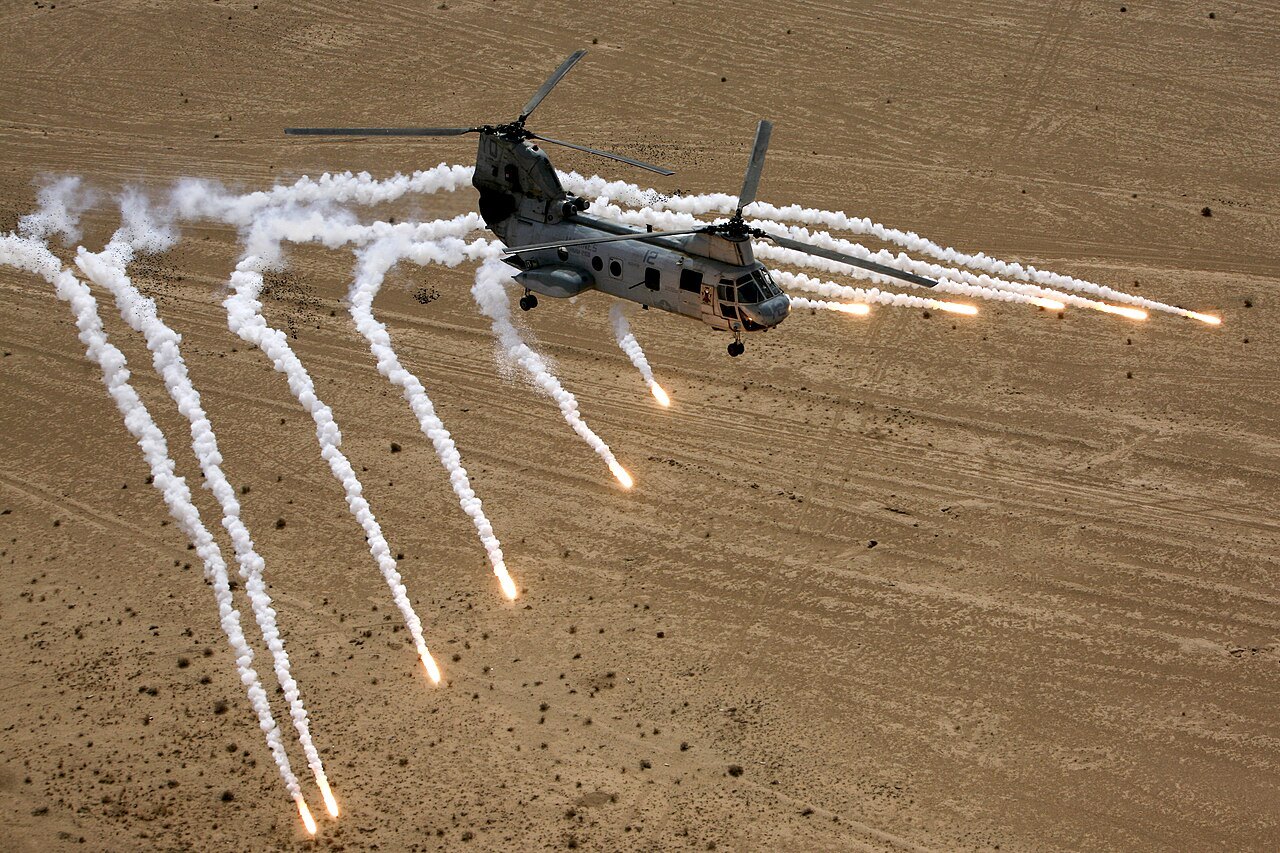
Where the CH-46 flies and flew
The CH-46’s record
The Sea Knight flew in every Marine Corps operation from Vietnam to Iraq and Afghanistan, as a troop carrier, casualty evacuation and rescue helicopter, and more than a hundred were lost to enemy fire in Vietnam alone. Abroad it was above all a rescue aircraft.
See how training and combat types compare in the military aircraft statistics database. Figures are approximate.
Everything people ask about the CH-46
Can I fly in a Boeing Vertol CH-46 Sea Knight?
Why was the CH-46 called the Phrog?
When did the CH-46 first fly?
When did the Marine Corps retire the CH-46?
What replaced the CH-46?
Is the CH-46 related to the Chinook?
Where can I see a CH-46 today?
You can’t fly the CH-46.
These, you can.
Most of this museum you can only look at. These genuine military jets you can fly yourself with MiGFlug — with aerobatics and time on the controls.
 Fly the L-39 AlbatrosThe world’s most-flown jet trainer — aerobatics included
 Fly the F-104 Starfighter“The missile with a man in it”
 Fly the MiG-21The Cold War’s most-produced jet
 Fly the T-33 Shooting StarAmerica’s first jet trainer
 Fly the DH VampireA piece of early jet history
 Fly the S.211Agile Italian jet trainer
 Fly the MB-326The classic Aermacchi jet
 Fly the MiG-15The Soviet legend of the Korean War
Continue the tour
Every fact, checked
- ‘Phrogs’ retire as Corps transitions to OspreyDVIDS/USMC: history, squadron numbers, reliability, Vietnam to Iraq
- Venerable ‘Sea Knight’ Makes Goodbye FlightsMilitary.com, October 2014: last Miramar air show, pilot quotes
- Phrog FarewellSmithsonian National Air and Space Museum: 1 August 2015 ceremony and history of BuNo 153369
- Marines Bid ‘Phrog’ Farewell to Last Active CH-46E Sea Knight SquadronUSNI News, April 2015: HMMT-164 ceremony
- Half a century spent making Phrogs flyUS Marine Corps: Boeing technical representative John Morgenstern
- Boeing Vertol CH-113 LabradorCanada Aviation and Space Museum: Labrador 11301, service 1963–2004, Saguenay floods
- Boeing-Vertol CH-46EPima Air & Space Museum: type history and airframe record
- Boeing Vertol CH-46E Sea KnightPatuxent River Naval Air Museum: Phrog nickname
- Interesting New Photos Of Armed “Embassy Air” CH-46E Helicopter At U.S. Embassy in Kabul EmergeThe Aviationist: Embassy Air operations, costs, Pompeo visit
- Afghanistan: What was left behind by US forces?BBC, 2021: Taliban filmed with an abandoned CH-46
- Argentina eyes surplus CH-46 helicopters as Mi-17 replacementDefense News, September 2023