
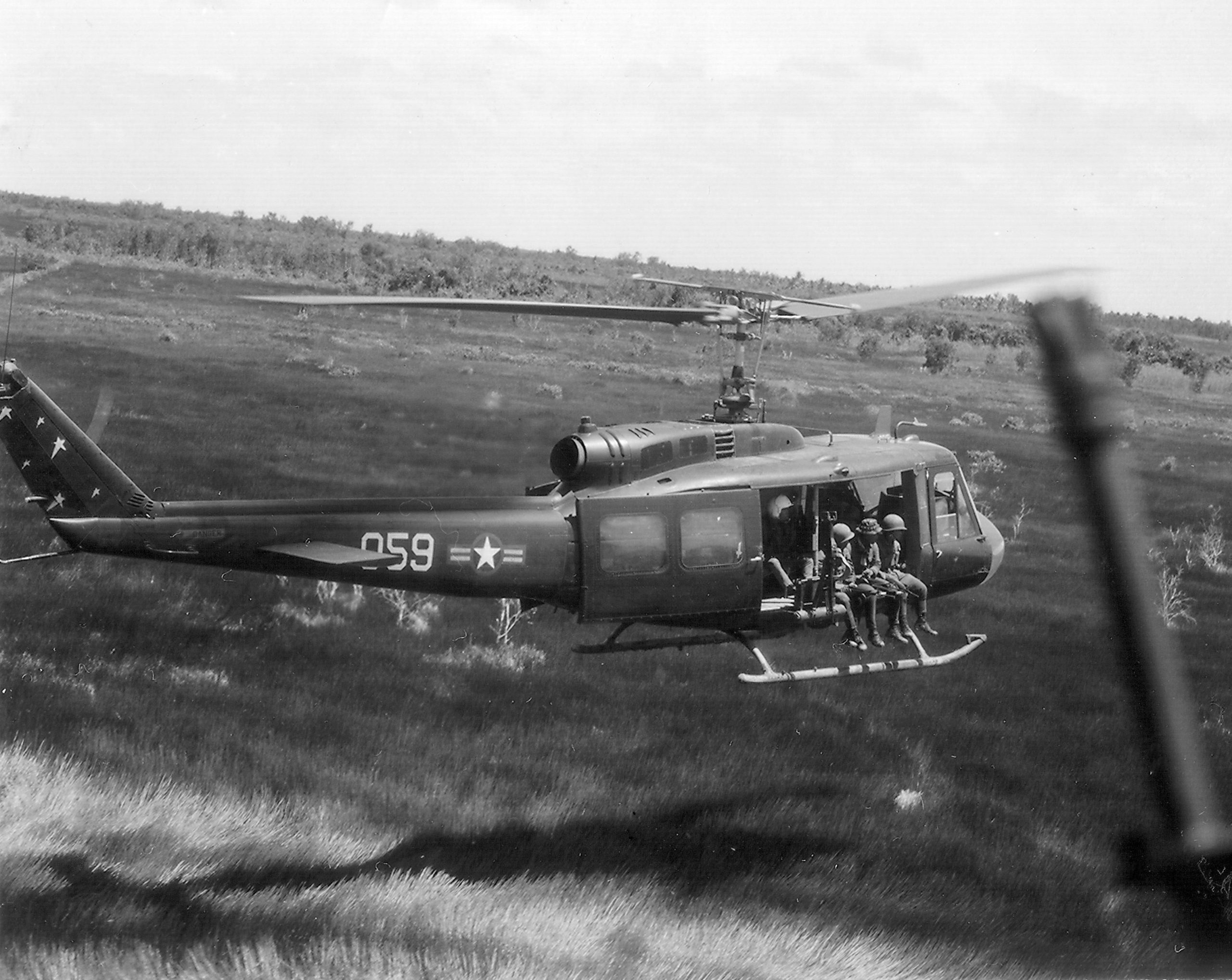
Bell UH-1 Iroquois “Huey”
The helicopter that defined a war
The two-blade utility helicopter whose “whop-whop” became the soundtrack of Vietnam — carrying troops into battle, lifting the wounded out, and reshaping how armies fight forever.
The Bell UH-1 Huey: the machine that invented air mobility
In 1955 the United States Army issued a requirement that would quietly change the shape of warfare. It wanted a turbine-powered helicopter that could evacuate casualties, move troops and haul cargo — a single, reliable workhorse to replace the underpowered piston helicopters of the Korean War. Bell Helicopter answered with its Model 204, and on 20 October 1956 the prototype, designated XH-40, made its first flight. The Army ordered it into service, and a legend was born.
The name came from the paperwork. The production aircraft was first designated HU-1 — Helicopter, Utility, model 1 — and crews immediately began calling it the “Huey.” When the Pentagon rationalised its designations in 1962 the aircraft officially became the UH-1, and it was formally named Iroquois in the Army’s tradition of naming helicopters after Native American nations. But the nickname had already stuck so hard that Bell eventually cast the word “Huey” onto the anti-torque pedals. To almost everyone, it has only ever been the Huey.
What made the Huey revolutionary was its Lycoming T53 turboshaft. A turbine engine is lighter, more powerful and more reliable than a piston engine of the same output, and it gave the Huey the lifting power to carry a useful load of soldiers or stretchers. Slung beneath a distinctive two-blade semi-rigid main rotor, that engine produced the unmistakable rhythmic “whop-whop” that a generation of soldiers would never forget — the sound of help arriving.
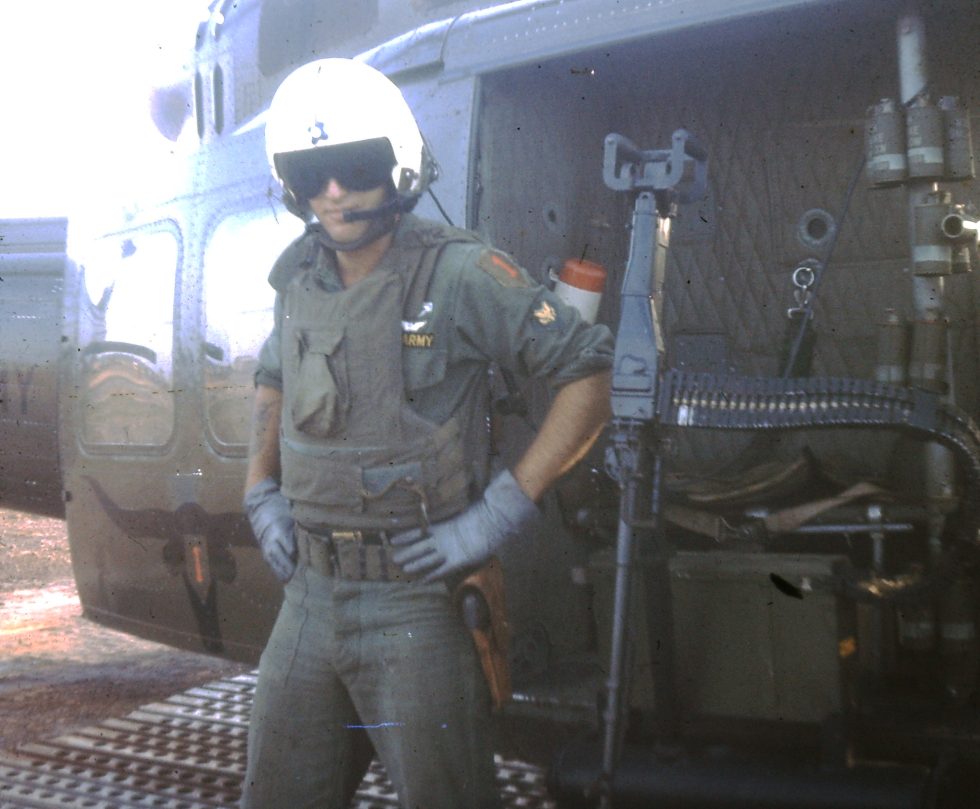
It was Vietnam that made the Huey immortal. The US Army had developed a radical new doctrine — air mobility — in which whole infantry units would be lifted into and out of battle by helicopter, freed from roads and terrain. The Huey was the aircraft that made it real. From 1965 the 1st Cavalry Division (Airmobile) and countless assault helicopter companies flew Hueys into hot landing zones, door gunners hammering away with M60 machine guns as troops leapt from the skids. More than 7,000 Hueys served in the theatre.
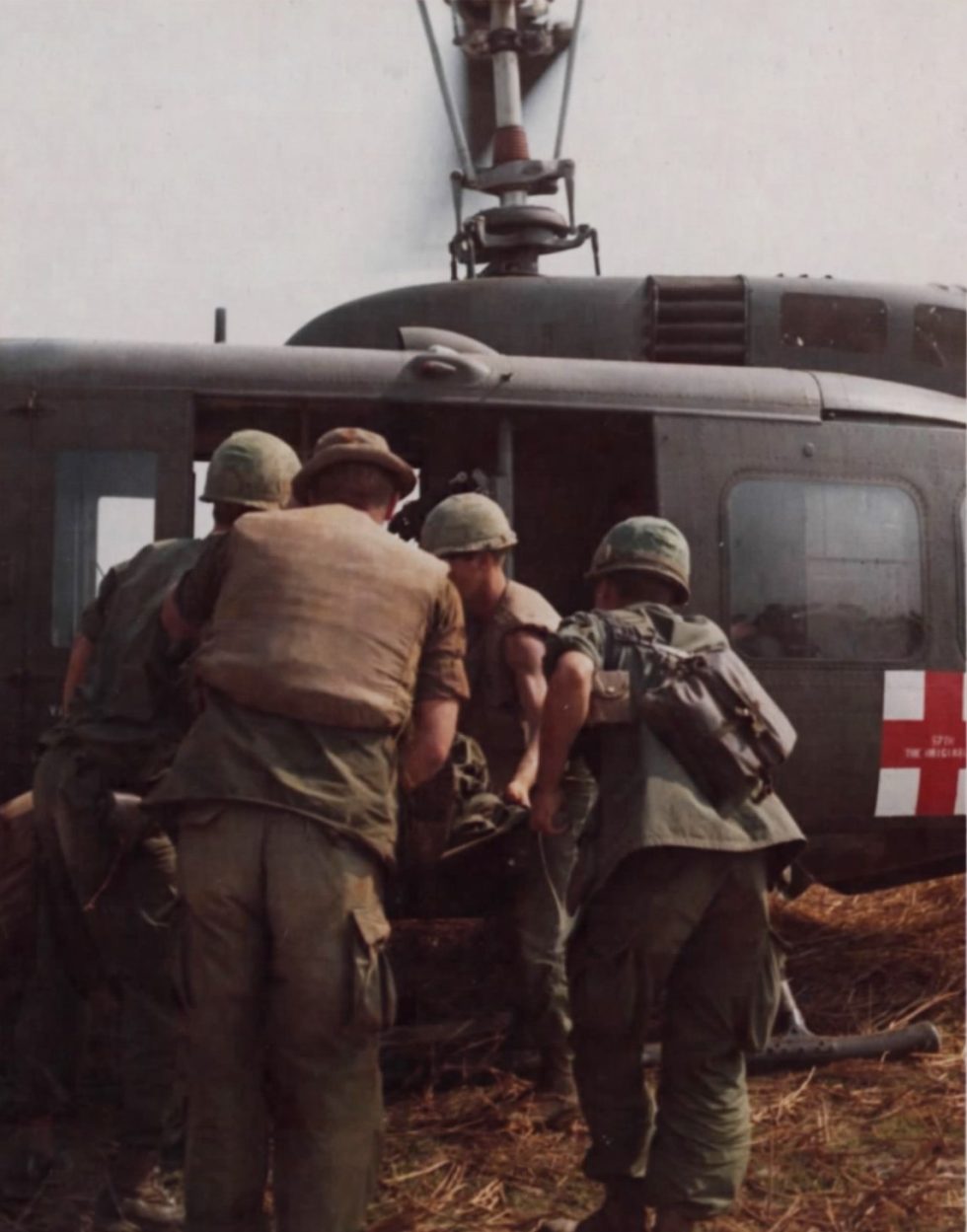
If air assault made the Huey famous, medevac made it beloved. Unarmed medical Hueys flying under the radio call-sign “Dustoff” braved fire to lift wounded men straight from the battlefield to surgical hospitals, often within what became known as the golden hour. That speed saved thousands of lives and set a standard for combat casualty evacuation that endures today. The cost was heavy: roughly half of the Hueys that served in Vietnam were lost, and many crews with them.
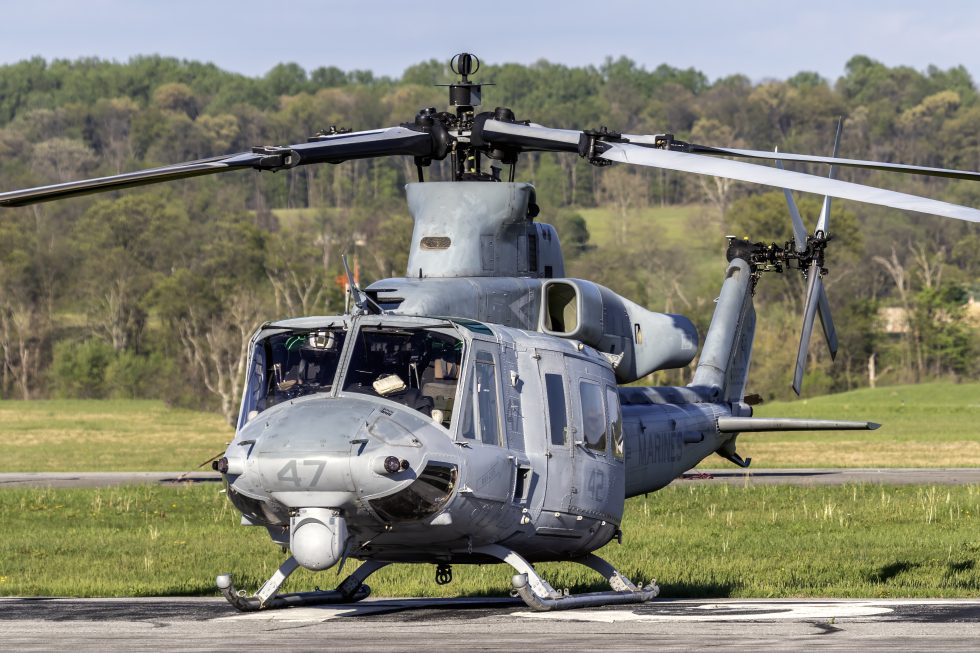
The Huey never really retired — it multiplied. The short-fuselage UH-1A/B/C (Model 204) gave way to the stretched UH-1D and UH-1H (Model 205), which became the definitive troop-carriers. The twin-engine UH-1N and the civil Bell 212 and 412 spread the design worldwide, and the thoroughly modernised four-blade UH-1Y Venom still serves with the US Marine Corps today. Licence-built in Germany, Italy, Japan and beyond, and flown by dozens of nations, the Huey became one of the most-produced military aircraft in history — and, more than sixty years after that first flight, its descendants are still in the air.
01The Bell UH-1 Huey’s name: how “HU-1” became the most famous nickname in aviation
The Huey owes its name to a designation quirk. When the US Army adopted Bell’s Model 204 it labelled it HU-1 for “Helicopter, Utility, model 1.” Read aloud, “H-U-One” slurred naturally into “Huey,” and the crews who flew and maintained it adopted the name instantly. In 1962 a Department of Defense reorganisation of aircraft designations renamed the type UH-1 and it was officially christened Iroquois, following the Army’s convention of naming its helicopters after Native American peoples — a convention that also gave us the Chinook, Kiowa, Apache and Black Hawk.
But the official name never took. “Huey” was already universal, and Bell embraced it so completely that the name was reportedly cast onto the aircraft’s control pedals. Today “Iroquois” appears mostly in reference books, while “Huey” is understood everywhere from veterans’ reunions to Hollywood. Few aircraft are known so overwhelmingly by an accident of paperwork.
What makes the Bell UH-1 Huey special
The turbine engine that changed everything
The Huey’s heart is the Lycoming T53 turboshaft — roughly 1,100 shp in early models, about 1,400 shp in the definitive UH-1H. A turbine is far lighter and more powerful for its size than the piston engines it replaced, and it transformed what a utility helicopter could carry. That power-to-weight leap is what made a squad of soldiers, or a load of stretchers, a practical payload — and what made air mobility possible in the first place.
A simple two-blade rotor with a signature sound
Above the cabin turns a two-blade semi-rigid main rotor on a teetering hub — mechanically simple, rugged and easy to maintain in the field. Its wide, heavy blades give the Huey its unmistakable rhythmic “whop-whop”, produced as each blade slaps the disturbed air of the other. That sound became so identified with the aircraft that it is instantly recognisable to anyone who has seen a Vietnam film.
Wide doors, open sides, endless versatility
The Huey’s cabin was a plain, roomy box with large sliding doors that were usually flown wide open. Troops sat on the floor or the skids and jumped clear in seconds; stretchers slid straight in; door gunners had a clear field of fire. The same airframe could be a troop carrier, an ambulance, a cargo lifter or — bristling with rockets and machine guns — a gunship. That adaptability is why one design filled so many roles.
02The Bell UH-1 Huey as a gunship: rockets, miniguns and the birth of the attack helicopter
Long before the purpose-built AH-1 Cobra arrived, the Army armed the Huey itself. UH-1B and UH-1C gunships — nicknamed “Hogs,” “Frogs” and, with the Navy, “Seawolves” — carried side-mounted rocket pods, forward-firing miniguns and grenade launchers, and door gunners with M60s. They escorted the troop-carrying “slicks” into landing zones and suppressed enemy fire while the infantry disembarked. The gunship Huey proved the concept of the armed helicopter so convincingly that Bell developed the slim, dedicated AH-1 Cobra around the very same engine, transmission and rotor system — making the Huey the direct ancestor of the modern attack helicopter.
03The Bell UH-1 Huey’s engine: why the Lycoming T53 turboshaft was a revolution
The Lycoming (later Honeywell) T53 was one of the first turboshaft engines to enter mass military service, and it defined the Huey. Compared with a piston engine of similar output it was dramatically lighter, more compact and more reliable, and it ran on kerosene rather than volatile avgas. Successive versions raised the power: the T53-L-11 of around 1,100 shp powered many early Hueys, while the T53-L-13 of roughly 1,400 shp gave the UH-1H the muscle to lift a full squad in the heat and altitude of Vietnam. The same engine family went on to power the AH-1 Cobra and the OV-1 Mohawk, and remained in production for decades — a genuine milestone in the turbine age.
04The Bell UH-1 Huey’s variants: from the short 204 to the four-blade UH-1Y Venom
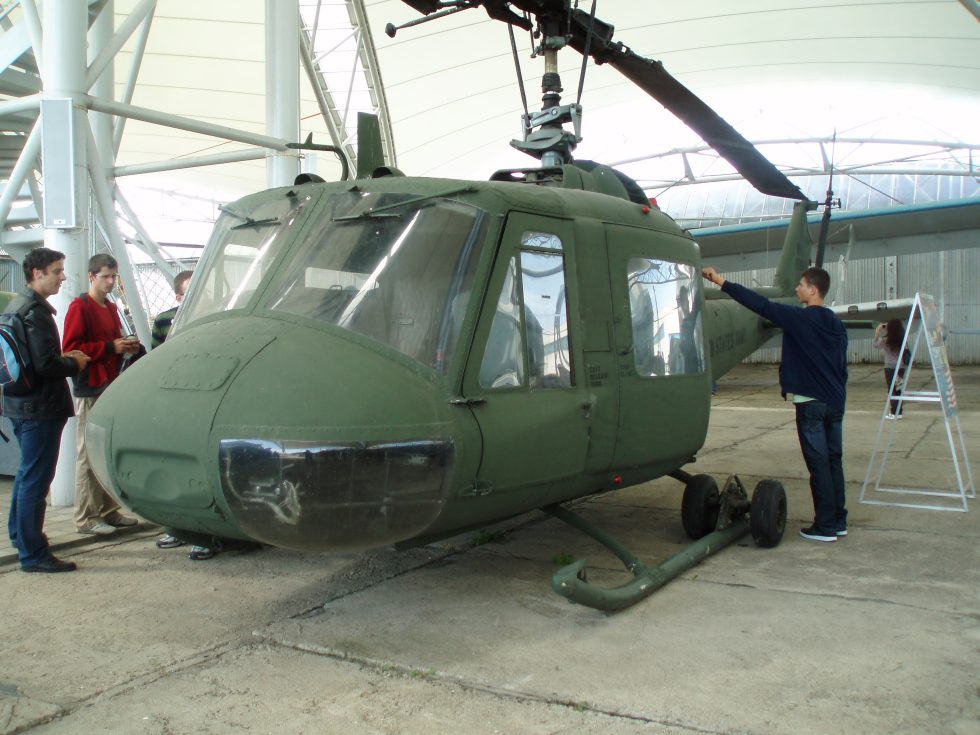
The Huey grew into a sprawling family. The original Model 204 aircraft — UH-1A, UH-1B and UH-1C — had a short cabin and seated fewer troops. Bell then stretched the fuselage into the Model 205, producing the UH-1D and the definitive UH-1H, the classic Vietnam troop-carrier able to seat up to a dozen soldiers. The twin-engine UH-1N (Model 212) added a second engine for safety and power, and the civil Bell 212 and Bell 412 spread the design into commercial, police and offshore work worldwide. The line continues today with the comprehensively rebuilt UH-1Y Venom, which swaps the classic two-blade rotor for a four-blade system and modern avionics and still serves the US Marine Corps. Few aircraft have been developed continuously for so long.
Full Bell UH-1H Huey specifications
Baseline note: the figures below describe the UH-1H — the stretched Model 205 airframe with the 1,400 shp Lycoming T53-L-13, of which 5,435 were built and which is what almost everyone means when they say "Huey". Deltas for the short-fuselage UH-1B and gunship UH-1C, and for the twin-engined UH-1N and UH-1Y Venom, are in grey. Two figures belong in any honest table about this aircraft and sit nowhere else: 7,013 UH-1s served in Vietnam and 3,305 of them were destroyed, and the crews lost 1,151 pilots and 1,231 other crewmen — figures which exclude South Vietnamese losses entirely.
Dimensions & weights
- Crew
- 1–4 — two pilots side by side, plus a crew chief and a door gunner when the doors are manned. The crew chief was frequently the aircraft’s owner in every sense that mattered; the pilots rotated, he did not
- Capacity
- 1,760 kg (3,880 lb) comprising 11–14 troops, or six stretchers and an attendant, or equivalent cargo. The UH-1B carried seven passengers or four stretchers; stretching the fuselage by 1.04 m (41 in) for the Model 205 is the single change that turned a utility helicopter into an air-assault vehicle
- Fuselage length
- 12.77 m (41 ft 10.75 in)
- Length, rotors turning
- 17.62 m (57 ft 9.6 in)
- Main rotor diameter
- 14.63 m (48 ft 0 in), chord 533 mm (21 in). The Model 205 prototype flew with a 13.41 m (44 ft) rotor; the 48-footer and a longer tail boom to clear it are part of the same stretch
- Main rotor disc area
- 168.1 m² (1,809.6 sq ft)
- Width over skids
- 2.90 m (9 ft 6.5 in)
- Height
- 4.41 m (14 ft 5.5 in) with the tail rotor turning
- Empty weight
- 2,363 kg (5,210 lb)
- Mission weight
- 4,100 kg (9,039 lb)
- Maximum take-off weight
- 4,309 kg (9,500 lb); the UH-1Y grosses 8,391 kg (18,500 lb), which is very nearly double
- Internal fuel
- ~832 litres (~220 US gal; ~183 imp gal) in five interconnected self-sealing cells, three behind the transmission and two under the cabin floor. The UH-1C carried ~916 litres (242 US gal)
- Cargo hook
- Fitted under the lift beam at the centre of gravity, with a rescue hoist available at the cabin roof. The lift beam is a short aluminium girder attaching the transmission above and the hook below; late in the UH-1H’s life it was changed to steel because high-hour airframes were cracking
- Disc loading
- 25.6 kg/m² (5.25 lb/sq ft) — very low, which is why a Huey autorotates gently and why it can be flown out of places that would frighten a heavier machine
Performance
- Never-exceed speed
- 204 km/h (127 mph; 110 kn) at maximum take-off weight — at that weight Vne and maximum speed are the same number, which tells you everything about how much margin the aircraft had
- Cruise speed
- 204 km/h (127 mph; 110 kn) at 1,740 m (5,700 ft)
- Vertical rate of climb
- 8.1 m/s (1,600 ft/min) at sea level, at maximum take-off weight
- Hover ceiling, in ground effect
- 4,145 m (13,600 ft)
- Hover ceiling, out of ground effect
- 1,220 m (4,000 ft) at maximum weight — and that single figure explains most of the Huey’s Vietnam career. In heat, at weight, over a landing zone with no ground cushion, a loaded UH-1H simply could not hover. Crews took off with running starts, arrived with running landings, and left men behind when the numbers would not close
- Service ceiling
- 3,840 m (12,600 ft) at maximum take-off weight
- Range
- 511 km (318 mi; 276 nmi) with maximum fuel, no reserves, at sea level
- Endurance
- About 2 hours 30 minutes on internal fuel. The UH-1Y is quoted at 3 hours 18 minutes and roughly 50 per cent more range than the UH-1N it replaced
- Power-to-weight
- 0.116 hp/lb at mission weight, calculated on the 1,100 shp the transmission will actually pass rather than the 1,400 shp the engine will make
- Autorotation
- The teetering rotor carries a great deal of inertia for its size, and the type is famous for forgiving engine failures. The same rotor is unforgiving of low-g: push the cyclic forward sharply, unload the disc, and a two-blade teetering head can strike its own mast. Mast bumping killed a significant number of Huey crews and is the family’s defining vice
- Vibration
- Two blades produce a strong two-per-revolution shake that no amount of tuning removes. It is also the source of the "Huey thump" — blade-vortex interaction in descent and in turns, audible several kilometres away, which for a generation of infantry meant either rescue or the start of a very bad day
Propulsion & systems
- Engine
- 1 × Lycoming T53-L-13 turboshaft, 1,040 kW (1,400 shp). The prototype XH-40 had a 522 kW (700 shp) YT53-L-1; the UH-1A’s production engine gave a continuous 574 kW (770 shp) and the Army called the aircraft underpowered before deliveries had finished. The UH-1B got 716 kW (960 shp), the UH-1C 820 kW (1,100 shp), and the Japanese UH-1J and the Huey II rebuild use the 1,343 kW (1,800 shp) T53-L-703
- Transmission rating
- 820 kW (1,100 shp) — the gearbox, not the engine, is the limit, and the engine is deliberately derated to it. Reduction runs 3.19:1 in the engine output gearbox, then 2.14:1 through a bevel set and 9.53:1 through two planetary stages, giving 324 rpm at the rotor. Derating buys reliability and a reserve of power that is there when it is hot and the aircraft is heavy
- Rotor system
- Two-blade semi-rigid underslung teetering main rotor with pre-coned blades and a damped stabiliser bar, inherited almost directly from the Bell 47. Two blades mean fewer parts, cheaper maintenance, a smaller footprint for storage and shipping, and worse vibration. The UH-1C introduced a new door-hinge rotor head with wider-chord blades to delay retreating-blade stall in diving gunship attacks. The UH-1N kept two blades; the UH-1Y and Bell 412 finally went to four
- Tail rotor
- Two blades, driven from the main transmission through 42° and 90° gearboxes at about six times main-rotor speed, controlled by tensioned cables. Some UH-1Hs were later modified to the UH-1N’s push-pull tube control runs
- Flight controls
- A single hydraulic system boosting cyclic, collective and pedals; rotor rpm is automatically governed, so the twist grip is used only for starting and shutdown. The UH-1C added a second, redundant hydraulic system precisely because gunships were being flown to the edge of the envelope. There is no autopilot and no stability augmentation on a UH-1H
- Avionics
- Almost none by modern standards: UHF and FM radios, an automatic direction finder, a transponder and basic instruments. No radar, no navigation system worth the name, no night-vision-compatible lighting until decades later. The UH-1J, the Huey II and the UH-1Y all correct this; the UH-1Y has a full glass cockpit with flat-panel multi-function displays
- Sights
- None fitted to a transport Huey. Gunships used a pilot’s M73 reflex sight for fixed forward-firing weapons and a copilot’s flexible sight for the turret; door gunners aimed by tracer and by eye
- Protection
- Five self-sealing fuel cells. No factory armour was fitted to the UH-1H: armoured seats were an option, crews bolted on what they could find, and door gunners sat behind a plate if they were lucky. The airframe is aluminium semi-monocoque on two longitudinal beams, and it is not designed to take hits
- First flight
- 20 October 1956 (XH-40, Floyd Carlson, Fort Worth); Model 205 prototype 16 August 1961; UH-1N 1968; UH-1Y 2001
- Service entry
- 1959 as the HU-1A with the 101st Airborne Division, redesignated UH-1A in 1962. The HU-1 designation is the entire reason for the name: the Army called it the Iroquois and essentially nobody ever did, so Bell eventually cast "Huey" into the anti-torque pedals
- Number built
- 5,435 UH-1H alone — plus 2,008 UH-1D, 1,014 UH-1B, 767 UH-1C, 192 UH-1E, 182 UH-1A and 120 UH-1F
- Family total
- ~16,000 aircraft of the wider Huey family worldwide including Agusta (Italy), Fuji (Japan), Dornier (Germany) and AIDC (Taiwan) licence production and the Bell 204, 205, 212, 214 and 412 civil and military derivatives. It is the most-produced Western military helicopter ever built and, on most counts, the most-produced military aircraft of any kind since the Second World War
05The Bell UH-1 Huey’s operating costs: what a legend costs to keep flying
Because the Huey served for decades across many air arms and was frequently rebuilt and re-engined, there is no single authoritative cost-per-flight-hour figure. As a relatively simple single-turbine helicopter it was cheap to run by military standards, and published estimates for the legacy UH-1H in later service commonly fall in the region of USD 1,000–1,700 per flight hour — a fraction of what a modern twin-engine military helicopter costs. Its original flyaway price in the 1960s and 1970s was on the order of a few hundred thousand dollars per airframe, though figures vary by variant, year and how the accounting is done. Today, operating a Huey as a civilian warbird still costs real money in fuel, insurance, overhaul reserves and skilled maintenance, but owners rarely publish exact numbers. Treat any single Huey cost figure as an estimate.
06The Bell UH-1 Huey’s numbers: how many were built and how many served
The Huey is one of the most-produced military aircraft of all time. Total production across all variants and licence-builders is commonly cited at around 16,000 aircraft, though exact totals depend on which sub-types and foreign-built machines are counted. In Vietnam alone, more than 7,000 Hueys served over the course of the war. Losses were severe: authoritative tallies of US helicopter losses in Vietnam put total helicopter losses at roughly 5,000, of which the UH-1 accounted for the largest share — frequently cited at around 3,300 Hueys destroyed. These figures are widely repeated but should be treated as best estimates rather than exact counts.
Armament & payload
A transport Huey’s armament is two men with machine guns in the doorways, and everything else is a different aeroplane
It is worth being precise about this, because the Huey is routinely described as an armed helicopter and mostly it was not. The aircraft that flew the air assaults and the resupply and the medical evacuation — the "slick", so called because it had no weapon pods hanging off it — carried two door gunners with pintle-mounted M60Ds and nothing else. That was the whole armament, and it was defensive. Roughly 900,000 casualties were moved by air ambulance in Vietnam, and the Dustoff aircraft that carried most of them were unarmed and wore red crosses.
The gunship Huey was a genuinely different machine and a genuinely awkward one. The UH-1B and then the purpose-built UH-1C carried rocket pods, quad machine guns, 40 mm grenade launchers and, briefly, cannon and TOW missiles, and they escorted the troop-carrying Hueys they could not keep up with. That was the fatal problem: a loaded gunship was slower than the loaded slicks it was protecting. Bell’s answer was the Model 209, which took the UH-1C’s engine, transmission and rotor system, threw away the cabin and put a gunner and a pilot in a 0.99 m wide fuselage. It first flew on 7 September 1965, reached Vietnam as the AH-1G Cobra in 1967, and replaced the UH-1 gunships between then and late 1968. Every Western attack helicopter since descends from that decision.
The Army also used the Huey as a flying test rig for weapons that had no business being there: a 20 mm cannon bolted to the cabin floor with no room to traverse, and a full Vulcan firing out of the door at 2,400 rounds a minute, which the airframe could not absorb. What did work was the XM26 TOW installation, taken out of storage in 1972 to meet the Easter Offensive: two UH-1Bs at Camp Holloway, crews given a crash course, 162 missiles fired and 151 hits, including tanks. Armament varies enormously by mark and operator: an Italian AB 205, a Japanese UH-1J, a Colombian Huey II and a US Marine Corps UH-1Y share a name and almost nothing else.
Door guns
- M60D 7.62 mm on the M23 armament subsystem — a pintle mount in each cabin doorway, with spade grips and a bag to catch the links. The standard fit on a slick and, for most of the type’s career, its only weapon
- GAU-17/A (M134 Minigun) in the doorways of later and current aircraft, including the UH-1Y, at 2,000 to 4,000 rounds per minute
- GAU-21/A .50 in (12.7 mm) or M240D on the UH-1Y’s two pintle mounts, the operator choosing weight of fire against ammunition load
- Door guns are aimed by eye and by tracer, they cannot fire forward through the arc of the rotor, and the gunner is protected by whatever plate the unit could find. This is not a weapon system; it is suppression
Armament subsystems
- M6 — four flexible M60C machine guns, two a side on outrigger mounts, aimed by the copilot. The original 1962 gunship kit
- M16 — the M6 gun set plus two seven-tube 2.75 in rocket pods, the classic early UH-1B gunship
- M21 — two M134 Miniguns and two seven-tube pods, on the UH-1B, UH-1C and UH-1M. The definitive Vietnam gunship subsystem
- M5 — a chin turret carrying the 40 mm M75 grenade launcher, traversed by the copilot; it could be combined with the M21 but not with a full rocket load without exceeding gross weight
- These were kits, not designs. The first mounts in 1962 were welded up in-country by the units themselves, and the official subsystems chased what crews had already built
Rockets
- XM157 and XM158 / M260 seven-tube 2.75 in (70 mm) launchers — the standard light fit, one each side, usually paired with guns
- XM159 / M261 nineteen-tube launchers on aircraft that could lift them
- XM3 — 48 tubes, 24 a side, the heavy rocket fit that gave the "Heavy Hog" its name. Photographs exist of an XM3 and an M5 turret on the same aircraft; that combination was over gross weight and could not be flown
- Modern aircraft carry Hydra 70 in M260 pods, and the UH-1Y is cleared for APKWS II laser-guided 70 mm — the Venom is the first Huey with a genuinely precise weapon
Grenade launchers & cannon
- M75 40 mm grenade launcher in the M5 chin turret, roughly 150 to 400 rounds, 230 rounds per minute; later the higher-rate M129 in the M28 turret used on the Cobra
- M24A1 20 mm cannon tested in podded form in combat over Vietnam, and in a cabin-floor mount so large there was almost no room to move it
- M61 Vulcan was tried firing out of the cabin door at a reduced 2,400 rounds per minute. The recoil was more than the airframe would take and the experiment ended there
- The lesson from all of it was structural: a Huey is a light airframe with a two-blade rotor, and heavy forward-firing weapons want a purpose-built aircraft. That aircraft was the Cobra
Guided missiles
- XM26 / BGM-71 TOW — the "Hawk’s Claw" installation, two UH-1Bs sent to Camp Holloway in 1972 against the Easter Offensive. 162 missiles fired, 151 hits, tanks among them, by pilots who had never fired one before deployment
- SS.11 and AS.11 wire-guided missiles were trialled in several configurations in the 1960s and did not enter US service on the type
- No standard UH-1H carries a guided weapon of any kind, and no transport Huey ever has. Anti-armour work went to the Cobra with TOW from 1973
- The UH-1Y likewise carries no anti-tank missile. Its precision weapon is APKWS, which is a guided rocket — the Marine Corps deliberately keeps the Venom a utility aircraft and lets the AH-1Z Viper carry the missiles
Troops, casualties & cargo
- 11 to 14 troops on quickly removable aluminium-and-canvas bench seats, or six stretchers and an attendant, or 1,760 kg (3,880 lb) of cargo — the payload that is the aircraft’s actual reason for existing
- Two large sliding doors and two hinged panels, all removable, so troops leave from both sides at once and a casualty can be loaded without folding him. Flying doors-off is normal, not an improvisation
- A centre-of-gravity cargo hook under the lift beam and a cabin-roof rescue hoist; skis and inflatable floats were available, and the cabin took auxiliary tanks, searchlights and a long list of mission kits
- The UH-1Y carries 3,020 kg (6,660 lb), up to ten crashworthy seats or six litters — less troop capacity than a UH-1H, more of everything else, and it can actually hover with the load in the heat
Three typical loadouts
- Slick, air assault
- UH-1H, doors removed, two M60D on M23 mounts, crew of four, eight to eleven infantrymen with weapons and water. No pods, no pylons, no armour. This is the configuration that flew the great majority of the Huey’s 7,000-aircraft war and defined air-mobile doctrine.
- Hog, gunship escort
- UH-1C with the M21 subsystem — two M134 Miniguns and two seven-tube rocket pods — plus two door M60Ds; or the Heavy Hog with an XM3 and 48 rockets and no guns. Reduced fuel to make weight. Slower than the loaded slicks it escorted, which is precisely why the Cobra exists.
- Dustoff, medical evacuation
- UH-1H, unarmed, red crosses on white discs, six stretchers and a medic, hoist fitted for jungle extraction. Flown into hot landing zones with no weapons at all. It is the mission the Huey is most remembered for and the one for which the 1952 requirement was originally written.
Sourcing caveat: US helicopter armament subsystem designations are a maze of XM and M numbers that changed as kits were standardised, and unit-level improvisation in Vietnam ran well ahead of the paperwork, so published fits should be read as representative rather than exhaustive. The Vietnam loss and casualty figures quoted here are the US Army totals and exclude Republic of Vietnam Air Force aircraft and crews entirely.
Variants
Bell built one helicopter in 1956 and then spent seventy years building larger, heavier and better-powered versions of it
The Huey family divides on two axes. The first is length: the short-fuselage Model 204 (UH-1A through UH-1C, plus the Marine UH-1E and Air Force UH-1F) against the stretched Model 205 (UH-1D and UH-1H), which gained 1.04 m of cabin, a longer rotor and the ability to carry a squad. The second is engines: single-engined 204s and 205s against the twin-engined Model 212 (UH-1N) of 1968 and, thirty years later, the four-bladed UH-1Y Venom.
What matters commercially is that the Model 204/205 became the Bell 212, the 212 became the Bell 412 with four blades, and the 412 is still in production as the Subaru-Bell UH-2 for Japan. Along the way Agusta built the type in Italy, Fuji in Japan, Dornier in Germany and AIDC in Taiwan. A great many aircraft described in the press today as "Hueys" are 212s and 412s and share little more than an ancestor.
- XH-40 / YH-40 (1956–1958, 3 and 6 built)
- Bell’s answer to a 1952 US Army requirement for a turbine medevac, trainer and utility helicopter, selected over nineteen rivals in February 1955. First flight 20 October 1956 on a 700 shp YT53-L-1. The YH-40 added a 12 in cabin stretch.
- HU-1A / UH-1A (1959–1961, 182 built)
- The first production model, and underpowered from the day it arrived. Went to the 101st and 82nd Airborne Divisions and to the 57th Medical Detachment, whose aircraft reached South Vietnam in March 1962. Fourteen converted to TH-1A trainers.
- UH-1B (1961–1965, 1,014 built plus 4 YUH-1B)
- 960 shp T53-L-5 and a longer cabin for seven passengers or four stretchers. The first genuinely useful Huey and the first gunship, carrying the M6 and M16 subsystems.
- UH-1C (1966–1967, 767 built)
- Purpose-built gunship: 1,100 shp T53-L-11, a new wide-chord rotor to delay retreating-blade stall in dives, a longer tail boom with a broader fin, dual hydraulics and a dust filter for Southeast Asia. The UH-1M was the same aircraft re-engined with the 1,400 shp T53-L-13.
- UH-1D (1963–1967, 2,008 built)
- The Model 205 in production: fuselage stretched 41 in, seating for fifteen including crew, a 48 ft rotor and much larger doors. The first 77 reached Vietnam in April 1965. Very many were later brought up to UH-1H standard.
- UH-1H (1967–1986, 5,435 built)
- A UH-1D with the 1,400 shp T53-L-13 and the pitot tube moved from the nose to the cockpit roof to stop crews breaking it on landing. The most-produced version and the definitive one. Retired from active US Army service in early 2005 and from the Army National Guard by 2016.
- UH-1E, UH-1F and UH-1P (1964–1968, 192 and 146 built)
- Service-specific 204s. The Marine UH-1E used all-aluminium construction against corrosion, a shipboard rotor brake and a roof hoist. The Air Force UH-1F was mandated to use the General Electric T58 the service already stocked, which required an offset gearbox and a shaft to reach the Huey transmission; the UH-1P served with the 20th Special Operations Squadron.
- UH-1N Twin Huey / Bell 212 (from 1968)
- Developed for Canada with the Pratt & Whitney Canada PT6T Twin Pac — two power sections driving one gearbox, so an engine failure is survivable rather than an emergency. Adopted by the US Air Force in 1970 and by the Marines, Navy and Canadian forces in 1971; the USAF still flies it over the intercontinental-ballistic-missile fields pending the MH-139A Grey Wolf.
- UH-1Y Venom (2001–2019 and 2021–, 160 for the USMC plus Czech aircraft)
- The H-1 upgrade programme of 1996, developed alongside the AH-1Z Viper with which it shares roughly 85 per cent of components. Four-bladed bearingless rotor, two 1,828 shp GE T700-GE-401C, a 21 in cabin stretch, glass cockpit, and nearly double the gross weight of a UH-1H. Originally to be rebuilt from UH-1N airframes, approved as new-build in 2005. Deliveries to the Marines ran 2008 to January 2019.
- Licence production and rebuilds (1962–present)
- Agusta-Bell AB 204, AB 205 and AB 212 in Italy, including the AB 204AS anti-submarine variant; Fuji-Bell in Japan, culminating in the UH-1J with a 1,800 shp T53-L-703, vibration reduction, infra-red countermeasures and a night-vision-compatible cockpit; Dornier UH-1D in Germany; AIDC UH-1H in Taiwan. Bell’s own Huey II rebuild offers the UH-1J’s improvements to any existing UH-1H, and is the reason so many 1960s airframes are still flying.
Closing caveat: the family total of roughly 16,000 aircraft covers military and civil Bell 204, 205, 212, 214 and 412 production and every licence line, and different authorities draw the boundary in different places — some exclude the 412, some include the AH-1 on the grounds that the US military treats UH-1 and AH-1 as one H-1 series. Any single number for "how many Hueys were built" is a definition as much as a count.
The Bell UH-1 Huey from prototype to living legend
The requirement
The US Army issues a requirement for a turbine-powered utility and medical evacuation helicopter to replace its piston-engined types. Bell wins with its Model 204.
First flight
The XH-40 prototype flies for the first time on 20 October 1956, powered by the new Lycoming T53 turboshaft.
Enters service as the HU-1
The first production aircraft reach the US Army as the HU-1 — and crews immediately start calling it the “Huey.”
Redesignated UH-1
A Pentagon reorganisation renames the type UH-1 Iroquois, but the Huey nickname is already permanent.
Air mobility in Vietnam
The 1st Cavalry Division (Airmobile) takes the Huey to war, proving the doctrine of lifting entire units into battle by helicopter.
Dustoff and gunships
Unarmed “Dustoff” medevac Hueys save thousands of lives, while armed UH-1B/C gunships escort the troop-carrying “slicks.”
The definitive UH-1H
The stretched, more powerful UH-1H enters service and becomes the classic Vietnam troop-carrier, built in the thousands.
A worldwide workhorse
Licence-built in Germany, Italy and Japan and sold to dozens of nations, the Huey and its Bell 205/212/412 relatives spread across the globe.
The UH-1Y Venom
The comprehensively modernised, four-blade UH-1Y enters US Marine Corps service — keeping the Huey lineage on the front line.
Retired, but still flying
Long retired from US Army service, Hueys fly on with foreign air arms, civil operators, firefighters and warbird owners — and remain among the most recognisable aircraft ever built.
From the flight line: twelve Bell UH-1 Huey stories
A turbine for the Army
Bell answered a 1955 medevac requirement and changed helicopters forever.
Read the full story
How HU-1 became Huey
An accident of military paperwork produced aviation’s most famous nickname.
Read the full story
Lifting armies into battle
The Huey turned a bold theory into a battlefield reality.
Read the full story
The sound of rescue
Unarmed medevac Hueys flew into fire to save the wounded.
Read the full story
Riding the skids
The unarmed troop-carrying Huey was the infantry’s taxi to war.
Read the full story
Hogs, Frogs and Seawolves
Before the Cobra, the Huey armed itself.
Read the full story
A machine gun and an open door
The door gunner became one of the enduring images of Vietnam.
Read the full story
That unmistakable whop
Physics gave the Huey a voice no other aircraft has.
Read the full story
One airframe, a dozen jobs
The plain cabin was the secret to endless adaptability.
Read the full story
A global workhorse
Licence-building sent the Huey to every continent.
Read the full story
Ancestor of the modern fleet
The Huey’s DNA runs through the helicopters that replaced it.
Read the full story
The Huey today
Retired from the US Army, the Huey refuses to disappear.
Read the full story
The Bell UH-1 Huey in pictures
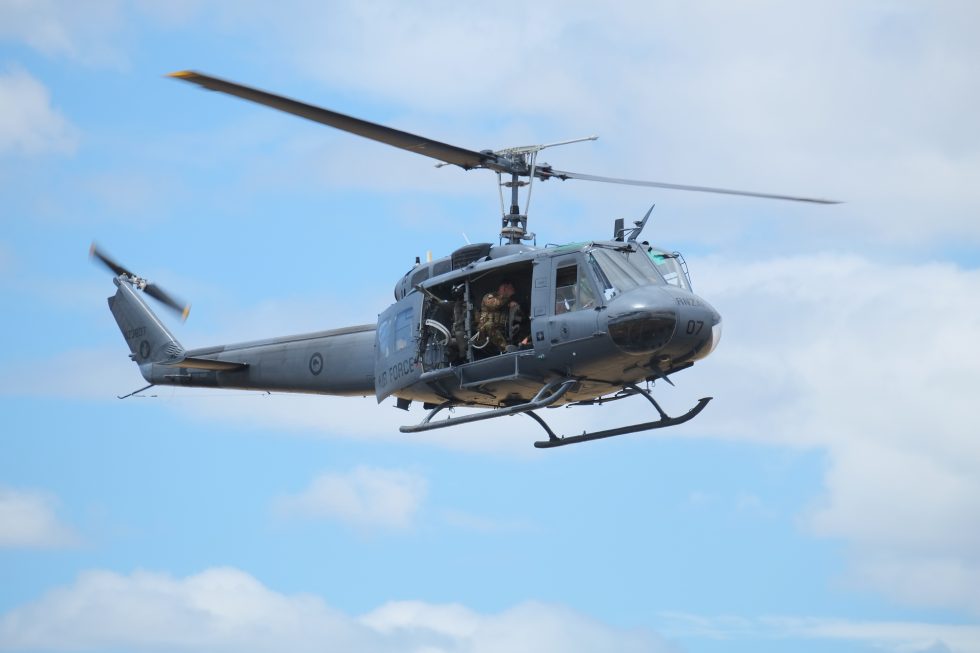
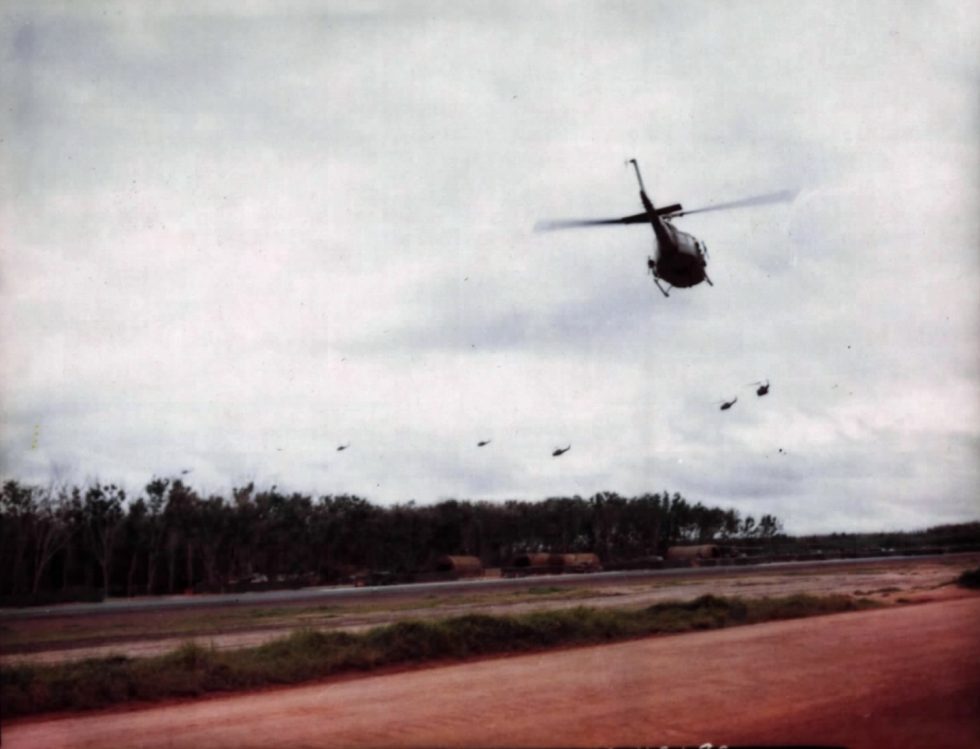
The Bell UH-1 Huey in motion
Flying The Iconic Huey Helicopter During The Vietnam War — from the authoritative Behind The Wings aviation-museum documentary series (Spark / PBS). A close look at how the Huey flew and why it mattered, filmed in a preserved airworthy example.
Where the Bell UH-1 Huey flew
Operators today
The Huey is still flying with more than thirty air arms, and counting them accurately is close to impossible
Seventy years after the XH-40 first flew, the Huey remains one of the most widely operated military helicopters in the world — but the fleet has changed character completely. The large Cold War users have gone: Germany retired its Dornier-built UH-1D in 2021 after 53 years, Thailand retired the Royal Thai Army’s UH-1H in 2020 after 52, and Taiwan and South Korea have both run their fleets down. What remains is a small number of genuinely modern aircraft — the US Marine Corps UH-1Y above all — and a very long tail of rebuilt UH-1H and Huey II airframes doing counter-insurgency, disaster relief and border work in Latin America, Africa and Southeast Asia.
These are estimates of delivered aircraft on charge, and this particular chart needs more qualification than most. First, the definition: many airframes counted as "Hueys" are Bell 212 and Bell 412 derivatives or Agusta-Bell licence aircraft, not UH-1Hs, and where that is the case it is noted. The American figure is about 160 UH-1Y Venoms with the Marine Corps — the only large modern Huey fleet in existence, all delivered between 2008 and January 2019 — plus roughly 60 twin-engined UH-1N still guarding US Air Force intercontinental-ballistic-missile fields and flying the Washington continuity-of-government mission until the MH-139A Grey Wolf replaces them. The US Army retired its last UH-1 in 2016. Japan’s figure is Fuji-built UH-1Js of the Ground Self-Defense Force, now being replaced by the Subaru-Bell UH-2. Colombia’s combines 52 UH-1H and Huey II with 11 Bell 212 in the Aerospace Force alone; the Army and the National Police fly more, and those could not be counted. Morocco’s and Greece’s totals are Agusta-Bell AB 205 and AB 212 aircraft, and the Greek figure is air force only — the Hellenic Army operates further UH-1H that could not be corroborated to a firm number. Deliberately omitted rather than guessed: Turkey, Italy and the Philippines, all of which certainly operate significant UH-1H, AB 205 or Bell 212 fleets for which no reliable current figure could be found. Also omitted for size: the Czech Republic, whose eight UH-1Y delivered from 2023 make it the newest Venom operator in the world, plus Bolivia, Lebanon, Pakistan, Guatemala, Honduras, Georgia, Uruguay, Albania, Yemen and a dozen others with fleets in single figures. Sources: IISS The Military Balance, FlightGlobal World Air Forces and national inventory returns; entries that could not be corroborated are omitted.
The Bell UH-1 Huey’s record: the workhorse of a war
The Huey was not built to win dogfights — its record is written in troops carried, wounded saved and missions flown. Over the course of the Vietnam War more than 7,000 Hueys served in the theatre, flying millions of sorties in every role from air assault to ambulance. The cost was heavy: roughly half of the Hueys in Vietnam were lost, and the type accounted for the largest single share of US helicopter losses in the war. These figures are widely cited but should be read as best estimates.
See the aircraft that flew alongside it: the Douglas A-1 Skyraider and the AC-47 Spooky gunship.
Everything people ask about the Bell UH-1 Huey
Can I fly in a UH-1 Huey?
What is the Bell UH-1 Huey?
Why is it called the Huey?
When did the UH-1 Huey first fly?
What engine does the UH-1 Huey have?
How many UH-1 Hueys were built?
What was the Huey’s role in the Vietnam War?
What is a “Dustoff” Huey?
What are the main UH-1 variants?
Why does the Huey make that distinctive sound?
Is the UH-1 Huey still in service?
What replaced the UH-1 Huey in US Army service?
You can’t fly the UH-1 Huey.
These, you can.
Some legends only live in museums — others are fuelled and waiting. MiGFlug has put civilians in real military jet cockpits since 2004.
 Fly the L-39 AlbatrosThe world’s most-flown jet trainer — aerobatics included
 Fly the F-104 Starfighter“The missile with a man in it”
 Fly the MiG-21The Cold War’s most-produced jet
 Fly the T-33 Shooting StarAmerica’s first jet trainer
 Fly the DH VampireA piece of early jet history
 Fly the S.211Agile Italian jet trainer
 Fly the MB-326The classic Aermacchi jet
 Fly the MiG-15The Soviet legend of the Korean War
Continue the tour
Every fact, checked
- Bell (Bell Flight)The manufacturer’s own history of the Model 204/205 and the UH-1 family.
- U.S. ArmyOfficial Army history of the Huey and Cobra in Vietnam air-mobility operations.
- Smithsonian National Air and Space MuseumCollection entry and history for the Bell UH-1 Iroquois.
- National Museum of the U.S. Air ForceFact sheet on the UH-1 and its Air Force service.
- Vietnam Helicopter Pilots AssociationDetailed tally of US helicopter losses during the Vietnam War.
- Behind The Wings (PBS)Aviation-museum documentary series featuring the airworthy UH-1H.
- Key AeroEstablished aviation reference for UH-1 development, variants and specifications.
- Honeywell / Lycoming T53Background on the T53 turboshaft engine that powered the Huey.