
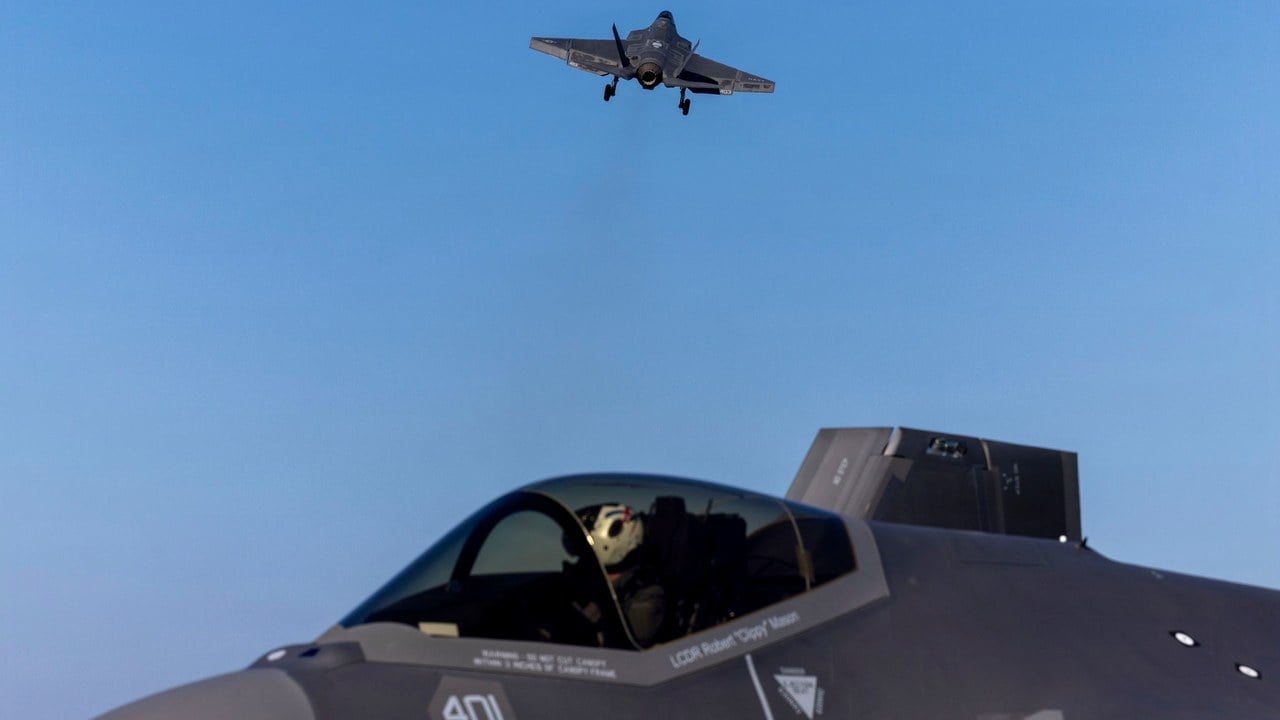
One hundred and twenty-two catapult shots. One hundred and twenty-two arrested landings. Two jets, 34 flights, 11 days of testing. That is the scorecard Lockheed Martin published on Thursday 19 November 2026 for the first full round of F-35C launch and recovery trials aboard a Gerald R. Ford-class aircraft carrier, the future USS John F. Kennedy (CVN 79).
Afterburner reported the opening moments in October, when a test jet caught the first wire on Kennedy on 13 October and the ship’s electromagnetic catapult flung an F-35C back into the air the next day. One trap proves the idea. The campaign that followed was about proving it hundreds of times over, in a way engineers can write rules from.
Informations clés
- Annoncé : Thursday 19 November 2026, by Lockheed Martin
- Bateau: Future USS John F. Kennedy (CVN 79), second Gerald R. Ford-class carrier
- Aéronef: Two F-35Cs of VX-23 “Salty Dogs”, NAS Patuxent River
- Results: 34 flights, 122 catapult launches, 122 arrested landings over 11 test days
- First trap / first launch: 13 October / 14 October 2026
- Systems tested: EMALS catapult and Advanced Arresting Gear
- Clearance: Lockheed says the Navy has cleared the F-35C across all its carriers, effective once launch and recovery bulletins are published
- Kennedy delivery: Planned for spring 2027
What the Salty Dogs flew
The two jets came from Naval Air Station Patuxent River, Maryland, and belong to Air Test and Evaluation Squadron 23 (VX-23), the “Salty Dogs”. According to Lockheed Martin, they completed 34 flights, 122 catapult launches and 122 arrested landings using the Electromagnetic Aircraft Launch System (EMALS) and the Advanced Arresting Gear (AAG).
The company did not give an end date for the 11 test days. US Navy photos from the ship show the work stretched well beyond mid-October: VX-23 F-35Cs were flying touch-and-goes on 30 October, and on 2 November an F-35C sat on the deck edge between a VX-23 F/A-18F Super Hornet et un EA-18G Growler.
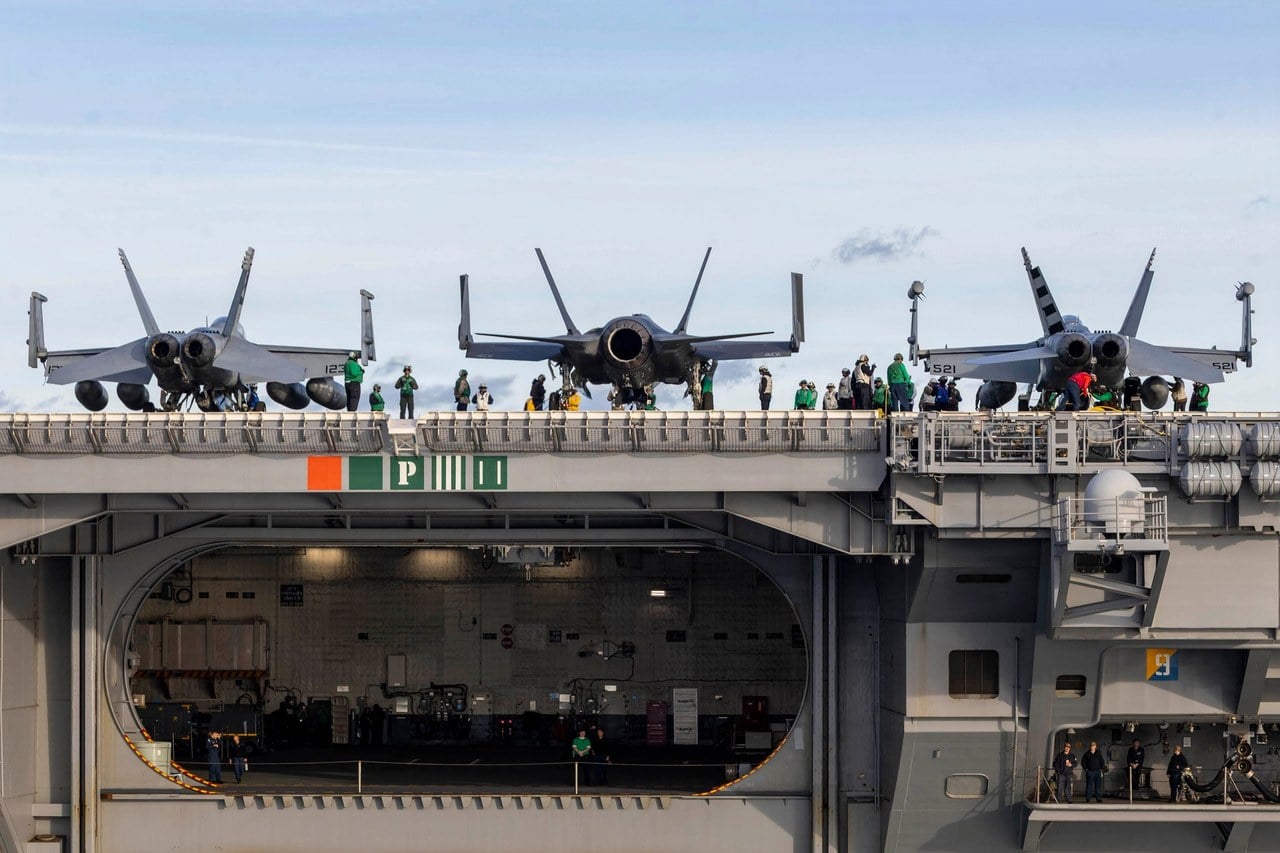
All of this falls under the ship’s Aircraft Compatibility Testing, which the Navy describes as assessing how the carrier’s launch and recovery equipment works with Navy aircraft. The F-35C was not alone: Navy photo captions also show an E-2D Advanced Hawkeye of test squadron VX-20 landing aboard on 28 October.
What 122 traps actually tested
A Ford-class deck is a different place for a jet. Lockheed points to three changes: EMALS, which it says gives smoother, more precisely controlled launches; AAG, designed to cope with a broader range of recovery conditions; and a redesigned flight deck and island that change airflow, exhaust patterns and deck operations. Defense News notes the smaller island sits about 140 feet farther aft than on a Nimitz-class ship.
According to the company, the test team gathered data to verify the EMALS and AAG software and shipboard installations, validate the F-35C’s loads and structural models for launch and recovery, and assess how supportable the jet is in the new ship’s environment. Lockheed also lists the first use of F-35 Block 4 software in a carrier environment, though, as AeroTime pointed out, it did not say which software increment flew.
Footage of the October 2026 F-35C arrested landings and EMALS launches aboard the future USS John F. Kennedy.
The most practical output of the F-35C Ford-class campaign is paperwork. The data feeds the Aircraft Launch Bulletins and Aircraft Recovery Bulletins for Ford-class carriers, the documents that set the conditions and limits under which a given aircraft type may be launched and recovered. The sea trials followed shore-based testing that ran from January 2024 to May 2025.
Cleared, but not yet ready to deploy
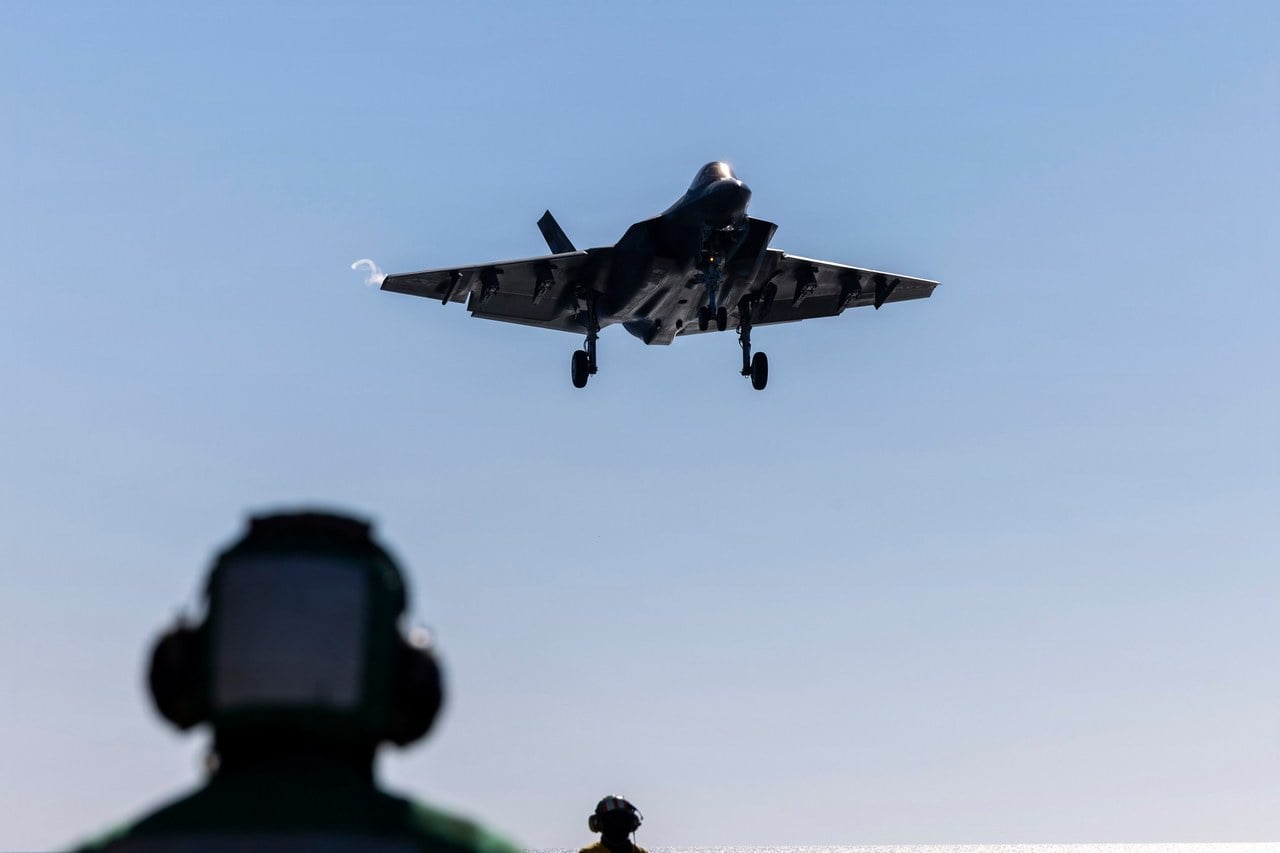
Lockheed’s headline claim is that, with this phase complete, the Navy has cleared the F-35C to operate across its entire carrier fleet. A company official added important qualifiers when speaking to Defense News: the clearance takes effect once the bulletins are published, the Navy holds the final say, and the ships will not be ready to deploy with the jet until fully outfitted with supporting equipment.
That matters most for USS Gerald R. Ford herself. The lead ship entered service in 2017 without the F-35C modifications, such as tougher jet blast deflectors and secure spaces for the jet’s classified systems, and still deploys with Super Hornets. Defense News cites Stars and Stripes reporting in October that the Navy plans to retrofit Ford for the jet. Kennedy had the changes built in after the Navy altered her construction contract in 2020.
Data for a loud argument
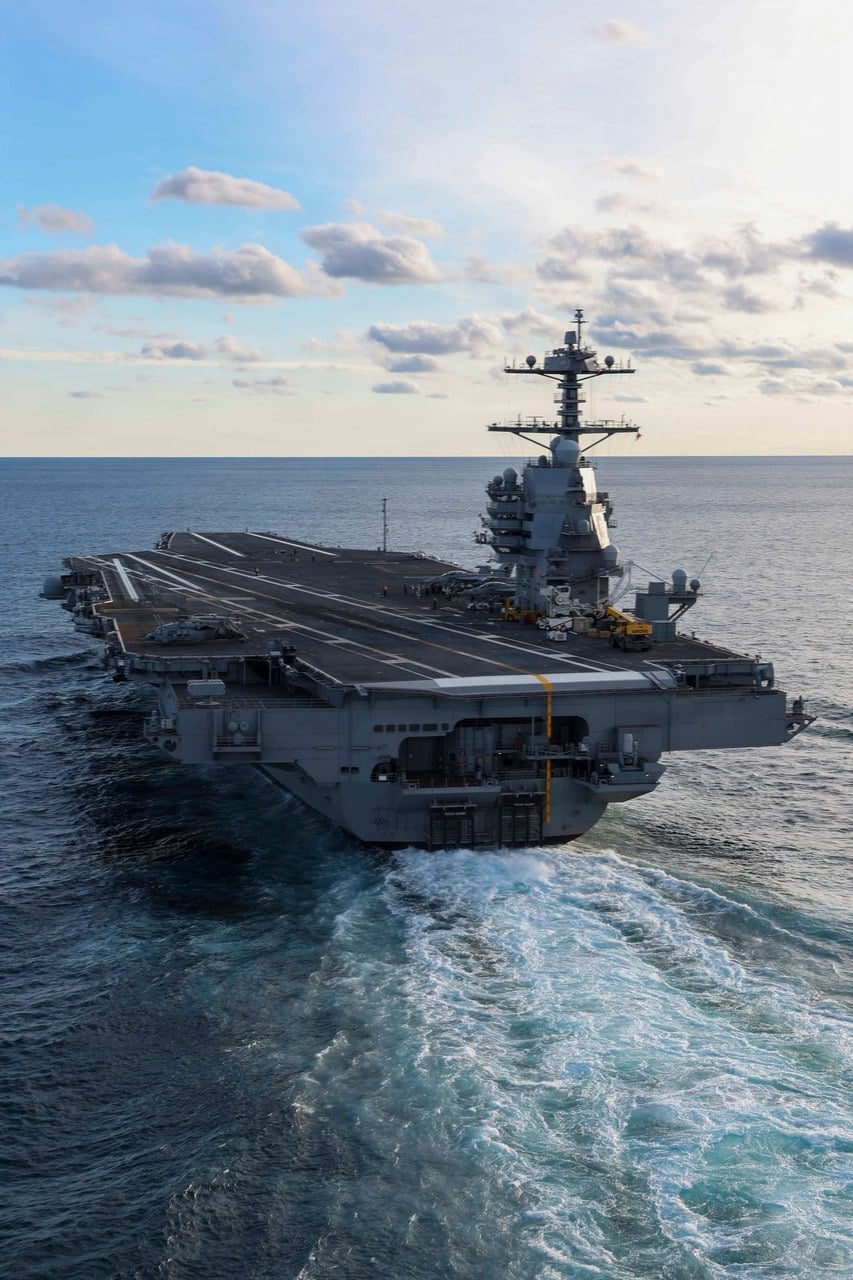
The numbers arrive in the middle of a fight about the catapults themselves. A presidential memorandum of 13 August 2026 ordered a plan to put steam catapults and hydraulic arresting gear back on Ford-class carriers, which Afterburner covered in Trump ordonne à la marine de reprendre du service.. On Tuesday 17 November, Senate Armed Services Committee chairman Roger Wicker told Navy secretary nominee Hung Cao that a return to steam was a non-starter, as we reported in our story on the hearing.
A clean 122-for-122 run with the Navy’s newest fighter does not settle the reliability record of EMALS and AAG across a full deployment, and nobody involved has claimed it does. But it is the kind of evidence the systems’ defenders will point to. For how the two systems work, see our explainer EMALS, AAG et la catapulte qui a réinventé le porte-avions.
Former military pilots on The Mover and Gonky Show discuss why it took until the second Ford-class ship to get the F-35C aboard.
What comes next
Kennedy took preliminary acceptance from Newport News Shipbuilding on 29 September, after acceptance trials in August, and formal delivery is planned for spring 2027. The Ford class is due to grow with ships named for presidents Bill Clinton and George W. Bush, alongside the future USS Doris Miller.
For now the Navy’s stealth fighter has done on a Ford-class deck what it has done on Nimitz-class carriers since its first trap aboard USS Nimitz in November 2014. The next milestone is the one that counts: an operational squadron, not a test team, flying off Kennedy on deployment.
Sources: Lockheed Martin (news release, 19 Nov 2026), Defense News, AeroTime, U.S. Navy / DVIDS photo captions, Naval News
Header photo: U.S. Navy photo by MC Seaman Kaitlyn Bailey / DVIDS, public domain

0 Comments