
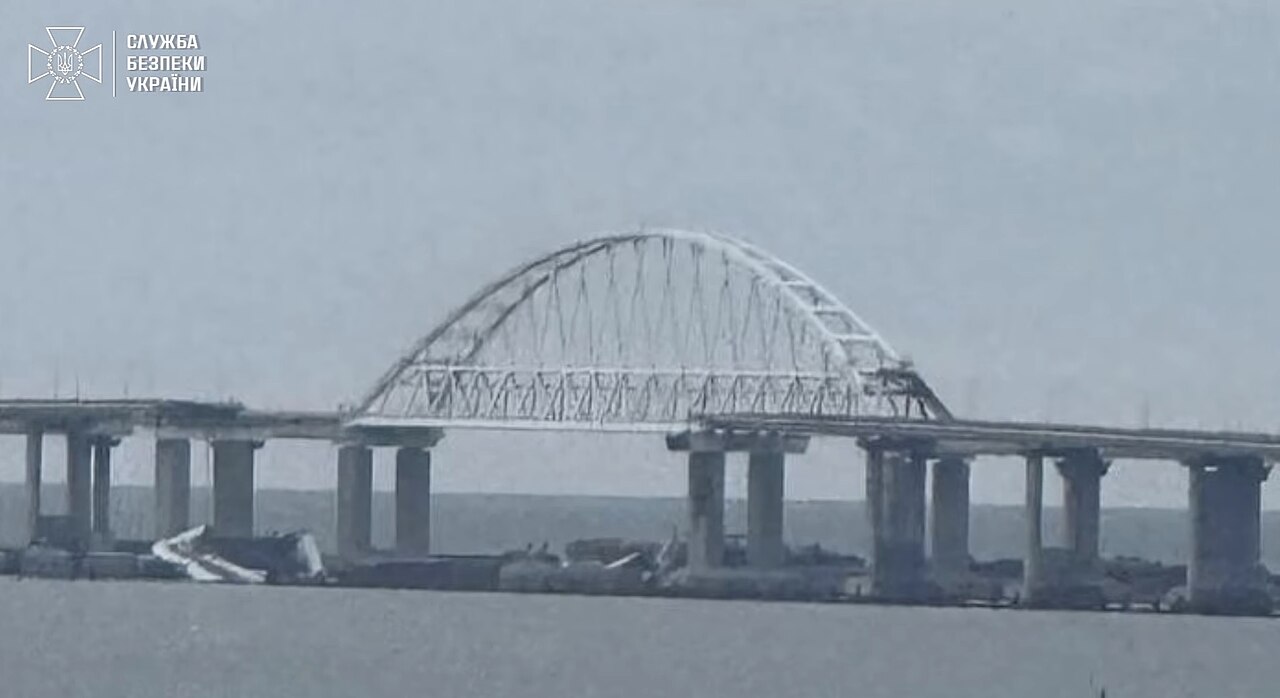
Around midnight Moscow time on Tuesday 17 November 2026, a span of the Crimean Bridge’s road section fell into the Kerch Strait. Hours later, a defence company headquartered in the Netherlands did something arms makers almost never do: it went on LinkedIn and said its missiles had done it.
The company was Destinus. Five years earlier the same firm had been flying a small waverider model near Munich and talking about hydrogen-powered hyperplanes that would cross the planet in an hour or two. How a Swiss hypersonic start-up became one of Europe’s busiest cruise-missile factories is one of the strangest corporate journeys of the war in Ukraine.
Informations clés
- Fondé: 2021, Payerne, Switzerland
- Founder and CEO: Mikhail Kokorich
- Headquarters: The Netherlands (Valkenburg); factory in Hengelo
- Hydrogen demonstrators: Jungfrau (first flew November 2021), Eiger (2022), Destinus 3 (mock-up shown in Paris, 2023)
- Main weapons: Ruta Block 1 and Block 2 cruise missiles, LORD (Da Vinci) long-range drone, Hornet interceptor
- Ruta Block 1: 300 km range, 150 kg payload (company figures)
- Production: 1,750 Ruta Block 1 built, close to 300 a month (company, October 2026)
- Crimean Bridge: Company says seven Ruta missiles hit the bridge on 17 November 2026; its account of the damage is not independently verified
“A cross between a plane and a rocket”
Destinus was founded in 2021 in Payerne, the Vaud town that is also home to a Swiss Air Force base. The pitch was audacious: an autonomous, hydrogen-fuelled “near-space” aircraft. According to AIN, the plan was a hydrogen-fed air turborocket for take-off, landing and supersonic flight, plus a cryogenic rocket engine to push the machine to hypersonic speed in the mesosphere, above the altitudes where existing aircraft fly.
The first sub-scale prototype, Jungfrau, flew in November 2021 at an airfield near Munich. In February 2022 the company closed a seed round of about $29 million, AIN reported, and said a full-scale prototype could begin flight testing in 2025 or 2026. A larger second demonstrator, Eiger, followed in 2022, although AIN noted that its first test flight did not go as smoothly as planned.
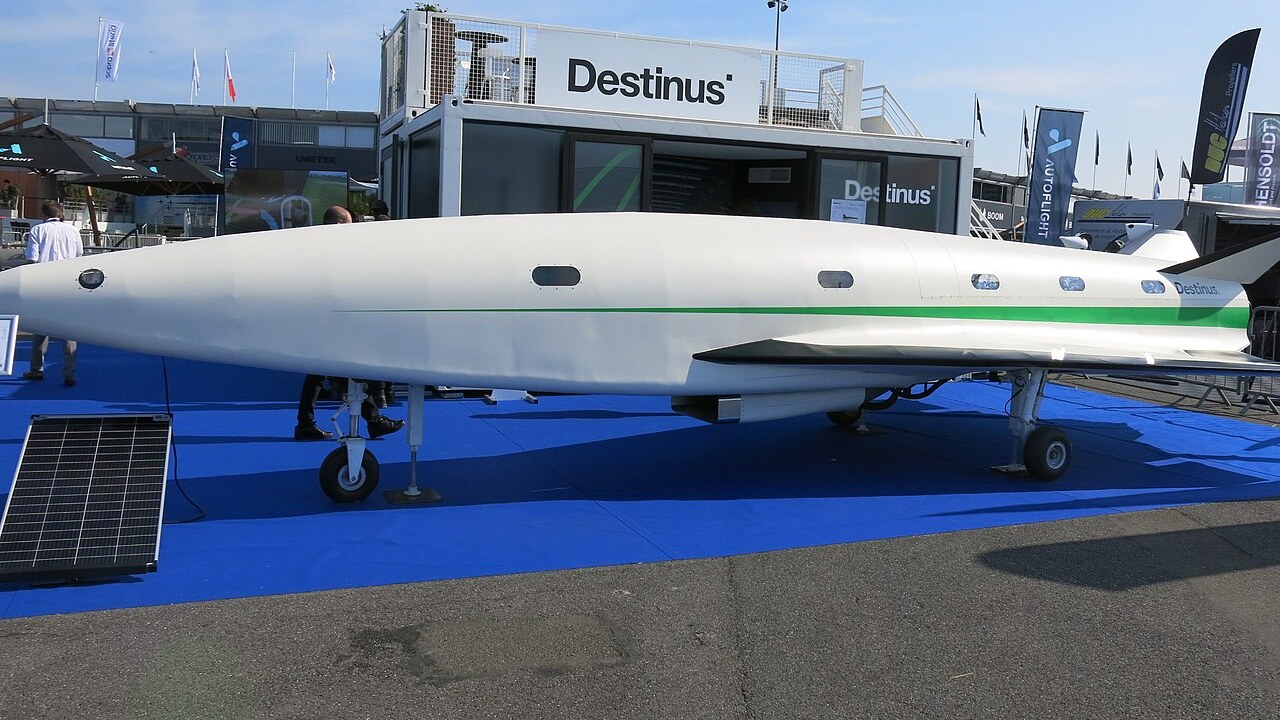
At the Paris Air Show in June 2023, Destinus showed a full-size mock-up of Destinus 3, a demonstrator meant to test its hydrogen afterburner at supersonic speed. Spain became a second home for the propulsion work: by early 2024 the company had factories in Munich, Madrid and the Netherlands and had received €12 million from the Spanish government for hydrogen engine research, according to Kyiv Post.
SWI swissinfo.ch on the Swiss start-up planning a hydrogen-powered hypersonic plane.
The founder: Mikhail Kokorich
Behind the company stands Mikhail Kokorich, a Russian-born serial entrepreneur. Born in the Chita region, he made his first fortune in retail, including the Tekhnosila home-appliance chain, then founded Dauria Aerospace, Russia’s first private space company, Meduza and the Jamestown Foundation report.
He left Russia for the United States, where in 2017 he co-founded Momentus, a start-up building orbital “space tugs”, with Lev Khasis. US national-security concerns about a Russian citizen controlling a dual-use space company forced him to step down as CEO in January 2021. In 2024 he settled US fraud charges linked to Momentus without admitting or denying them, paying a $2 million penalty and accepting a five-year ban from running listed companies, DutchNews reports.
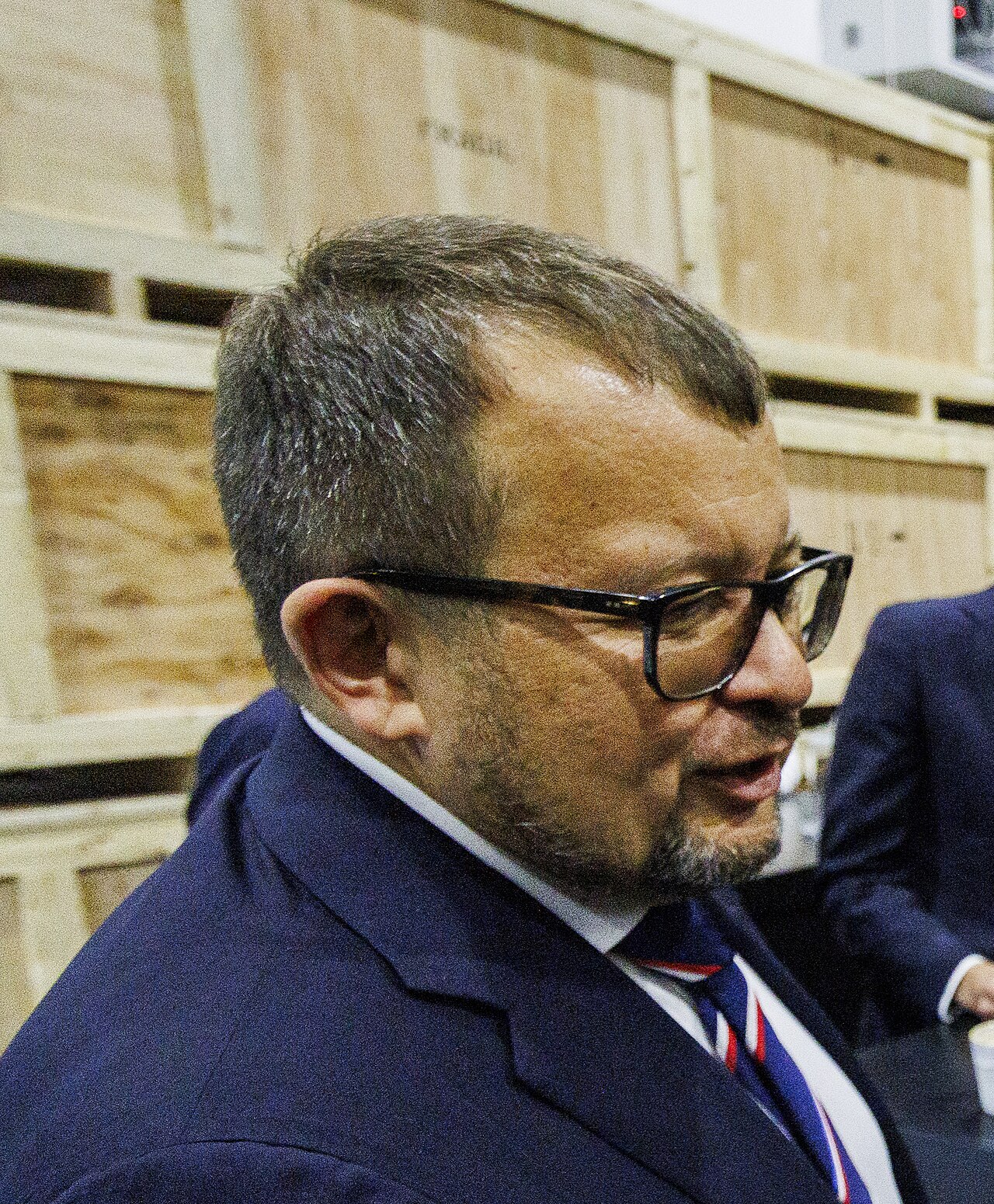
Kokorich renounced his Russian citizenship in January 2024, calling it a conscious decision driven by his disagreement with the invasion of Ukraine. He is a member of the exiled Anti-War Committee, and in October 2025 Russia’s FSB opened a criminal case against its members, Kokorich among them, according to Meduza.
From hyperplanes to strike drones
Russia’s full-scale invasion in February 2022 changed everything. In a January 2024 interview with the French magazine Challenges, reported by Kyiv Post, Kokorich revealed that Destinus had quietly been supplying drones to Ukraine for almost a year. Because of Swiss controls on military production, the drones were built outside Switzerland and shipped as components for assembly in Ukraine.
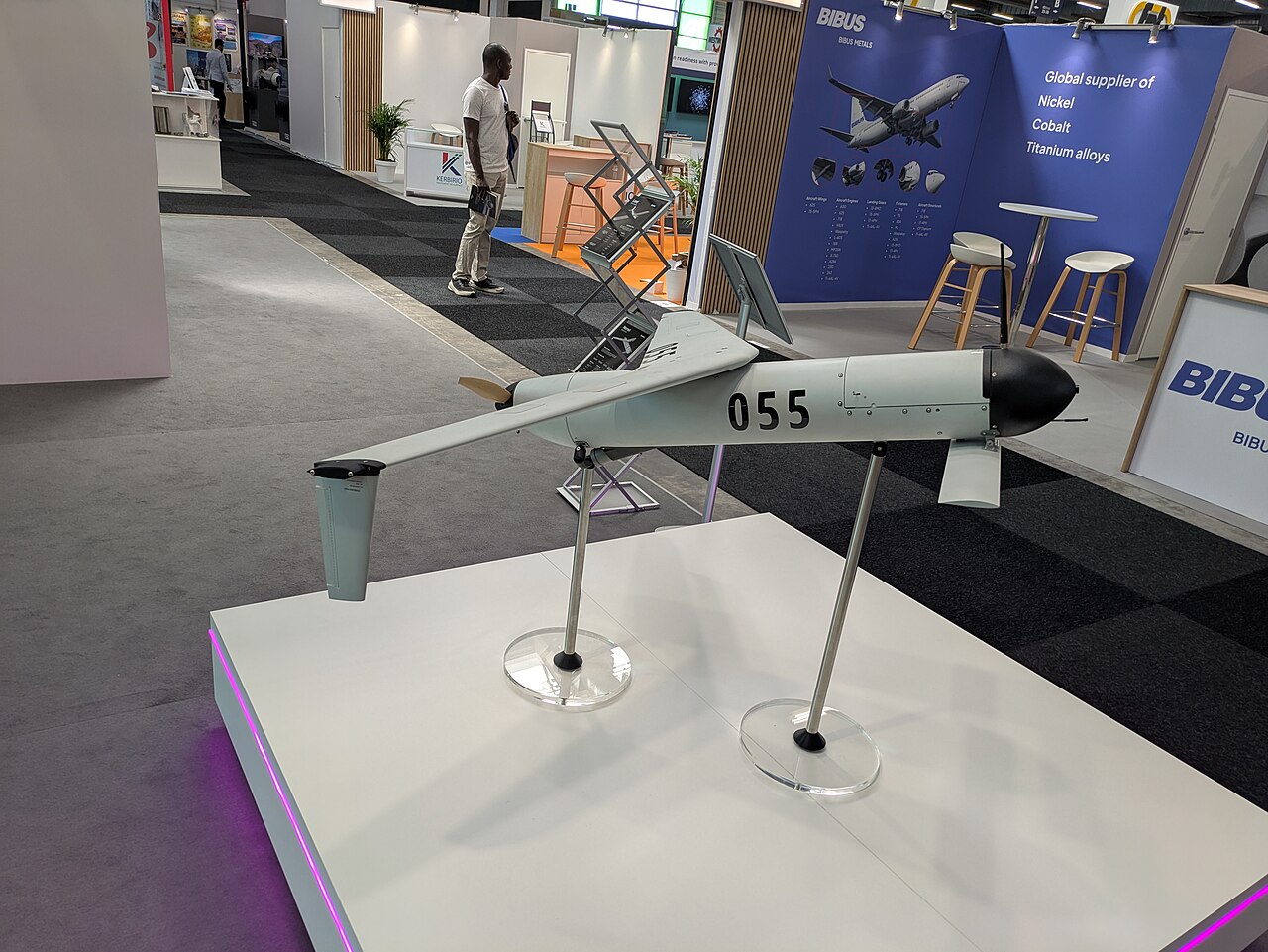
The first product was LORD, a propeller-driven long-range drone that Ukraine calls Da Vinci. The manufacturer says it can fly more than 1,000 kilometres with a warhead of 40 to 100 kg, according to United24 Media. Next came Hornet, a fast interceptor drone designed to hunt Russian Shaheds, and Ruta, which Kokorich in early 2024 still described as a dual-role surveillance and strike drone.
The leadership grew with the pivot. Oleksandr Danylyuk, Ukraine’s former finance minister, joined in 2023 and is described by Meduza as the company’s president; co-founder Tim Moser serves as chief technology officer. In August 2025 Destinus agreed to buy the Zurich AI avionics firm Daedalean for CHF 180 million, and the headquarters moved from Switzerland to the Netherlands, with offices in Valkenburg and a factory in Hengelo. The Payerne team kept working on high-speed technology.
Ruta: a cruise missile built like a product
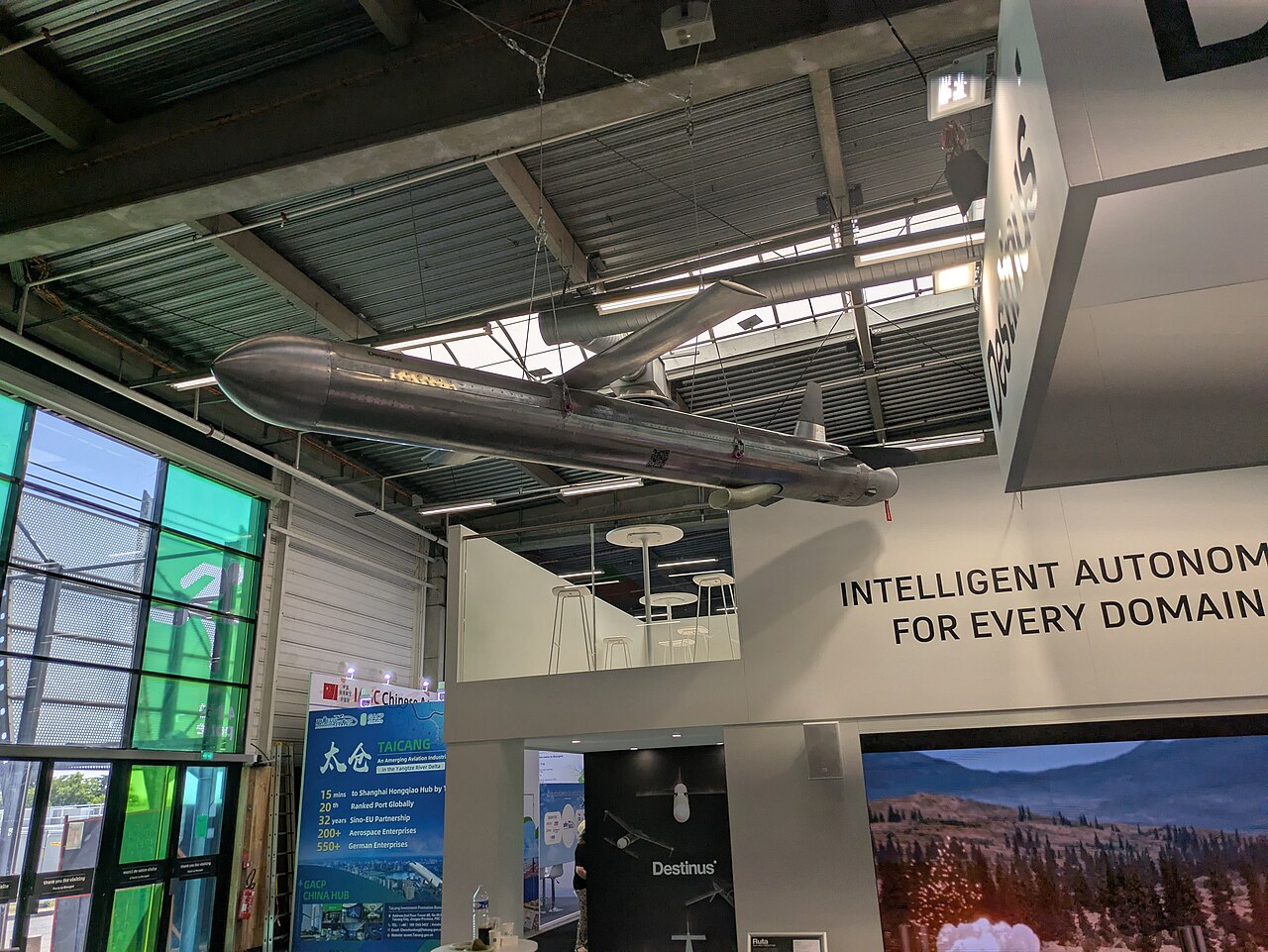
The Destinus Ruta is now the core of the business. Destinus says Ruta Block 1 carries a 150 kg payload over 300 km, while Block 2 doubles the take-off weight and range to more than 700 km with a 250 kg payload and an electro-optical and infrared seeker. Both use the company’s own T150 turbojet, of which it announced the 1,000th in June 2026.
By late October 2026 Destinus said it had completed 1,750 Ruta Block 1 missiles and was building close to 300 a month. A Block 3 version with a range of around 2,000 km is planned with Rheinmetall through a joint venture called Rheinmetall Destinus Strike Systems, with flight tests due in 2027 and production at Rheinmetall’s Unterlüß site.
Destinus film on its Ruta Block 1 production milestone.
The money followed. In 2025 the company raised nearly $464 million, including shareholder loans and a Commerzbank credit line, the Financial Times reported, as cited by the Jamestown Foundation. In June 2026 the Dutch government agreed to pay €250 million for 700 Ruta missiles for Ukraine, and in August the Dutch defence ministry signed a contract to develop a naval version of Hornet, DutchNews reports.
The Crimean Bridge claim
Ukraine attacked the 19-kilometre Crimean Bridge in several waves. A first strike in the early hours of 16 November damaged the road bridge’s arch; the second, around midnight on 17 November, brought down the arch and the road span beneath it. On 17 November, President Volodymyr Zelenskyy listed eleven weapon systems used in the weeks-long operation, Ruta and Da Vinci among them, and said that at the key stage Neptune missiles, Ruta and FP-5 Flamingo hit the railway section while Palianytsia drones struck the road section.
The same day, Destinus said on LinkedIn that Ruta missiles had struck the bridge on two consecutive nights: the first night damaged the upper load-bearing structure, and on 17 November seven Ruta missiles hit the bridge, “causing one span to collapse”. It added that its LORD/Da Vinci systems were used to suppress Russian air defences. A spokesperson told Dutch broadcaster NOS it was the first time the company had publicly claimed a role in a single attack, and that it had done so partly because Zelenskyy had already named its weapons.
So this is not a rumour: the claim comes from the manufacturer itself, and Ukraine’s president confirmed that Ruta was used. What has not been independently verified is the company’s account of which weapons did which damage. Zelenskyy did not give missile numbers or say which weapon caused the collapse, Fire Point released footage it said showed its Flamingo missile approaching the bridge, and his account places Ruta on the railway section, while the span that fell carried the road.
Moscow answered through its embassy in The Hague on 18 November. In April, Russia’s defence ministry had already put Destinus in Hengelo on a list of European drone makers, which former president Dmitry Medvedev called “a list of potential targets for the Russian armed forces”, NL Times reported. Destinus told NOS it takes the safety of its employees and the surrounding communities very seriously.
A company under the spotlight
Two days after the bridge strike, on 19 November, the Dutch newspaper NRC published a months-long investigation based on more than 40 interviews. It reported that from autumn 2024, Destinus staff in Ukraine tested Hornet interceptors against Russian Shahed drones, and that in June 2023 employees near Kharkiv were closely involved in a test of the company’s first attack drones against a military airfield near Voronezh. NRC said it could not establish where that drone came down.
Destinus confirmed to NRC that its staff “launched and operated” interceptor drones without live explosives under the direction of Ukrainian soldiers, but says the Ukrainian army selects targets and that it provides only technical support. The Dutch defence ministry told the paper that launching or operating a weapons system counts as direct participation in hostilities. MPs have asked for an explanation.
The Kyiv Independent on what it took for Ukraine to hit the Crimean Bridge.
The hydrogen hyperplane never flew. Instead, a company born to cut cargo times between continents is building hundreds of cruise missiles a month, and has signed its name to one of the most symbolic strikes of the war. Whatever the final verdict on that claim, Destinus is no longer a start-up that nobody has heard of.
Sources: AIN, Kyiv Post, Meduza, Jamestown Foundation, Tech.eu, Destinus, Defence Industry Europe, United24 Media, NOS, DutchNews, NL Times, NRC
Header photo: Tangopaso / Wikimedia Commons, public domain
Foire aux questions
What is Destinus?
Who founded Destinus?
What is the Destinus Ruta missile?
Did Destinus missiles hit the Crimean Bridge?
Why did Destinus move from Switzerland to the Netherlands?
What were the Destinus Jungfrau and Eiger prototypes?
Articles similaires
Mikhail Kokorich: From Siberian Start-ups to Missiles for Ukraine
Neptune Missile Explained: Ukraine's Ship-Killer Turned Deep-Strike Weapon
Ukraine's Flamingo Strikes a Soyuz Rocket Plant
TERCOM and DSMAC: How a Cruise Missile Finds Its Target Without GPS
Hypersonic Weapons Explained: Boost-Glide, Scramjet and Ballistic


0 Comments