
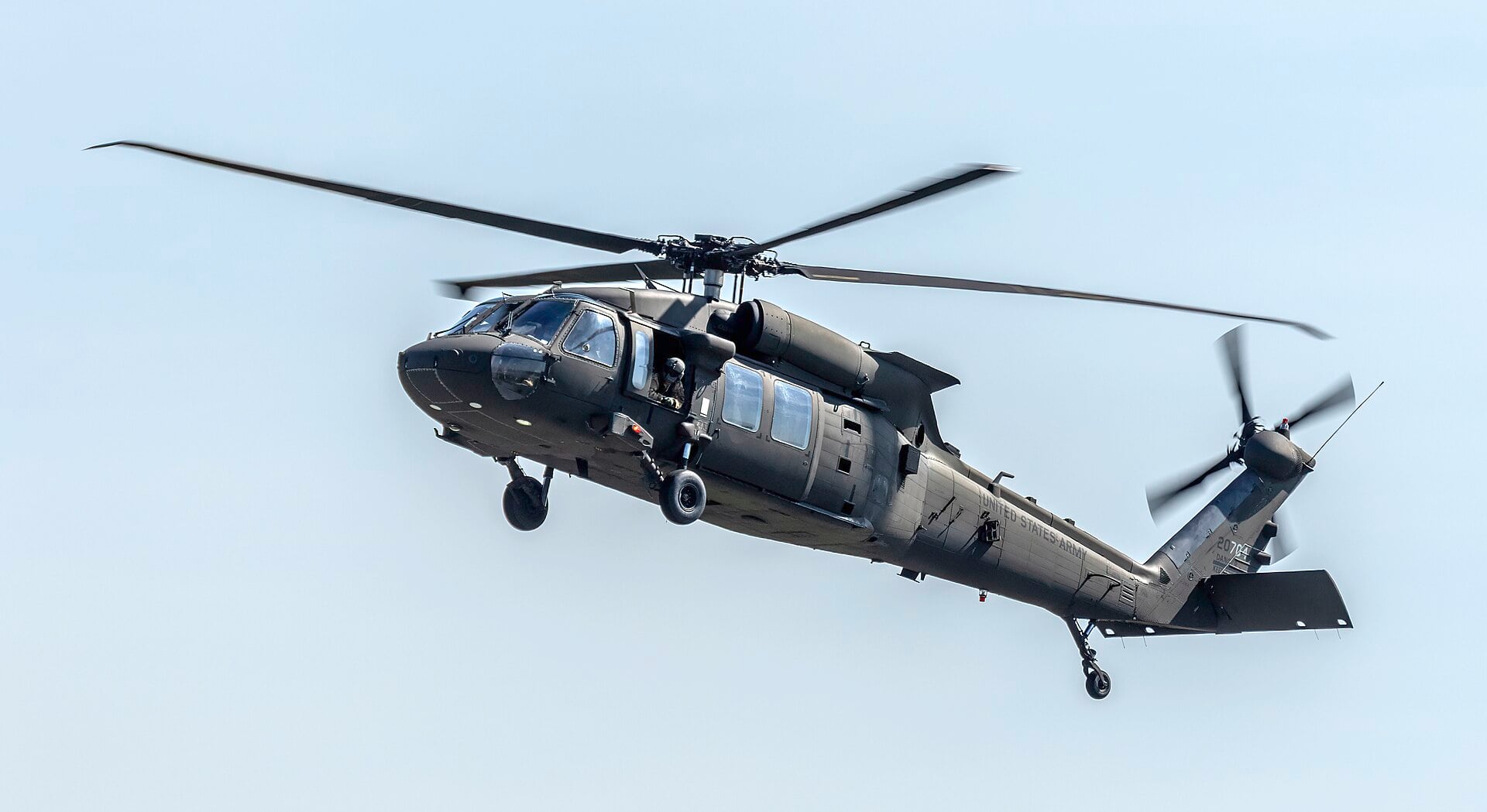
At 19:20 on 21 September 2017, two minutes before the end of civil twilight, a United States Army UH-60M Black Hawk was flying at about 300 feet over the water near Hoffman Island, off Staten Island. It was the lead aircraft of a flight of two, on a local orientation sortie, inside Class G airspace and entirely where it was entitled to be.
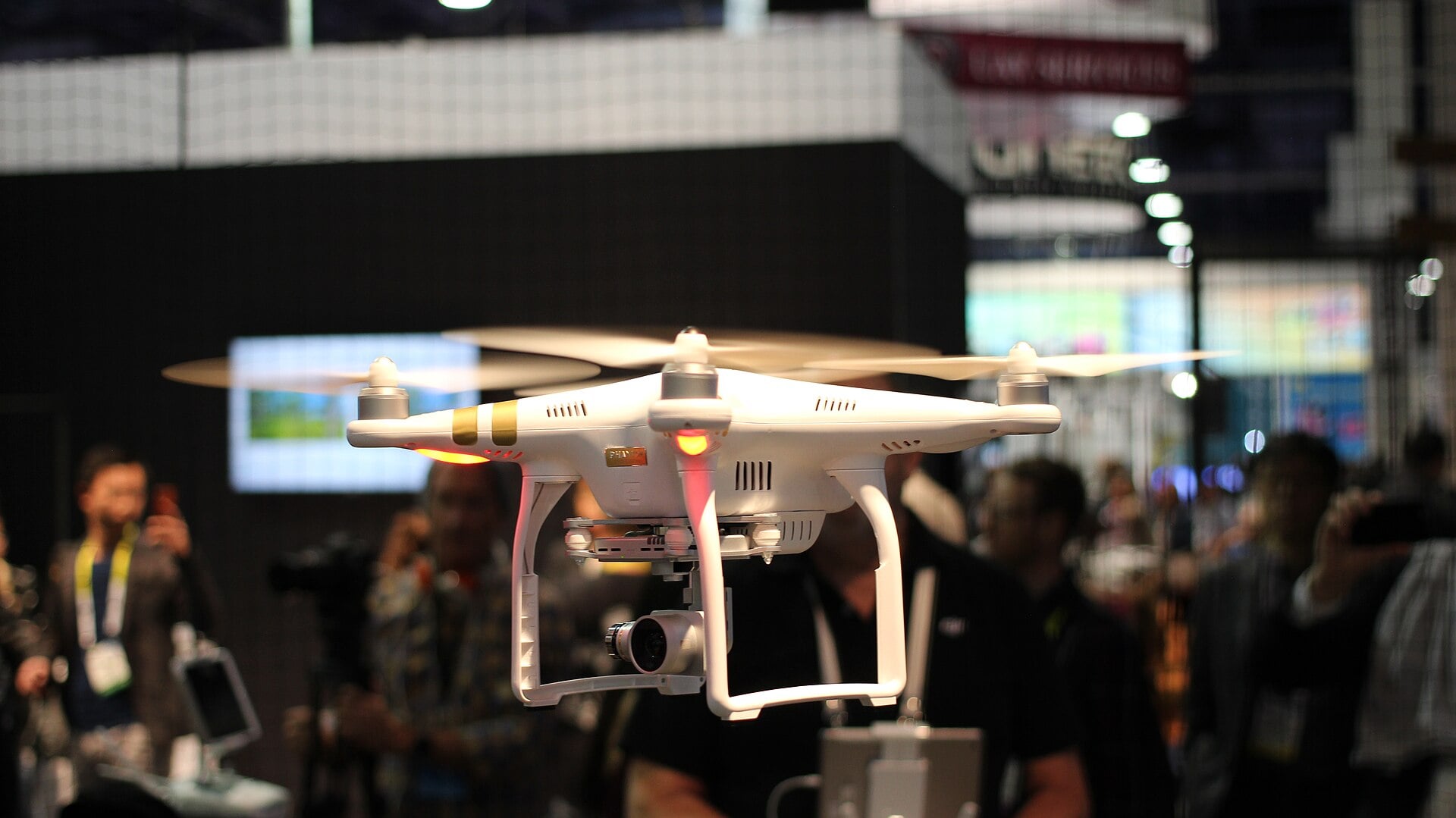
The pilot flying saw the object a moment before impact and moved the controls. There was not enough time. A privately owned DJI Phantom 4, being flown recreationally two and a half miles from its operator, struck the helicopter.
What happened next is the most carefully documented drone strike in aviation, and almost nothing about it matches the way the subject is usually discussed.
Informations clés
- The incident: NTSB DCA17IA202, Hoffman Island, New York, 21 September 2017
- Aéronef: US Army Sikorsky UH-60M Black Hawk, four-bladed, twin-engine
- Le drone : DJI Phantom 4, four brushless motors, 4-cell 15.2-volt lithium-polymer battery
- Damage to the helicopter: minor; a 1.5-inch dent in one main rotor blade leading edge
- Damage to the drone: destroyed
- Certification bird, windshield: four pounds at cruise design speed (14 CFR 25.775(b))
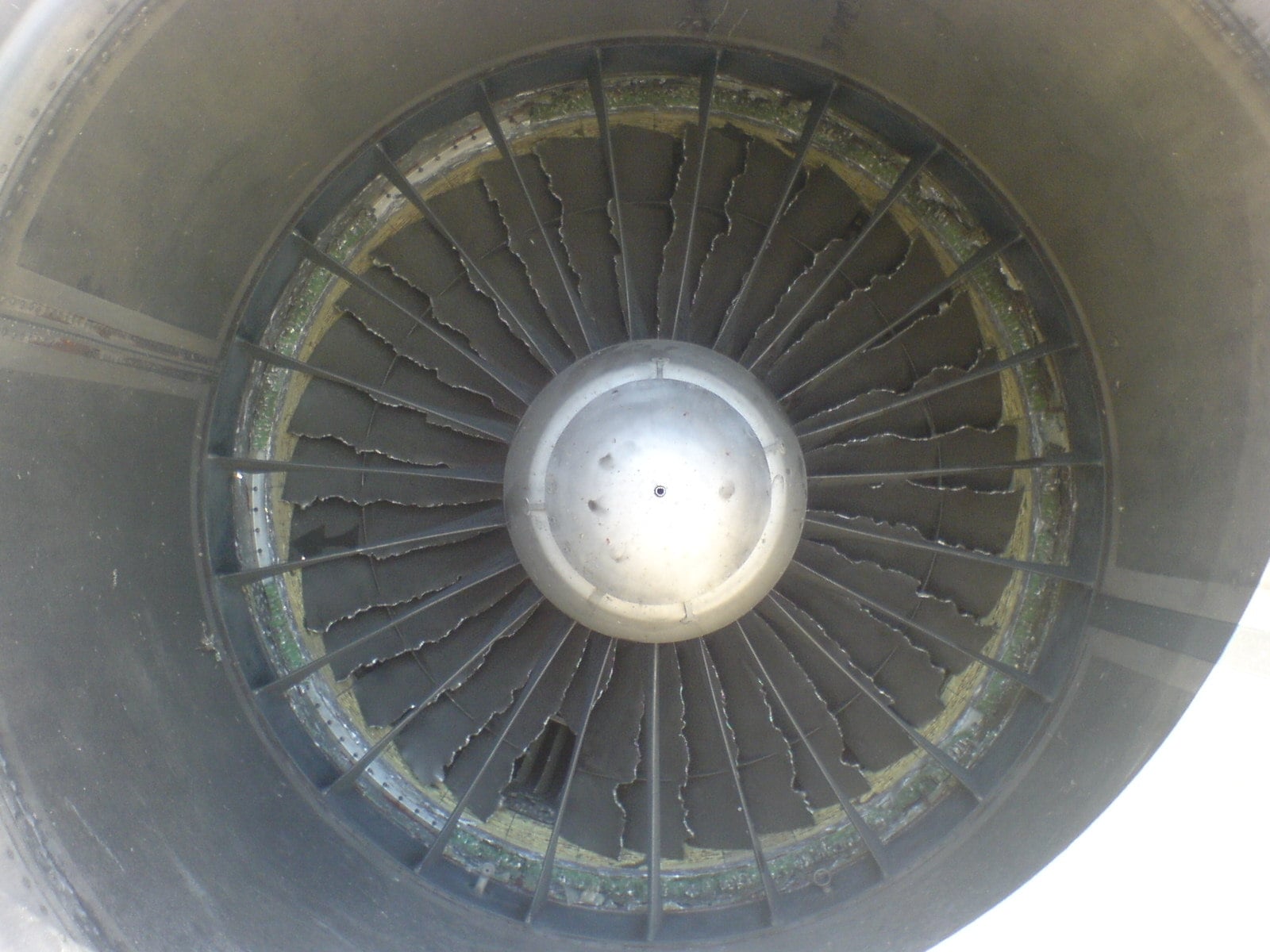
- Certification bird, engine: 1.85 kg (4.07 lb) to 3.65 kg (8.03 lb) by inlet area (14 CFR 33.76)
- FAA research: ASSURE A3, over 180 simulated impact scenarios at 250 knots
- Fatal collisions with crewed aircraft: one recorded, in Germany in 1997, involving a 10 kg model aircraft
A dent, a motor, and a serial number
The NTSB’s final report is unglamorous and precise. The helicopter sustained minor damage and landed uneventfully. Investigators found a dent one and a half inches long on the leading edge of one of the UH-60’s main rotor blades, surrounded by scratches and material transfer, plus some cracking in composite fairing and window-frame material.
That is the entire structural consequence of a 1.4-kilogram quadcopter meeting a rotor blade travelling at several hundred miles an hour at the tip.
The drone came off far worse. It was destroyed, and several of its components ended up lodged in the helicopter. Army maintenance personnel later found debris in the engine oil cooler fan. One motor and part of an arm were recovered from the airframe.
And then the detail that makes the case famous among investigators: the motor was intact enough that the manufacturing serial number inscribed on it was still legible. Because the aircraft had been bought directly from the manufacturer, those sales records led investigators straight to the operator. A brushless motor the size of a film canister survived a collision with a Black Hawk well enough to identify its owner.
The NTSB’s probable cause had nothing to do with engineering. It was the failure of the drone pilot to see and avoid the helicopter, because he had deliberately flown beyond visual line of sight, with his incomplete knowledge of the regulations as a contributing factor. He was not a certificated remote pilot. He was navigating by the map on his tablet. A temporary flight restriction was in force over the area, prohibiting both model aircraft and unmanned systems, and he did not know, because the only airspace information he had was an advisory feature in a consumer app that happened not to be working.
The comparison everybody reaches for, and why it misleads
The instinctive reaction is that aeroplanes hit birds all the time and survive, so a drone of similar weight should be no worse. The regulations certainly take birds seriously. Section 25.775(b) of 14 CFR requires that the windshield panes directly in front of the pilots, and the structure supporting them, withstand without penetration the impact of a four-pound bird at the aeroplane’s cruise design speed at sea level.
Engines face a similar bar. Table 1 to section 33.76 scales the large-bird test by engine inlet throat area: a minimum of 1.85 kg (4.07 lb) for inlets under 1.35 square metres, 2.75 kg (6.05 lb) up to 3.90 square metres, and 3.65 kg (8.03 lb) above that. Flocking-bird tests are run at a bird speed of 200 knots with the engine stabilised at take-off power.
Now put a drone beside those numbers. A DJI Phantom 4 weighs about 1.4 kg. It is lighter than the smallest certification bird and far lighter than the four-pound windshield bird. By mass alone, the aeroplane should shrug it off.
Mass alone is not the question, and that is precisely what the FAA set out to establish.
The most-watched drone impact footage on the internet, with more than a million views. Worth watching, and worth remembering that a single wing-leading-edge test is not a certification result.
What the FAA actually did, and what it did not do
The research is ASSURE project A3, run by a team led by the National Institute for Aviation Research at Wichita State University with Ohio State, Mississippi State and Montana State. ASSURE describes the brief plainly: if all safety measures fail and a small drone does hit a crewed aircraft, it is important to understand what happens.
The important caveat is in the method. This was overwhelmingly a simulation programme, supported by material and component testing, not a campaign of firing drones at airliners.
The scenarios modelled drones of 2.7 lb (1.2 kg) and 4.0 lb (1.8 kg) striking a narrowbody airliner of the 737 and A320 class, which makes up roughly 70 per cent of the US commercial fleet, and a business jet of the Learjet 30/40/50 class. Two drone types were used: a quadcopter from the DJI Phantom family and a fixed-wing Precision Hawk Lancaster. Idealised birds of the same two masses were modelled alongside them for comparison.
Note that the heavier simulated drone, at 4.0 lb, is exactly the mass of the bird in the windshield rule. The comparison was deliberately like for like.
The impact speed was chosen by reasoning about where a collision would realistically occur. Researchers assumed the most probable high-velocity encounter was during take-off, landing or holding, where the aeroplane is limited to 200 knots indicated, about 208 knots true at 2,500 feet. Treating a frontal impact as the worst case and adding the closing speeds gave a figure of 250 knots, which was used as the baseline for all the airborne collision scenarios.
Stiffness, not weight
The finding, in the researchers’ own summary, is that energy — that is, projectile mass and velocity — and the stiffness of the drone are the primary drivers of impact damage. Varying amounts of damage to airframes and engines occurred in all of the simulated collisions.
Stiffness is the word that does the work. A bird is mostly water in a soft envelope. It deforms on impact, spreads its energy over a comparatively large area and a comparatively long time, and the structure behind the skin is designed around exactly that behaviour. A quadcopter is a rigid plastic shell carrying four metal motors and a dense lithium-polymer pack. Those components do not deform in a useful way. They concentrate the same energy into small, hard points.
Impact research filmed at high speed, and a useful corrective to the idea that a small drone is simply a plastic toy.
Has a drone ever brought an aircraft down?
This is the question everybody actually wants answered, and it deserves a careful answer rather than a reassuring one or an alarming one.
Of the collisions between drones and crewed aircraft that have been formally recorded, the overwhelming majority produced little or no damage to the crewed aircraft. The Black Hawk case is typical: a dent, some cracked fairing, an uneventful landing. Two aeroplanes in later collisions sustained substantial damage. No airliner has been lost.
There is one fatal case, and it is routinely cited in a way that badly misrepresents it. On 3 August 1997, near Schopfheim in Germany, a Grob G109B motorglider collided in mid-air with a remotely controlled aircraft and crashed into woodland. Both occupants were killed. The German investigation agency, the BFU, examined it.
The object it hit was not a consumer quadcopter. It was a radio-controlled model aeroplane called a Dingo, with a wingspan of 2.4 metres and a weight of 10 kilograms. That is more than five times the heaviest bird in the engine certification table, and roughly seven times the mass of a Phantom 4. The collision happened between 219 and 285 metres above the ground.
So the honest formulation is this. One mid-air collision with an unmanned aircraft has killed people, and the unmanned aircraft involved was an order of magnitude heavier than the machines in the current debate. That fact cuts both ways. It should stop anyone claiming a drone has never killed anybody, and it should equally stop anyone presenting that accident as evidence about hobby quadcopters.
The damage that actually costs money
For all the attention paid to impact physics, the drone that has cost commercial aviation the most never touched an aircraft at all.
A reported drone near a runway does not need to hit anything. It only needs to be plausibly present. Movements stop, holding patterns fill, diversions begin and the recovery takes far longer than the sighting did. Gatwick in December 2018 is the case that made this famous, shutting the airport across parts of three days in the run-up to Christmas, and it has been repeated on a smaller scale many times since — at Leipzig in September 2026 and at Jersey in October 2026, to take two that Afterburner has covered.
This is why detection, rather than collision survivability, is where most of the current money goes. It is also why the regulatory answer has been to keep drones away from aerodromes rather than to toughen aeroplanes against them. No manufacturer is being asked to certify a windshield against a Phantom.
BBC News coverage of the Gatwick drone disruption, the event that turned airport drone sightings into a standing operational problem.
The Hoffman Island report ends not with a recommendation about structures but with a portrait of an ordinary person two and a half miles from his aircraft, looking at a tablet, unaware that a flight restriction was in force and that a pair of Black Hawks were in the same piece of sky. Every serious finding in the research points back to that: the cheapest place to stop a drone strike is long before the impact.
Sources: NTSB Aviation Investigation Final Report DCA17IA202 (Hoffman Island, New York, 21 September 2017); 14 CFR 25.775 and 14 CFR 33.76, including Table 1 to section 33.76; ASSURE, UAS Airborne Collision Severity Evaluation (A3_A11L.UAS.7.2), Wichita State University NIAR with Ohio State, Mississippi State and Montana State; Linda Werfelman, “Weighing the Damages”, Flight Safety Foundation AeroSafety World, 14 December 2017; Aviation Safety Network WikiBase record 58711 (Grob G109B, Schopfheim, 3 August 1997, BFU).


0 Comments