
For most of the history of air defence, the target was worth more than the missile that killed it. A bomber, a fighter or a cruise missile cost millions, so a missile that cost hundreds of thousands was a bargain. Drones broke that arithmetic.
A Shahed-type one-way attack drone has been estimated at around $35,000. A Patriot PAC-3 MSE interceptor costs millions. Fire one at the other often enough and the defender goes bankrupt before the attacker runs out of drones. Military Times reports that Washington spent roughly $4 billion on interceptors in the first week of the war with Iran.
The answer has been a new class of weapon: the cheap drone interceptor. Here is how they work, from a $2,500 Ukrainian quadcopter to America's jet- and rocket-powered Coyote.
Quick Facts: Drone Interceptors at a Glance
The problem: Attack drones cost tens of thousands; many air defence missiles cost millions
Ukrainian interceptor drones: About $1,000 to $2,500 each, according to Military Times
Sting top speed: 343 km/h (213 mph), according to its maker's figures reported by Wikipedia
Coyote: Raytheon's tube-launched interceptor; earlier reported at around $100,000
Roadrunner: Anduril's twin-turbojet interceptor that can land and be reused
Other tools: Laser-guided 70mm rockets (APKWS), guns, jammers, lasers
Typical kill method: Ram the target or detonate next to it
Key limitation: Speed: jet-powered attack drones are getting faster
The Cost-Exchange Problem
Engineers call it the cost-exchange ratio: how much the defender spends to kill each thing the attacker sends. Against a swarm of cheap drones, a missile designed to stop an aircraft or a ballistic missile is the wrong tool. It works, but it is like using a sniper rifle on a flock of pigeons.
The war in Ukraine forced the issue first. Russia has launched thousands of Iranian-designed Shahed drones, now built in Russia as the Geran, at Ukrainian cities. Ukraine could not afford to answer each one with a Western surface-to-air missile, and did not have enough of them anyway. So it built something cheaper.
Ukraine's Flying Bullets
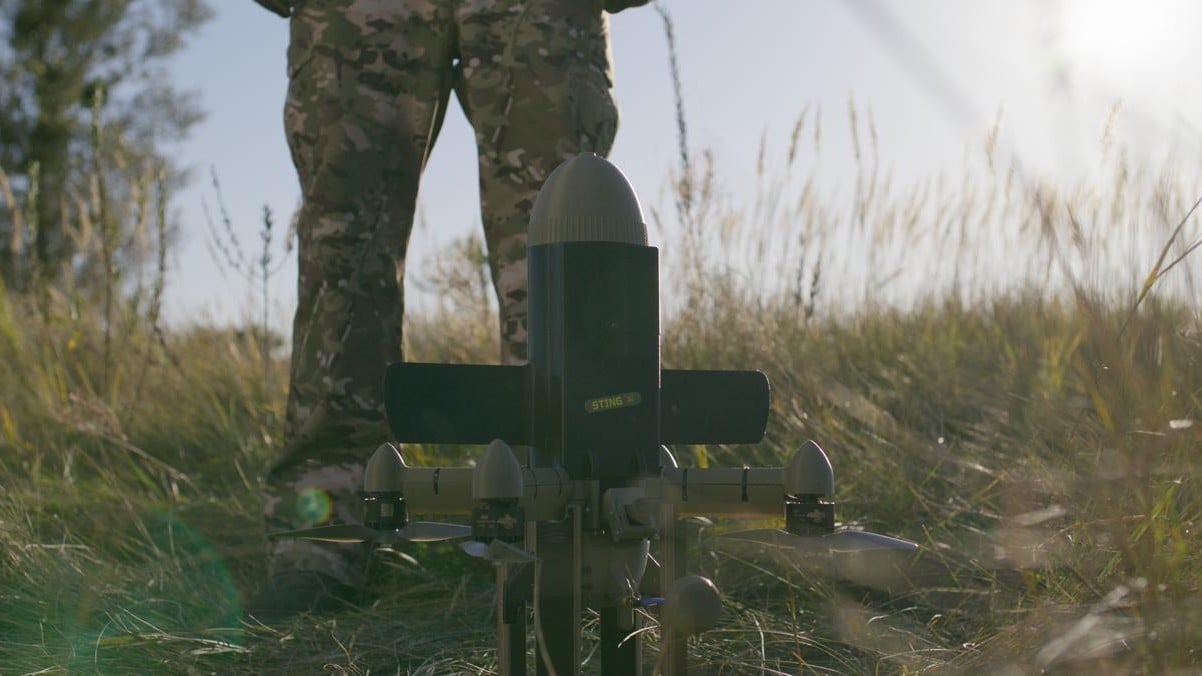
Ukrainian interceptor drones are small, fast, mostly quadcopter-style aircraft that hunt an attack drone and either ram it or detonate next to it. The best known is the Sting from the volunteer-founded company Wild Hornets: a bullet-shaped, partly 3D-printed quadcopter with a thermal camera, a reported top speed of 343 km/h and a price of around $2,100 to $2,500.
Most of these interceptors combine thermal imaging, radar cueing from the ground and some AI-assisted guidance, with a human operator taking manual control for the last seconds, Military Times explains. Radar finds the Shahed, the interceptor is launched towards it, and the pilot flies it into the target through a video link. Wild Hornets says the Sting had downed some 3,900 drones by early 2026.
They are not perfect. They depend on good radar cueing and trained pilots, and weather can limit them. Faster jet-powered Shaheds are a serious challenge, and Business Insider reports that Russia's Geran-5 may be faster than every Ukrainian interceptor currently in service.
Wild Hornets' own video of the Sting interceptor drone hunting Shaheds.
Coyote: A Small Missile That Thinks It Is a Drone
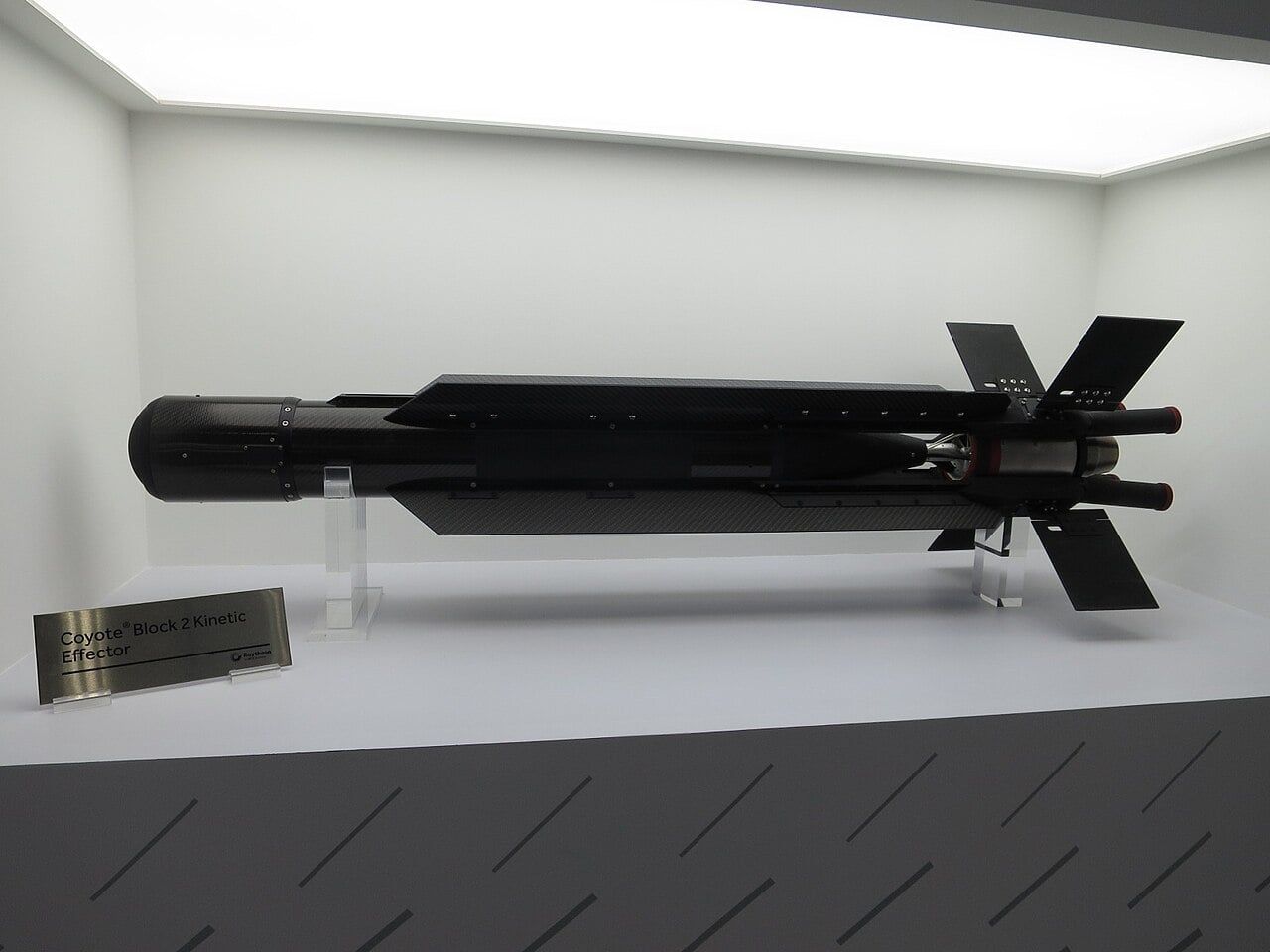
America's equivalent sits between a drone and a missile. Raytheon's Coyote is launched from a tube, boosted by a small rocket and then, in the Block 2 version, kept flying by a tiny turbojet. That lets it chase targets at several hundred kilometres per hour and even loiter for a second attempt if it misses. It carries a seeker and a proximity warhead, and Raytheon says the jet-powered Block 2 has more than 600 combat kills.
Each Coyote has previously been reported to cost around $100,000. That is far more than a Ukrainian quadcopter, but it is also faster, more automated and integrated with American radar networks. This week Raytheon revealed a new rocket-powered version, the Block 2C+RM, designed to catch faster Class 3 drones.
Roadrunner: The Interceptor That Comes Back
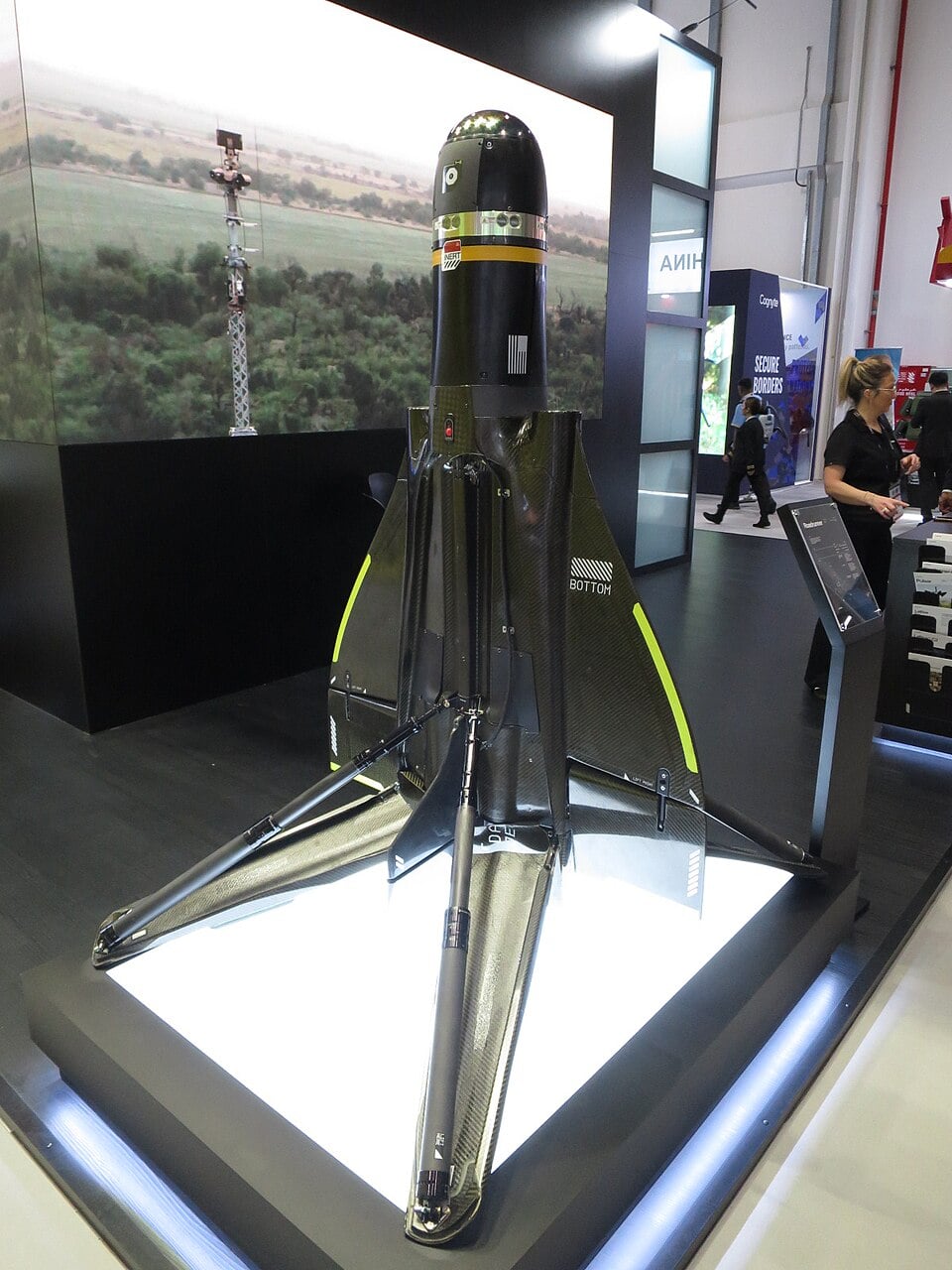
Anduril's Roadrunner takes a different approach to cost: reuse. It is a twin-turbojet aircraft that launches vertically, flies out to inspect or intercept a target, and, if it does not need to detonate, lands again to be refuelled and flown another day. Anduril unveiled it in December 2023 and has now asked the US Federal Aviation Administration for permission to expand its test flying.
A reusable interceptor changes the arithmetic in a different way. An expensive airframe that comes home most of the time can cost less per mission than a cheap one that is always destroyed.
Rockets, Guns and Lasers
Interceptor drones are not the only cheap answer. Laser-guided 70mm rockets such as APKWS, originally designed to be fired from helicopters at ground targets, are now fired from jets and ground launchers at drones. Guns, from old anti-aircraft cannon to modern programmable-ammunition systems, are cheap per shot but short-ranged. Electronic jammers can force drones off course without firing anything. And lasers promise a cost per shot measured in dollars, if they can be made powerful and reliable enough.
None of these is a complete solution on its own. The lesson from Ukraine and the Middle East is that air defence now needs layers: cheap interceptors for cheap threats, expensive missiles for ballistic and cruise missiles, and enough of each to last.
The Wall Street Journal on how Ukraine stops most of Russia's attack drones.
Task & Purpose on why the US wants Ukraine's Shahed-killing interceptor drones.
Sources: Military Times (March 2026); Wikipedia (Sting drone; Raytheon Coyote); The War Zone; Defense Daily; FlightGlobal; Anduril Industries; Business Insider (via Military Times).

0 Comments