
Ask how old an airliner is and you will usually get an answer in years. Ask an engineer and you will get two more numbers: how many hours it has flown, and how many times it has taken off and landed. For the structure of an aircraft, those numbers matter far more than its birthday.
This week Russia's aviation authority approved a life extension for the Superjet 100, raising its limits from 15 to 20 years, from 25,000 to 40,000 flight hours, and from 15,000 to 20,000 flight cycles. It is a useful window into a question passengers rarely ask: how long is an airliner actually built to last, and who decides when it is worn out?
The short answer is that an aircraft does not wear out all at once. It accumulates fatigue, flight by flight, and the rules are designed to retire it, or repair it, long before that fatigue becomes dangerous.
Quick Facts: Airliner Life Limits
Three clocks: Calendar years, flight hours and flight cycles
Flight cycle: One take-off and landing, including one pressurisation of the cabin
Main enemy: Metal fatigue from repeated loads
A320 original design goal: 48,000 cycles and 60,000 flight hours (FlightGlobal)
A320 first extended goal: 60,000 cycles and 120,000 flight hours (FlightGlobal)
US rule: FAA Limit of Validity (LOV) rule, effective 14 January 2011
Superjet 100 (2026): 20 years, 40,000 hours, 20,000 cycles
Typical fate: Retirement for economics long before the structural limit
Hours Versus Cycles
Flight hours measure how long an aircraft has been in the air. Flight cycles count take-offs and landings. Each cycle is a complete stress event for the airframe: the cabin is pressurised on the climb, the fuselage expands slightly like a balloon, the wings bend upwards under load, and on landing everything relaxes again.
That is why a short-haul jet ages faster than a long-haul one in structural terms. An aircraft flying six one-hour hops a day racks up cycles quickly while adding relatively few hours. A long-haul widebody might fly one 12-hour sector, collecting many hours but a single cycle. Manufacturers set separate limits for both, and calendar time matters too because of corrosion.
When Airbus designed the A320, it set a design service goal of 48,000 cycles and 60,000 flight hours, based, as Airbus's Antoine Vieillard told FlightGlobal in 2008, on a "25-year design service goal based on an assumption that each cycle would be 1.25h". Testing later supported an extended goal of 60,000 cycles and 120,000 flight hours.
What Fatigue Actually Is
Metal fatigue is the growth of tiny cracks under repeated loading, even when each load is well below what would break the part in one go. A crack might start at a rivet hole or a sharp corner, grow a fraction of a millimetre with each cycle, and eventually reach a size where the structure can no longer carry its design loads.
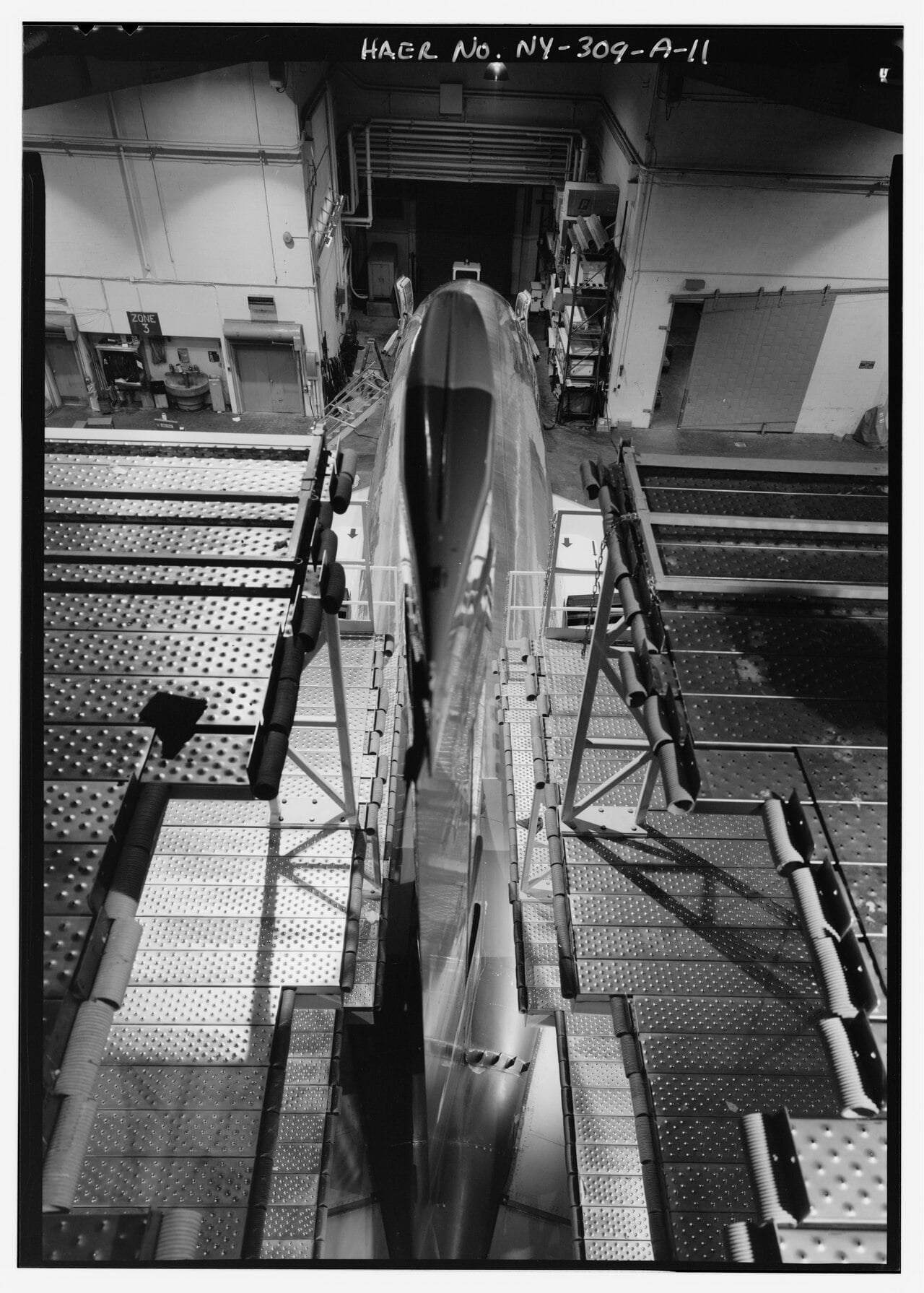
Aviation learned this the hard way. In 1954 two de Havilland Comets, the world's first jet airliners, broke up in flight. Investigators put a Comet fuselage in a water tank, pressurised it again and again to simulate flights, and watched it fail. The cracks had started at the corners of openings in the fuselage. The lesson shaped every pressurised aircraft since.
Modern airliners are designed to be damage tolerant: if a crack starts, the structure must still carry its loads until the next inspection finds it. Engineers prove this with full-scale fatigue tests, in which an entire airframe is bolted into a rig and put through simulated flights, often for several times the aircraft's intended lifetime.
Boeing's video of full-scale fatigue testing on the 787 airframe.
The Problem of Widespread Fatigue
One crack is manageable. Many small cracks appearing at the same time across a structure is a different danger, because they can link up faster than inspections can catch them. Regulators call this widespread fatigue damage, and it becomes more likely as aircraft age.
In the United States, the Federal Aviation Administration responded with a rule that took effect in January 2011. It requires manufacturers to set a Limit of Validity, or LOV, for each type: the number of cycles or hours up to which they have shown the structure will stay free of widespread fatigue damage. Airlines cannot operate an aircraft beyond its LOV unless an extension has been approved.
Life Extensions: The Superjet Case
Limits can be raised, but only with evidence. To extend a type's life, the manufacturer runs more fatigue testing, analyses the fleet's real-world experience and usually adds inspections or modifications for older aircraft. That is what Airbus did for the A320 family, and what Rosaviatsia says Yakovlev did for the Superjet 100, citing calculations, full-scale tests and operating data.
The Superjet case is unusual because of the circumstances. With Western sanctions cutting off support from its French engine partner, keeping existing aircraft flying longer has become a matter of necessity for Russian airlines.
Why Most Jets Retire Early Anyway
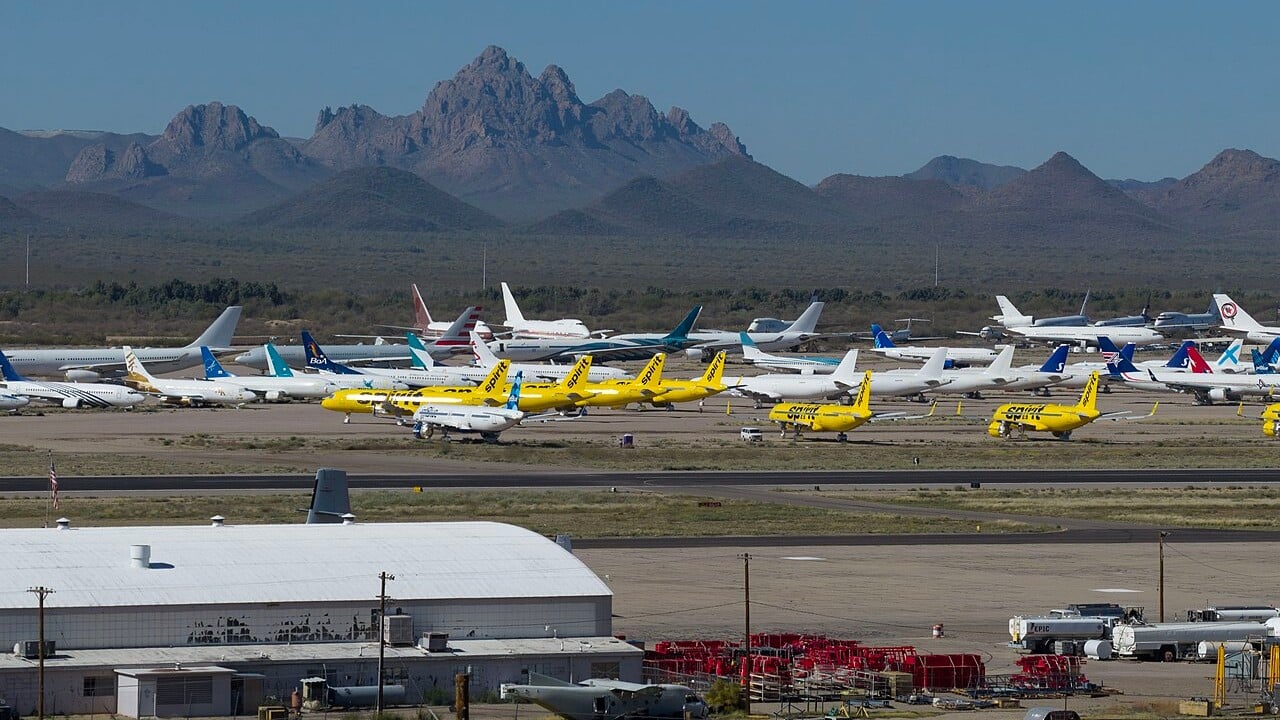
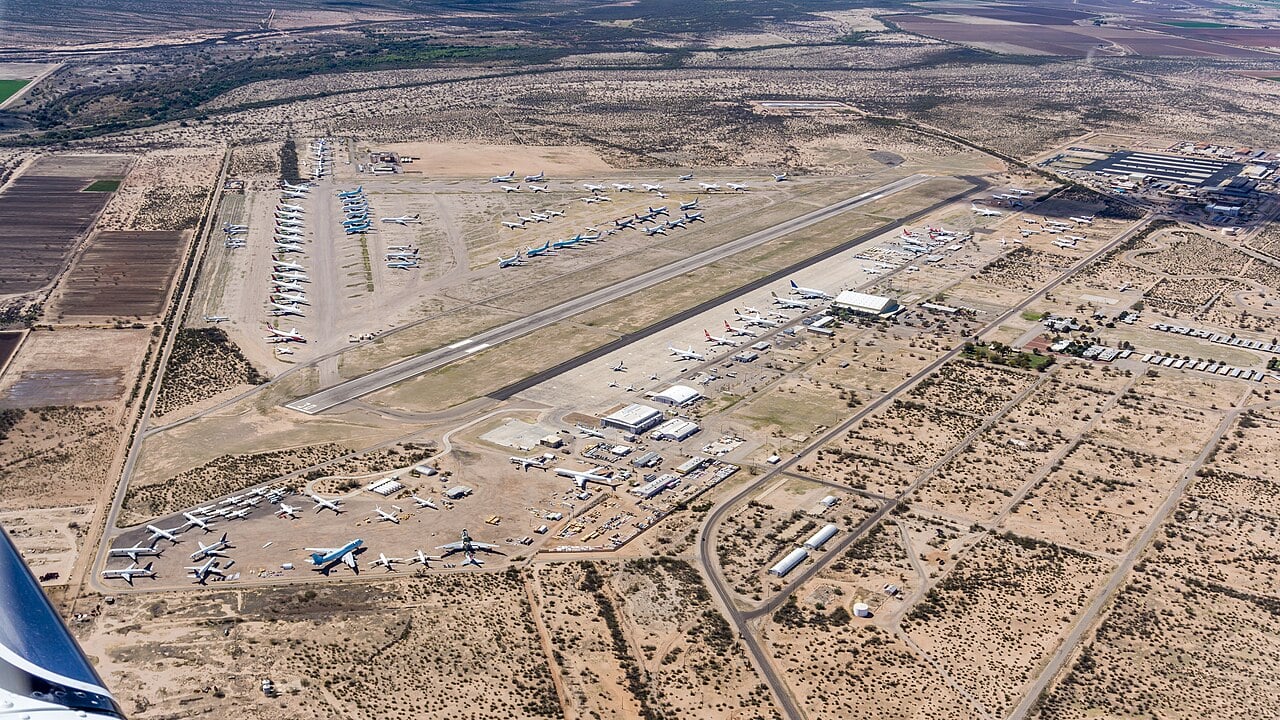
In practice, most airliners are retired long before their structures are used up. Fuel efficiency, maintenance costs, cabin standards and the value of their engines and parts usually decide when an airline lets go. An older aircraft can be perfectly safe and still be uneconomic to keep flying. Many end up in desert storage, where the dry air slows corrosion, before being parted out for spares.
So when you board a 25-year-old jet, the more useful question is not its age but how it has been maintained. The hours and cycles are counted, the cracks are hunted, and the limits are set by tests that pushed identical structures far beyond anything your flight will do.
The Efficient Engineer explains fatigue failure and S-N curves.
CNBC on why retired airliners are still worth millions in parts.
Sources: FlightGlobal (2008); US Federal Register, Aging Airplane Program: Widespread Fatigue Damage (75 FR 69746, 2010); Vedomosti; Fontanka; Wikipedia (de Havilland Comet).
0 Comments