

Japan is about to hand the Philippines something it has never given any partner under its newest aid programme: a complete, finished defence system. On Monday 9 November, the Japanese Foreign Ministry announced that Tokyo will provide a coastal radar system to the Philippine Navy and unmanned surveillance aircraft to the Force aérienne philippine, in a package worth 4.3 billion yen.
Kyodo News put the value at about 27 million US dollars. Small change by Pentagon standards, but a line in the sand for Japan, a country that spent decades refusing to send military hardware abroad at all.
Informations clés
- Donor: Japan, under its Official Security Assistance (OSA) programme, launched in fiscal 2023
- Equipment: A coastal radar system for the Philippine Navy; unmanned surveillance aircraft for the Philippine Air Force
- Valeur: 4.3 billion yen (about 27 million US dollars, per Kyodo)
- Annoncé : Monday 9 November 2026, by the Japanese Foreign Ministry
- Signed by: Ambassador Katsuro Kitagawa and Foreign Secretary Maria Theresa Lazaro, in Manila
- D'abord: First transfer of a complete Japanese defence system under OSA
What Manila is getting
According to Kyodo, the agreements were signed in Manila by Japan’s Ambassador to the Philippines, Katsuro Kitagawa, and Philippine Foreign Secretary Maria Theresa Lazaro. The package has two parts: a coastal radar system for the Philippine Navy, and unmanned aerial vehicles for surveillance missions for the Philippine Air Force.
Jiji Press, reporting the same Foreign Ministry announcement, described the drones as dual-use unmanned aerial vehicles for monitoring and surveillance. Neither agency named the radar’s manufacturer or the drone type, and Afterburner has not been able to confirm either.
The money comes through Official Security Assistance, or OSA, a grant programme Japan launched in fiscal year 2023 to supply defence equipment to what Tokyo calls like-minded countries. It sits alongside Japan’s long-running development aid, which by its own rules cannot be used for military purposes.
Why “complete system” matters
The important word in the announcement is “complete”. Kyodo reported that the coastal radar will be the first transfer of a completed Japanese-made defence product under OSA. Jiji Press explained the distinction: until now, equipment supplied under the framework had been limited to dual-use products and parts.
Jiji also reported that the Japanese government is considering providing complete systems to other countries under the framework. The Philippines, in other words, goes first.
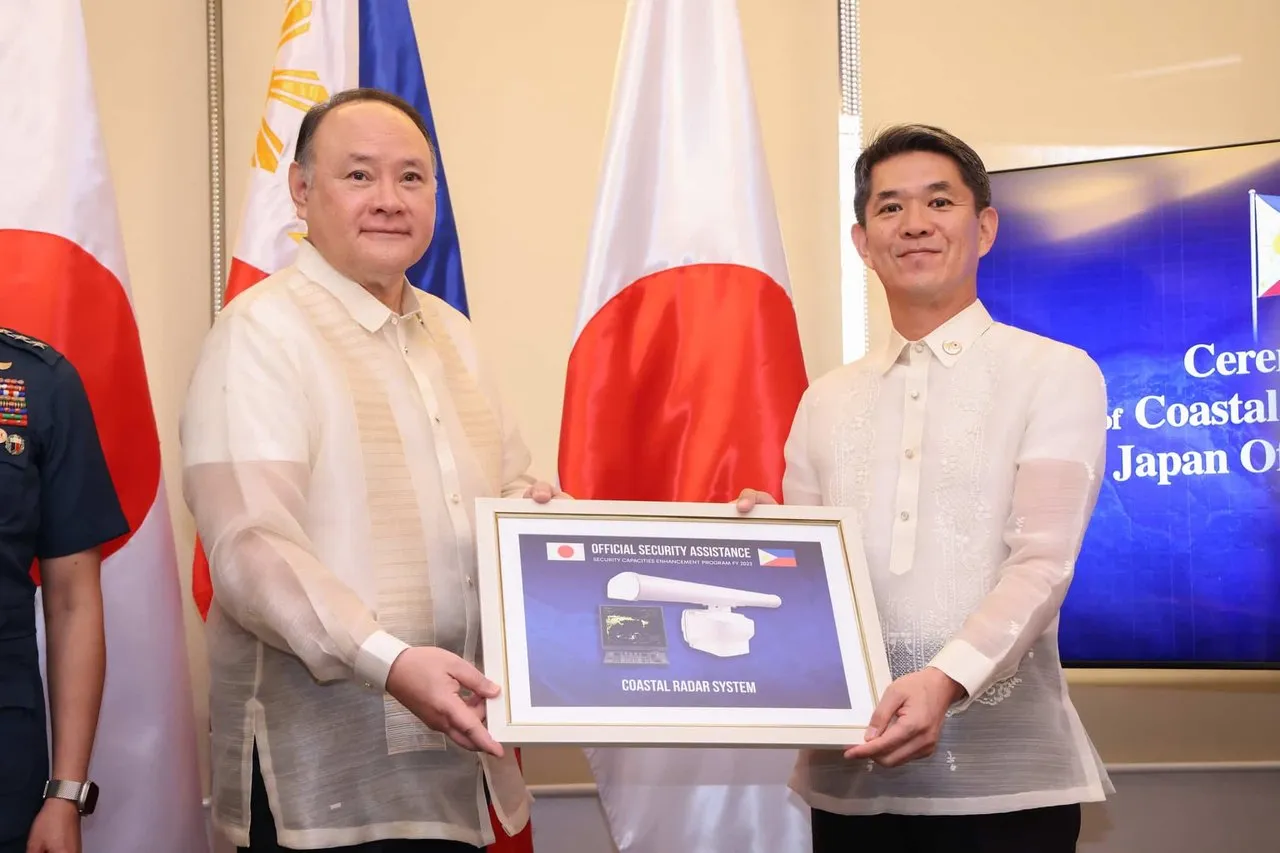
Manila has been OSA’s most regular recipient. On 11 February 2026, Japan formally handed over five coastal radar systems worth 600 million yen from the first, fiscal 2023 package, with the Philippine Navy as end user, Naval News reported. The second package was 900 million yen of rigid-hulled inflatable boats, and Japan then agreed to fund facilities for those boats, the first infrastructure project under OSA. The Philippines is the only country to have received OSA three years running.
At 4.3 billion yen, the new deal is roughly seven times the size of that first radar package.
Eyes on the South China Sea
Nobody involved pretends the radar is pointed at nothing. Kyodo framed the deal against China’s maritime assertiveness in regional waters, and Jiji said the aim is to boost the deterrence of the Philippine armed forces. Beijing claims most of the South China Sea and is locked in territorial disputes there with the Philippines, while also claiming the Japan-controlled Senkaku Islands in the East China Sea.
ANC 24/7 reports on the February 2026 handover of the first five Japanese coastal radar systems to the Philippines.
Radar and long-endurance drones are exactly the tools Manila needs for maritime domain awareness: knowing which ships and aircraft are where, around the clock, across thousands of islands. Japan made the same argument when it handed over the first radars in February.
Japan and the Philippines are both US treaty allies, and their direct security ties have been tightening fast. Earlier in 2026 they signed an Acquisition and Cross-Servicing Agreement that lets their forces supply each other during joint exercises.
The radar will not shoot anything down. That is rather the point. Tokyo is still feeling its way into arms transfers one carefully worded step at a time, and this step puts a finished Japanese military sensor on the edge of the South China Sea for the first time under OSA.
Sources: Kyodo News, Jiji Press via Nippon.com, Anadolu Agency, Naval News, Japanese Foreign Ministry


0 Comments