
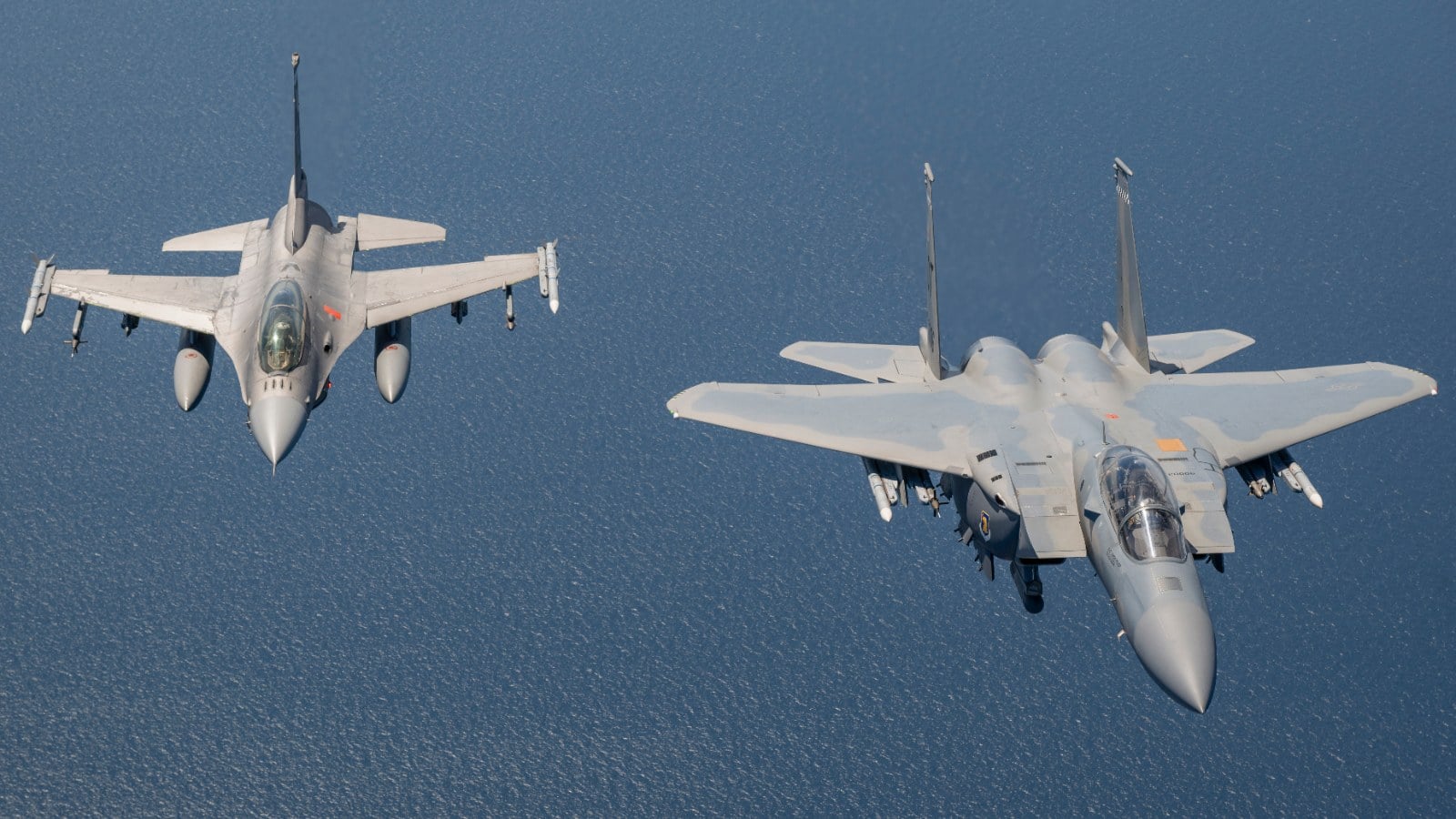
The U.S. Air Force has put a number on what it needs to fight: 1,509 combat-coded fighters by 2035. That is the headline of a new fighter force structure report the service sent to Congress on 16 October 2026, and it is a lot more jets than the USAF fighter fleet has today.
The catch, as with most Pentagon numbers ending in a nine, is the bill. The Air Force has said for years it must buy 72 fighters a year to keep its fleet from ageing out. Its fiscal 2027 request buys 62.
Lt. Gen. David Tabor, the service’s deputy chief of staff for plans and programs, walked reporters through the report at a Pentagon roundtable on 20 October. Reporters did not get a copy. They did get the shape of the future force, and a remarkably relaxed view of the F-16 question.
Informations clés
Requirement: 1,509 combat-coded fighters by 2035
Report sent to Congress: 16 October 2026
Briefed by: Lt. Gen. David Tabor, deputy chief of staff for plans and programs, 20 October 2026
2035 mix: About 40% F-35, 20% F-22/F-47, 40% F-15 and F-16
Not counted: A-10s and Collaborative Combat Aircraft
Demande pour l'exercice 2027 : 38 F-35s + 24 F-15EXs = 62 fighters (goal: 72 a year)
New-build F-16: No decision; unlikely in the FY2028 budget
Two in five will be F-35s
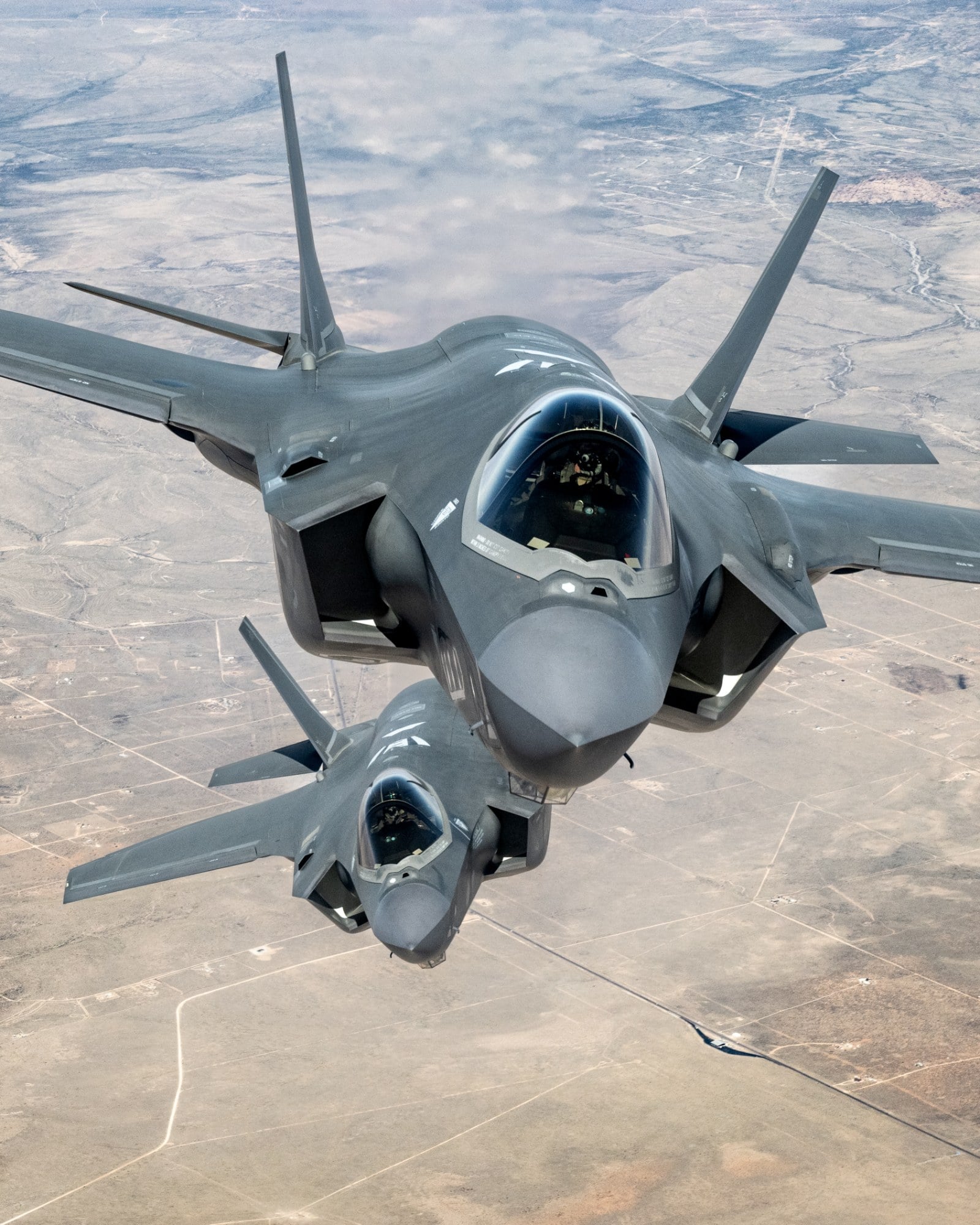
By 2035, about 40 percent of the fleet would be F-35As, up from roughly 30 percent today, Tabor said. Another 20 percent would be a mix of F-22 Raptors and their sixth-generation successor, the F-47, which the service still plans to buy in roughly one-for-one numbers to replace the Raptor.
The remaining 40 percent would be split roughly evenly between F-15 variants and F-16 Fighting Falcons. Today, excluding A-10s, the mix is about 45 percent F-16, 30 percent F-35, 15 percent F-15 and 10 percent F-22.
Run the percentages against 1,509 and the 2035 force works out at roughly 600 F-35s, 300 Raptors and F-47s, and 600 Eagles and Vipers. Those are Afterburner’s back-of-envelope figures, not the report’s, and the percentages themselves are approximate.
Why the number went up
Last year’s report aimed for 1,369 combat-coded fighters by fiscal 2030. Tabor said the data behind it was “pretty old”, so planners built a fresh analysis. According to TWZ, the USAF fighter fleet counted 1,168 combat-coded fighters at the start of fiscal 2026, plus 103 A-10s.
The new figure rests on what regional combatant commanders say they need to achieve their goals at “medium risk”, the second rung of a four-step scale. Tabor said the work began before this year’s war with Iran and was not driven by it, and warned that world events, new capabilities and technology will all move the number.
Le A-10 is not part of the 2035 count at all, because the Warthog is not in the Air Force’s plans for that year. Neither are drones: the service intends to field 500 Collaborative Combat Aircraft by 2032, but Tabor said they do not yet change the fighter requirement, though future reports may count them.
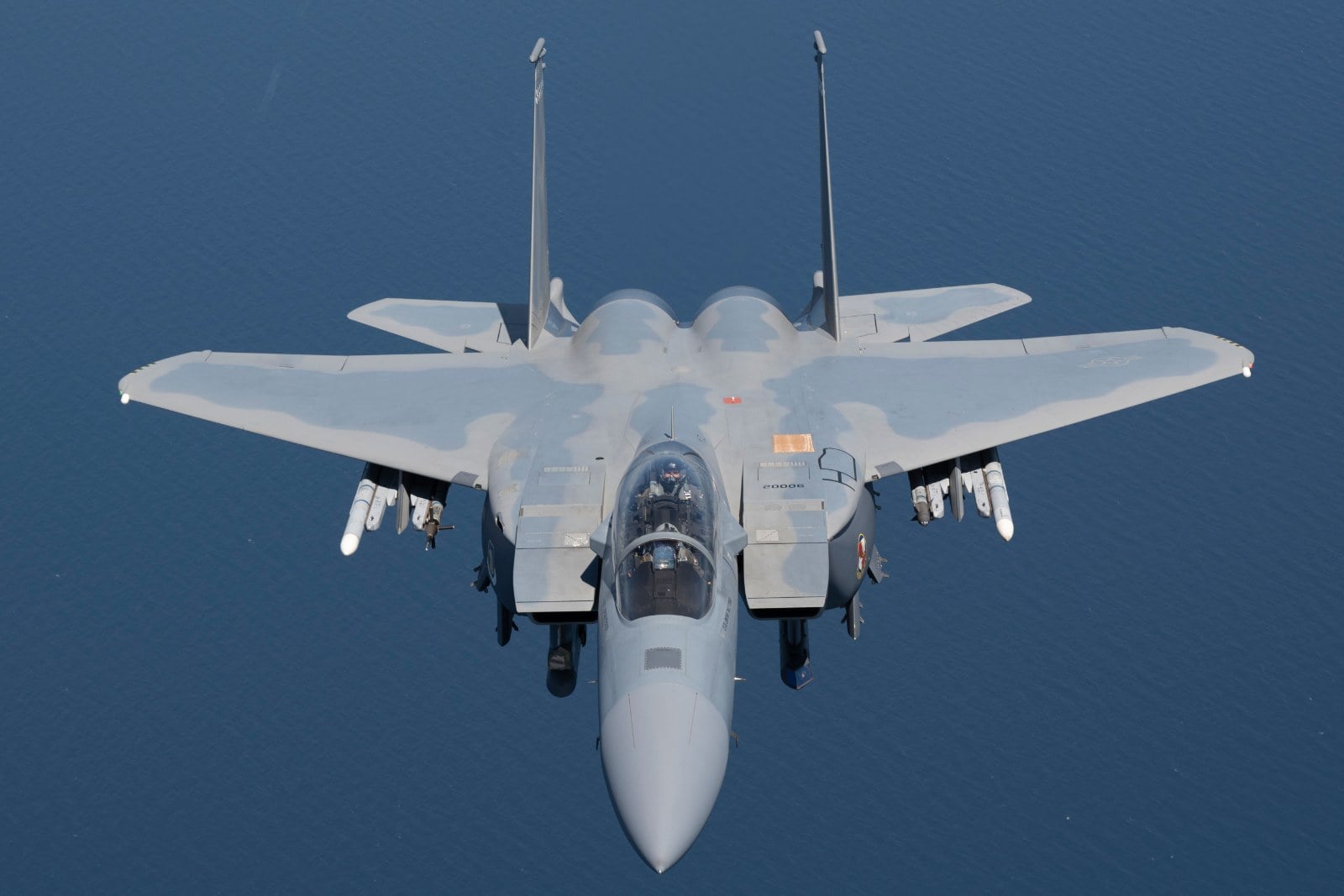
Boeing’s F-15EX Eagle II, one of the two fighters the Air Force is buying in its fiscal 2027 request.
The 62-versus-72 problem
The fiscal 2027 request asks for 38 F-35As and 24 F-15EXs, ten short of the 72-a-year rate Air Force leaders keep citing. Tabor said purchases can ramp up over time, provided Congress pays and Lockheed Martin and Boeing deliver.
Even the 38 F-35s are not a sure thing. The budget counts on $2.34 billion from a reconciliation bill to fund 14 of them. If that bill fails, the Air Force can raid other programmes or slip the jets to 2028, which Tabor summed up as losing “14 times [an] F-35’s worth of other capabilities.”
The service is also asking Congress for multiyear contracts on the F-35 and F-15EX, which Tabor said would give industry the stability to expand production. Industry says it can deliver; the Air Force, in Tabor’s words, believes them but needs to “see it manifest.”
The F-16G can wait
Older F-16s reach the end of their service lives in the mid-2030s, and Lockheed Martin reportedly pitched a new-build Viper last month, tentatively called the F-16G, to be built on its Greenville, South Carolina, line. Tabor called buying more F-16s the simple, “and maybe the lazy”, answer, while conceding that it is “practically a ready-made aircraft.”
A decision is unlikely in the fiscal 2028 budget process, he said, and may come in the years after. In other words: the Air Force is in no hurry, and wants everyone to know it is in no hurry on purpose.
A number with a lot of conditions
For now, 1,509 is less a fleet than a negotiating position with Congress and a challenge to two production lines. It spans several budget cycles and at least one presidential election, any of which can rewrite it.
The USAF fighter fleet of 2035 will be decided the old-fashioned way: one appropriations bill at a time. The Air Force has stated its requirement; now Congress has to decide what to fund.
Sources: Air & Space Forces Magazine, Air Force Times / Defense News, TWZ, U.S. Air Force, DVIDS, Boeing

0 Comments