
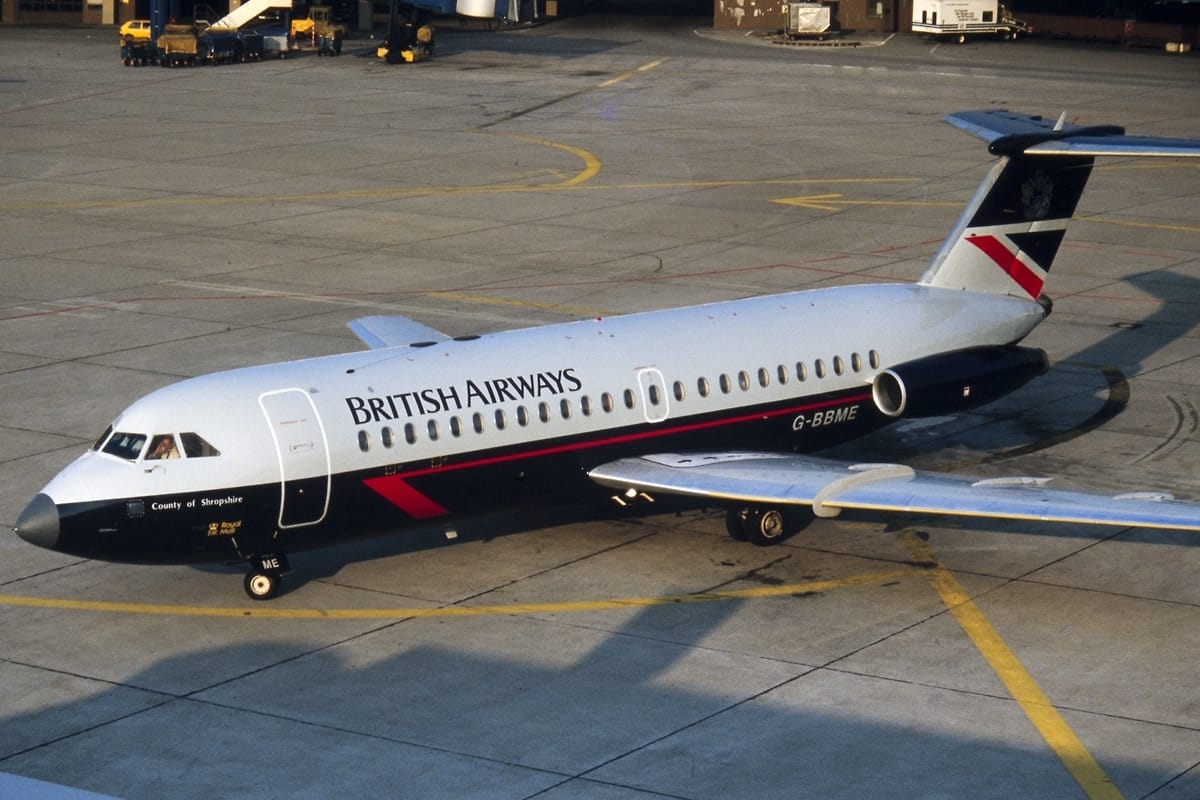
Thirteen minutes after leaving Birmingham on the morning of 10 June 1990, the pilots of British Airways Flight 5390 had loosened their shoulder straps and set breakfast on their laps. Then, with a bang like a bomb, the left cockpit windscreen tore away — and Captain Tim Lancaster was gone through the hole, headfirst into the sky.
What happened over the next twenty minutes is one of the most astonishing survival stories in aviation history.
Informazioni rapide
- Volo: British Airways 5390, Birmingham to Malaga, 10 June 1990
- Aeromobili: BAC One-Eleven
- Quello che è successo: a cockpit windscreen blew out at 17,300 ft; the captain was sucked halfway out
- The save: cabin crew held his legs for 20 minutes while the co-pilot landed
- Causa: 84 of 90 windscreen bolts were the wrong size, fitted 27 hours earlier
- Vittime: none - the captain survived
Sucked into the sky
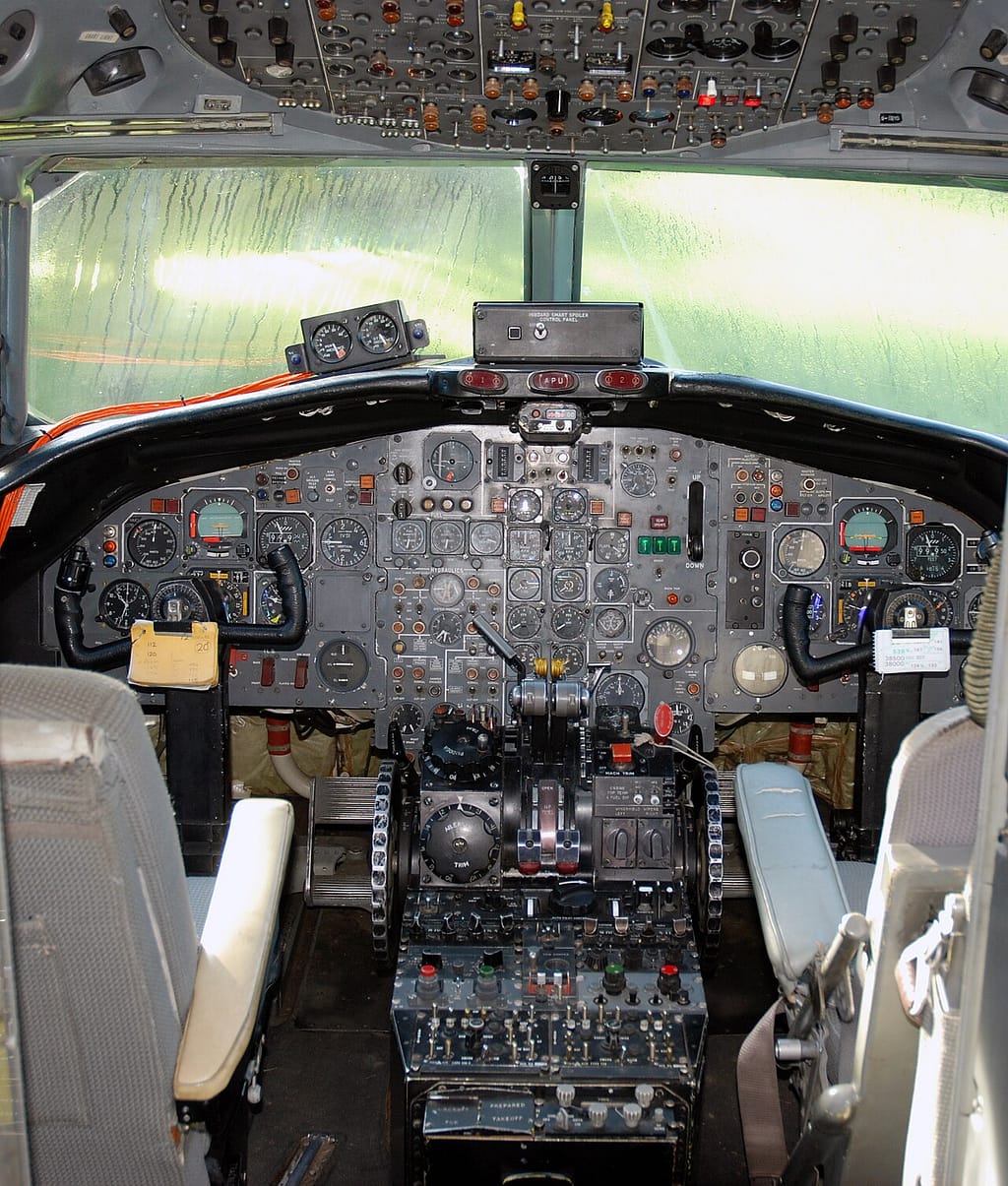
At 17,300 feet the pressure difference blasted Lancaster out of his seat so fast that his knees snagged on the control column, jamming the autopilot off. His torso, head and arms were outside the aircraft in a 300-mph, sub-zero slipstream; only his trapped legs kept him with the plane at all.
Flight attendant Nigel Ogden had just stepped onto the flight deck. He lunged and grabbed his captain.
Twenty minutes of grip
For the entire emergency, Ogden held on. The wind battered Lancaster against the fuselage; his shirt was ripped from his back; loose objects, even a bolted-down oxygen bottle, flew around the cockpit. Freezing and exhausted, Ogden began to lose his own grip, and other crew took over, wrapping their arms around the captain’s legs. Everyone assumed he was already dead. They held on anyway — partly because letting go might send his body into the tail or engine.
In the right-hand seat, First Officer Alastair Atchison did the real flying. Deafened by the roaring wind and unable at first to hear air traffic control, he descended and slowed until he could finally get a word through, then threaded the crippled jet down to a landing at Southampton. Emergency crews met the aircraft; astonishingly, Lancaster was still alive.
The reason: the wrong bolts
The captain survived with frostbite, shock and fractures, and was flying again within months. The investigation found the cause was heartbreakingly mundane. The windscreen had been replaced just 27 hours before the flight, and of the 90 bolts holding it in, 84 were fractionally too small in diameter and the other six slightly too short. Under the pressure of altitude, they simply let go.
Atchison and the cabin crew received the Queen’s Commendation for Valuable Service in the Air. Flight 5390 became a landmark case in maintenance procedure and human factors — proof of how a tiny error, and extraordinary human grip, can decide who lives and who dies at three miles up.
Sources: UK Air Accidents Investigation Branch report; Wikipedia (British Airways Flight 5390); Admiral Cloudberg; Simple Flying; Nigel Ogden interviews.
0 Commenti