
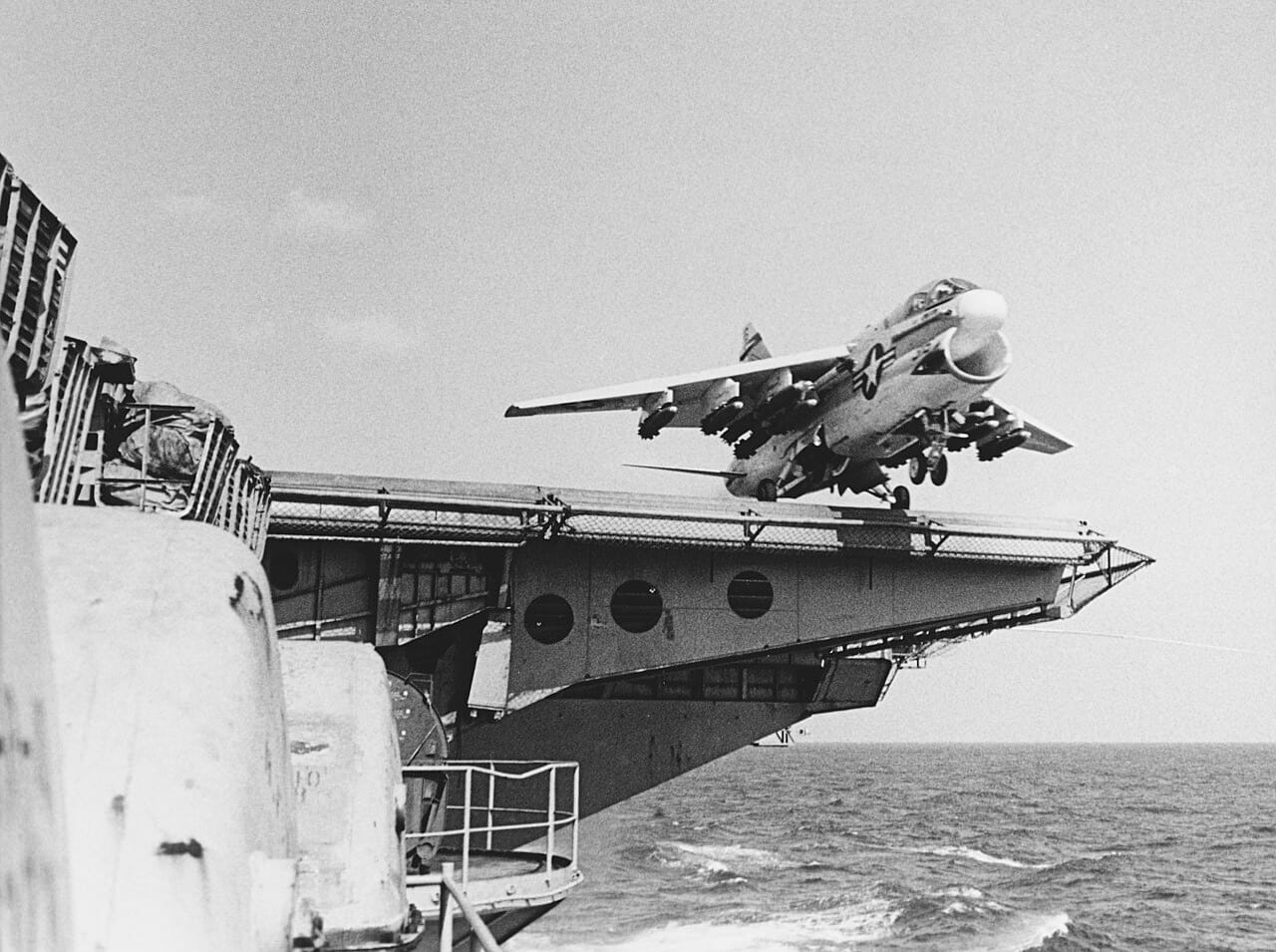
The catapult fires and the deck drops away. It is January 1968, the Gulf of Tonkin, and the aeroplane clawing off the bow of USS Ranger is short, blunt-nosed and faintly ridiculous next to the sleek fighters parked behind it. The crews call it the SLUF. Short Little Ugly Fellow, when officers are listening.
It is also about to put bombs on target two to three times more accurately than anything the US Navy has ever flown.
The A-7 Corsair II was never beautiful and was never meant to be. It was built to carry a great deal of ordnance a long way and drop it exactly where it was asked to. It did that better than anyone expected, and then it outlasted the men who mocked it.
Informazioni rapide
| Primo volo | 26 September 1965 (some sources 27 September) |
| Manufacturer | Ling-Temco-Vought (LTV), Dallas, Texas |
| Introduced | 1 February 1967, U.S. Navy |
| Numero costruito | 1,545 (1965–1984); 1,569 in some sources |
| Equipaggio | 1 |
| Powerplant (A-7E) | 1 × Allison TF41-A-2 non-afterburning turbofan, a licence-built Rolls-Royce Spey |
| Max speed | 600 kn (1,110 km/h) at sea level |
| Combat radius | 772 nmi (1,430 km) hi-lo-lo-hi with six Mk 82 and three tanks |
| Armamento | 1 × M61A1 Vulcan 20 mm; 8 stations, up to 15,000 lb |
| Operatori | United States, Greece, Portugal, Thailand |
| Retirement | USN/USAF 1991 · Portugal 1999 · Greece 17 October 2014 (last operator) |
Built From a Fighter, Deliberately Slowed Down
The requirement was written in May 1963 and had one unusual condition: every entry had to derive from an aircraft that already existed. Vought took its supersonic F-8 Crusader, shortened it, thickened it, threw away the afterburner and won the contract in March 1964.
Throwing away the afterburner was the whole idea. An attack aircraft does not need to go supersonic; it needs to loiter, carry weight, and come home. A non-afterburning turbofan gave the A-7 range and endurance that a fighter engine never would.
It reached combat almost indecently fast. First flight September 1965, operational February 1967, and VA-147 flying missions over North Vietnam from Ranger that December. Barely two years from maiden flight to war.
The Computer Was the Weapon
What made the A-7E extraordinary was not the airframe. It was the AN/ASN-91 weapons-delivery computer wired to an inertial navigation system and an air-data computer, feeding what was among the first genuinely modern head-up displays in American service.
Two to three times. Not a marginal gain. In an era when hitting a bridge meant sending wave after wave of aircraft and losing some of them each time, halving the number of sorties needed to destroy a target was worth more than any amount of speed.
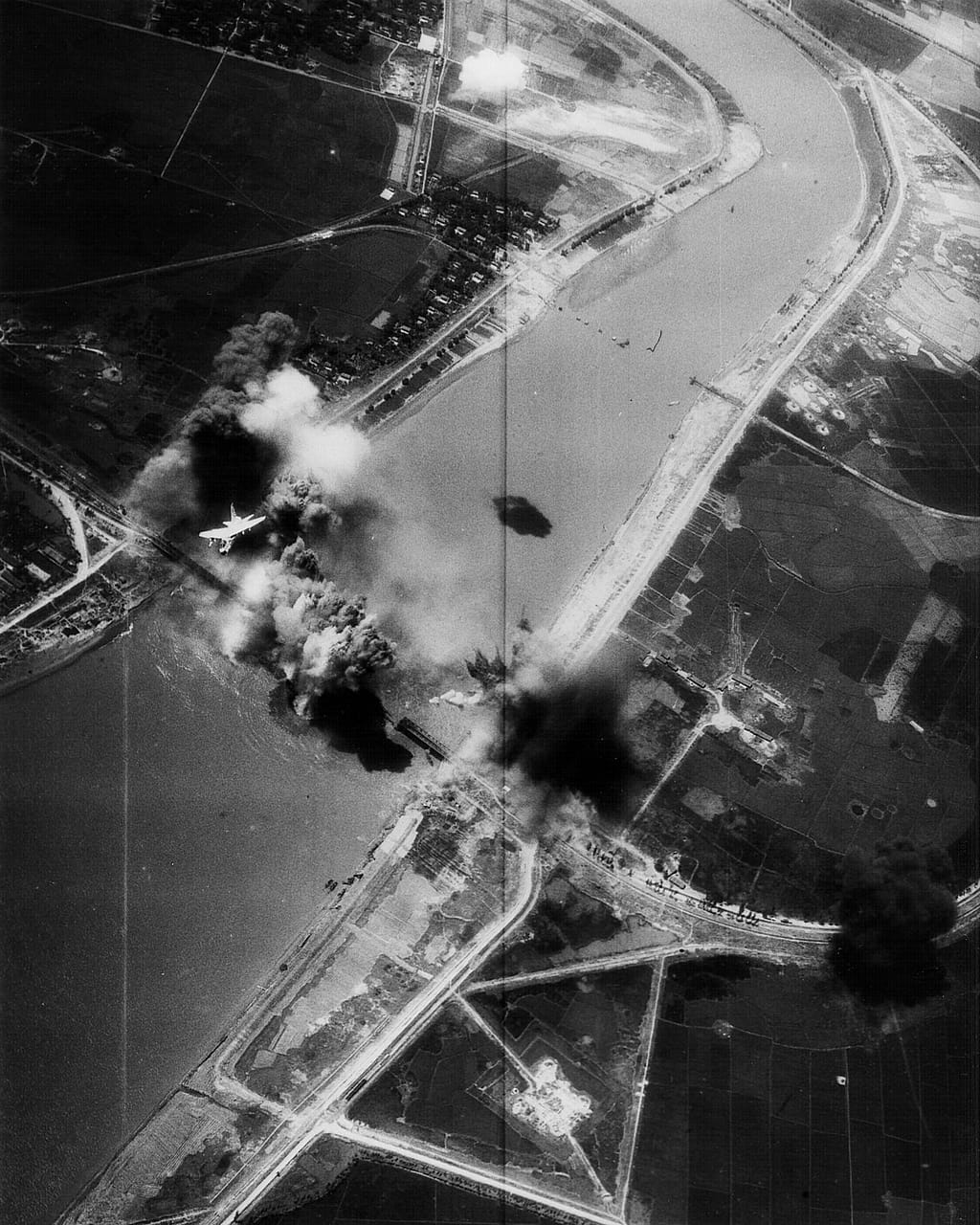
The USAF, which bought 459 A-7Ds, saw the result in the coldest possible statistic: 12,928 combat sorties in Southeast Asia for six losses. The lowest loss rate of any American fighter in the theatre.
It Also Had a Gun, and Pilots Enjoyed It
The A-7D and A-7E carried the M61A1 Vulcan with a thousand rounds. Not everyone used it strictly as doctrine intended.
Wetterhahn had already shot down a MiG-21 during Operation Bolo before he ever strapped into a Corsair II. When a man like that says he enjoyed the gun, it is worth noting.
The looks question has never gone away. It is, in fairness, a short little ugly fellow.
The Long Afterlife
By Desert Storm only two A-7E squadrons were left, VA-46 and VA-72, aboard USS John F. Kennedy — one carrier out of six still flying the type. The Navy retired them in May 1991; the Air National Guard followed in 1993.
There was one stranger chapter. From 1981 to 1989 around twenty A-7D and A-7K aircraft flew with the 4450th Tactical Group at Nellis as surrogates and deliberate cover for the F-117A programme, parked in the open where Soviet satellites would see exactly what they were meant to see.
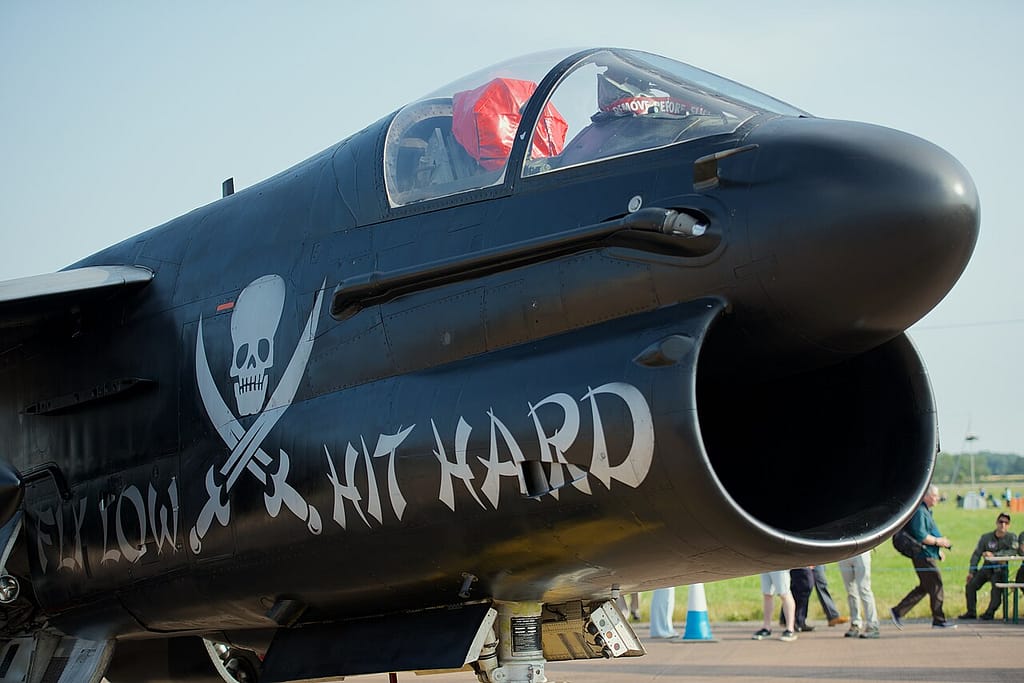
Portugal flew rebuilt A-7Ps from 1981 and flew the last one on 10 July 1999. Greece kept going longer than anyone: 60 A-7H and 5 TA-7H from 1975, then 62 more ex-US A-7Es in 1993, retired in a ceremony at Araxos on 17 October 2014.
Thirty-nine years of Greek service. Forty-nine years from the type’s first flight. The Short Little Ugly Fellow outlasted the F-14 Tomcat in front-line service, and it did it by being unglamorous, accurate, and very hard to shoot down.
Sources: National Museum of the U.S. Air Force; Naval History and Heritage Command; Gunston & Gilchrist, Fighter Missions; Hobson, Vietnam Air Losses; Birzer & Mersky, U.S. Navy A-7 Corsair II Units of the Vietnam War (Osprey); The Aviation Geek Club; Hellenic Air Force (airforce.gr).

0 Commenti