
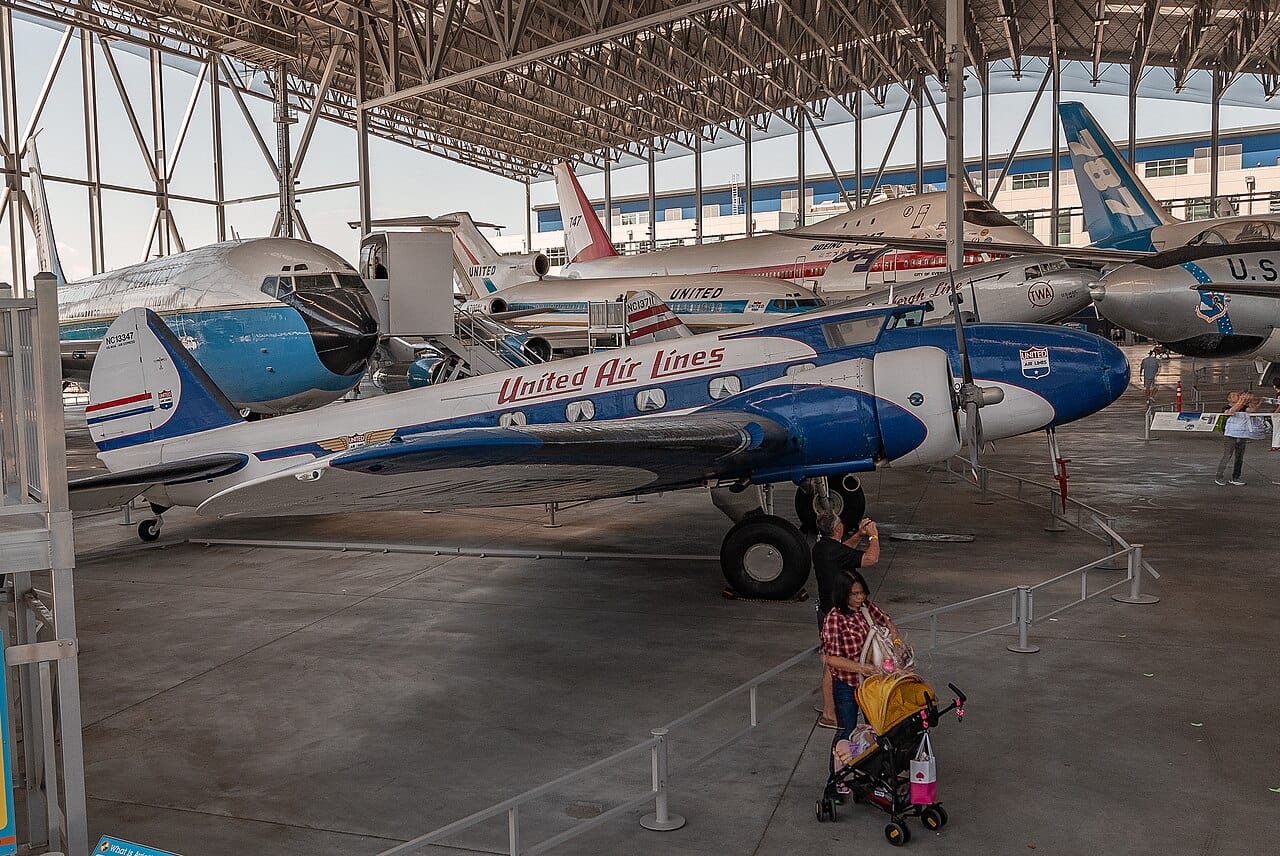
In 1933 Boeing built the aeroplane that made every other airliner in the world obsolete overnight. All-metal, cantilever low wing, retractable undercarriage, autopilot, de-icing boots, a heated and insulated cabin, and 189 miles an hour in cruise. It crossed America in nineteen and a half hours, seven hours faster than anything else.
Two years later it was finished, and the reason had nothing to do with engineering. Boeing lost the market because it refused to sell the aeroplane to anyone else.
Informazioni rapide
- Primo volo: 8 February 1933
- Inserimento del servizio: 22 May 1933, with Boeing Air Transport
- Motori: Two Pratt & Whitney R-1340 Wasp radials
- Capacità: 10 passengers, one stewardess, 400 lb of mail
- Cruise / max: 189 mph / 200 mph
- Costruito: 75
- Premio: Collier Trophy, 1934
- Sopravvissuti: Four — Seattle, Washington DC, Ottawa and Wroughton
What made it modern
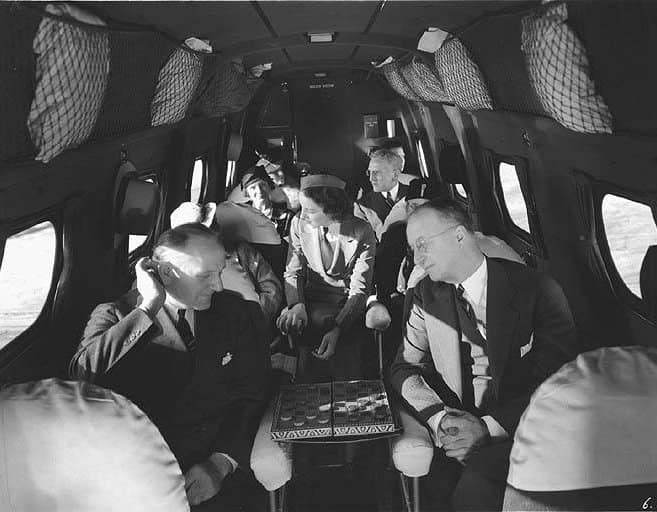
It is tempting to list the 247’s features as firsts, and mostly they were not. Boeing had already flown the structural recipe on the Monomail in 1930 and the B-9 bomber after it. The retractable gear did not fully retract — the wheels deliberately protruded below the nacelles so a wheels-up landing would do less damage.
The achievement was the combination. Nobody had put all of it into a production airliner at once: anodised aluminium semi-monocoque structure, a fully cantilevered wing needing no external bracing, an autopilot, trim tabs, pneumatic de-icing boots, and a cabin that was heated and thermostatically controlled rather than merely enclosed. It had no flaps and did not need them — it landed at 62 miles an hour.
The decision that lost the market
Boeing was not an independent aircraft manufacturer in 1933. It sat inside the United Aircraft and Transport Corporation, a conglomerate that also owned Pratt & Whitney, Hamilton Standard, Sikorsky, Vought, and the airlines that became United Air Lines.
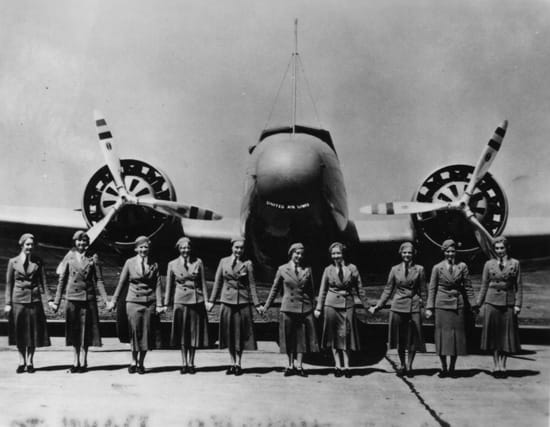
So when the 247 appeared, the first sixty went to Boeing Air Transport — the in-house airline. TWA tried to order some. United declined to sell. The production line was committed, and a competitor was not going to be allowed to buy the fastest airliner in America from a company that owned an airline competing with it.
TWA’s response was a letter. On 2 August 1932, its vice-president of operations, Jack Frye, wrote to Donald Douglas.
Frye asked for a trimotor. The attached specification carried one demand that shaped everything after it: the aircraft had to take off fully loaded, from any TWA airport, on any two of its three engines.
Douglas ignored the trimotor requirement and built a twin good enough to meet the engine-out clause anyway. That was the DC-1, which flew on 1 July 1933. It became the DC-2, carrying fourteen. And in December 1935 it became the DC-3, carrying twenty-one.
Ten seats and a hurdle in the aisle
Against a DC-3 the 247 had two problems it could not solve. The first was arithmetic: ten seats against twenty-one, on similar operating costs. Even the smaller Lockheed Electra carried ten more cheaply.
The second was more embarrassing. The wing spar ran straight through the passenger cabin, and travellers had to step over it to reach their seats. Douglas made the DC-3’s centre wing section integral with the fuselage, and the aisle was flat.
Then the government broke the company
What finished it was politics. The air mail scandal of early 1934 led to the Air Mail Act of 12 June 1934, which forbade airlines and aircraft manufacturers from being owned by the same holding company.
United Aircraft and Transport was dismembered on 26 September 1934 into three companies. Eight days before that, on 18 September, William Boeing took early retirement as chairman at the age of 52, reportedly rather than deal with the federal government again.
The vertical integration that had let Boeing keep the 247 for itself was now illegal, and by the time the company could sell freely, the aircraft worth buying was a Douglas.
The Boeing 247 against the Douglas competition that displaced it.
A last race, lost to the aircraft that beat it
In October 1934 Roscoe Turner and Clyde Pangborn flew a 247D in the MacRobertson air race from England to Australia. They finished third overall and second in the transport category, covering 11,300 miles in about 93 hours.
The aircraft that beat them into second place was a KLM DC-2, flying a scheduled route with passengers and mail aboard. Losing to a Douglas by three hours, on a course designed to reward exactly the qualities the 247 was built for, is the whole story compressed into one week.
What it actually left behind
The 247 lost the commercial argument and won the technical one. Every airliner that followed adopted its formula, starting with the DC-1 that killed it. Twenty-seven were impressed into wartime service as C-73s, and one of those, DZ203, made the world’s first fully automatic blind landing on 16 January 1945.
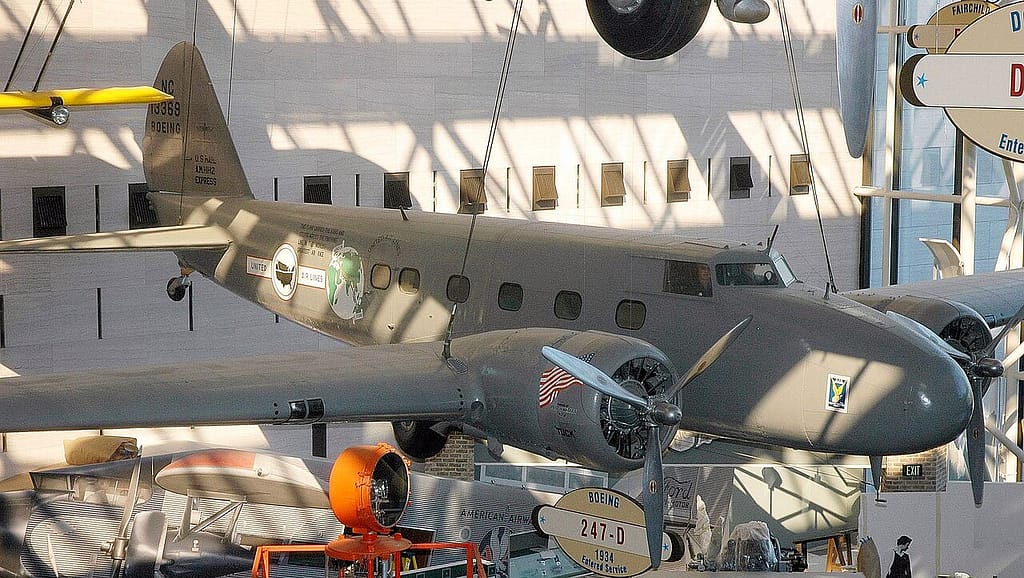
Four survive. The Museum of Flight in Seattle holds the last airworthy one, which made its final flight on 26 April 2016. The Smithsonian has the Turner and Pangborn racer, painted in race colours on one side and United livery on the other, which is a neat way of admitting the aircraft had two lives. There is one in Ottawa and one at Wroughton in England.
It is one of the cleaner lessons in industrial history. Boeing built a better aeroplane than anyone else had, and then declined to sell it — which handed a competitor both the market and the incentive to build something better still.
The last airworthy Boeing 247D on its final flight, April 2016.
Sources: NASA SP-2007-4409 The Wind and Beyond Vol. II, National Air and Space Museum, Museum of Flight, aviation-history.com
0 Commenti