
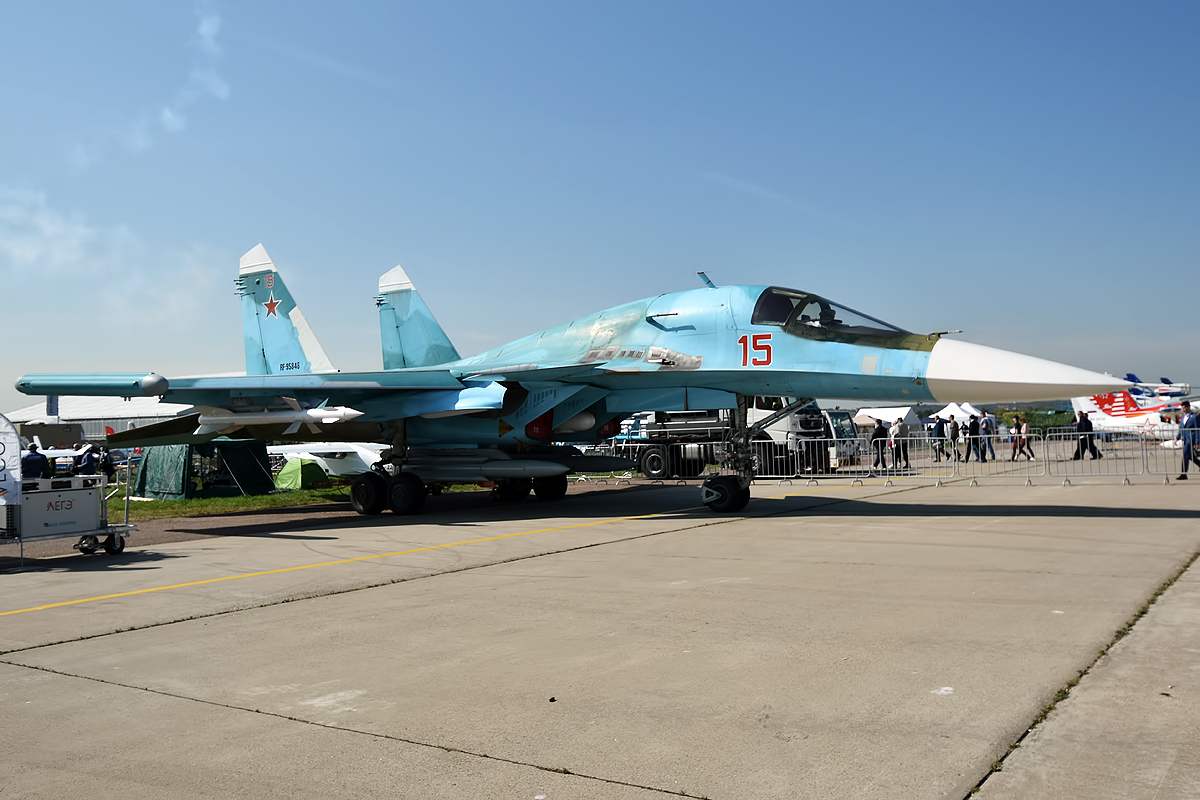
At an air festival at Mochishche aerodrome outside Novosibirsk in early August, someone photographed a Su-34 that had not been painted yet. Bare factory grey primer, straight out of the shop next door.
It is a mundane picture that answers a question people have been asking for four years: is Russia still building these things? It is. The interesting question is whether it is building them fast enough.
The arithmetic says no, and has said no for most of the war.
Informazioni rapide
| Totale costruito | 212 Su-34s received by the start of 2026, including 7 prototype and pre-production aircraft |
| Recent output | 16 production aircraft in 2024, 18 in 2025 |
| Confirmed losses | 43 destroyed since February 2022, per Oryx visual confirmation |
| Produttore | Novosibirsk Aviation Plant (NAZ/NAPO), the sole builder, part of United Aircraft Corporation |
| NATO name | Fullback |
| Configurazione | Twin-engine, two-seat side-by-side fighter-bomber, replaced the Su-24 |
| Into service | Formally accepted March 2014, from a Soviet design contract signed in 1989 |
| Systems | Sh141 phased-array radar, L-150 Pastel radar warning receiver, 12 hardpoints |
| Self-sufficiency | In-flight refuelling and an onboard APU allow operation from airfields without ground support |
The production line that never stopped
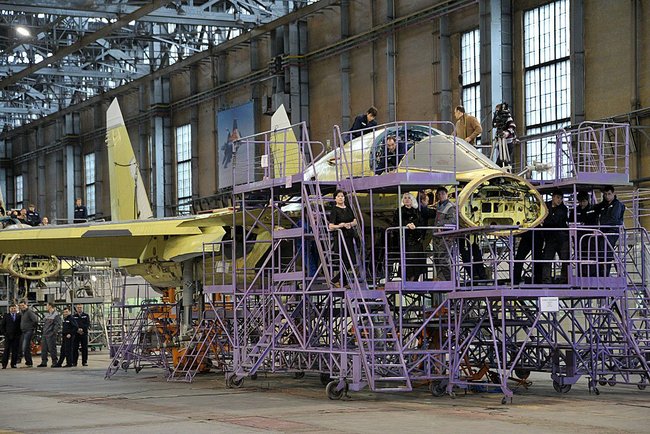
Every Su-34 ever built has come out of one factory. The Novosibirsk Aviation Plant, known as NAZ or NAPO and part of United Aircraft Corporation, is the sole manufacturer, which makes it an unusually clean thing to count.
By the start of 2026 it had delivered 212 airframes in total, seven of them prototypes and pre-production examples. Recent annual output has been remarkably flat: 16 aircraft in 2024, 18 in 2025. Western sanctions aimed squarely at the Russian defence industry have not visibly broken that rhythm.
Nor has the programme run on a single contract. Russia ordered 32 in 2008, delivered by 2013. A second contract covered 92 more due by 2020. Twenty aircraft with upgraded electronic warfare equipment followed in 2020. Russian media have reported that at least 76 further aircraft, upgraded to Su-34M standard with new electronics and precision weapons carried in underwing pods, are expected by 2027.
Now subtract
Oryx, the open-source group that only counts losses it can see in a photograph or video, has documented 43 Su-34s destroyed since February 2022. That method is deliberately conservative and certainly undercounts, because an aircraft that goes down where no camera is pointing does not make the list.
Put the two numbers side by side. Roughly 18 to 20 new aircraft a year against 43 confirmed losses across four and a half years works out at about ten a year visually confirmed lost, which sounds survivable, until you remember the count is a floor and not a total.
The point is not that Russia is running out of Su-34s. It is that this fleet is not growing the way the Su-35 fleet has. Production and attrition are close enough that the aircraft doing the most visible work in the war is roughly treading water.
A documentary walk around the Su-34, the aircraft built to replace the Su-24.
Why it is worth so much to Russia
The Su-34 is the aircraft that made the glide bomb campaign possible. Fitted with UMPK wing-and-guidance kits, ordinary unguided bombs became standoff weapons, and the Su-34 became the truck that carries them to a release point well behind the line.
Ihnat has described Russian aircraft dropping up to twenty gliding bombs a day. Release points have been reported around 100 kilometres from the target, from Russian airspace, against cities and positions the aircraft never has to overfly.
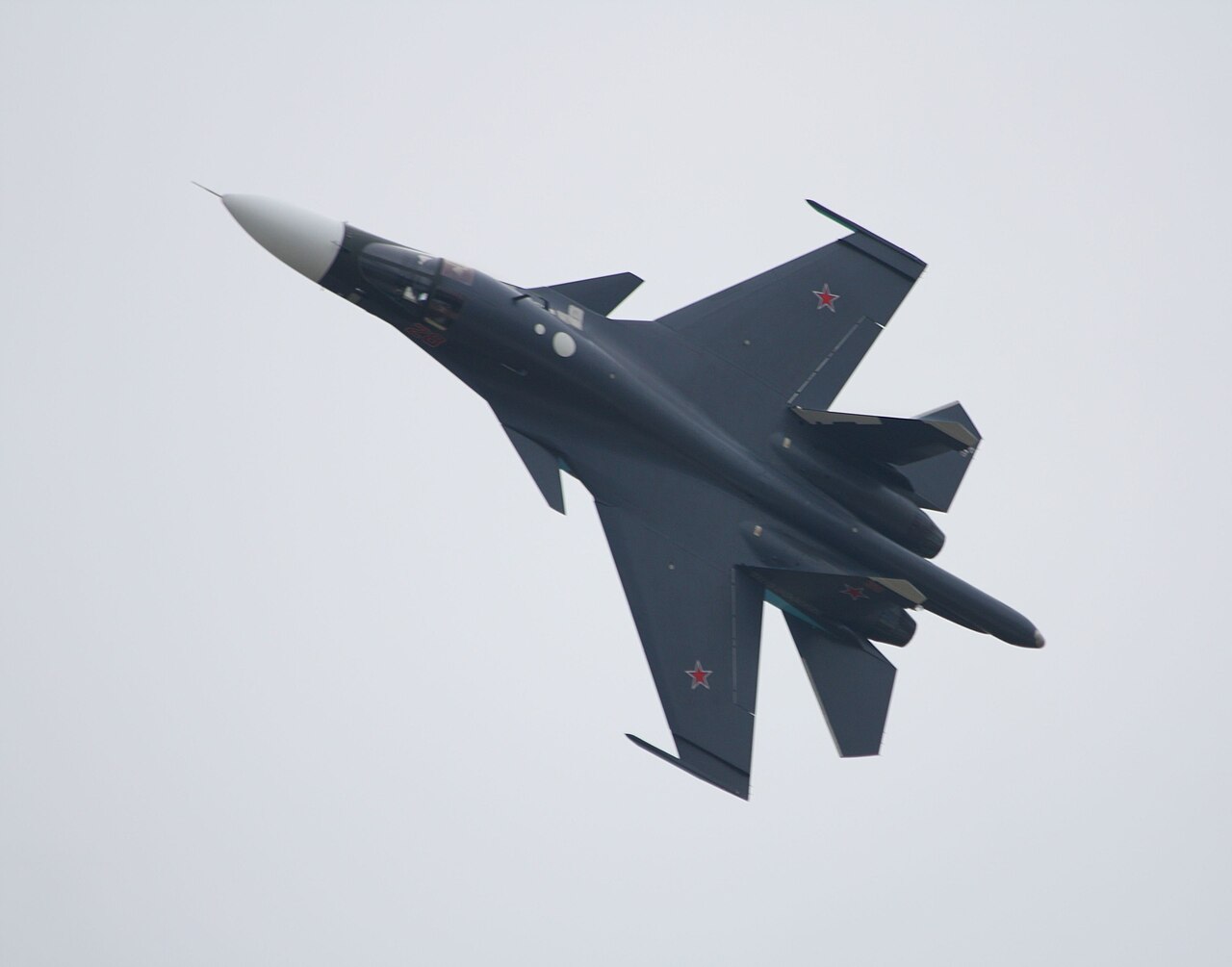
That is the reason a grey, unpainted airframe at a provincial air festival is worth noticing. The Su-34 is not a prestige project like the Su-57, and it is not an air-superiority showpiece like the Su-35. It is the working aircraft of this war, and Novosibirsk is the only place that makes it.
Reporting on the Su-34 carrying four jet-capable UMPK glide bombs, extending the standoff range further still.
A sceptical assessment of the Su-34: capable strike aircraft, or an expensive way to drop unguided bombs?
One factory, eighteen aircraft a year, and a loss list that only counts what somebody filmed. Those are the numbers that matter, and none of them are secret.
Domande frequenti
How many Su-34s has Russia built?
How many Su-34s has Russia lost in Ukraine?
Where is the Su-34 built?
What is the Su-34 used for in Ukraine?
What is the difference between the Su-34 and the Su-24?
When did the Su-34 enter service?
Sources: The Defence Blog; Oryx; United Aircraft Corporation production figures as reported; Ukrainian Air Force; Defence Intelligence of Ukraine; The Aviationist.
0 Comments