
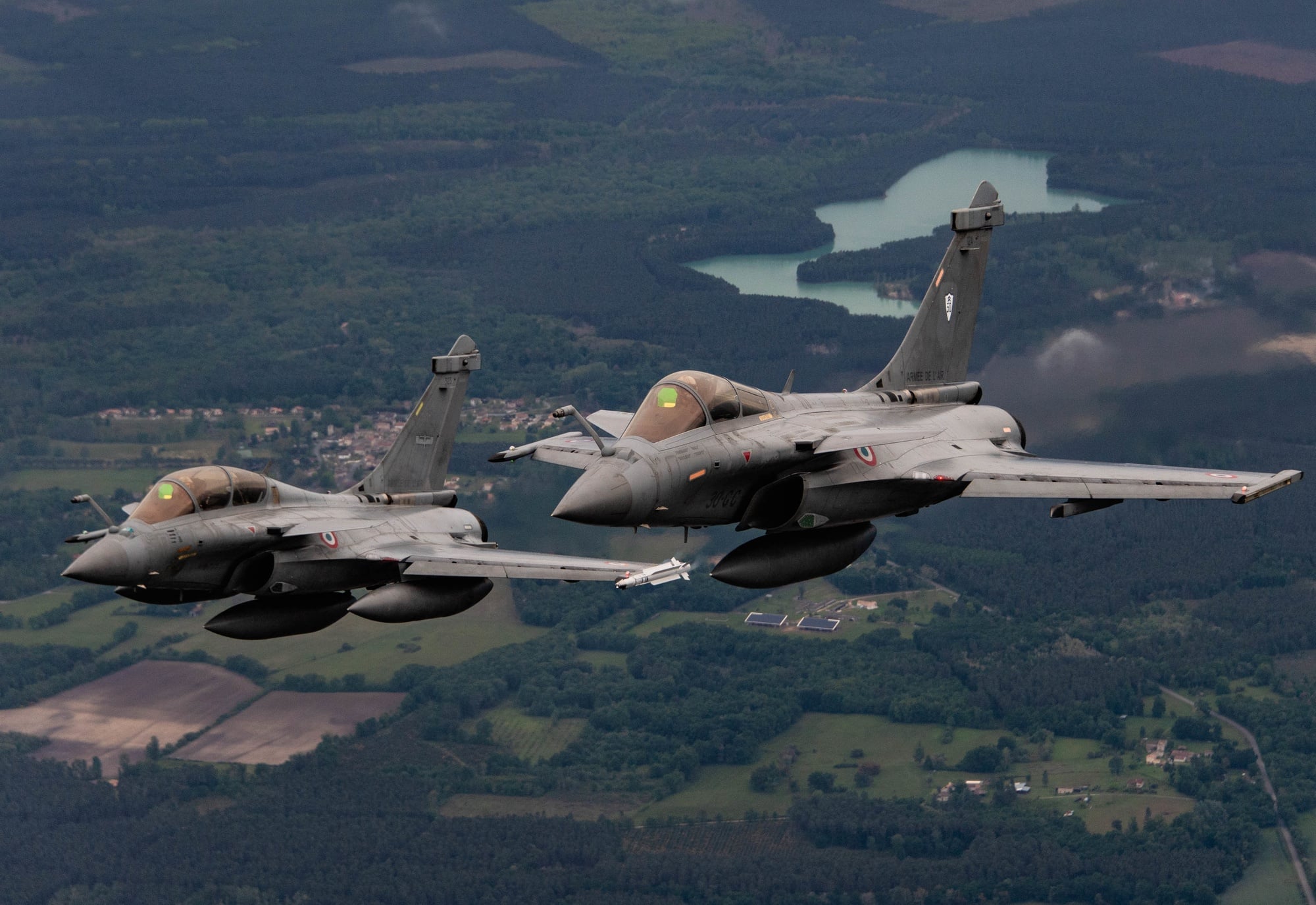
For most of a decade, France told itself a story about the 2040s in which the Rafale was a bridge to something else. That something else was FCAS, the Franco-German-Spanish Future Combat Air System, and in June it broke apart. Which leaves Dassault with an aircraft that first flew in 1986 and a requirement to keep it relevant into the 2040s.
On 10 September the Direction générale de l’armement confirmed how that will be done. It has notified the first development contracts for the Rafale F5 standard, deliberately front-loading the four pieces of the programme carrying the most technical risk. This is not the main development contract. That one is expected before the end of 2026. These are the pre-contracts, placed over the summer, for the things most likely to go wrong.
The shopping list is a reasonable description of what modern air combat has become: a new radar, a new electronic warfare suite, a datalink designed to survive jamming, an inertial navigation unit that works when satellites do not, and a more powerful engine.
Informazioni rapide
Annunciato: 10 September 2026, by the DGA. Contracts themselves notified over summer 2026
Contract value: Not disclosed. Vautrin told the Senate €3.4 billion is allocated to F5 across the current military programming law
Radar: Thales RBE2-XG, an evolution of the current AESA set
Electronic warfare: SPECTRA F5, by Thales and MBDA France, fully digital
Motore: Safran M88 T-REX, preliminary design only. Thrust from 7.5 to 9 tonnes, about 20 per cent
Ruolo nucleare: Integration of the hypersonic ASN4G, replacing the ASMPA
Qualification target: 2033, with service entry reported between 2033 and 2035
Acquisto pianificato: 47 F5-standard Rafales for the Strategic Air Forces by 2035
Rafale ordered to date: 234 by France, 299 new-build for export across eight customer nations
What F5 actually buys
The centrepiece is the RBE2-XG radar. It keeps the same physical envelope as the set already in the nose, which matters for retrofit, but the DGA promises a substantial increase in power and therefore detection range, plus better identification of what it calls targets with an extremely low radar cross-section. Read that as stealth aircraft and small drones. Reporting suggests the new array uses gallium nitride modules, with one French outlet putting the detection improvement at around 70 per cent, though the DGA’s own text does not mention GaN at all.
SPECTRA, the self-protection system that has always been the Rafale’s quiet advantage, gets a complete overhaul of its electronic warfare core on a fully digital basis. The new inter-vehicle datalink is specified to be discreet and jam-resistant enough to let the aircraft, in the DGA’s phrase, penetrate hostile areas where jammers are widespread. The inertial unit uses a hemispherical resonator gyro with very low drift, which is the polite way of saying the aircraft is expected to fight without GPS.
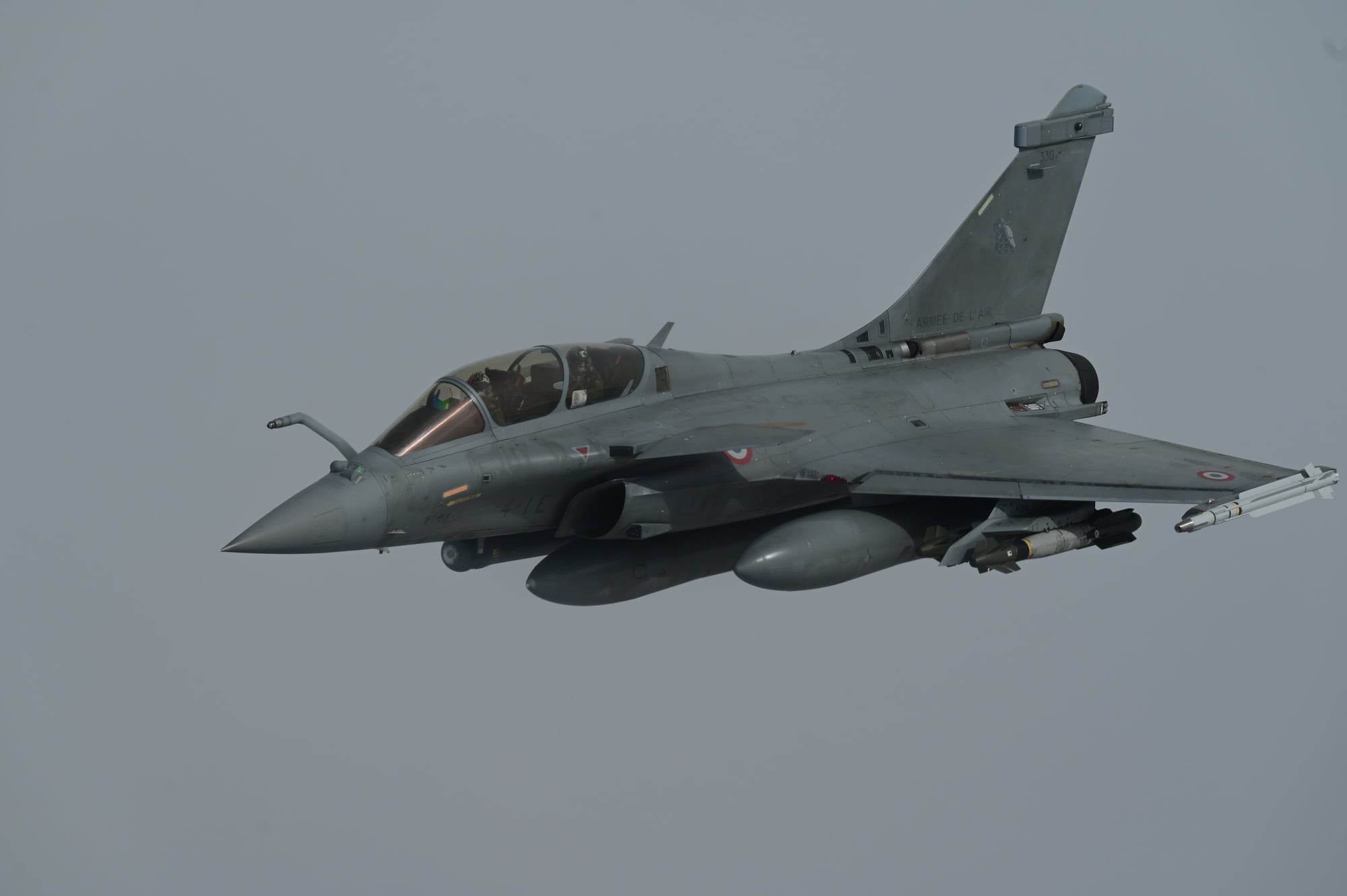
Then there is the engine. The M88 T-REX takes thrust from 7.5 to 9 tonnes, roughly 20 per cent, although the figures float: Safran has quoted 9 tonnes with afterburner, while a former head of the DGA put the target at 9.5. Only the preliminary design phase has been funded so far.
The nuclear piece is the one that sets the schedule. France’s airborne deterrent moves to the ASN4G, a hypersonic missile with a reported range beyond 1,000 km, and the Rafale cannot carry it in any current configuration. The defence minister was blunt about the causality when she appeared before the Assemblée nationale in April: to put an ASN4G on a Rafale, she said, you have to go to F5, and there was an overriding necessity to bring that transition forward.
Alongside the aircraft sits a stealthy combat drone, announced by Sébastien Lecornu at Saint-Dizier in October 2024 and led industrially by Dassault. It will draw on the nEUROn demonstrator, which flew in 2012 and has since logged more than 170 test flights. It has an internal payload bay, autonomous control with the Rafale crew in the loop, and no name. Anyone printing one is guessing.
How FCAS actually ended
The programme launched in 2017 with Macron and Merkel, Spain joining later, and was meant to replace both the Rafale and the Eurofighter Typhoon around 2040. It foundered on the question of who was in charge. Dassault was prime contractor for the crewed fighter, Airbus led most of the rest, and Dassault pressed for a model in which design authority went to whoever was most capable, which in Dassault’s reading meant Dassault. Éric Trappier said in March he would not accept a shared leadership arrangement.
Underneath the industrial argument was a genuine divergence of need. France wanted an aircraft that could operate from a carrier and deliver a nuclear weapon. Germany and Spain wanted neither. On 8 June Berlin moved to end the fighter pillar, and Airbus launched Team Gen 6 with German and Spanish industry three days later at ILA Berlin.
One nuance is worth preserving, because almost every headline has flattened it. France has not conceded that FCAS failed. Catherine Vautrin told the Senate that France had taken note of the German government’s wish to end the project, and when a senator asked her directly to confirm the failure of the fighter programme, she declined to use the word. All parties maintain that the wider system-of-systems work continues. It is the crewed fighter at the centre of it that is gone.
Whether the German and Spanish alternative closes is a separate question. Douglas Barrie of the IISS, assessing whether the two countries could assemble a credible programme without France, told TWZ that the numbers would be very difficult to stack up.
A third-party explainer on what is known about the F5 standard. Treat the speculative sections as speculation: the DGA has published far less than the enthusiast channels assume.
The export logic
France has ordered 234 Rafales for itself and delivered 189. Another 299 new-build aircraft have been sold to eight export customers, with 24 second-hand airframes on top of that. Around 175 export aircraft are still to be delivered. That is a production line with years of work in front of it, and an F5 standard keeps it saleable well beyond the point at which a 1980s design would normally be finished.
Vautrin made the commercial argument explicitly to the Senate in April, saying the decision contributes to French deterrence, maintains the competitiveness of the aircraft, and strengthens export potential. Aerotelegraph reported Trappier going further in late August and talking about a genuinely new aircraft. What the DGA has actually funded, for now, is a radar, a jammer, a datalink, a gyro and an engine study.
It is a great deal less romantic than a sixth-generation fighter. It is also, unlike FCAS, under contract.
Sources: Direction générale de l’armement; TWZ; Opex360; aeroTELEGRAPH; Breaking Defense; official transcripts of the Assemblée nationale defence committee and the Sénat foreign affairs and defence committee; Dassault Aviation.
0 Comments