
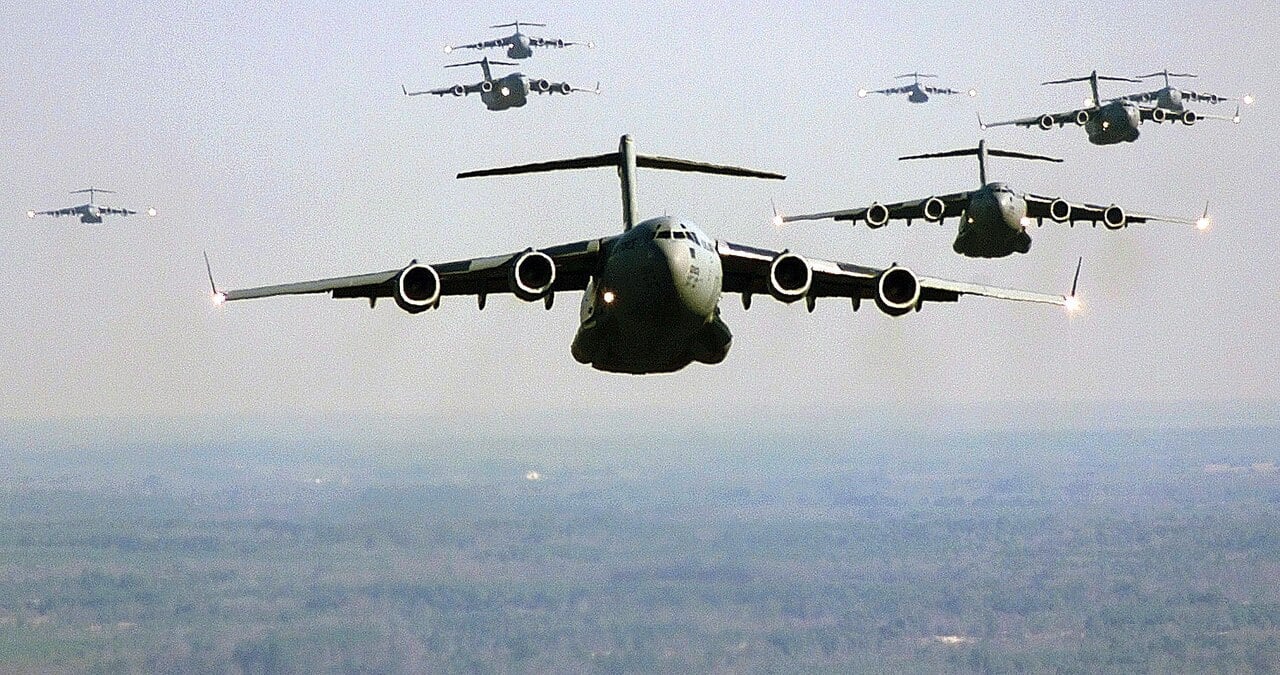
Asked at a press roundtable whether the US Air Force would like to build new C-17s, the general in charge of American airlift did not hedge for long.
“Heck yeah,” said Lt. Gen. Daniel Tulley, head of Air Mobility Command. Then came the caveat, and the caveat is the actual story.
Tulley was speaking on 16 September 2026 at the Air & Space Forces Association’s Air, Space & Cyber Conference. Boeing closed the Globemaster III line in Long Beach in 2015. The aircraft had marked the 35th anniversary of its first flight the previous day. And the Air Force is now, formally, asking whether the line can be switched back on.
Noi covered Boeing’s side of this in June, when the company said it was “encouraged” by restart discussions with unnamed operators. This is the customer answering.
Informazioni rapide
Who said it: Lt. Gen. Daniel Tulley, commander, Air Mobility Command
Dove: AFA Air, Space & Cyber Conference roundtable, 16 September 2026
C-17 first flight: 15 September 1991, Long Beach, California
Production line closed: 2015, final aircraft completed at Long Beach
The mechanism: An Analysis of Alternatives to replace both the C-17A and the C-5M
Current plan: A single Next-Generation Airlift platform from the mid-2040s
Congress: In June 2026 the House Armed Services Committee directed a formal briefing on new C-17 production in the FY2027 NDAA report
“Can we ever bring it back?”
The question Tulley is actually asking is not whether the Air Force wants more C-17s. Of course it does. The fleet is flogged. It took 73 C-17 loads to shift a single Patriot battalion from the Pacific to the Middle East, and the war with Iran has not made the demand curve any gentler.
The question is whether a closed aerospace production line is a thing you can actually reopen, and at what price.
That is a more honest framing than it might look. Tooling gets scrapped. Suppliers move on or go out of business. The people who knew how to build the thing retire. A production restart is not a switch; it is a small industrial archaeology project with a budget line attached.
RAND looked at precisely this more than a decade ago and concluded that every version of a C-17 restart would need billions in new investment and carry real risk. Nothing since then has made that cheaper.
Rebuild the old jet, or build a new one?
Even if the line can be reopened, Tulley is not convinced a straight rerun is the right buy. He reached for the C-130 as the analogy: the J-model is a far more capable aircraft than the Hercules he learned to fly, because it was rebuilt around newer technology rather than simply re-manufactured.
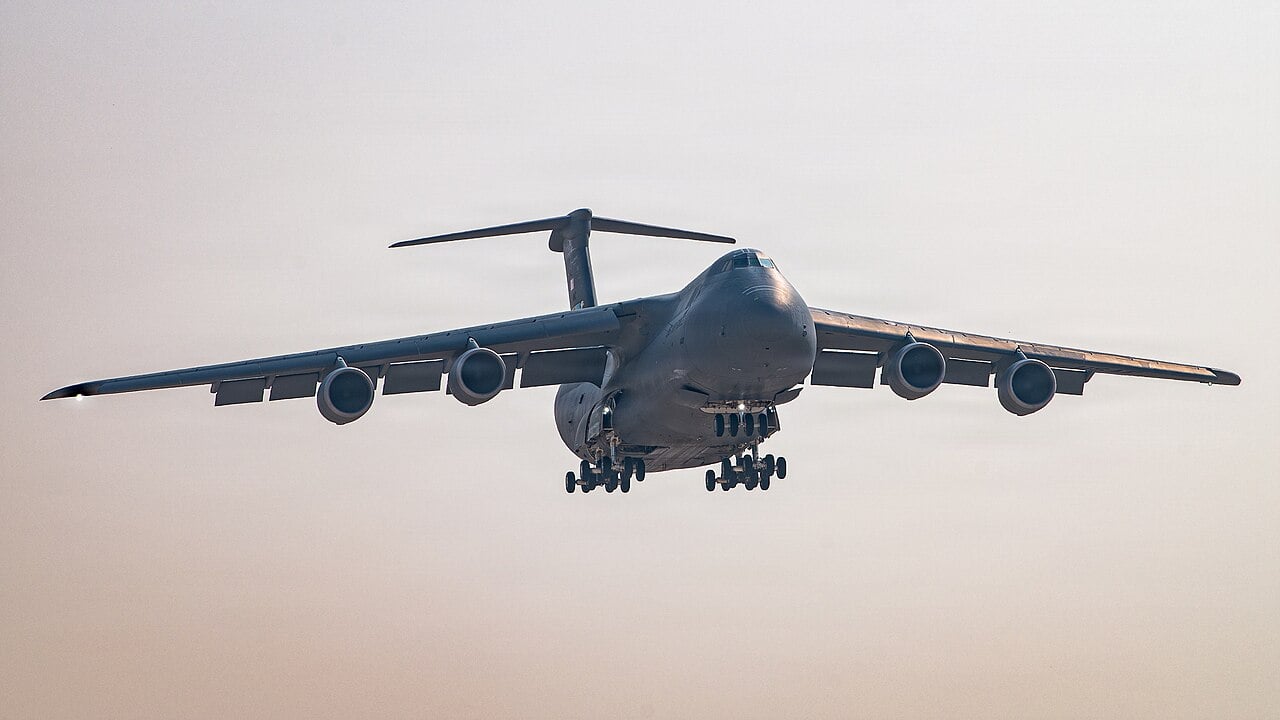
That is the live tension. The Air Force’s stated plan is still a single Next-Generation Airlift aircraft replacing both the C-17A and the C-5M from the mid-2040s, which in practice means the C-17 flies until it is about eighty years old. A restart would be a hedge against that timeline slipping, not a replacement for it.
And Boeing is not the only name in the room. Radia has been pitching the Air Force on Windrunner, a clean-sheet design physically larger than either the C-17 or the C-5, with a first flight targeted before the end of the decade. That target should be read as aspiration rather than schedule.
There is also a route that makes the arithmetic less painful: partners. Australia, Canada, India, Kuwait, Qatar, the United Arab Emirates and the United Kingdom all fly Globemaster IIIs, and the multinational Strategic Airlift Capability operates three more. A restart with foreign orders attached is a different business case from a restart without them.
The tanker question is messier still
Airlift was only half of what Tulley was asked about. The other half, Advanced Tanker Systems, is where the Air Force looks genuinely undecided.
Asked whether a future tanker has to have people in it, the AMC commander said plainly that he does not believe it does, pointing at the Navy’s MQ-25 Stingray, which received its first low-rate initial production contract earlier this week, and asking how the Air Force scales that idea to the ranges it actually needs. His own assessment: the technology is there, or very nearly.
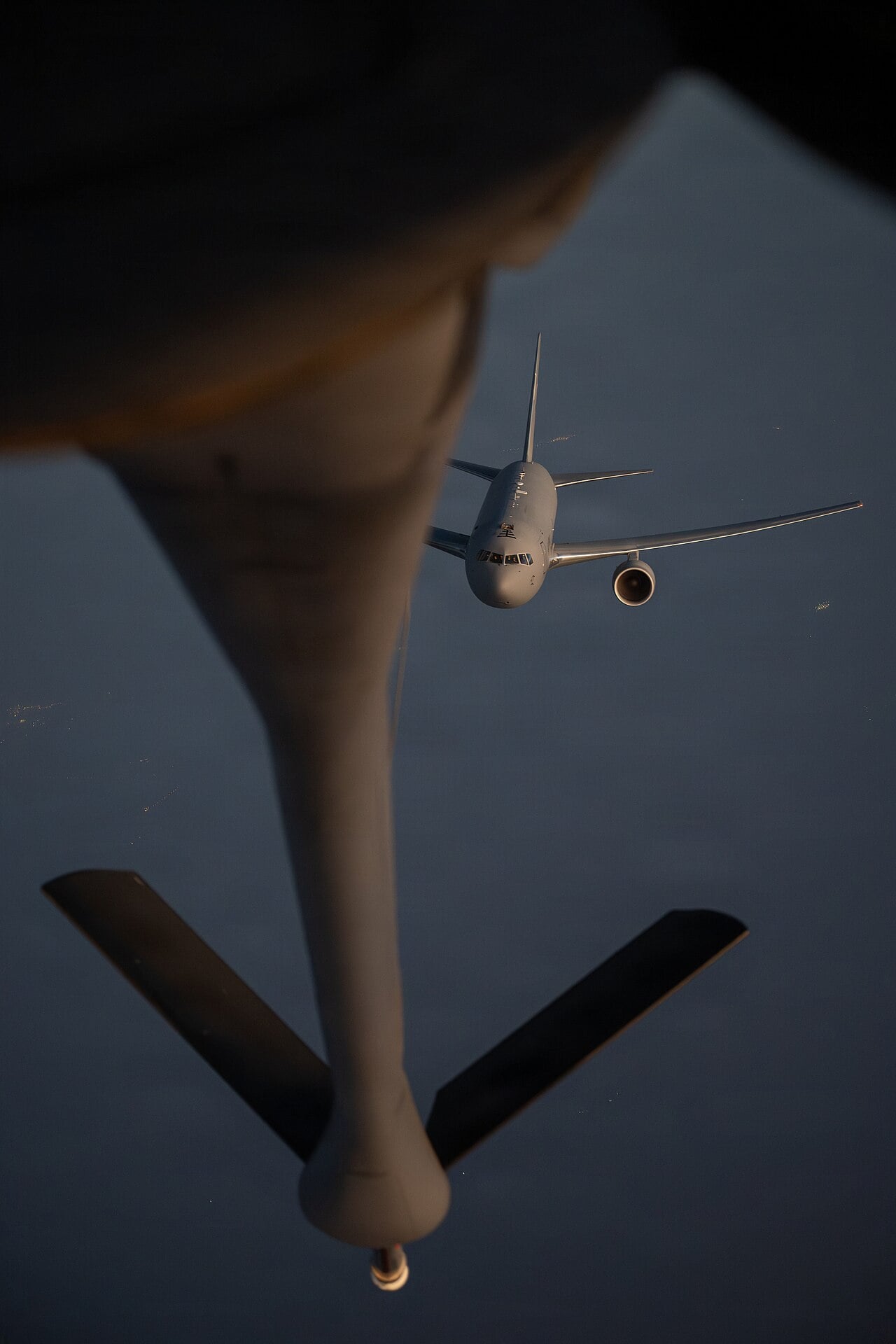
What did become clearer this week is that the Air Force has cooled on the idea that survivability means stealth. William Bailey, currently performing the duties of Assistant Secretary of the Air Force for Acquisition, Technology and Logistics, said the service went to industry for survivable tanker designs and was underwhelmed by what came back.
His conclusion is a reframing rather than a retreat. If the real requirement is tanker access to contested airspace, then the answer need not be a stealthy tanker at all; it can be everything else you put around the tanker to keep it alive. Escorting drones are on that list, and the Air Force has already flown a KC-135 with a loyal-wingman demonstrator.
In the meantime the existing fleets get upgrades rather than replacements. Tulley singled out connectivity, and specifically the MAF NEXUS programme intended for every mobility aircraft, as something that has already changed how crews operate over Iran — passing threat information, coordinating tanker orbits, and in his telling saving both lives and aircraft.
What this actually means
Nothing has been decided. No money has moved. An Analysis of Alternatives is the most procedural thing the Pentagon does, and the C-17 restart is one option inside it alongside service-life extension and a clean sheet.
But there is a reason this keeps coming back. Boeing built 279 Globemaster IIIs in all, closed the line, and the Air Force has spent every year since discovering it does not have enough strategic airlift. Congress has now asked for a briefing in writing. The customer has said “heck yeah” out loud. Somewhere in a warehouse, in theory, sit the dies.
Whether anyone can still find them is the multi-billion-dollar question.
Sources: TWZ; Air & Space Forces Magazine; Boeing; RAND Corporation; US Navy.

0 Comments