
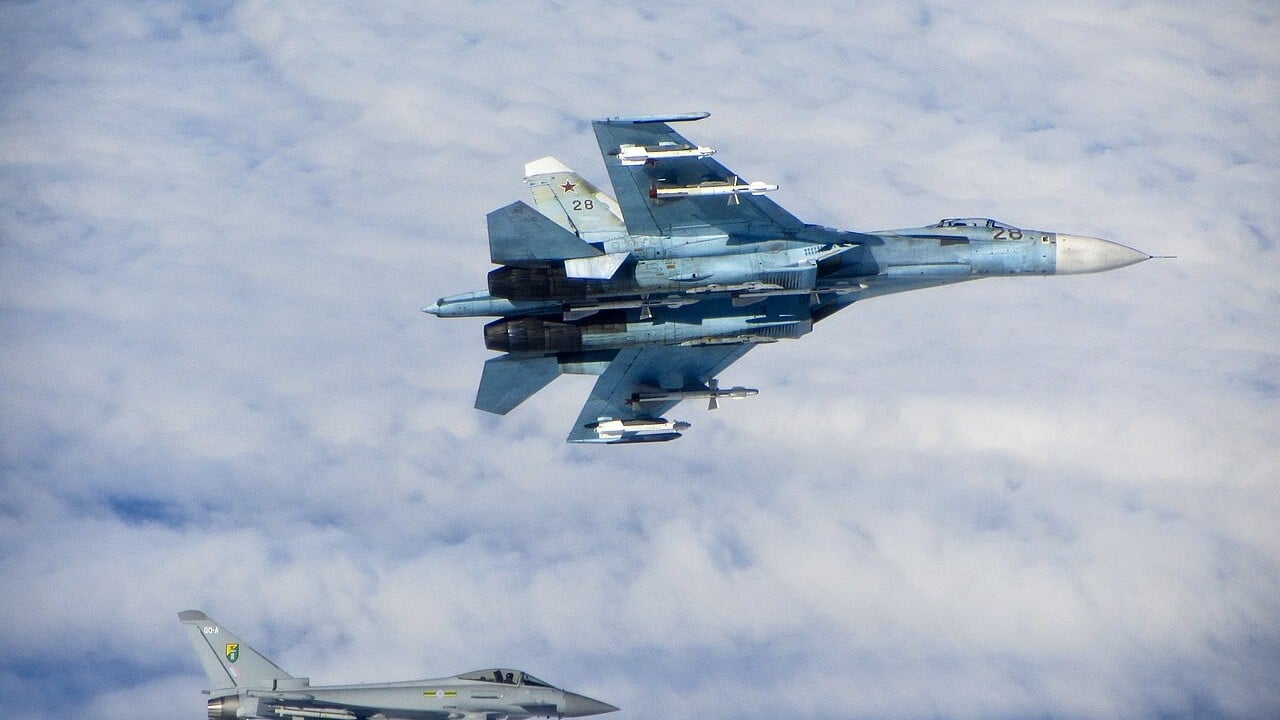
IL Su-27 e il MiG-29 were designed in the same country, in the same decade, against the same American threat. They were never supposed to meet.
They met exactly once, in February 1999, over a stretch of scrub on the border between Ethiopia and Eritrea. Both fleets had been bought from Russia within months of each other. Both were maintained by ex-Soviet technicians. In at least one telling, both were flown by men trained at the same schools.
It is the only head-to-head combat record the two aircraft have, which is why it gets quoted constantly. It is also one of the worst-documented air wars of the modern era, and most of what circulates about it is wrong.
Informazioni rapide
War: Eritrean–Ethiopian War (the Badme War), 6 May 1998 to 18 June 2000
Ethiopia bought: Su-27s from Russia, delivered from December 1998. Sources say 8, 9 or about 10
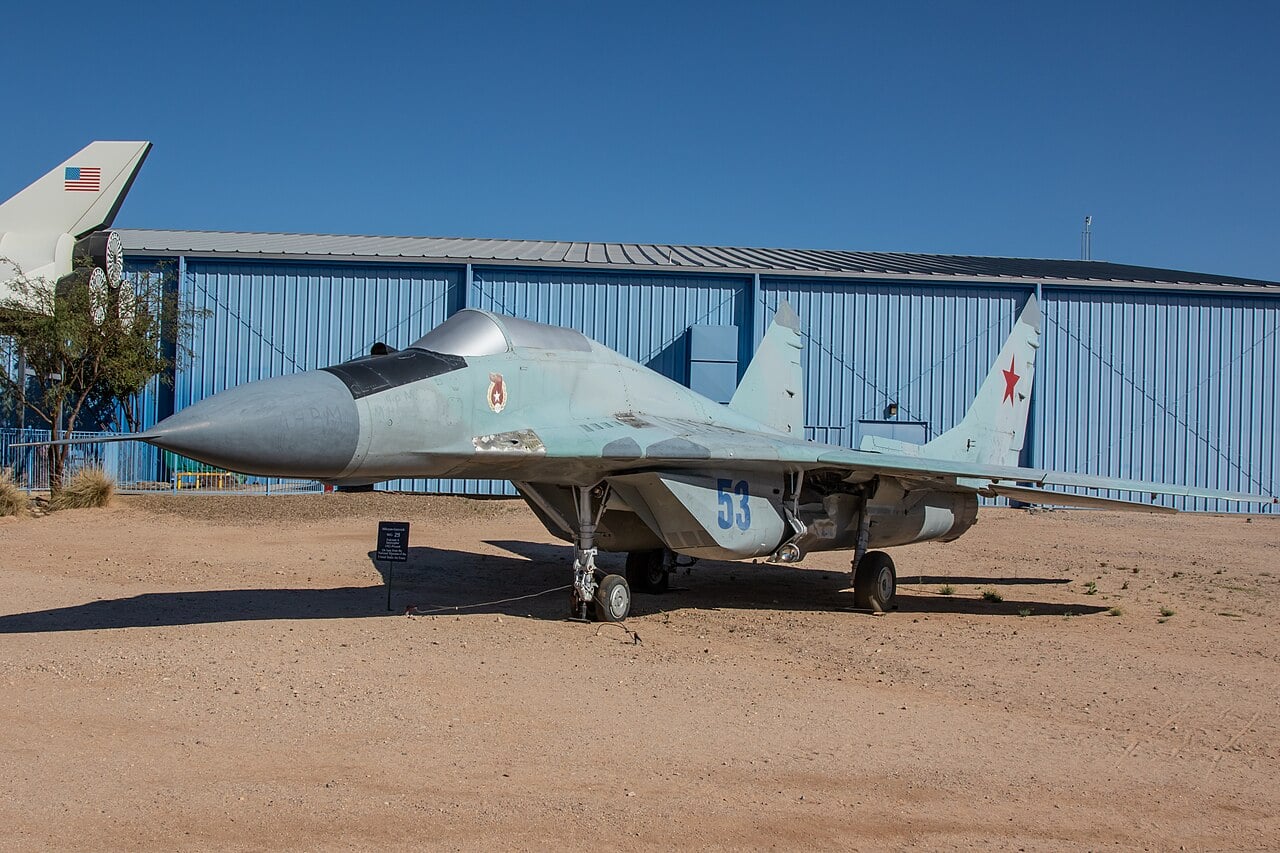
Eritrea bought: MiG-29s, also from Russia, delivered 1998. Sources say 6 or 10
Confirmed MiG-29 losses to Su-27s: Two, both named pilots, February 1999
Claimed: Up to five, depending on which account you read
Su-27 losses to enemy action: None. No source claims any
The technical headline: Beyond-visual-range missiles achieved essentially nothing
Two poor countries buy fourth-generation fighters
The war began over Badme, a dusty triangle of disputed border that neither country had bothered to demarcate. Within weeks it had escalated into something neither air force was remotely equipped for, and both governments went shopping.
Ethiopia bought Flankers from Russian Ministry of Defence surplus, a package worth around $150 million including helicopters. Eritrea bought Fulcrums. SIPRI’s arms transfer register, the only genuinely independent accounting of any of this, records Russia as the supplier of both, and notes that Eritrea’s MiG-29s were sold as a package that also included pilots and technicians.
SIPRI’s own summary of what followed is the flattest sentence written about this war.
Even the aircraft counts are contested. Tom Cooper, whose work underpins nearly everything written about African air wars, says eight Su-27s and ten MiG-29s. SIPRI’s register says nine and six. SIPRI’s own prose says “about ten” each. Nobody agrees on which MiG-29 variant Eritrea flew.
What actually holds up
Strip away the retellings and two engagements survive scrutiny, both in late February 1999, both during Ethiopia’s Operation Sunset to retake Badme.
In the first, an Eritrean MiG-29 flown by Yonas Misghinna was shot down and the pilot killed. In the second, the following day, the Eritrean command sent Samuel Girmay to the same area against the same threat, and he was killed the same way. Cooper and Fontanellaz’s 2018 account credits both to a single Ethiopian pilot, Lt-Col. Gebre-Salassie.
What makes these two stand up where the rest do not is that they are confirmed from the Eritrean side, by someone who knew the men. Dejen Ande Hishel was a MiG-29 pilot and Yonas Misghinna’s childhood friend. He was arrested in March 1999, aged 23, and held without charge for fifteen years before escaping from a maximum-security prison in Asmara in 2014 by stealing a running vehicle and driving it through the gate. He now lives in Sweden, and he is the single most valuable living witness to this war.
Dejen Ande Hishel, the Eritrean MiG-29 pilot, interviewed after his escape. His account of the training, the losses and the command decisions behind them is the closest thing this war has to a primary source.
His account adds the detail that turns a scoreline into a tragedy. After Yonas was lost, the Eritrean government — which had ordered the air force to defend the airspace regardless of circumstances — skipped the investigation that would normally follow a combat loss and sent the next pilot to the same place. Dejen also says the aircraft themselves were second-hand and defective: that the ejection systems did not work and the parachutes did not open, which is why both men died rather than ejecting. That last claim rests on him alone.
He is blunter still about the training. He says he was certified as an instructor pilot before he was ready, protested and was ignored, and that Eritrean pilots went into combat without the fundamentals and without the hours.
Three things everybody repeats that are not true
That an Ethiopian woman scored the first female jet-to-jet kill in history. The story is vivid: Capt. Aster Tolossa intercepts a MiG-29UB, recognises the voice of her own former instructor, warns him, and shoots when he refuses to land. It is everywhere. Cooper published it in 2004 — and then established in 2018 that the MiG-29UB said to have been destroyed, ERAF 502, survived the war undamaged. Cooper retracted his own story. The internet did not notice.
That the Eritrean air force commander was shot down. The rumour that the pilot lost on 25 February was Brig. Gen. Habtezion Hadgu appears in several accounts, always flagged as rumour and always repeated anyway. Habtezion survived the war and remained in command until January 2003, when he was arrested. He has been held incommunicado ever since, for over twenty years. His daughter still campaigns for news of him.
That the score was four or five to nil. The higher numbers come from Cooper’s earlier work and from a Usenet posting. His own later revision gives two shot down and one MiG-29UB damaged. Russian historian Mikhail Zhirokhov gives three plus one written off. A March 1999 double kill appears in one account, is described as inconclusive in another, and is dropped entirely from the most recent. Two are solid. The rest are claims.
What is not contested: no Su-27 was lost to enemy action. The only Flanker destroyed in the whole affair crashed at Debre Zeit on 6 January 1999 during a display for the Ethiopian president, flown by a Russian instructor who ejected. His Ethiopian back-seater was killed.
The missiles that did nothing
Here is the part that should interest anyone who thinks modern air combat is decided at a hundred kilometres.
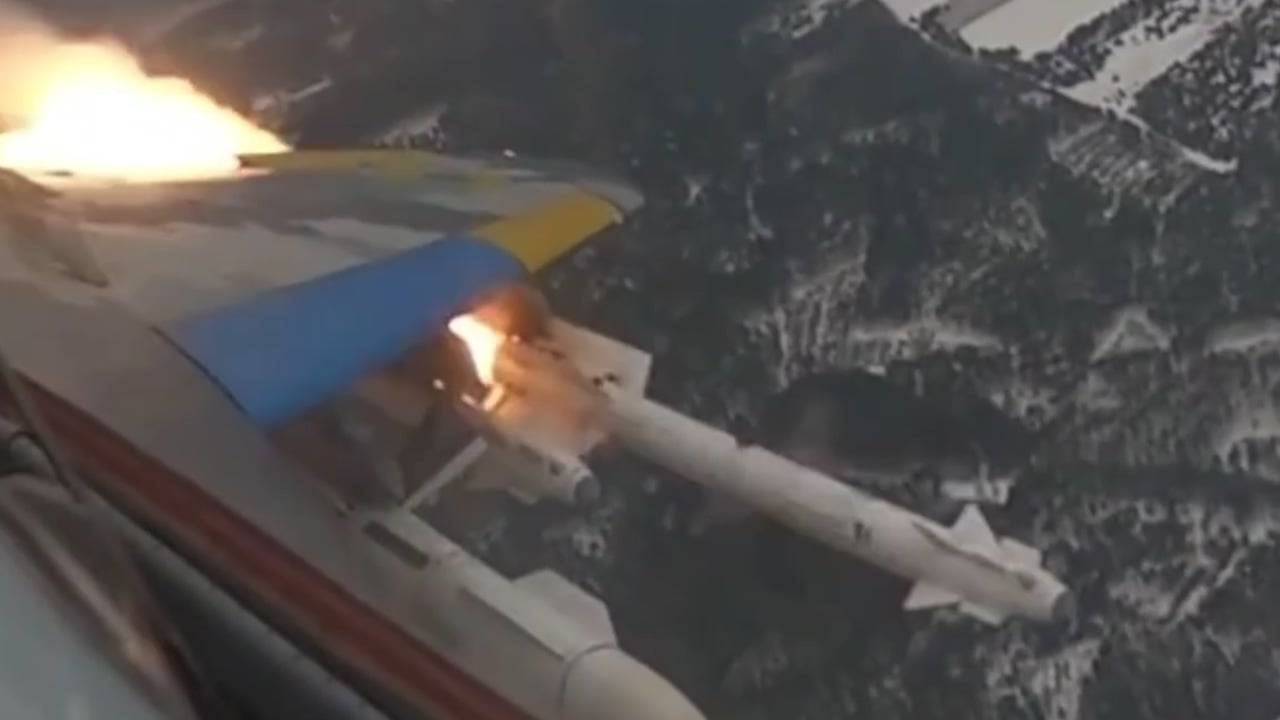
Both sides had radar-guided R-27s. Both sides fired them, repeatedly, at range. Cooper puts the expenditure at up to 24 missiles. The number that hit anything, by Zhirokhov’s reckoning, was zero.
Cooper reached the same conclusion from the other end: with one exception, every kill was scored by the R-73, the short-range infrared missile, in a close-in turning fight. The exception was a single R-27 in May 2000 that proximity-fuzed near a MiG-29 rather than hitting it, doing enough damage that the aircraft crashed on landing at Asmara.
There is a second surprise buried in that. Cooper notes that most, if not all, of the Eritrean MiG-29s went down in close-quarters turning fights — which is precisely where the smaller, lighter Fulcrum was supposed to have the advantage over the larger Flanker.
So why did the Su-27 win? Not, on this evidence, because of its radar or its missiles. The explanations that survive are mundane: fuel, speed and training. The MiG-29’s notoriously short legs forced the Eritreans to break off and run for home, and the Flanker’s speed let it run them down from behind. And the Ethiopian pilots had been through a serious programme at Debre Zeit under Russian instruction, some of them at the Krasnodar academy, followed by intensive flying through 1999. The Eritreans had been through a crash course.
Whose hands were on the sticks
The most-repeated claim about this war is that the Flankers were flown by Russian mercenaries. SIPRI’s register carries the note “flown by Russian pilots” against the Ethiopian Su-27 batch, and Cooper’s 2003 account says the 25 February engagement was fought by Russians.
Cooper’s own 2018 work records that Ethiopian sources, including veterans of that air war, strongly dispute it, and names an Ethiopian pilot for both kills. Russian instructors, advisers and technicians were unquestionably present in large numbers — roughly 300 accompanied the Su-27s — and Ukrainians served on the Eritrean side. Whether a Russian ever pulled a trigger is not established.
Eritrea’s president made his own position clear, announcing that any foreign mercenary shot down over Eritrea would be shot on capture.
The first part of Showtime112’s two-part account of the air war, the most thorough popular treatment available.
Part two, covering the February 1999 engagements and the 2000 offensive.
What is left of it
The war ended in June 2000 with a ceasefire and, in December, a peace agreement. Roughly a hundred thousand people had died, most of them on the ground, over a border that still was not properly settled.
In Mekelle a woman opened a bar and called it Bar SU, after the aircraft that beat the Eritreans. Airport security guards there took to carrying key fobs made from shapeless scraps of metal, which they told visitors came from an Eritrean MiG-29. Both Cooper and Zhirokhov report this detail independently, which is more corroboration than most of the kill claims have.
Two young Eritrean pilots are confirmed dead, sent one after the other into the same piece of sky. The pilot who survived spent fifteen years in prison and had to break out of it to be able to say so. And the only time the Flanker and the Fulcrum ever fought, the expensive radar missiles both had been built around missed every single time.
Sources: SIPRI Arms Transfers Database and UN arms embargo case study (Wezeman, 2007); Tom Cooper and Adrien Fontanellaz, Ethiopian-Eritrean Wars Volume 2 (Helion, 2018); Kyzer and Cooper, ACIG, 2003; Mikhail Zhirokhov, Ugolok Neba, 2004; Assenna and VOA interviews with Dejen Ande Hishel; Plaut and Gilkes, Chatham House, 1999.
0 Comments