
On 19 October 2026 the Federal Aviation Administration published an airworthiness directive ordering operators of 459 American-registered Boeing 737NGs to replace the video monitors mounted in their overhead passenger service units. It is a dull piece of regulation about screens falling out of ceilings. Buried in the comment section is one of the strangest facts in modern aviation.
One of the companies that wrote in was Aviation Partners Boeing. Despite the name, it is a separate joint-venture company. It does not build 737s, and it does not hold the 737's type certificate. It has nothing whatsoever to do with cabin video monitors. It wrote in because many of the aeroplanes on that list carry its winglets, fitted under supplemental type certificate ST00830SE, and it wanted the agency on the record that its approval did not interfere with the new one. The FAA agreed that it did not, and changed nothing.
That exchange is the whole subject of this article. Almost everyone assumes that Boeing owns the design of a Boeing. For large and valuable parts of a modern airliner, it does not. The bent-up wingtips, the cargo door cut into the side of a converted freighter, the glass cockpit in a thirty-year-old business jet, the seats, the galleys, the satellite antenna on the roof: a great many of them are legally owned by somebody else, under a document called a supplemental type certificate.
Informazioni rapide
Type certificate (TC): the FAA's approval of a product's type design, issued under 14 CFR 21.21
Supplemental type certificate (STC): approval of a major change to an already type-certificated product, 14 CFR Part 21 Subpart E
Who may hold one: anyone the FAA approves. 14 CFR 21.113(b) is written specifically for a person who does non hold the type certificate
What it contains: per 21.117(b), the FAA's approval of the change plus the type certificate previously issued for the product
Too big for an STC: 14 CFR 21.19 requires a new type certificate when the change is so extensive that a substantially complete investigation of compliance is needed
Not an STC: FAA Form 337, the major repair and alteration record required by 14 CFR 43.9(d) and Appendix B to Part 43
European equivalent: EASA Part-21 Subpart E. An FAA STC is not automatically valid in Europe
What a type certificate actually is
Start with the thing an STC supplements. When a manufacturer wants to sell a new aeroplane, it applies for a type certificate. Under 14 CFR 21.21 the FAA issues one once the applicant has submitted the type design, test reports and computations, and the agency has satisfied itself that the design meets the airworthiness, noise, fuel venting, emissions and fuel efficiency requirements, and that no feature or characteristic makes the aircraft unsafe for the category requested.
The phrase doing the work there is type design, and 14 CFR 21.31 defines it with unusual precision. It is the drawings and specifications necessary to define the configuration and design features of the product, the information on dimensions, materials and processes necessary to define its structural strength, and the airworthiness limitations section of the instructions for continued airworthiness. In other words, the type design is not a concept or a brand. It is a specific, listed, frozen set of documents.
14 CFR 21.41 then says the type certificate is considered to include the type design, the operating limitations, the certificate data sheet, and the regulations with which the FAA records compliance. That last clause matters more than it looks: a type certificate pins an aeroplane to the rules as they stood when it was approved. It is a snapshot, not a subscription.
So a type certificate answers one question: this exact configuration, built to these exact drawings, is airworthy. The moment anyone changes it, the snapshot no longer describes the aeroplane in front of you.
The certificate you can hold without owning the aeroplane
Here is where it becomes interesting. 14 CFR 21.113 splits the world in two. Paragraph (a) covers the person who holds the type certificate: if they introduce a major change in type design that does not need a whole new type certificate, they apply either for an STC or to amend their own type certificate. Paragraph (b) covers everybody else. If you do non hold the type certificate and you alter the product with a major change in type design, you must apply to the FAA for an STC.
Read that again, because it is the entire foundation of an industry. The regulation explicitly contemplates a stranger redesigning part of somebody else's aeroplane. It does not require the manufacturer's blessing. It does not require the manufacturer to be told. It requires the applicant to show, under 14 CFR 21.115, that the altered product meets the applicable requirements, and then the FAA issues the certificate to them.
What they receive is defined by 14 CFR 21.117(b), and the wording is elegant. A supplemental type certificate consists of the FAA's approval of a change in the type design of the product, E the type certificate previously issued for that product. The STC does not stand alone and it does not replace anything. It bolts onto the original, and the combination of the two is what makes the modified aeroplane airworthy.
The privileges that come with it are listed in 14 CFR 21.119. The holder may obtain airworthiness certificates for aircraft, obtain approval for installation of other products on certificated aircraft, and obtain a production certificate for the change their STC approved. That third one is the commercial engine. An STC holder can go into manufacturing, legally, on a design change to an aircraft they have never built.
The winglet economy
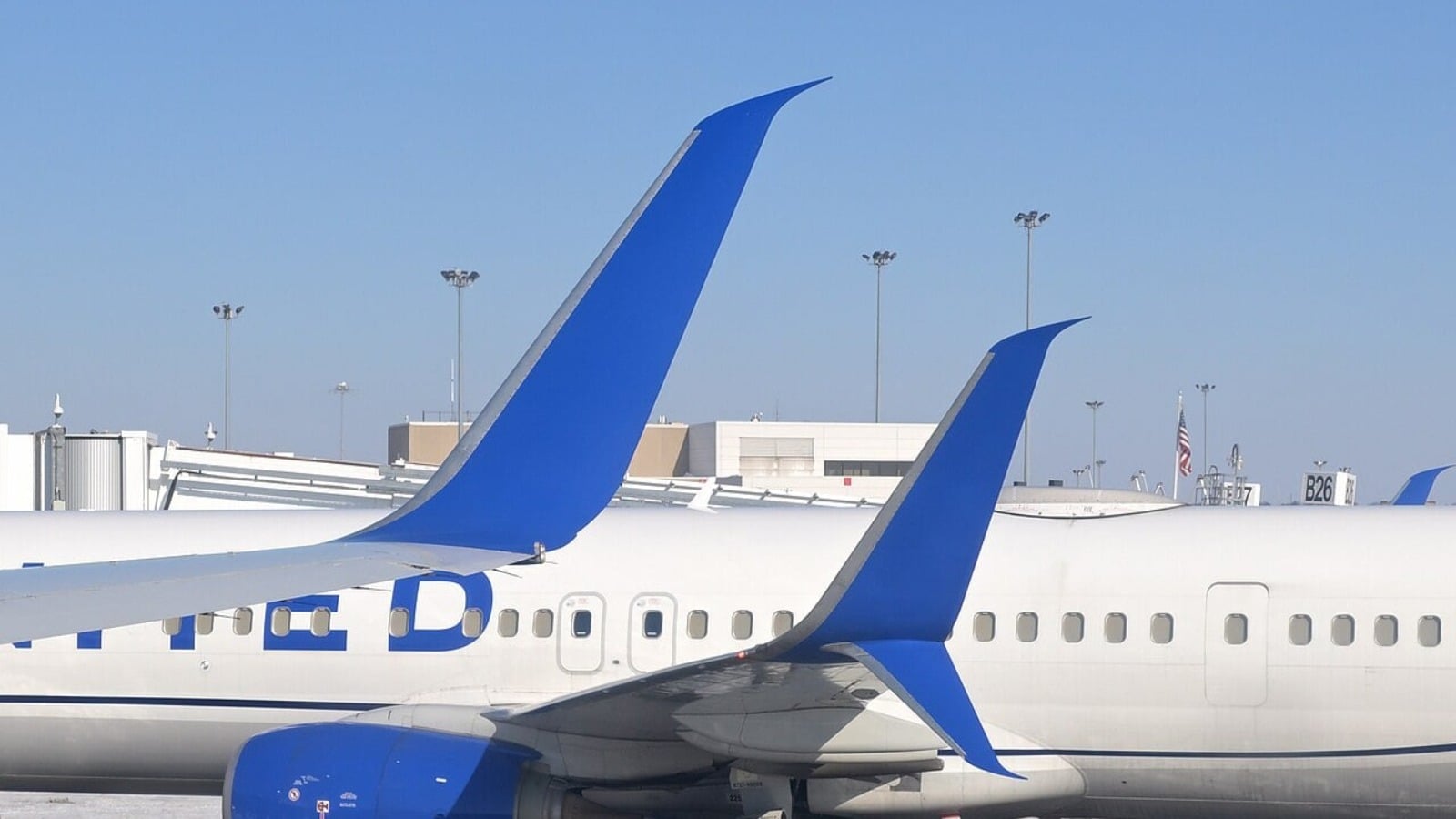
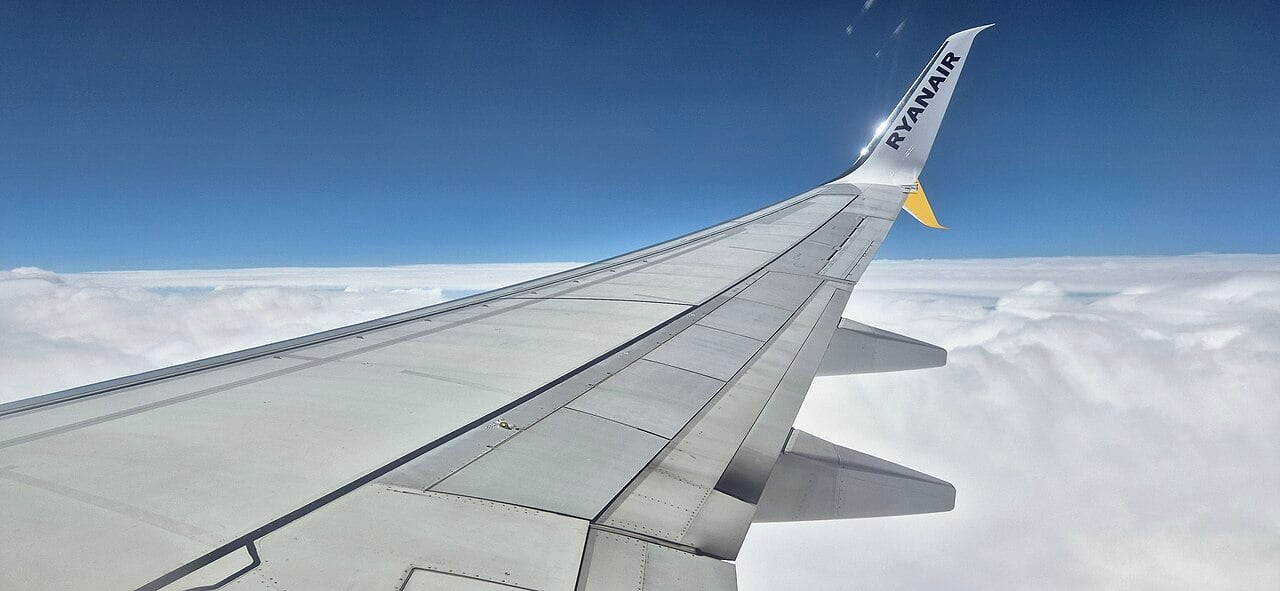
The clearest example in the sky is the one in the photograph at the top of this page. Aviation Partners was formed in 1991 by Joe Clark and Dennis Washington, who hired Dr Bernie Gratzer and a group of retired Boeing and Lockheed engineers. In 1999 the company entered a joint venture with Boeing itself, which tells you something about how the arrangement is viewed from the manufacturer's side: not as piracy, but as a partner doing work Boeing had chosen not to do.
The approvals then arrived one aircraft model at a time, each a separate certificate. The Boeing Business Jet came first, on 5 September 2000. The 737-800 followed on 23 March 2001, the 737-700 on 27 August 2001, the 737-300 on 29 May 2003, the 757-200 in May 2005, the 737-500 in May 2007, the 737-900 in October 2007, the 767-300ER in March 2009. Each of those dates represents a complete, separate certification programme against a different type certificate.
The second generation, the Split Scimitar Winglet with its added downward blade, began with the provisioned-wing 737-800 on 6 February 2014 and worked through the 737-900ER in August 2014, the 737-700 family in April 2015 and the provisioned-wing 737-900 in August 2015. By the time the first Split Scimitar certificate was announced, Aviation Partners Boeing said it had sold more than 7,000 Blended Winglet systems over the preceding decade, with 5,300 in service across more than 200 airlines, and put its cumulative fuel saving at an estimated 4.1 billion gallons. Those are the company's own figures, and they date from February 2014.
Not every idea survives the journey. The same company flew a Spiroid wingtip, a closed loop rather than an upturned blade, as far back as 1993, and reported more than ten per cent better fuel efficiency in cruise. It was never commercialised. A supplemental type certificate is a licence to try, not a promise that the market will care.
Qantas filmed the retrofit on its own 737-800s. What you are watching is an airline paying a separate company to change the shape of a Boeing wing. The approval belongs to that company, not to the 737's type certificate.
When a change is too big to supplement
There is a ceiling. 14 CFR 21.19 says that anyone proposing to change a product must apply for a new type certificate if the FAA finds the proposed change in design, power, thrust or weight so extensive that a substantially complete investigation of compliance is required. That is the line between modifying an aeroplane and designing one.
Below that line, 14 CFR 21.101 decides which rulebook the change is judged against, and it contains the clearest statement in the regulations of what makes a change serious. A change is automatically considered significant if the general configuration or the principles of construction are not retained, or if the assumptions used for certification of the product being changed do not remain valid. Those two tests are worth remembering, because they describe exactly what goes wrong when a modification programme turns into an aircraft programme.
The 737 MAX is the family argument about where that line sits, and it has been running for years. We covered the MAX 7's certification in August and the MAX 10 reaching its type certification board last week. Those are amended type certificates rather than supplemental ones, because Boeing holds the original and 21.113(a) gives the type certificate holder the choice.
Form 337 is not an STC, and the confusion is expensive
Search for supplemental type certificates and you will keep bumping into FAA Form 337. People treat the two as alternatives. They are not the same kind of object at all.
An STC is a design approval. Form 337 is a record. Under 14 CFR 43.9(d), major repairs and major alterations must be entered on a form and disposed of in the manner prescribed in Appendix B to Part 43, by the person performing the work. Appendix B then says what that means in practice: execute the form at least in duplicate, give a signed copy to the aircraft owner, and forward a copy to the FAA Aircraft Registration Branch in Oklahoma City within 48 hours after the aircraft is approved for return to service.
What makes a change major in the first place is set out in Appendix A to Part 43, and the list is specific: wings, tail surfaces, fuselage, engine mounts, control systems, landing gear, hull or floats, hydraulic and electrical actuating systems, changes to empty weight or balance that raise the maximum certificated weight, changes to the basic design of the fuel, oil, cooling, heating, pressurisation, electrical, hydraulic, de-icing or exhaust systems. One entry on that list, item (xiii), deserves to be read twice: changes to the wing or to fixed or movable control surfaces which affect flutter and vibration characteristics.
So the two documents sit at different ends of the same job. The STC says this design change is approved. The Form 337 says this particular aeroplane, with this registration, on this date, had that change embodied, and here is who signed for it. A modification done under an STC still generates a 337.
A short walk through the STC process from the certification side, for anyone who wants the paperwork rather than the aerodynamics.
You still need permission, just not Boeing's
One widely held belief is worth killing. Holding an STC does not mean anyone may use it. 14 CFR 21.120 is one sentence long and it is unambiguous: an STC holder who allows a person to use the supplemental type certificate to alter an aircraft, engine or propeller must provide that person with written permission acceptable to the FAA.
This is the clause that turns an engineering approval into a business. The certificate holder controls who may install the modification and on what terms, which is why an STC is an asset that can be sold, licensed, or used to lock a customer into a single maintenance provider. It is also why the FAA's own airworthiness directives sometimes have to deal with STCs explicitly, as AD 2026-20-13 did this month when it recorded that winglet STC ST00830SE does not affect compliance.
The industry built on somebody else’s drawings
Once you know the mechanism, you start seeing it everywhere. Passenger-to-freighter conversion is an STC business: cutting a main-deck cargo door into the side of a pressurised fuselage, reinforcing the floor and fitting a rigid cargo barrier is about as major as a major alteration gets, and the companies that do it hold the approvals themselves.
Israel Aerospace Industries on converting a Boeing 777 from passenger aircraft to freighter. The airframe is Boeing's. The hole in the side of it is not.
Avionics retrofits work the same way, which is how a forty-year-old light twin ends up with a glass cockpit its manufacturer never drew. So do cabin interiors, in-flight entertainment, connectivity antennas, auxiliary fuel tanks, engine re-rates and firefighting tank installations. In each case a company that does not own the aeroplane owns the approval for a part of it.
One caution for European readers: an FAA STC does not cross the Atlantic by itself. It has to be validated by EASA under the bilateral arrangements, and the two dates can be years apart. Aviation Partners Boeing's own record shows it plainly. The 737-500 blended winglet STC was issued by the FAA on 24 May 2007; the EASA approval followed on 16 July 2009.
None of this makes the manufacturer irrelevant. The type certificate is still the foundation, and nothing an STC holder does can be built without it. But the next time you are in a window seat looking at a wingtip that curls up and then down again, it is worth remembering that the approval for the last two feet of that wing is a separate document, owned by a separate company, and that the FAA had to put its number in the Federal Register this month to confirm it was not in the way.
Sources: 14 CFR 21.19, 21.21, 21.31, 21.41, 21.101, 21.113, 21.115, 21.117, 21.119, 21.120, 43.9 and Appendices A and B to Part 43 (eCFR); FAA AD 2026-20-13, Federal Register, 19 October 2026; Aviation Partners Boeing company history and press releases; EASA Part-21 Subpart E.



0 Comments