

In the early 1920s, the first aeroplane most Americans ever saw up close landed in a farmer's pasture. A young man in a leather helmet climbed out of a battered biplane, offered rides for a few dollars, and if the crowd was big enough, someone walked out on the wing in flight. This was barnstorming, and for a few wild years it was how America learned to fly.
It was cheap, dangerous, unregulated and enormously popular. It produced some of the most famous pilots of the century, including Charles Lindbergh, and it ended, as these things usually do, when the government started writing rules.
Informazioni rapide
- Era: About 1919 to 1927
- Signature aircraft: Curtiss JN-4 "Jenny", two-seat biplane trainer, 90 hp Curtiss OX-5 engine
- Surplus Jenny price: A few hundred dollars or less, against about $5,000 new
- Typical ride: $1 to $5; Lindbergh charged $5 for about 15 minutes
- Best-known troupe: Gates Flying Circus (Ivan Gates, Clyde Pangborn)
- First wing walker: Ormer Locklear (killed 2 August 1920)
- Regulation: Air Commerce Act, signed 20 May 1926; rules from 1927
The war surplus that built an industry
The First World War left the US Army with thousands of training aircraft and nothing to do with them. The Curtiss JN-4 "Jenny", a slow, forgiving two-seat biplane of wood and fabric, had been the Army's standard trainer. According to the National Air and Space Museum, Curtiss built 4,895 of the 6,070 JN-series aircraft delivered to the Air Service. After the armistice the government sold them off. A Jenny that had cost about $5,000 new could be had for a few hundred dollars, and sometimes far less.

Demobilised pilots and eager amateurs bought them, and took to the road. The season ran from spring until after the harvest and the county fairs. A pilot would buzz a small town to draw attention, land in the nearest flat field and sell rides, usually between $1 and $5. A good day, according to the Smithsonian, could bring in as much as $300.
Locklear and the wing walkers
Rides alone did not draw the biggest crowds. Stunts did. Ormer Locklear, a Texan training with the Army Air Service, began climbing out of his Jenny's cockpit onto the wing in flight, and is generally considered the first wing walker and the first person to transfer from one aircraft to another in mid-air. By 1919 he was doing it in public, with his own flying circus.
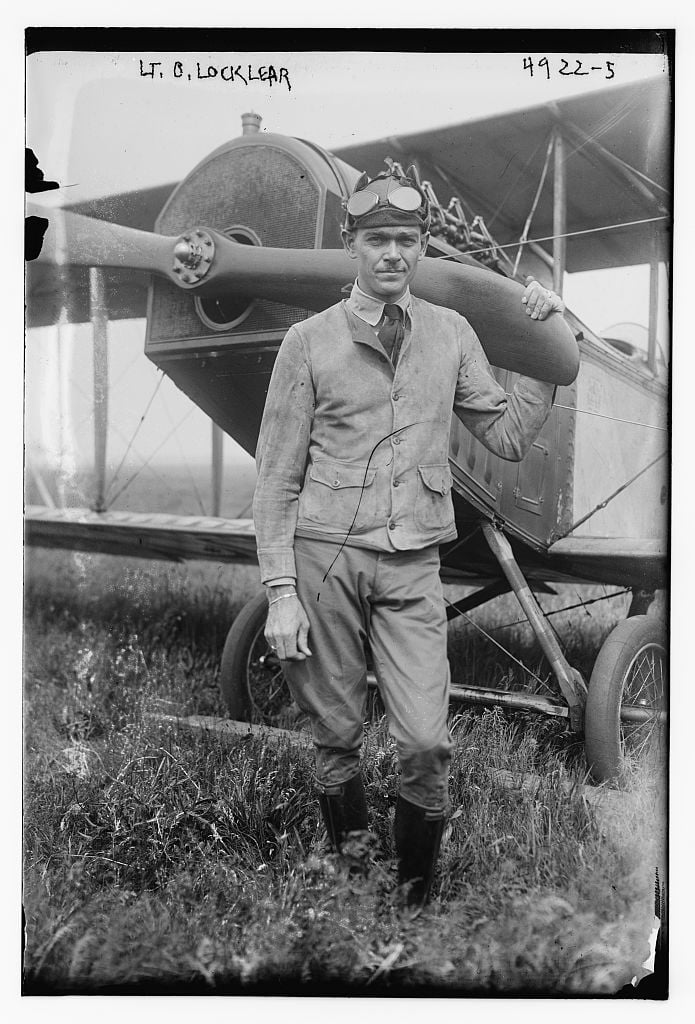

Locklear went to Hollywood and was killed there on 2 August 1920, with pilot Milton "Skeets" Elliott, during a night stunt for the Fox film The Skywayman; searchlights meant to be switched off as his cue to pull out stayed on. Others carried on. Gladys Ingle, the only woman in Los Angeles's 13 Black Cats stunt team, made more than 300 plane-to-plane transfers and was filmed changing a wheel on another aircraft in flight. Lillian Boyer, a Nebraska waitress taken for her first flight in 1921, performed in 352 shows across the United States and Canada.
British Pathé footage of 1920s air thrills and stunt flying.
The Gates Flying Circus and a young Lindbergh
The biggest troupe was the Gates Flying Circus, run by promoter Ivan Gates with Clyde "Upside-Down" Pangborn as chief pilot and part-owner. It drew crowds in the tens of thousands and introduced the $1 joyride. Aviation historian Don Dwiggins said it turned out more famous pilots than the Army and Navy combined.
One of the barnstormers was a lanky young man from Minnesota. In 1922 Charles Lindbergh joined Erold Bahl's barnstorming tour as a wing walker and parachutist. In spring 1923 he bought a surplus Jenny for $500 at Souther Field in Americus, Georgia, soloed there after less than 20 hours of instruction and barnstormed his way north, charging $5 a ride and sometimes accepting a meal or a bed instead.
The rules arrive
As flying grew, so did the pressure to regulate it. On 20 May 1926 President Calvin Coolidge signed the Air Commerce Act, which created the Aeronautics Branch of the Commerce Department to license pilots, aircraft and mechanics and set safety rules. The first regulations were issued at the end of 1926.
The Act did not ban barnstorming outright. But federal airworthiness standards finished off the worn-out Jennys, and rules such as minimum altitudes for stunts were almost impossible for the freelancers to meet. Later regulations required parachutes for stunt performers and, in 1936, banned wing walking below 1,500 feet. A few pilots sold rides into the 1940s, but the golden age of the flying circus was over.
The Henry Ford's Innovation Nation on the history of barnstorming.
Period newsreel footage of 1920s barnstormers and a young Charles Lindbergh.
Sources: Smithsonian National Air and Space Museum, US Centennial of Flight Commission, FAA history, National Geographic, Minnesota Historical Society, Georgia Historical Society, Wikipedia


0 Comments