
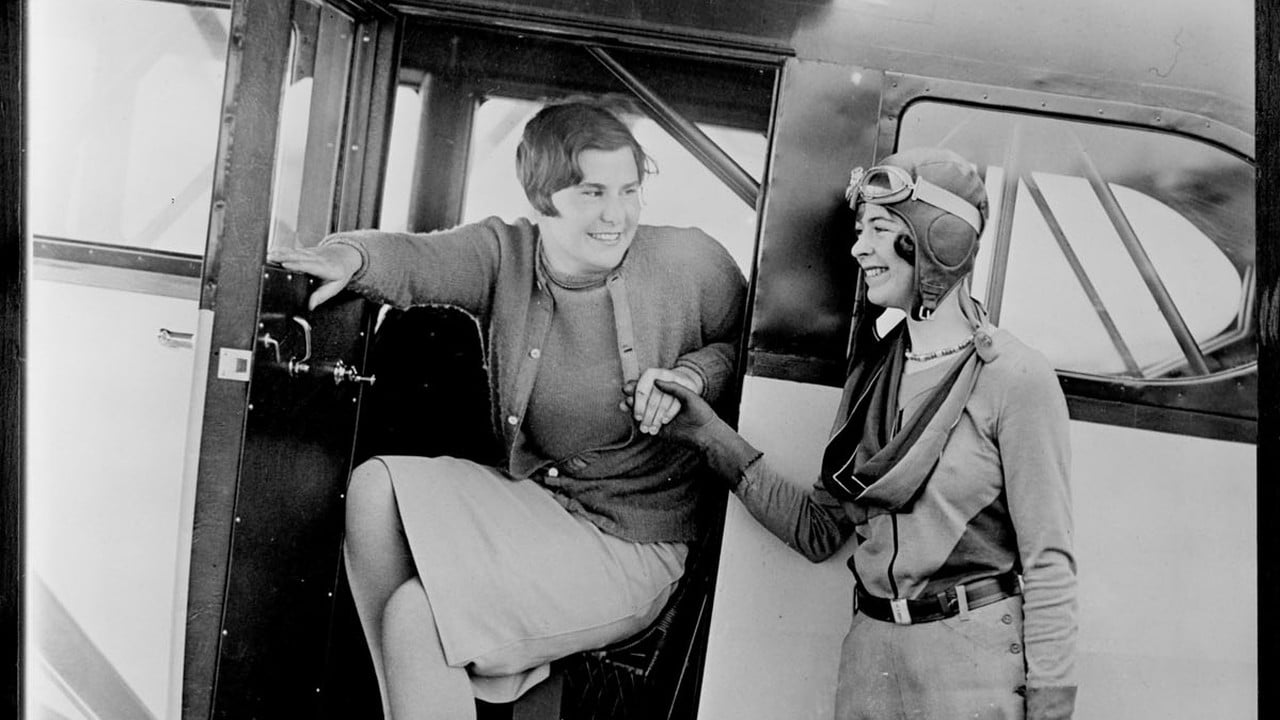
On Sunday 21 October 1928, a small Waco biplane dropped down over New York’s East River and flew under the Queensboro Bridge. Then under the Williamsburg Bridge. Then the Manhattan Bridge. Then the Brooklyn Bridge. Newsreel cameras caught her at every bridge.
The pilot was Elinor Smith of Freeport, Long Island. She was 17, and she had held a pilot’s licence for just over two months. The stunt helped win her a nickname that would stick for the rest of her life: the Flying Flapper of Freeport.
The bridge stunt made her famous. What she did over the next three years made her one of the finest pilots of her generation, man or woman, with endurance, altitude and speed records that put her name alongside Amelia Earhart’s in the headlines of the day.
Informazioni rapide
- Nome: Elinor Smith (born Elinor Regina Patricia Ward), later Elinor Smith Sullivan
- Born / died: 17 August 1911, New York City / 19 March 2010, Palo Alto, California
- Soprannome: The Flying Flapper of Freeport
- Licence: NAA pilot certificate No. 6906, 14 August 1928, signed by Orville Wright
- Famous stunt: 21 October 1928: flew under all four East River bridges in a Waco biplane
- Resistenza: About 13.5 hours solo (January 1929); more than 26 hours solo (April 1929); 42.5 hours refuelled with Bobbi Trout (November 1929)
- Altitudine: 27,418 ft women’s world record (March 1930); 32,576 ft (1931)
- Onorificenze: Voted best woman pilot in America (1930); first woman on a Wheaties box (1934)
Blocks on the rudder pedals
She was born Elinor Regina Patricia Ward in New York City on 17 August 1911. Her father, a vaudeville comedian and dancer, changed the family name to Smith to avoid being confused with another performer. Elinor took her first aeroplane ride at the age of six, in a Farman pusher that lifted off from a potato field on Long Island, and decided on the spot what she wanted to do.
At ten she began lessons with the barnstormer Clyde Pangborn, who tied blocks to the rudder pedals so her feet could reach them. Her father bought a Waco 9 biplane and hired an instructor for both of them, but ordered that his daughter must not be taught to take off or land. Her mother lifted the ban while he was away on tour.
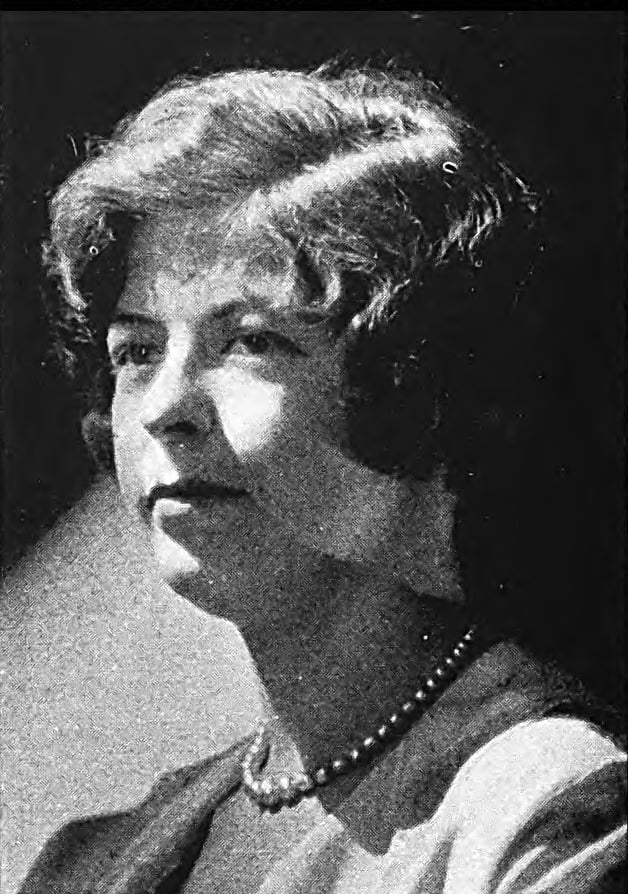
The result was a teenager who could already fly better than most adults. Her pilot’s certificate from the National Aeronautic Association, No. 6906, was issued on 14 August 1928, three days before her 17th birthday. It was signed by the association’s chairman, Orville Wright.
Four bridges and a dare
The East River flight came on a dare. Smith reconnoitred the route from above first, then went in low, dodging shipping as she threaded the bridge spans. Unknown to her, the regulars at Curtiss Field who had bet on her success had tipped off the newsreel companies, so there would be film proof that she had really done it.
There was a price. Smith was grounded and, according to the aviation historian Tom Crouch, had her licence suspended for about two weeks. By her own account, the mayor of New York, Jimmy Walker, stepped in on her behalf, and the reprimand letter from the Department of Commerce arrived with a request for her autograph. The Cradle of Aviation Museum on Long Island says she remains the only pilot to have flown under all four East River bridges.
Records in the cold and the dark
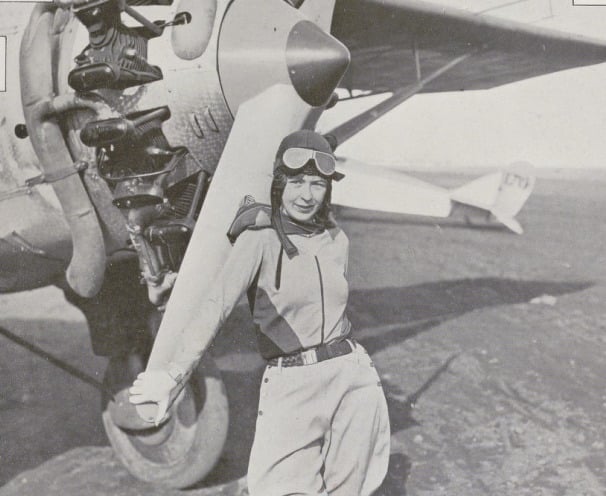
In 1929 the record books for women pilots were being rewritten almost monthly, and Smith set out to own them. On a bitterly cold day at the end of January, flying an open-cockpit Brunner-Winkle Bird from Mitchel Field, she stayed aloft for about 13 and a half hours to set a women’s solo endurance record.
When Bobbi Trout took the record back with a 17-hour flight in February, Smith answered in April with more than 26 hours in a Bellanca CH monoplane, a much bigger and more powerful aircraft than any woman had flown before. Later that year she and Trout flew a Sunbeam biplane for 42 and a half hours over Los Angeles, the first official women’s endurance record using air-to-air refuelling.
British Pathé newsreel of 1929: crowds greet 17-year-old Elinor Smith after her women’s endurance record of more than 26 hours.
She also set a women’s world speed record of 190.8 mph in a Curtiss military aircraft and went on a 6,000-mile tour of the United States flying a Bellanca Pacemaker for the Irvin parachute company, all while still a teenager.
Six miles up, without enough oxygen
On 10 March 1930, flying a Bellanca Skyrocket, Smith climbed to 27,418 feet (8,357 metres), a new women’s world altitude record recognised by the Fédération Aéronautique Internationale. Two months later, still short of her 19th birthday, she became the youngest pilot ever to receive a Transport Licence from the US Department of Commerce. That autumn, a poll of licensed American pilots voted her the best woman pilot in the country.
High-altitude flying in 1930 meant breathing through a crude tube from a bottle, in an unpressurised cockpit, at temperatures far below freezing. In March 1931, on her first attempt to beat the overall world altitude record, her engine stopped at about 26,000 feet. Unknown to her, her oxygen bottle had cracked. She blacked out as the powerless Bellanca dived, came round at around 6,000 feet, and put the aircraft down in an open lot, flipping it onto its nose.
Archive footage of Elinor Smith, unhurt, after her Bellanca crashed in Mineola, New York, during a 1931 altitude attempt.
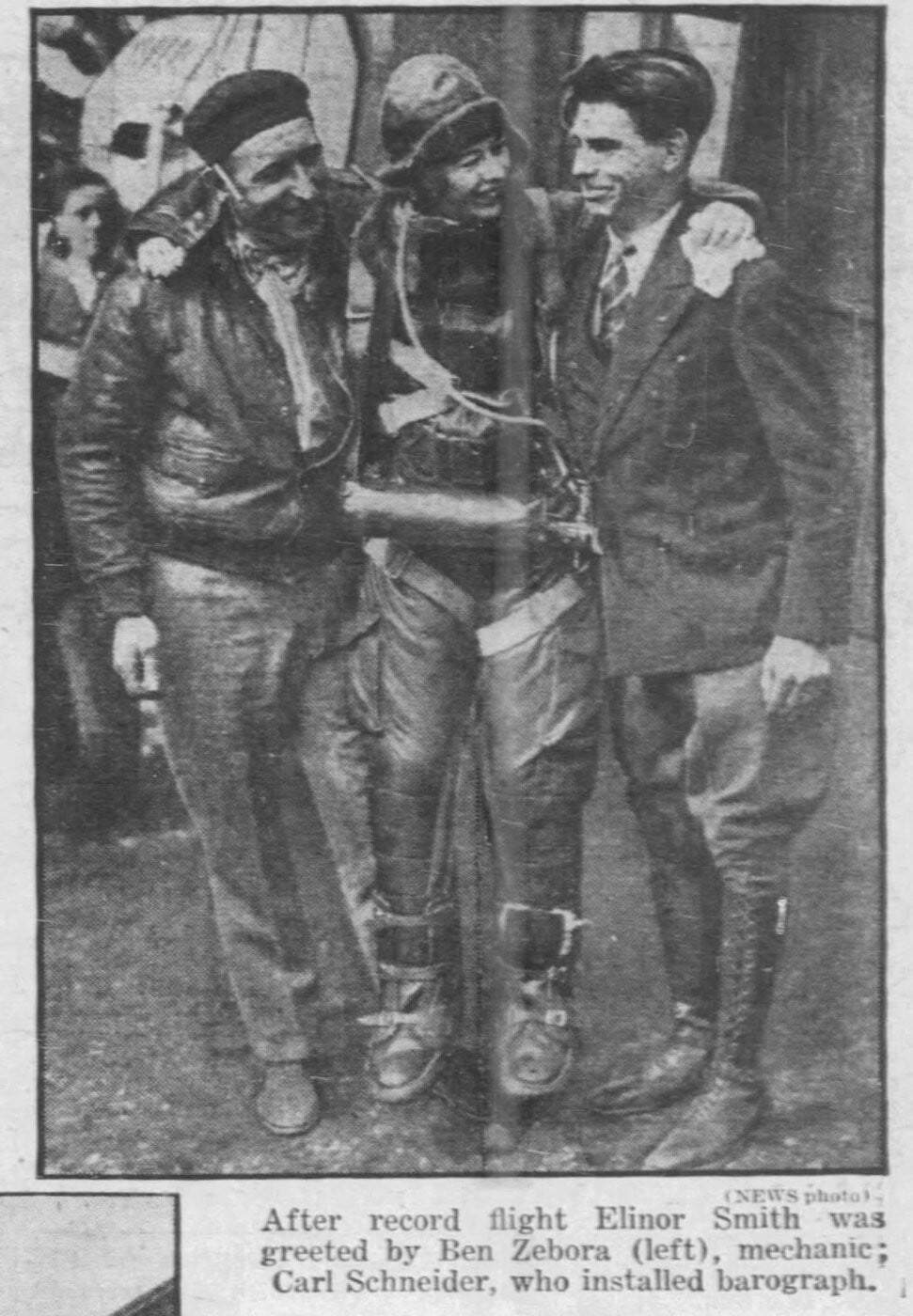
Ten days later she went up again in the repaired aircraft and reached 32,576 feet, reclaiming the women’s altitude record. Her altimeter showed even more, but the barograph that would have proved it had jammed at 28,000 feet, ending any hope of the overall world record.
A Wheaties box and a second career
From 1930 she also worked as an aviation commentator for NBC radio, covering air shows and interviewing other famous flyers. In 1934 she became the first woman to appear on a box of Wheaties, the General Mills cereal sold as the Breakfast of Champions. The Great Depression killed her plans for a solo Atlantic crossing in a Lockheed Vega.
In 1933 she married Patrick H. Sullivan, a New York State assemblyman and lawyer. After the birth of their first child she gave up flying and spent more than two decades raising four children. When her husband died in 1956, she went back to the sky.
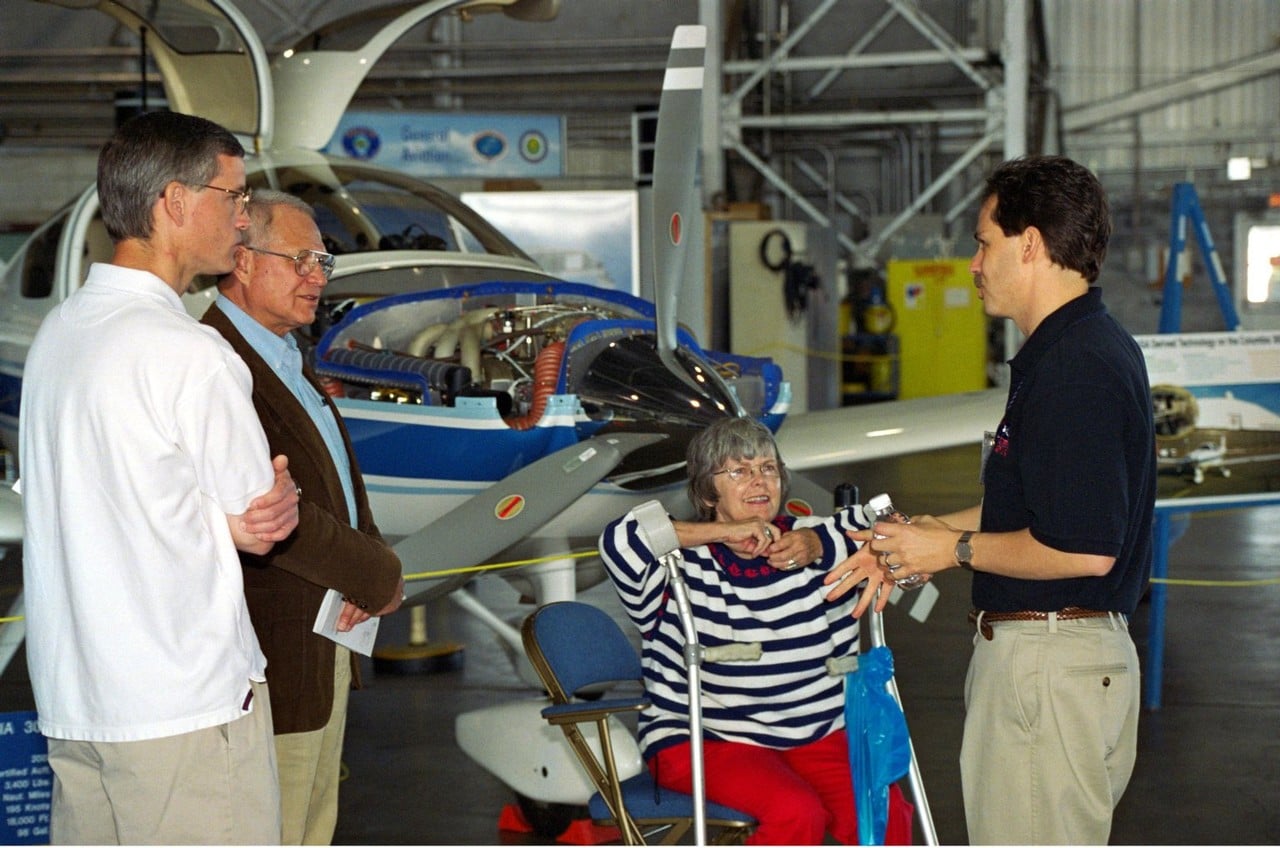
Through the Air Force Association she flew the Lockheed T-33 Shooting Star jet trainer. In March 2000, with an all-woman crew, she flew NASA’s Space Shuttle vertical motion simulator at Ames Research Center and became the oldest pilot to complete a simulated shuttle landing. In April 2001, at 89, she flew an experimental Beech Bonanza at NASA Langley in Virginia.
Newsreel footage of Elinor Smith preparing for and taking off on an altitude record flight from Roosevelt Field, New York.
Elinor Smith Sullivan died in Palo Alto, California, on 19 March 2010, at the age of 98. She is less famous today than Earhart, partly because her record-breaking years were so short and so early. But for a few remarkable years at the end of the 1920s, the girl who flew under the Brooklyn Bridge was the pilot everyone else had to beat.
Sources: Wikipedia (Elinor Smith), NPR, This Day in Aviation, Long Island Herald, Pop History Dig, Monash University CTIE (Hargrave pioneers)


0 Comments