
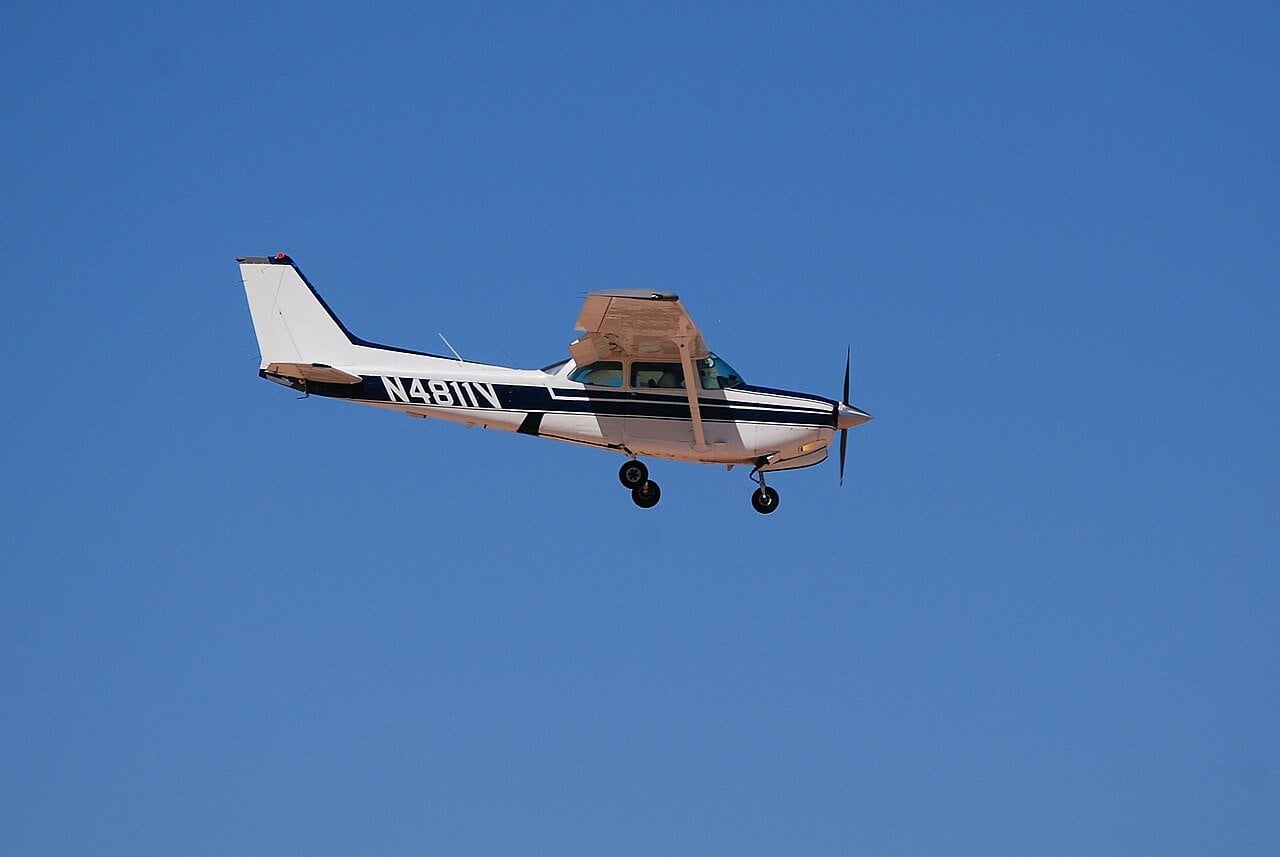
Picture a private pilot from Germany, Brazil or Japan stepping off an airliner in Florida with a simple plan: rent a Cessna, fly under blue skies, and log some hours. Somewhere along the way they have heard that they need to convert their licence first.
They do not, strictly speaking. A foreign licence never turns into an American one. What the Federal Aviation Administration does instead is issue a separate US private pilot certificate on the basis of the foreign licence, under a single regulation, 14 CFR 61.75. Pilots call it the piggyback certificate, and the name is more accurate than most people realise.
This is the honest guide to going from ICAO to FAA: what that piggyback actually buys you, what it does not, how long the paperwork really takes, and where the shortcuts end.
Informazioni rapide
- Regulation: 14 CFR 61.75
- What you get: A US private pilot certificate issued on the basis of a foreign licence
- Eligible licences: Private level or higher, from an ICAO contracting State, with no ICAO-standards limitation
- Checkride: None for the private certificate
- Instrument rating: Possible if the foreign licence has instrument privileges, plus a knowledge test within 24 months
- Key limitation: Valid only with the foreign licence in your possession or readily accessible in the aircraft
- Verification: FAA Airmen Certification Branch, IACRA or Form 8060-71, about 45 to 90 days
- Verification letter: Valid six months
- Commercial and ATP: Full US requirements still apply
What 14 CFR 61.75 Actually Says
The rule is short. A person who holds a foreign pilot licence at the private pilot level or higher, issued by a contracting State to the Convention on International Civil Aviation, may be issued a US private pilot certificate with the appropriate ratings. Crucially, the FAA issues it without any further showing of proficiency. There is no checkride and no written exam for the basic certificate.
The conditions are equally short. The foreign licence must not carry a limitation saying the holder has not met all ICAO standards. The applicant must not already hold a US pilot certificate, other than a student pilot certificate. They need either an FAA medical certificate or a medical licence from the country that issued the foreign licence, and they must be able to read, speak, write and understand English.
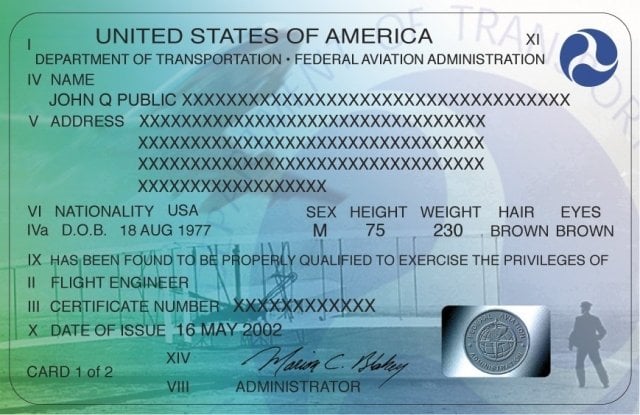
The certificate that comes out of the process is visibly different from a normal one. It must specify the foreign licence number and the country that issued it, which is the first hint that it is tied permanently to the document behind it.
Private Privileges Only
Whatever is on the foreign licence, the piggyback is a private pilot certificate. A commercial or airline transport licence from abroad still produces only a US private certificate under this rule. Aircraft ratings listed on the foreign licence can be placed on the US certificate, but only for private pilot privileges.
The holder may act as pilot in command of a US-registered civil aircraft within the privileges and limitations on the certificate. They are also subject to the limitations on the foreign licence itself, and that applies whether the N-registered aircraft is flying inside or outside the United States. If your home licence restricts you, the restriction comes with you.
Only one foreign licence can be used as the basis for a US certificate. The foreign licence and medical must be written in English, or accompanied by an English transcription signed by an official or representative of the foreign aviation authority.
In practice that last rule is the one pilots trip over. Lose or let lapse the foreign licence and the US certificate cannot be exercised. The piggyback has no legs of its own.
Adding an Instrument Rating
There is one meaningful extra. A pilot whose foreign licence authorises instrument privileges can have an instrument rating placed on the US certificate. The condition is a knowledge test: the applicant must pass the appropriate test within the 24 months before the month in which they apply, and meet the same English language requirement.
There is still no instrument checkride for this route. The foreign instrument privileges do the work, and the knowledge test confirms the pilot understands the US system of rules and procedures that the rating will be used in.
Noel Philips on taking his UK private licence through the US process.
The Paperwork: 45 to 90 Days
Nothing happens until the FAA's Airmen Certification Branch in Oklahoma City has confirmed that the foreign licence is real and current. The applicant submits a request through the FAA's IACRA online system, which the FAA calls the preferred method, or by mailing FAA Form 8060-71 with a copy of the foreign licence. A copy of the foreign medical is needed only if the applicant wants that verified too.
The branch then contacts the foreign civil aviation authority, which responds to the FAA. According to the FAA, the whole verification takes approximately 45 to 90 days. Applicants from Australia, Cyprus, Ireland, Malaysia, New Zealand and the United Kingdom must also complete additional forms with their own authority before the FAA can get its answer.
The result is a verification letter, uploaded to the applicant's IACRA account. It is valid for six months, unless the foreign authority specifies a shorter period or the foreign licence expires sooner. With the letter in hand, the applicant contacts an FAA designated foreign pilot examiner, a flight school or an FAA Flight Standards District Office to complete the application.
Anyone who needs to visit a Flight Standards District Office should contact it once the letter arrives. The FAA warns applicants not to expect an appointment earlier than two weeks after that first contact, citing enhanced security procedures.
Before You Rent the Cessna
A fresh US certificate does not by itself make a pilot current. The ordinary US rules apply. Under 14 CFR 61.56, no one may act as pilot in command unless they have completed a flight review with an authorised instructor since the beginning of the 24th calendar month before the flight, with a logbook endorsement to prove it.
Non-US citizens also run into the Transportation Security Administration. TSA's rule in 49 CFR Part 1552 covers aliens who apply for or participate in flight training, and it defines flight training broadly, including instruction needed to obtain a new certificate or rating or to maintain one. Anyone planning training in the US should check early whether a security threat assessment applies to them; our guide to the M-1 visa and TSA's flight training rules covers that side in detail.
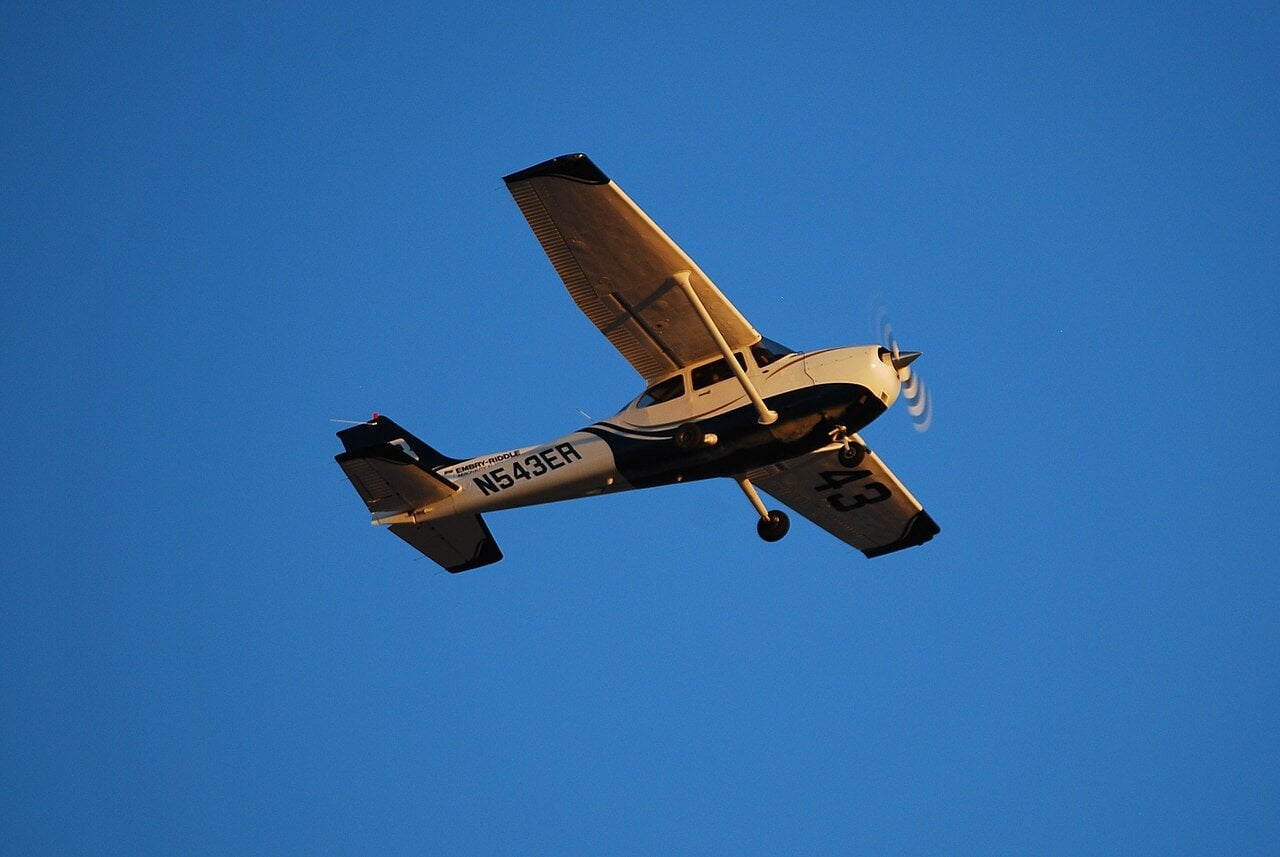
Then there is the practical side. Rental operators and insurers set their own checkout requirements, which can be stricter than the regulation. The certificate is the legal minimum, not a guarantee that a flight school will hand over the keys.
Where the Shortcut Ends: Commercial and ATP
This is where many pilots' plans meet reality. There is no 61.75 equivalent that issues a US commercial or airline transport pilot certificate on the strength of a foreign one. The piggyback does help, though. The FAA lists using a certificate issued under 61.75 to apply for a commercial pilot certificate under 14 CFR 61.123(h), which requires the applicant to hold at least a private pilot certificate issued under Part 61.
Everything else in the commercial requirements still applies: an instructor's endorsements, the knowledge test, the aeronautical experience for the category and class, and the practical test. In other words, the commercial certificate is earned in full; the piggyback only satisfies the prerequisite.
Airline pilot Captain Joe on moving from an EASA licence to the FAA system.
The airline transport pilot certificate has its own door. Under 14 CFR 61.153(d)(3), an applicant can qualify with a foreign airline transport pilot licence with instrument privileges, or a foreign commercial licence with an instrument rating, issued by an ICAO contracting State with no geographical limitations. They still need the knowledge test, the practical test and the aeronautical experience, and for a multi-engine ATP, a graduation certificate from the ATP certification training programme before the knowledge test.
That aeronautical experience is the hurdle the US system is famous for. How the hours rule and the restricted ATP shape an American airline career is explained in our piece on the FAA 1,500-hour rule.
The Piggyback in One Sentence
A 61.75 certificate is a quick, cheap-to-obtain permission to fly American aircraft as a private pilot, for as long as your home licence stays valid and in your pocket. It is perfect for the holiday flyer and the foreign owner of an N-registered aircraft.
The Flying Reporter on flying in the USA with a foreign private pilot's licence.
For anyone dreaming of flying for pay in America, it is the first rung of a full ladder, not a lift to the top. Start the verification three months before you need it, and do not book the flight until the letter arrives.
Sources: 14 CFR 61.75, 61.56, 61.123 and 61.153 (eCFR), 49 CFR 1552 (eCFR), Federal Aviation Administration (Airmen Certification Branch, foreign licence verification)
0 Comments