
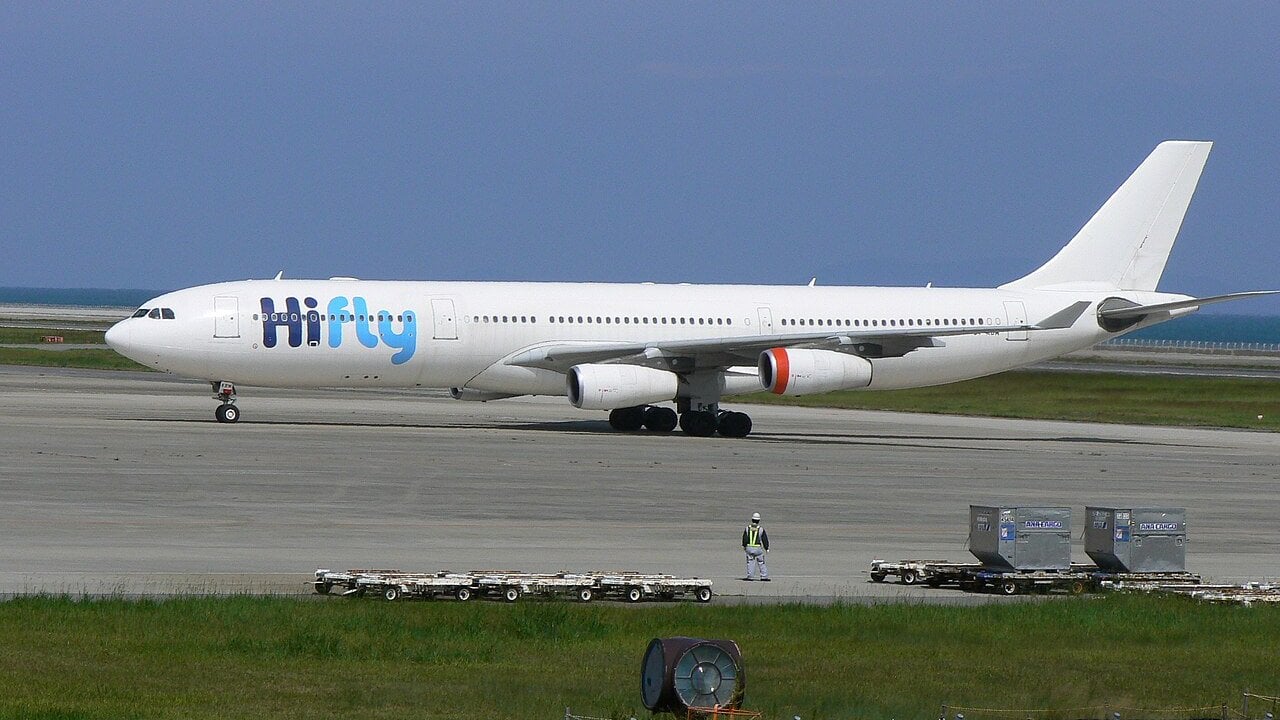
The airline name painted on the side of your aircraft tells you who sold you the ticket. It very often does not tell you who owns the aircraft. That is probably a leasing company, quite possibly headquartered in an office building in Dublin, and the airline is paying it rent every month.
According to IATA figures cited by Aerospace Global News, leased aircraft made up around 58 per cent of the world's commercial fleet at the end of 2023, up from roughly 10 per cent in the 1970s. Aircraft leasing has gone from a financing niche to the way most airlines get most of their aircraft.
Here is how it works: the difference between dry, wet and damp leases, what airlines actually pay, why lessors love narrowbodies, and how a small town on the west coast of Ireland became the capital of the business.
Informazioni rapide
- Share of fleet leased: About 58% at end-2023 (IATA, via Aerospace Global News)
- Dry lease: Aircraft only; lessee's crew, maintenance and AOC; usually 2+ years
- Wet lease (ACMI): Aircraft, crew, maintenance, insurance; paid by hour; 1-24 months
- Damp lease: Lessor flight crew, lessee cabin crew (UK usage)
- Typical lease rate: Around 0.6-0.75% of aircraft value per month
- Industry birthplace: Guinness Peat Aviation, Shannon, Ireland, 1975
- Largest lessor: AerCap, Dublin (bought GECAS in 2021)
- Big 2026 deals: DAE buys Macquarie AirFinance; Avolon orders 250 jets
Why Rent an Airliner?
A new narrowbody airliner costs tens of millions of dollars, and a widebody far more. Buying one ties up cash or debt for decades and leaves the airline carrying the risk of what the aircraft will be worth when it is finished with it. Leasing hands much of that risk to someone else. The airline pays a monthly rent, flies the aircraft for an agreed term, and gives it back.
Wikipedia's summary of the industry identifies two main reasons airlines lease: to operate aircraft without the financial burden of buying them, and to add capacity for a limited time. Leasing also gives carriers access to delivery slots they could never get on their own. The big lessors place enormous orders with Airbus and Boeing years in advance, then rent those aircraft to airlines that arrive later.
That role has grown as manufacturers struggle to keep up. IATA reported in 2026, according to Aerospace Global News, that the global order backlog had passed 17,000 aircraft and that the average age of the world fleet had risen to 15.1 years. When new aircraft are scarce, the companies that already hold delivery positions hold the cards.
Dry Lease: Just the Aircraft
A dry lease is the standard long-term arrangement. The lessor, a finance company such as AerCap or Air Lease Corporation, supplies the aircraft and nothing else. The airline puts it on its own air operator's certificate and registration, and provides its own pilots, cabin crew, maintenance and insurance. A typical dry lease runs for more than two years, and for new aircraft it is usually much longer.
The contract covers far more than rent. It sets out how the aircraft must be maintained, what condition it must be in when it goes back, and how much the airline must set aside for future heavy checks and engine overhauls. Those payments, often called maintenance reserves, are big business: AerCap reported $177 million of maintenance rents and other receipts in the second quarter of 2026 alone, on top of $1.68 billion of basic lease rents.
Dry leases also exist between airlines. A major carrier can supply aircraft to a regional partner, which provides the crews and maintenance and flies them under the major airline's brand. FedEx Express runs its turboprop feeder network this way, contracting the flying to operators such as Empire Airlines and Mountain Air Cargo.
Wet Lease: An Airline for Hire
A wet lease is the opposite. The lessor is another airline, and it provides the aircraft, the complete crew, the maintenance and the insurance, which is why the industry calls it ACMI. The customer pays by the hour flown, buys the fuel, covers airport fees and sells the seats under its own flight numbers. Wet leases usually run from one month to two years.
Airlines use them to cover summer peaks, to fill gaps when their own aircraft are in heavy maintenance or grounded, and to launch new routes before committing aircraft of their own. Portuguese operator Hi Fly has built its business on exactly this kind of work, which is why one of its A340s can turn up at an airport in Japan in a livery that barely says who it is.
Wet leases can also solve political problems. For years, Egyptian government policy did not allow the state airline EgyptAir to fly to Israel under its own name, even though the 1979 peace treaty required flights between the two countries. The Cairo to Tel Aviv service was instead operated by Air Sinai, which wet-leased aircraft from EgyptAir. Egypt changed the policy in 2021, and EgyptAir now flies to Israel under its own name.
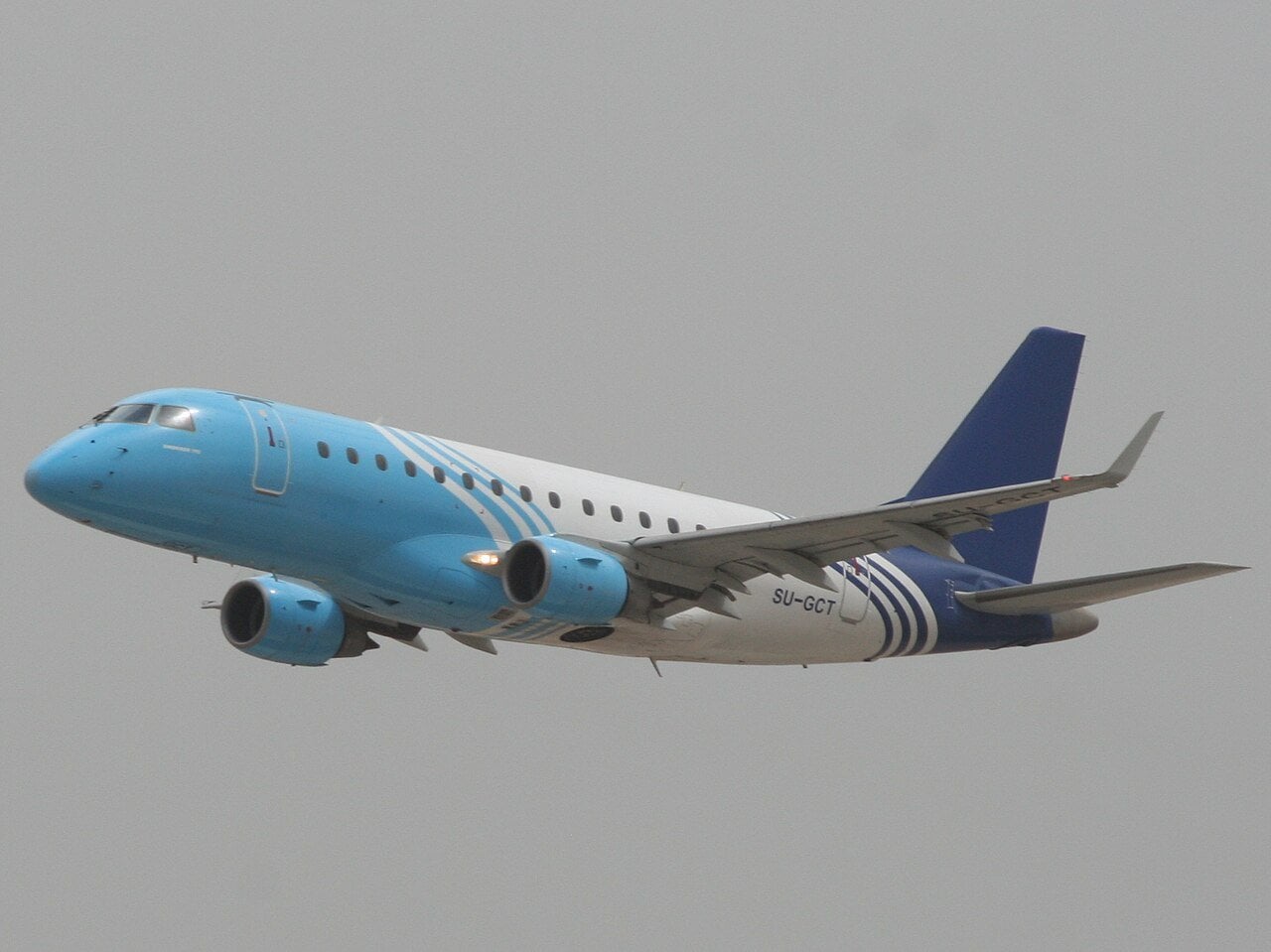
In between sits the damp lease, a term used especially in the United Kingdom. The lessor provides the aircraft, flight crew and maintenance, but the customer supplies its own cabin crew, so passengers are greeted in the familiar uniform even though someone else is flying.
What Airlines Actually Pay
Lessors price aircraft with a lease rate factor: the monthly rent as a percentage of the aircraft's value. Wikipedia cites typical factors falling to around 0.6 per cent a month, or 7.2 per cent a year, in a highly competitive market around 2017, and in some deals as low as 0.55 per cent.
It gives a worked example from 2018. A Boeing 737-8 could be leased for slightly more than $385,000 a month. A well-rated airline taking an A320neo on a 12-year term might pay less than $370,000 a month, about 0.74 per cent of a capital cost of around $49 million. Over that term the lessor would collect about $53 million in rent, plus more than $8.5 million in end-of-lease maintenance compensation, and still own an aircraft worth about $20 million.
That arithmetic explains why lessors prefer narrowbodies. An A320 or 737 can move from one airline to another relatively cheaply. A widebody is a different matter: Wikipedia puts the cost of reconfiguring an Airbus A330-300 for a new operator at around $7 million, with new seats, entertainment systems, galleys and paint all adding up.
AerCap's own film on how the world's largest aircraft lessor makes its money.
How Ireland Became the Capital of Leasing
The modern industry has an unlikely birthplace: Shannon, on Ireland's west coast. In 1975 Aer Lingus, the London-based Guinness Peat Group and Aer Lingus executive Tony Ryan set up Guinness Peat Aviation, or GPA. During the 1980s it became the world's largest commercial aircraft lessor, and in 1990 it placed a $20 billion order for new aircraft, about 10 per cent of world production at the time.
Then it all went wrong. GPA tried to float on the stock market in 1992, in the downturn that followed the Gulf War, and investors refused to buy. With some $10 billion of debt, it had to be rescued, and in 1993 GE Capital Aviation Services, or GECAS, took over the management of its fleet and most of its staff.

GPA's people stayed in the business. Former GPA executives went on to run several of the biggest lessors in the world, and by 2015, Wikipedia records, half of the world's aircraft lessors were based in Ireland. The circle closed on 1 November 2021, when AerCap completed its purchase of GECAS from General Electric, giving it a portfolio of more than 2,000 aircraft and making it, in its own words, the largest customer of both Airbus and Boeing. AerCap's chief executive, Aengus Kelly, called it the right business, for the right price, at the right time.
The Giants of 2026
The big lessors are still growing. In July 2026, Dubai Aerospace Enterprise completed its roughly $9 billion purchase of Macquarie AirFinance, creating a portfolio of about 1,000 owned, managed and committed aircraft. In October, Avolon announced firm orders for 250 aircraft: 140 Boeing 737 MAX jets and 110 Airbus aircraft, made up of 75 A320neo family and 35 A330neo family jets, with options on 100 more, subject to approval by its 70 per cent shareholder, Bohai Leasing.
Leasing reaches far beyond big jets. ATR says more than 10 brand-new turboprops were leased to airlines straight from lessors' order books in 2025, and more than 90 second-hand ATR transactions were recorded that year.
Leasing is not risk-free for airlines. Rent is due whether or not the aircraft is full, and return conditions can be expensive. When Air Berlin and Monarch collapsed in 2017, though, their leased aircraft found new operators quickly at normal market rates, Wikipedia notes, precisely because demand was strong. That is the lessor's bet: an airliner is a global asset that can always find another airline.
KPMG Ireland interviews AerCap chief executive Aengus Kelly on the leasing business.
So next time you board, look for the small registration letters near the tail. They tell you which country the aircraft is registered in. The name of the company that actually owns it will not be painted anywhere at all.
Sources: Wikipedia (Aircraft lease, Guinness Peat Aviation), IATA via Aerospace Global News, AerCap (Q2 2026 results; GECAS completion release, SEC filing), Avolon (via Business Wire/Morningstar), ATR, Aviation Week
0 Comments